
Too many direct quotes crowd out your own thinking, and that is exactly what readers and graders notice first. A paper built from other people's sentences stops sounding like you. Quoting is not the problem. Over-quoting is. The fix is practical: learn when a quote earns its place and when paraphrasing does the job better.
Table of Contents
- Why do too many quotes make a paper feel weaker?
- What does quotation overuse actually look like in a paper?
- Is there a percentage or rule of thumb for how much you should quote?
- How do you decide between quoting and paraphrasing?
- How should you introduce and cite a quote once you decide to use one?
- How does Submit Your Assignments help you fix quotation overuse?
- What habits prevent quotation overuse before the deadline hits?
- Key Takeaways
- References
Why do too many quotes make a paper feel weaker?
Too many quotes make a paper feel weaker because they push your own analysis to the margins. Quotations are only one kind of evidence. Balanced papers also use paraphrase, data, and statistics, and the majority of a paper should still be the writer's own ideas in their own words, according to the UNC Writing Center.
Over-quoting also weighs down the reader. The reader's real task is to read your writing, not a chain of someone else's sentences stitched together. A paper that leans on long quotations asks the reader to do the work of connecting ideas that you should have connected yourself. That is exhausting, and it makes the argument harder to follow.

Heavy quotation can also suggest that the writer is not confident enough to say things in their own words. That undermines authority and credibility as a scholar, as Pat Thomson explains. Expert scholars rarely lean on long quotations. They prefer to summarize key points with citations and footnotes.
This is a fixable habit, not a talent problem. You can learn to quote less and argue more.
What does quotation overuse actually look like in a paper?
Quotation overuse usually shows up as a quote sandwich gone wrong. A quote gets dropped into a paragraph with no context, no explanation of why it matters, and no analysis after it. The reader hits a block of someone else's words and has to guess why it is there. The UNC Writing Center describes this as the failure to provide context, attribution, explanation of significance, and a citation for each quotation.
Another common pattern is stacked quotes. Two or three sources talk to each other in a row while the writer disappears. The paragraph becomes a list of quotations with thin connecting tissue. Your voice never enters the room.
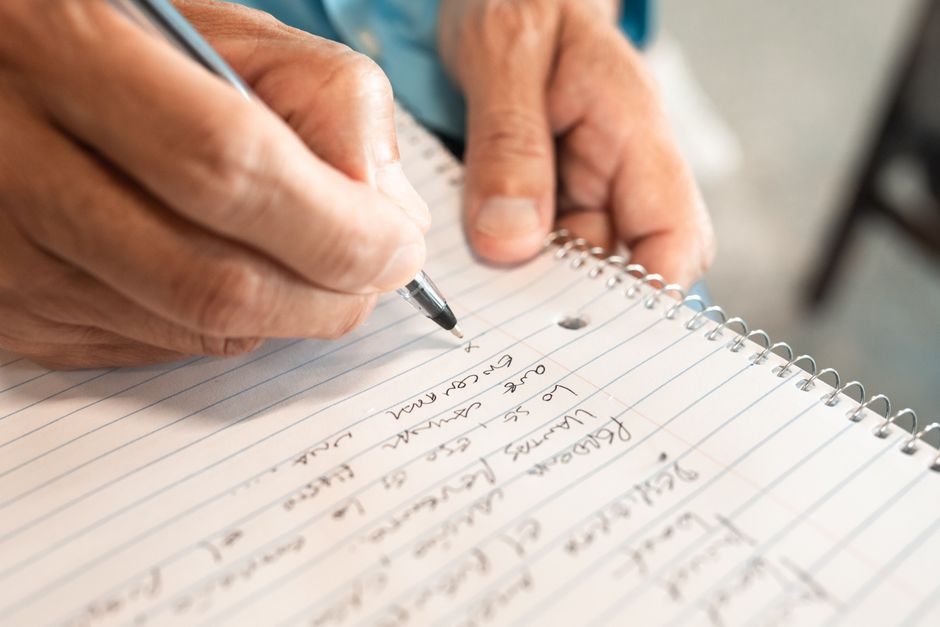
The note-taking trap is a major cause. Students who copy too many direct quotations into their notes end up with too many in the final paper, according to a Quinnipiac University research guide and York University. The notes become the paper.
Less-experienced writers often over-quote because it feels easier than paraphrasing. Direct quotation looks like a shortcut. It skips the harder work of putting an idea into your own words while keeping the citation.
Is there a percentage or rule of thumb for how much you should quote?
There is no universal official percentage, but a practical checkpoint helps. Submit Your Assignments suggests keeping quoted material around 10 to 15 percent of a paper as a rule of thumb, not a law. That gives you a quick way to scan a draft and see whether the balance has tipped.
Once quoted material approaches a quarter of the assignment, it is usually a sign that more paraphrasing and analysis are needed. The same guidance from Submit Your Assignments treats that quarter mark as a signal to review the balance. You are not breaking a rule. You are seeing a pattern.
The "3 quote rule" circulates as informal writing advice, not an official standard. Some students treat it as a hard limit of three quotes per paper. It is better treated as a habit-check. Ask yourself whether each quote is doing work that paraphrase could not do.
Quotation volume legitimately varies by discipline. Literature papers may quote heavily because the exact wording is the thing being analyzed. Social science papers lean more on paraphrase, data, and statistics, according to the UNC Writing Center. Style authorities do not publish a universal percentage, so the useful move is checking your assignment instructions and rubric.
How do you decide between quoting and paraphrasing?
You decide by asking one clear question: does the exact wording truly matter? If the original phrasing is distinctive, authoritative, or the thing being analyzed, quote it. If not, paraphrase. That single test beats ten abstract rules.
Paraphrasing is not swapping a few words for synonyms. You still keep the citation. The idea belongs to the source, but the sentence belongs to you. Submit Your Assignments makes this distinction clear: paraphrase means restating the idea in your own words while crediting the source.
Block quotations are appropriate only when the full wording truly matters. If you are quoting a passage of poetry, a legal text, or a sentence you plan to analyze word by word, the block quote earns its place. If you are quoting a long passage because it says something generally useful, paraphrase it instead.
Paraphrasing builds the analytical muscle that over-quoting skips. It forces you to understand the source well enough to explain it. That understanding shows up in your writing, and it keeps the paper in your voice. Less-experienced writers sometimes over-quote because paraphrasing feels harder, as the eCampusOntario academic writing text notes. The harder path is the one that strengthens the paper.
How should you introduce and cite a quote once you decide to use one?
Every quotation needs four things: context, attribution, explanation of significance, and a citation. The UNC Writing Center describes this as the standard for using quotations well. Context tells the reader who is speaking and why. Attribution names the source. Explanation connects the quote to your argument. The citation gives the location.
The parenthetical reference or footnote number goes after the closed quotation mark, not inside it. That is a small formatting detail, but it is the kind of error that makes a paper look careless. The UNC Writing Center advises placing the reference after the closing quotation mark.
Introduce quotations with the author's last name and page number in MLA or APA format. Submit Your Assignments recommends this as a clean, standard way to bring a source into the sentence. The exact format depends on your style guide, so confirm specifics against your assignment sheet.
Quotation marks around jargon signal a special meaning in context, not informality. A word in quotes can mark a technical term or a term used in a specific way. That is different from using quotes to excuse slang. Confirm how your style guide handles special terms before relying on quotation marks.
How does Submit Your Assignments help you fix quotation overuse?
The fastest fix is a second set of eyes on the draft, and that is exactly what the services are built for. Custom Writing creates original work built from your instructions and rubric, so the paper starts in your voice instead of a pile of quotes. Editing & Proofreading reviews an existing draft for clarity, flow, citations, and formatting while keeping your ideas intact.
The Rewrite Service reworks over-quoted passages into your own voice. Research Assistance helps you find credible sources and organize evidence, so you rely less on pasted text. AI Humanization makes writing that reads naturally, and PowerPoint Presentations handles the assignment when it is a deck instead of a paper.
Free revisions are available when instructions are not met, and on-time delivery comes with a deadline guarantee. Fast quotes and local Houston, TX support are available by phone at 346-603-6340. The goal is a paper that sounds like you, with quotes doing only the work they should.
What habits prevent quotation overuse before the deadline hits?
Start with your own outline and topic sentences. When your argument comes first, quotes fill gaps in the reasoning rather than replacing it. A quote should support a point you have already made, not make the point for you.
Take notes in paraphrase with page numbers attached. That way you are not stuck with a page of copied text later. York University identifies copying too many direct quotations into notes as a common path to over-quoting in the final paper.
Draft first, then add quotes only where the exact wording earns its place. Writing the draft without quotes forces you to articulate your own ideas. The quotes become additions, not scaffolding.
Do a final quote audit. Highlight every quotation and check whether each one has context, explanation, and a citation. The UNC Writing Center recommends this four-part check for every quotation. A paper with fewer, better-chosen quotes usually reads stronger and grades better on analysis.
Key Takeaways
- Most of a paper should be the writer's own ideas in their own words, with quotations as just one type of evidence.
- Over-quoting can make a writer look unsure of their own voice and can weaken their credibility.
- Expert scholars tend to summarize key points with citations rather than lean on long quotations.
- Submit Your Assignments suggests keeping quoted material around 10 to 15 percent of a paper, and treats a quarter as a signal to rebalance.
- Paraphrasing means more than swapping synonyms, and the citation still stays.
- Each quotation needs context, attribution, an explanation of its significance, and a citation.
- Copying too many direct quotations into your notes is a common path to over-quoting in the final paper.
References
- Quotations – The Writing Center — date unknown
- quotations – handle with care – Pat Thomson — 2013-11-11
- Common Dissertation and CCS Errors: Overusing quotes — date unknown
- Does using quotes around an informal word make it acceptable in academic writing? — 2024-08-09
- Overuse of Quotations in Academic Writing — 2026-08-16
- Research Guides: Plagiarism: Quoting/Paraphrasing — date unknown
- Making Your Quotes Fit – Academic Writing for Success — date unknown
- How do I use citations in my writing? — date unknown