You’ve been staring at that blinking cursor for forty-five minutes, haven't you? Your coffee is getting cold, your eyes are getting heavy, and that blank white screen feels like it’s mocking you. We’ve all been there. You know what you want to say, mostly, but getting those first few sentences onto the page feels like trying to run through waist-deep mud. The introduction is, hands down, the most stressful part of any assignment. It’s the "make or break" moment where you either hook your reader or lose them to the depths of boredom.
At Submit Your Assignments, we see this struggle every single day. Students are overwhelmed by a plethora of requirements, and the pressure to be "perfect" from sentence one is often detrimental to the actual writing process. But here’s a secret: writing a killer introduction doesn’t have to be a nightmare. Most students fall into the same seven traps. Once you recognize these mistakes, you can fix them, find your flow, and finally get some of that "No Homework and Chill" time you deserve.
Let’s dive into the most common introduction blunders and how you can pivot toward an A+ opening.
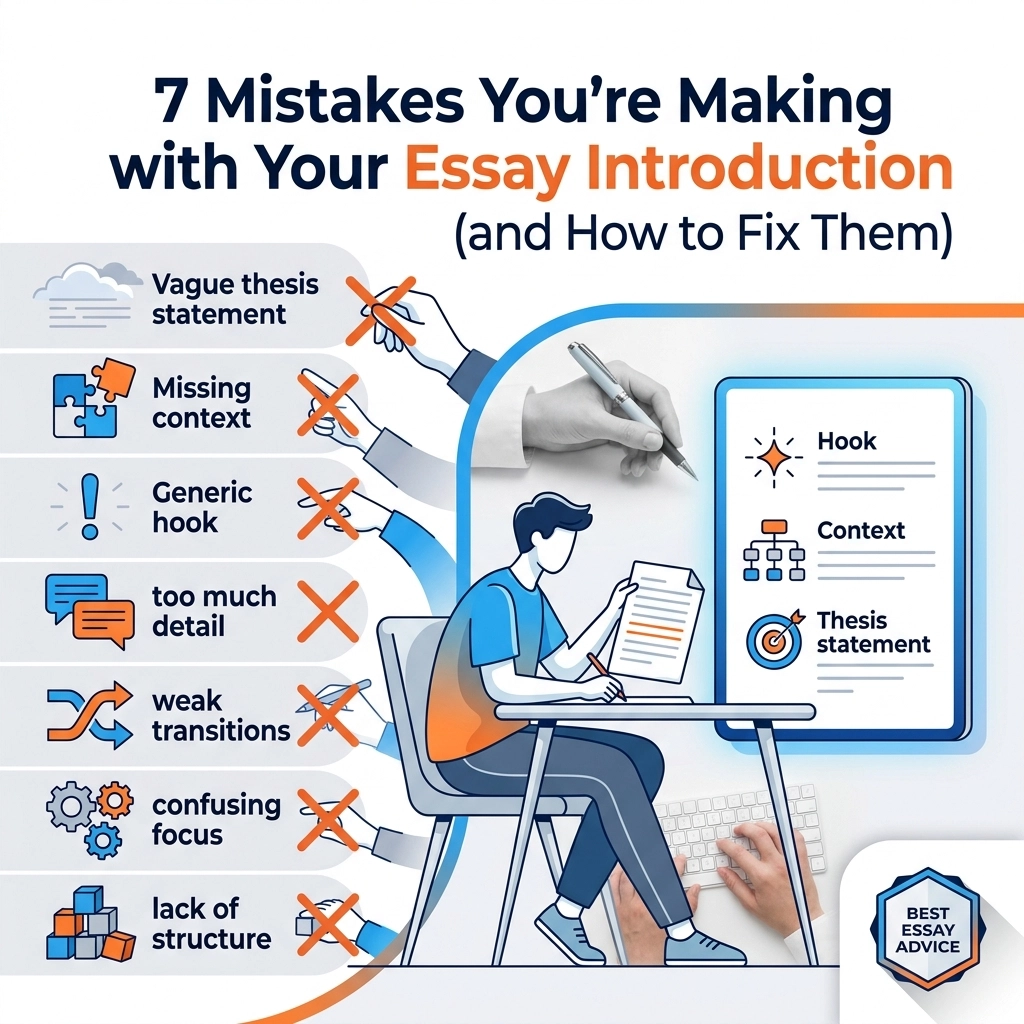
1. The "Invisible" Thesis Statement
The biggest mistake you can make is writing a beautiful, flowery introduction that never actually says anything. Your reader finishes the first paragraph and thinks, "Okay… but what is the point?" A weak or missing thesis statement is like trying to drive to a new city without a GPS. You might be moving, but you have no idea where you’re going.
The Fix: Every introduction must end with a clear, concise thesis statement. This is usually one sentence that directly answers the essay prompt and outlines your specific argument. Instead of just stating a topic (e.g., "This essay is about climate change"), take a stand (e.g., "While individual actions are important, systemic policy changes in the energy sector are the only way to effectively mitigate climate change").
If you're struggling to nail this down, our tutoring and research assistance can help you refine your core argument before you even start the body paragraphs.

2. Starting "Since the Dawn of Time"
We call this the "Universal Opening" mistake. You’ve probably seen it: "Since the beginning of human history, people have always loved stories." Unless you are writing a history of the entire universe, please stop doing this! It’s a cliché that adds zero value to your paper and tells the professor you didn’t know how to start.
The Fix: Start in the middle of the action or with a specific, punchy observation. Use a relevant quote, a surprising statistic, or a direct reference to the text or problem you’re discussing. The goal is to create immediate interest. Why does your topic matter now? Focus on the "here and now" rather than the "forever and always."
3. The "Thesaurus Trap" (Overusing Jargon)
It’s tempting to think that using big words will make you sound more academic. You might feel the need to pepper your intro with a plethora of complex jargon to impress your instructor. However, overcomplicating your language often backfires. If your reader has to stop every three words to look something up, you’ve lost the rhythm of your argument.
The Fix: Prioritize clarity over "sounding smart." Use professional but accessible language. Save the highly technical terms for the body paragraphs where you have the space to define and analyze them. A great introduction should be understandable to a smart person who isn't necessarily an expert in your specific niche.
4. Lacking Spatial Order and Structure
In our series on the fundamentals of academic writing, we often discuss spatial order. In an introduction, this means organizing your thoughts so they flow logically from the general to the specific (the "inverted pyramid" method). A common mistake is jumping randomly from a broad hook to a tiny detail, then back to a general concept. It leaves the reader feeling dizzy.
The Fix: Follow a logical roadmap.
- The Hook: Grab attention.
- The Context: Provide the "who, what, where, and when."
- The Bridge: Connect your hook to your thesis.
- The Thesis: State your main argument.
By maintaining this structure, you ensure that your introduction acts as a literal map for the rest of your paper. If you’re worried your structure is a bit messy, you can always check out how much our editing services cost to get a professional eye on your work.

5. The "Kitchen Sink" Approach (Too Much Background)
Are you trying to tell the entire history of the French Revolution in your first paragraph? Stop! Students often provide way too much background information in the intro, fearing the reader won't understand the context. This results in a five-page introduction and a very bored professor.
The Fix: Keep your background info on a "need-to-know" basis. What are the absolute essentials required to understand your thesis? If a detail isn't directly supporting your opening argument, move it to a body paragraph or cut it entirely. Think of your intro as a movie trailer: it should give us the premise and the excitement without spoiling the whole plot.
6. Forgetting the "Who and Where" (Contextual Details)
On the flip side of the "Kitchen Sink" mistake is the "Vague Intro." This happens when you talk about "the characters" or "the situation" without ever mentioning the title of the book, the author’s name, or the specific time period. You assume the reader knows what you’re talking about, but in academic writing, you must explicitly state your subjects.
The Fix: Use a simple checklist. Does your intro include:
- The full name of the author or creator?
- The full, correctly punctuated title of the work?
- The genre or type of document?
- The specific setting or context?
Including these details immediately establishes your authority and shows you've done your research.
7. Writing the Intro First (And Never Revising It)
This is a psychological trap. You feel like you must write the introduction first to "get started." But often, your argument evolves as you write the body paragraphs. By the time you finish the conclusion, your original introduction might not even match the rest of your essay!
The Fix: Write a "placeholder" intro to get your thoughts moving, but don't fall in love with it. Many professional writers actually write the introduction last. Once you know exactly what your conclusion is, you can go back and write an introduction that perfectly sets the stage. If you do write it first, make sure you revisit it during your final editing phase to ensure it aligns with your final argument.

How We Can Support Your Writing Journey
Writing a complex essay is a massive undertaking. Between the research, the citations, and the structural requirements, it’s easy to feel like you’re drowning. That’s where Submit Your Assignments comes in. We aren't just a service; we’re your academic allies. Whether you need research assistance to find those perfect sources or editing support to polish your prose, we’ve got your back.
We know the stress of a looming deadline. We know the frustration of a prompt that makes no sense. Our mission is to give you back your time and peace of mind. Trust our experts to help you navigate the tricky waters of academic writing so you can focus on what matters most to you.
Why Choose Submit Your Assignments?
- Fast Delivery: We understand that deadlines are non-negotiable. Our team expedites the process to ensure you're never left hanging.
- Expert Tutors: Our writers are experts in their fields, providing high-quality research and editing that meets rigorous academic standards.
- Reliability: With a 94% average customer rating, you can trust that your work is in good hands.

Quick Tips for Success
As you work on your next assignment, keep these "fun facts" and tips in mind to stay focused:
- The 10% Rule: Your introduction should generally be about 10% of your total word count. If your paper is 1,000 words, keep that intro to around 100!
- Read it Aloud: If you trip over your words while reading your intro aloud, your reader will too.
- Houston Pride: Did you know Submit Your Assignments is based right here in the Houston area? We love supporting students from the University of Houston, UT, and beyond!
- Take a Break: Sometimes the best way to fix a bad introduction is to walk away for twenty minutes and come back with fresh eyes.
Stop worrying about that blinking cursor. You have the tools, you have the fixes, and you have a team of experts ready to help you succeed. Whether you're struggling with a thesis or just need a final proofread, we are here to ensure you can "Submit Your Assignments" with total confidence.
Legal Disclaimer: Submit Your Assignments is an independent academic support service and is not affiliated with, endorsed by, or partnered with the University of Houston or the University of Texas. Our services are intended for research, tutoring, and editing purposes only.