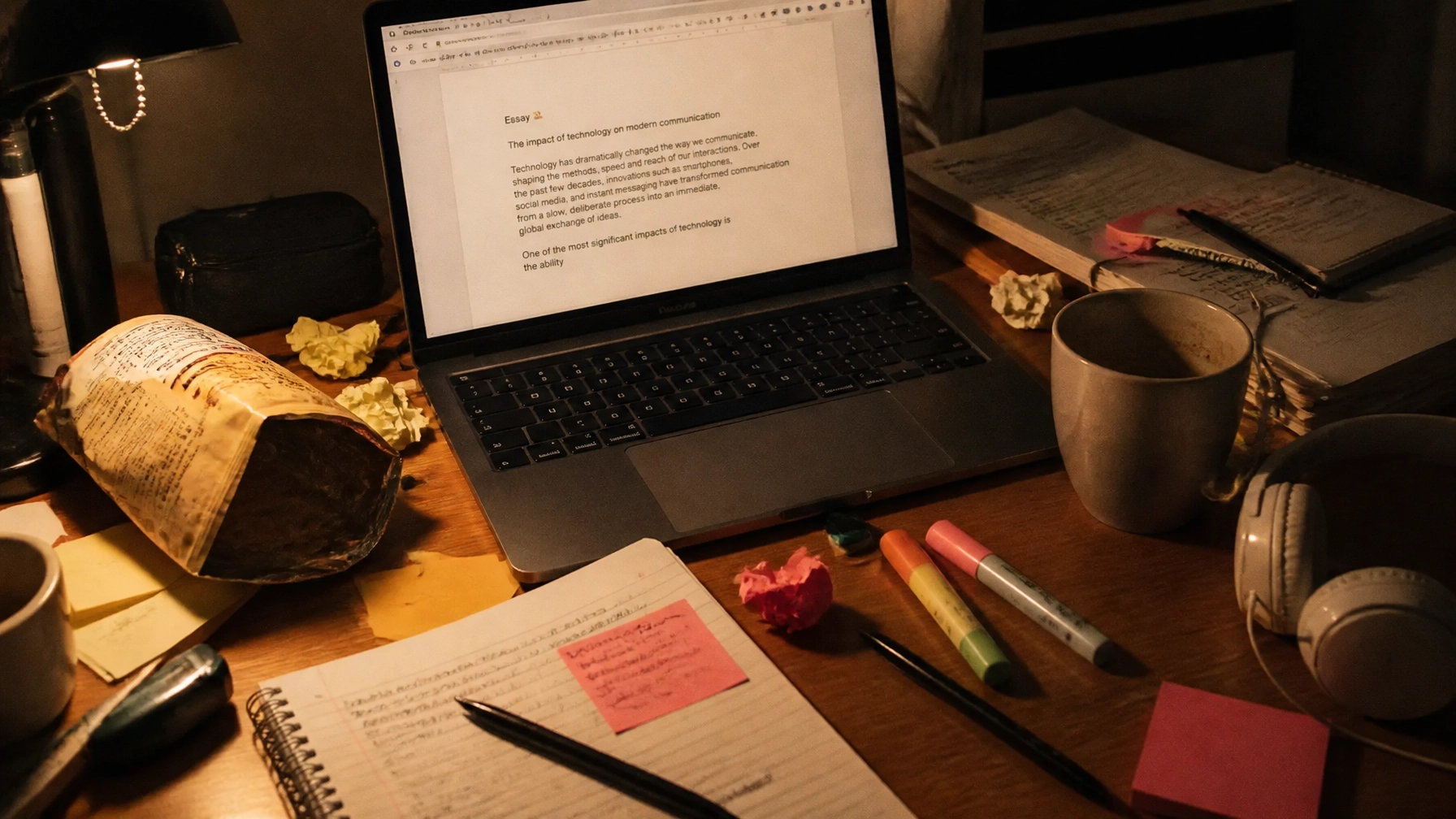
You’ve been staring at that blinking cursor for forty-five minutes. The white screen is practically mocking you, and that 2:00 AM deadline is looming closer than you’d like to admit. We’ve all been there: the "all-nighter grind" where your brain feels like mush and you’re pretty sure "academic writing" is just a fancy term for torture.
But here’s the thing: writing a killer paper doesn't have to feel like pulling teeth. Whether you’re a high school senior or knee-deep in a university degree, leveling up your writing game is more about strategy than "talent."
Ready to stop the panic and start actually getting stuff done? Let’s break down how to take your papers from "meh" to "actually impressive."
Plan Before You Even Touch the Keyboard
Most students make the mistake of diving straight into the first paragraph without a plan. That’s a fast track to getting stuck halfway through. Before you type a single word, you need to understand exactly what your professor is asking for.
Grab a highlighter (or use the digital one, we won't judge) and underline the "instruction words" in your prompt. Are they asking you to discuss, evaluate, or compare? There’s a huge difference between explaining a topic and arguing for a side. Once you know the mission, scribble down a messy mind map. Don't worry about being neat; just get the ideas out of your head.

Quick Writing Tip: Try to paraphrase the essay question in your own words. If you can’t explain it to a friend over coffee, you probably don’t understand it well enough to write five pages on it.
The "Sandwich" Method for Structure
Think of your essay like a sandwich. If the bread is soggy or the middle is missing, it’s a bad time for everyone. A solid academic paper usually follows a classic three-part structure:
- The Introduction (The Top Bun): Introduce the vibe of the topic. Why should anyone care? End this section with a rock-solid thesis statement: that’s your main argument in one or two punchy sentences.
- The Body Paragraphs (The Filling): This is where the real work happens. Each paragraph should focus on one main point. Don't try to cram three different ideas into one block of text; it just confuses the reader.
- The Conclusion (The Bottom Bun): Wrap it up. Remind your reader what you proved, but don't just copy-paste your intro. Show them why your argument matters in the real world.
Build Paragraphs That Actually Make Sense
A common mistake is throwing a quote into a paragraph and just leaving it there like a stray cat. You have to "claim" your evidence. Use the PEEL method to keep things on track:
- Point: Start with a clear topic sentence.
- Evidence: Drop in a quote, a stat, or a fact.
- Explanation: Explain why that evidence supports your point. (This is the most important part!)
- Link: Connect it back to your main thesis or the next paragraph.
If you’re struggling with how to organize these, checking out resources like the Harvard Writing Center can give you some extra inspo on structuring complex arguments.

Cut the Fluff and Keep It Real
Academic writing doesn't mean you have to sound like a 19th-century philosopher. In fact, professors usually prefer clarity over "fancy" words.
- Ditch the "In order to": Just use "To." It’s shorter and cleaner.
- Use the Active Voice: Instead of saying "The experiment was conducted by the team," say "The team conducted the experiment." It sounds way more confident.
- Avoid Vague Words: Stop using "things," "stuff," and "very." Be specific. Instead of saying something is "very bad," say it’s "detrimental" or "ineffective."
The "Read Aloud" Secret Weapon
This is the one tip most students ignore, but it’s the one that works the best. Once you’ve finished your draft, read it out loud. Seriously.
When you read in your head, your brain automatically fixes mistakes without you realizing it. When you speak the words, you’ll catch those awkward sentences, repeated words, and weirdly long paragraphs that make you run out of breath. If a sentence feels like a tongue-twister, it needs to be edited.
Why You Don’t Have to Do It Alone
Listen up: even the best writers have editors. Sometimes you’re just too close to the project to see the flaws. That’s where we come in. At Submit Your Assignments, we aren't just about finishing a task; we’re about helping you find your academic flow.
Whether you need a consultation to brainstorm a tricky prompt, an expert edit to polish your grammar, or a model paper to show you how a professional structures an argument, we’ve got your back. Think of us as your academic pit crew. You’re the one driving the car, but we’re here to make sure you don't crash and burn before the finish line.

A Few Extra Hacks for the Road:
- Change the Font: If you’re tired of looking at your draft, change the font to Comic Sans while you edit. It makes the text look "new" to your brain, and you’ll spot more errors. Just remember to change it back before submitting!
- The 20-Minute Rule: Set a timer for 20 minutes and write without stopping. No editing, no deleting. Just raw thoughts. You can clean it up later.
- Hydrate: Coffee is great, but water actually keeps your brain from fogging up during those long study sessions.
- Houston Fact: Did you know Houston is home to the largest medical center in the world? Just like those doctors need precision, your writing needs focus!
Stop worrying about that blank page and trust our writers to help you bridge the gap between "stressed student" and "academic pro." You deserve to live your life: go grab that pizza, hang out with friends, and let us handle the heavy lifting.
Submit Your Assignments provides custom reference materials and tutoring services for research and educational purposes only. We encourage all students to follow their institution's academic integrity policies.