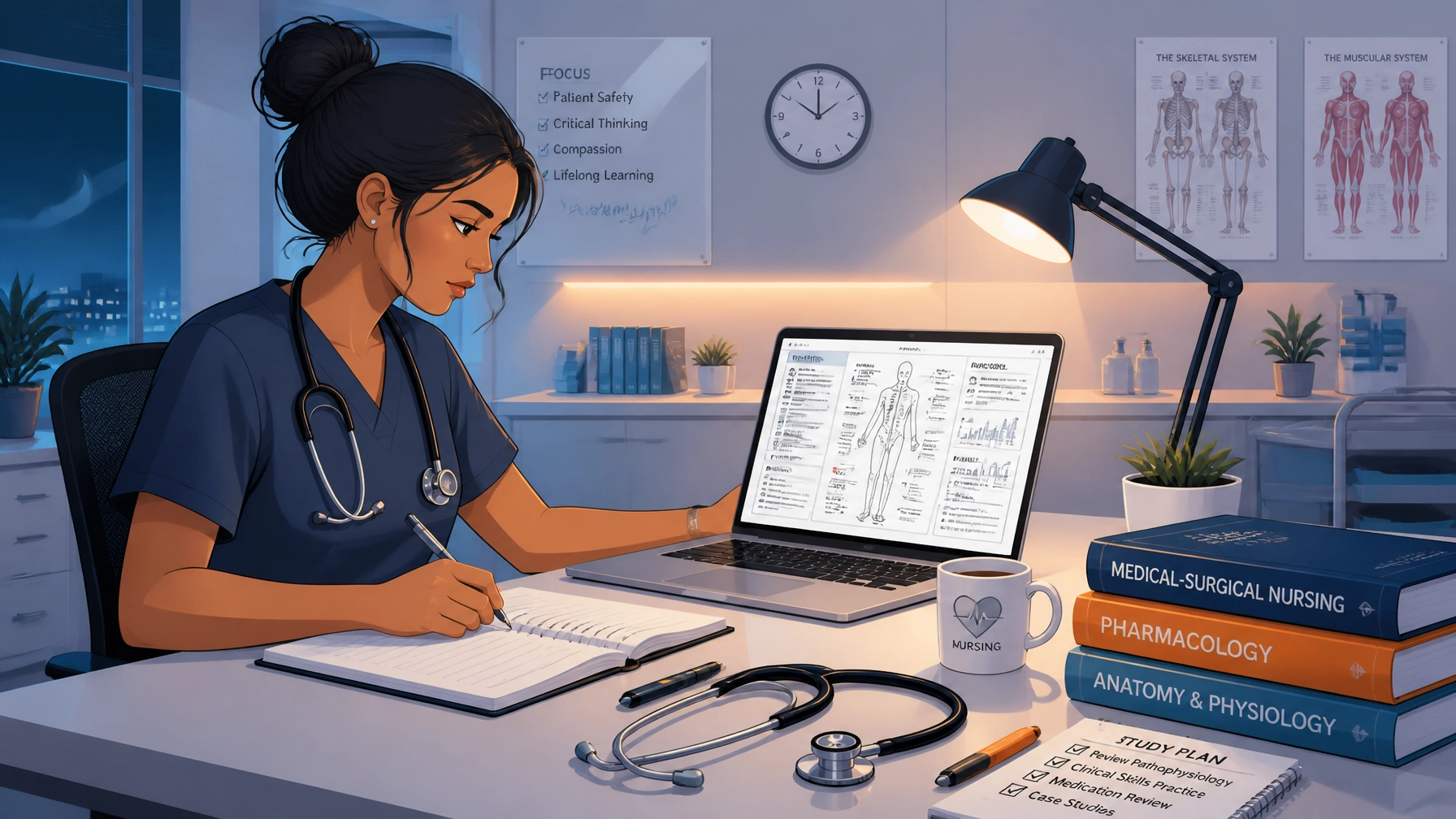
It’s 2:00 AM in Galveston, and the weight of the world: or at least your clinical rotation at the University of Texas Medical Branch (UTMB): is sitting squarely on your shoulders. You’ve just finished a 12-hour shift, and now you’re staring at a blank screen, trying to translate a day of patient cues into a perfectly structured nursing care plan.
You know the stakes. At UTMB, a care plan isn't just a homework assignment; it's a demonstration of your clinical judgment. One misplaced NANDA-I diagnosis or a vague, non-measurable goal can be the difference between a "Satisfactory" and a stressful meeting with your clinical instructor. In your exhaustion, the temptation to open a tab and let an AI "draft" it for you is overwhelming.
But before you click "generate," stop. While AI might be able to summarize a movie plot or write a poem, it lacks the one thing that keeps your patients safe and your grades secure: clinical reasoning.
The "ADPIE" Nightmare: Why the Rubric is So Demanding
If you’ve looked at the UTMB Plan of Care Evaluation form, you know they aren’t looking for generic fluff. They expect a deep dive into the nursing process. Whether you are navigating a pediatric rotation or a high-acuity med-surg floor, the expectations are clear:
- Assessment (Cues): You must bridge the gap between subjective and objective data.
- Diagnosis: You need the exact NANDA-I labels in the PES (Problem, Etiology, Signs/Symptoms) format.
- Planning: Your goals must be SMART (Specific, Measurable, Achievable, Relevant, and Time-bound).
- Implementation: You have to document exactly what you did.
- Evaluation: You must prove whether the goal was met using real clinical data.
Does that sound like something a machine can do without ever meeting your patient? Probably not.

Quick Tips for a Better Care Plan Tonight
Before we dive into why AI often falls short, here are a few immediate "wins" you can use to tighten up your document:
- Prioritize the ABCs: Always address Airway, Breathing, and Circulation first. If your patient is struggling to breathe, "Knowledge Deficit" shouldn't be your primary diagnosis.
- Use the "By the end of shift" Rule: For goals, be hyper-specific. Instead of saying "Patient will feel better," try "Patient will report a pain level of 3/10 or less on the 0-10 scale within 2 hours of analgesic administration."
- Cite Real Sources: UTMB faculty usually require evidence-based rationales from the last 3 years. Don't guess: use your textbooks or the CINAHL database.
Why AI Fails the Clinical Judgment Test
It is incredibly easy to spot an AI-generated nursing care plan, and professors are becoming experts at it. Here is why relying on a bot is a detrimental move for your academic career.
1. The "Hallucination" Factor
AI models are notorious for "hallucinating" or making things up when they don't have the answer. In a nursing care plan, this often manifests as fabricated citations. Imagine turning in a paper with a reference to a journal article that doesn't exist. At an institution like UTMB, that isn't just a mistake; it's a potential academic integrity violation.
2. Lack of Nuance and Context
A bot doesn't understand that your pediatric patient’s "Risk for Falls" is higher because they are in a strange environment without their favorite toy, or that their "Imbalanced Nutrition" is tied to a specific cultural preference. AI provides generic, cookie-cutter interventions that fail to show the individualized care that UTMB rubrics demand.
3. Outdated NANDA-I Terminology
Nursing diagnoses change. AI is often trained on older datasets, meaning it might suggest a diagnosis that was retired or renamed two years ago. Using an outdated NANDA-I label is a massive red flag to an instructor that you didn't actually open your manual.

The High Cost of "Generic"
When you use AI, you aren't just risking a bad grade; you are failing to develop the critical thinking skills you'll need for the NCLEX and your future career as a Registered Nurse. Clinical reasoning is a muscle. If you let a machine do the heavy lifting, that muscle atrophies.
With that being said, we understand the pressure. Nursing school is a plethora of deadlines, clinical hours, and high-stakes exams. Sometimes, you don't need a machine to write for you; you need a professional mentor to show you the way.
How Submit Your Assignments Supports Your Journey
At Submit Your Assignments, we don't believe in "bots." We believe in human expertise. Our team includes writers who understand the complexities of medical and nursing education. We don't just "give you an essay"; we provide high-quality custom research materials and model papers that serve as a roadmap for your own clinical success.
We can help you with:
- Brainstorming NANDA-I Diagnoses: Not sure which diagnosis fits your patient's cues? We can help you narrow it down based on the PES format.
- Evidence-Based Rationales: We can find the current, peer-reviewed sources you need to support your interventions, ensuring your APA citations are flawless.
- Structural Editing: If you've written your care plan but it feels disjointed, our editors can help refine your prose to ensure it meets the professional standards expected at UTMB.
Regain Your Peace of Mind
Think about the freedom of knowing your clinical prep is handled with the care and precision of a professional. Instead of panic-typing at 3:00 AM, you could be getting the rest you need to be sharp for your patients tomorrow.
Trust our human-led process to provide the professional writing support you need. Our 94% average rating and 4.5 Trustpilot score aren't accidents: they are the result of helping students like you navigate the toughest assignments in their curriculum.

Final Thoughts: Your Future in Nursing
Your journey at UTMB is about becoming a safe, competent, and compassionate nurse. Don't let the stress of a care plan template stand in the way of that goal. Use the tools available to you: tutors, mentors, and professional consulting services: to ensure you are learning the right way.
Ready to stop worrying about your next clinical worksheet?
Check out our services today and see how we can help you turn that deadline panic into academic confidence.
Fun Facts for the Galveston Nursing Student:
- The Mosquito Beat: Did you know that the UTMB campus is home to some of the most advanced infectious disease research in the country? (Stay safe in those labs!)
- Coffee is Life: Most UTMB students swear by Mod Coffeehouse on Postoffice St. for those long study sessions.
- Island Life: Sometimes, the best "clinical reasoning" happens during a 15-minute walk on the beach to clear your head.
Submit Your Assignments provides custom reference materials and tutoring services for research and educational purposes only. We encourage all students to follow their institution's academic integrity policies.