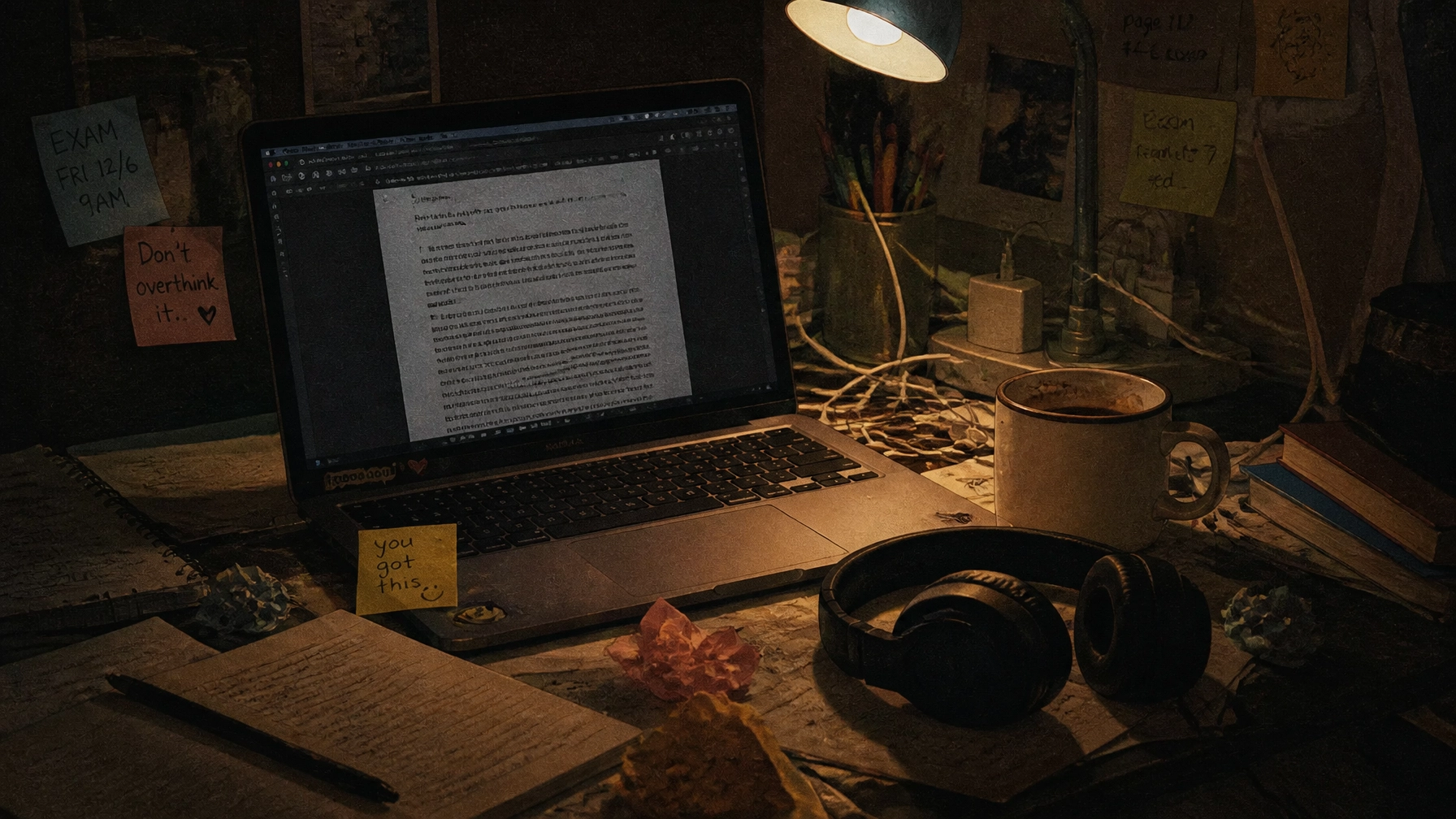
Picture this: You just spent ten hours in the library. You powered through the sensory overload, the wandering focus, and that oddly specific hyper-fixation on making your thesis statement perfect. You hit "Submit" on Canvas, feeling that sweet, sweet hit of dopamine.
Then, three days later, the email hits. "Your paper has been flagged for AI usage."
Wait, what? You literally wrote every single word. You can practically still feel the hand cramps and the caffeine jitters. But some algorithm decided your natural voice sounds like a robot.
If you’re neurodivergent, whether you’re navigating ADHD, Autism, Dyslexia, or just a brain that processes language a little differently, this isn't just a "glitch." It’s a real problem. AI detectors are often biased against the very writing styles that make our brains unique. Dealing with AI detection when neurodivergent shouldn't feel like a second full-time job, but here we are.
Let’s talk about why this happens and how you can protect your hard work without losing your mind.
Quick Tips to Stay Safe Right Now
Before we get into the "why," here is how you can protect your peace of mind today:
- Work in Google Docs: The "Version History" is your best friend. It proves you wrote the paper over time, rather than copy-pasting a finished block from ChatGPT.
- Keep Your Scraps: Don’t delete your messy outlines or that "brain dump" document. They are your receipts.
- If You Get Accused, Don’t Wing It: Use this guide on how to respond to AI accusations so you know what to say and what proof to bring.
- Humanize the Vibe: If you're worried about a paper sounding "too formal," try reading it out loud. If you wouldn't say it to a friend, maybe tweak the phrasing.
- Check Our Authenticity Guide: Read up on why your paper is 100% human-written and how we ensure every assignment we help with is legitimate.
Why AI Detectors "Don't Get" You
AI detectors don't actually read your work like a human does. They don't look for meaning; they look for math. Specifically, they look for two things: Perplexity and Burstiness.

The Perplexity Trap
Perplexity is a fancy word for "how predictable is this text?" AI models like ChatGPT are built to be predictable. They choose the most likely next word based on a huge dataset.
If your writing style is very structured, formal, or literal (common for many Autistic writers), the detector might think, "Wow, this is very organized and precise. It must be AI." It sees your clarity as predictability. It mistakes your focus for a formula.
The Burstiness Problem
Burstiness refers to the variation in sentence length and structure. Humans usually write in "bursts": a long, flowy sentence followed by a short, punchy one. AI tends to be more consistent and middle-of-the-road.
For students with ADHD or Dyslexia, our "burstiness" can sometimes go the other way. We might use very repetitive sentence structures because we’re focusing so hard on the content that the "style" becomes secondary. Or, we might use a very specific vocabulary that doesn't fluctuate much. The detector sees this lack of "rhythm" and flags it as machine-generated.
Basically, if you don't write like a "typical" person, the detector assumes you aren't a person at all. And that’s a vibe we definitely don't need.
The Pressure to "Dumb Down" Your Essay
One of the weirdest pieces of advice students get lately is that they need to "dumb down" their essays to avoid detection. You might feel like you have to add "planned typos" or intentionally mess up your grammar just to prove you’re human. If that’s the exact spiral you’re in, read our full guide on how to "dumb down" your essay without wrecking it.
Stop. You shouldn't have to "mask" your intelligence or your writing style just to satisfy a broken algorithm.
Instead of making your work worse, focus on making your process visible. If you're struggling to find that balance between "academic" and "human," check out some of the hidden free tools on our home page that can help you outline and structure your thoughts without losing your unique voice.

How to Handle a False Accusation
If the worst happens and you get hit with that "AI detected" flag, do not panic. Take a deep breath. You haven't done anything wrong.
1. Ask for the Data
Don’t just accept "The detector said so" as an answer. Ask which tool they used and what the percentage was. Most detectors have a high false-positive rate for neurodivergent and non-native English speakers. If you're looking for a script on how to handle this, our guide on how to respond to AI accusations (using the tips from our previous posts) is a lifesaver.
2. Show Your "Receipts"
This is where your messy Google Docs history comes in. Show your professor the timestamps. Show them the 2 AM edit where you changed "furthermore" to "also" because you thought "furthermore" sounded too stuck-up. Show them the notes where you scribbled down ideas while waiting for the bus.
3. Explain Your Style
You have every right to say, "I am neurodivergent, and my writing style tends to be very structured and literal. This is how I’ve always written." Most professors are starting to realize that these tools aren't perfect, but they need you to advocate for yourself.

Trust the Human Process
At the end of the day, the "AI witch hunt" is exhausting. It takes the joy out of learning and replaces it with a constant fear that your natural brain isn't "human enough" for a computer.
That’s why we do things differently here at Submit Your Assignments. We don't just "generate" stuff. We provide custom reference materials, brainstorming sessions, and editing help that respects your voice. If you want extra support, check out our student services page. We believe in the "No Homework and Chill" lifestyle because you deserve to live your life without being glued to a screen, worrying about whether your sentence structure is too "low perplexity."
Stop worrying about the bots. Trust our writers to help you find your rhythm and ensure you have the peace of mind to actually enjoy your weekend.
Fun Facts for the Neuro-Spicy Brain
- The First "AI" Accusation: Did you know students were being accused of "writing like bots" way back in the 90s just for being too formal? The tech changed, but the bias stayed the same.
- OpenAI's Own Tool: Even the creators of ChatGPT (OpenAI) shut down their own AI detector because it was only 26% accurate. If the experts can't get it right, your professor probably can't either.
- The "Vibe" Check: Some studies show that adding just one personal anecdote or a specific local reference to your paper can drop the AI detection score by up to 50%.

Listen up: Your brain is an asset, not a glitch. Don’t let a piece of software tell you how to think or write. If the grind is getting too heavy or the AI anxiety is too real, we’re here to help you navigate it.
Ready to stop the stress? Get a quick quote and let's get that assignment off your plate.
Submit Your Assignments provides custom reference materials and tutoring services for research and educational purposes only. We encourage all students to follow their institution's academic integrity policies.