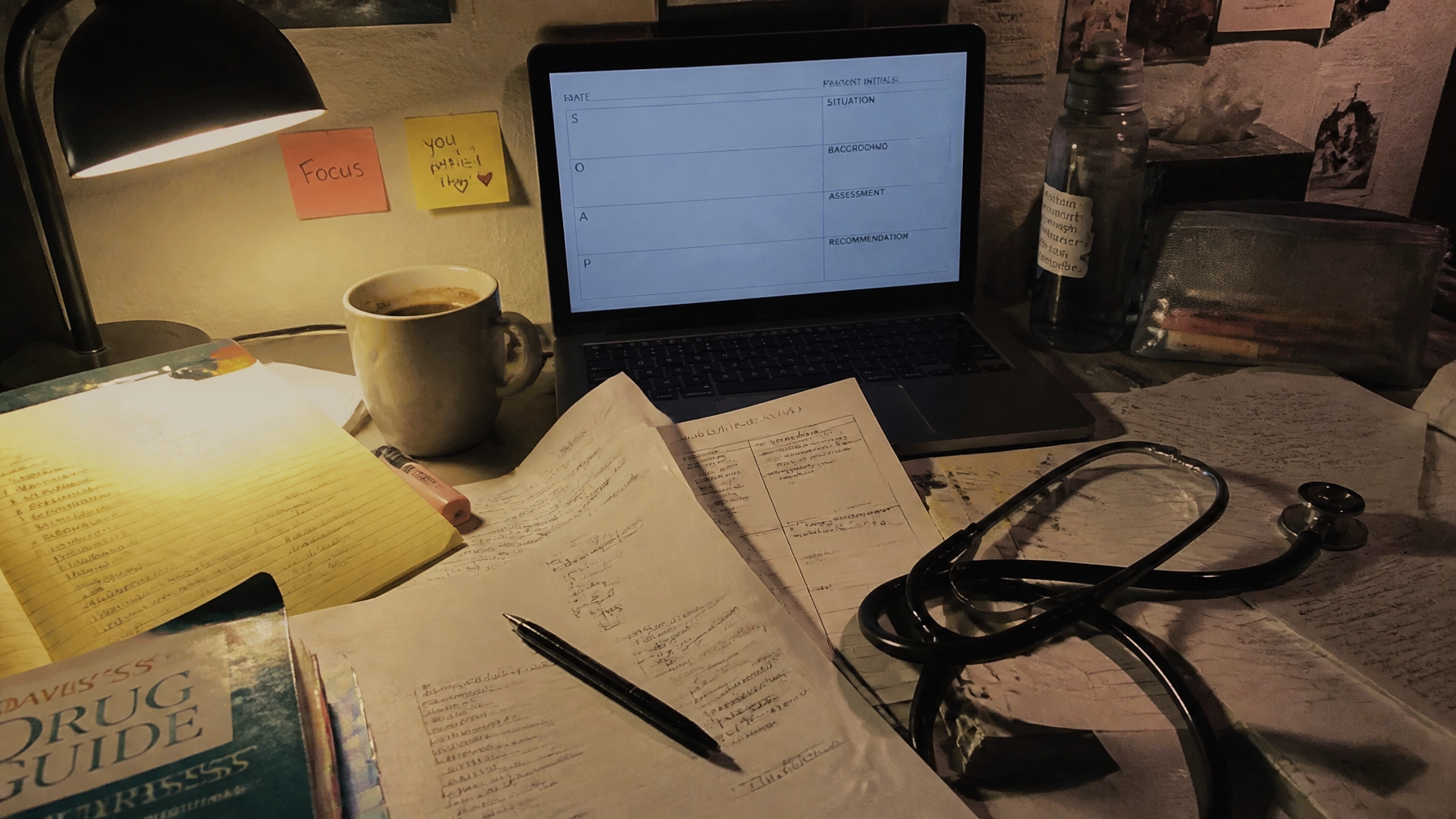
You’re finally home after clinicals. Your feet hurt. Your brain is still hearing call lights. And now you’re staring at a “clinical report” assignment like… what even counts as good writing here?
If your instructor’s feedback keeps sounding like:
- “Too vague”
- “Missing clinical reasoning”
- “Where’s your evaluation?”
- “This reads like a story, not a report”
…you’re not alone. Clinical reports are a weird mix of professional documentation + academic grading. With that being said, you can fix most issues fast, without rewriting your whole life.
Below are 7 mistakes nursing students make all the time, plus quick, practical fixes you can apply tonight (yes, even if you’re running on iced coffee and stress).
First: what your instructor actually wants (usually)
Most nursing “clinical reports” (case studies, clinical paperwork, narrative notes, reflections, patient summaries) are graded on the same core things:
- Accuracy: correct patient info, correct clinical facts, correct meds/labs
- Clarity: easy to follow, no rambling, no missing steps
- Clinical reasoning: why you chose an intervention, what data supported it
- Nursing process: assessment → diagnosis → plan → interventions → evaluation
- Professional tone: objective language, clean formatting
- References: when you mention guidelines/meds/evidence-based practice
Keep that in your head as you read the mistakes.
Mistake #1: You write like it’s a diary (instead of a clinical report)
What it looks like:
“I went into the room and the patient seemed upset so I tried to comfort them…”
That’s relatable. But your instructor is looking for objective, clinical language and a clear chain of care.
Fix it instantly (swap style):
Use this mini format in paragraphs or bullets:
- What you assessed (objective data)
- What you did
- How the patient responded
- What you monitored next
Example rewrite:
- Instead of: “Patient seemed bad.”
- Write: “Patient reported nausea 7/10 with two episodes of emesis; skin pale and diaphoretic. Administered ordered antiemetic; nausea decreased to 3/10 within 30 minutes. Continued to monitor I&O and hydration status.”
Quick tip: If you can’t measure it or observe it, phrase it as patient-reported.
Mistake #2: Your report is missing the “why” (clinical reasoning is invisible)
What it looks like:
You list tasks (vitals, meds, education), but there’s no explanation connecting the data to your choices. That’s when instructors write “needs rationale” in the margins.
Fix it instantly (add one sentence per key action):
After any major intervention, add a short rationale:
- “This supports ___ because ___.”
- “This is indicated due to ___.”
- “Priority was ___ given ___.”
Micro-example:
“Elevated RR (26/min) and SpO₂ 90% on room air indicated impaired oxygenation; initiated supplemental O₂ per protocol and reassessed.”
You don’t need a novel. You need a reason.
Mistake #3: You don’t follow a structure (so your grader gets lost)
You might understand your report. Your instructor shouldn’t have to decode it.
Fix it instantly: pick ONE structure and stick to it
Two common options:
- Nursing process headings
- Assessment
- Nursing Diagnoses / Problems
- Goals/Outcomes
- Interventions
- Evaluation
- SBAR (especially for patient summaries / shift-style reports)

SBAR cheat lines you can literally copy:
- S: “Primary concern today was ___.”
- B: “Relevant history includes ___.”
- A: “Current assessment findings show ___.”
- R: “Plan/recommendation: continue ___ / notify provider if ___.”
As we said earlier: if your reader can’t follow the flow, you lose points even if your care was solid.
Mistake #4: You stay vague because you’re scared of being “wrong”
This is such a nursing-student thing. You write: “Patient stable.” “Wound looks okay.” “Pain improved.”
But “stable” is not data. “Okay” is not charting. And your instructor can’t grade vibes.
Fix it instantly (replace vague words with specifics):
Swap these:
- “Stable” → vitals + trend + symptoms
- “Improved” → pain scale before/after + timeframe
- “Tolerated well” → what happened during + after
Mini template:
“Before: ___. After: ___. Timeframe: ___. Evidence: ___.”
Example:
“Pain decreased from 8/10 to 4/10 within 45 minutes after repositioning and PRN analgesic; patient able to deep breathe without grimacing.”
Mistake #5: You forget the evaluation piece (so it feels unfinished)
A lot of clinical reports stop right after interventions, like the story cuts off mid-season.
Fix it instantly (write a 2–3 sentence evaluation for each goal/problem):
Answer:
- Did the intervention work?
- What evidence shows that?
- What will you do next?
Example:
“Goal partially met: SpO₂ improved to 95% on 2 L NC. Patient still SOB with exertion; will continue to monitor respiratory status, encourage incentive spirometry, and report worsening symptoms.”
Evaluation is where your clinical thinking shows up the loudest.
Mistake #6: You use unsafe abbreviations or sloppy formatting
Your school may not be a hospital, but they’re training you like it is.
What it looks like:
- Random abbreviations your instructor doesn’t allow
- Inconsistent units
- Missing dates/times
- Typos in med names (big yikes)
Fix it instantly (tighten your “professional polish” checklist):
- Use only approved abbreviations from your course/facility
- Write units clearly (mg, mL, L/min, mmHg)
- Keep tense consistent (past tense usually works best for clinical reports)
- Proofread med names against a drug guide
If you mention medication rationale, use a credible source (drug guide, textbook, facility policy, whatever your course accepts).
Mistake #7: Your citations are missing (or dropped in like confetti)
Clinical reports often require at least some evidence-based support, especially for teaching, interventions, and rationales.
Fix it instantly (cite only where it matters most):
You don’t need to cite “I assessed lung sounds.” You do need to cite:
- best-practice interventions (turning schedules, fall precautions, wound care basics)
- medication education/rationale
- guideline-based care (e.g., diabetes education, HTN management basics)
Fast workflow (that doesn’t ruin your night):
- Highlight 3–5 statements that are clearly evidence-based
- Add 1 source per statement (textbook/drug guide/journal)
- Format once at the end in your required style (APA is common)
Your “Fix-It-Instantly” clinical report checklist
Print this in your brain before you submit.

Clinical Report Quick Check
- Uses a clear structure (SBAR or nursing process headings)
- Objective data included (vitals, labs, assessment findings, scales)
- Interventions include rationale (“why”) and patient response
- Evaluation is written (did it work? what next?)
- Professional tone (no diary language, no “seems fine”)
- Abbreviations are safe/approved
- Citations are included where clinical claims are made
- Grammar/formatting are clean and consistent
Behind the scenes: how we help nursing students clean up reports (without changing your voice)
When you’re juggling clinical prep, commute time, and a stack of assignments, the hardest part is usually organizing and polishing what you already know.
At Submit Your Assignments, we typically support nursing students like this:
- You share your assignment prompt + rubric + any clinical details you’re allowed to use
- We help you outline the structure (SBAR vs nursing process) so nothing gets missed
- We support your writing with editing, clarity upgrades, and citation help
- If you’re stuck, we can provide custom reference materials/model papers so you can see what “meets expectations” looks like
And yes: keeping it realistic matters. Nursing instructors can spot “perfect but empty” writing a mile away. You want clean, clinical, and human.
If you want to see how our process works, start here:
- Read how our custom writing and research service works
- Check what’s included in your order: what’s included in the price
- Get a feel for our approach and standards: why we’re not just another paper mill
With that being said, if your biggest fear is your report sounding “too AI” or not like you, this may also help: how we humanize your paper.
A realistic late-night example: what “better” looks like in 15 minutes
Let’s say your report paragraph is:
“Patient had high blood pressure. Gave meds. Patient better.”
Try this upgrade:
“BP elevated at 168/96 with complaint of headache 6/10. Reviewed MAR and administered scheduled antihypertensive per order. Reassessed BP 60 minutes post-administration: 148/88; headache decreased to 3/10. Continued monitoring and reinforced education on low-sodium diet and medication adherence.”
Same situation. Way more grade-friendly.
If you only fix ONE thing tonight…
Make your report show this chain, every time:
Data → Interpretation → Action → Response → Next step
That’s nursing. That’s safety. That’s what instructors grade.

FAQs (because you’re probably wondering)
Should I write my clinical report in first person?
Usually, minimize first person unless it’s a reflection assignment. For most clinical/case reports, objective language reads more professional. If your prompt explicitly asks for reflection, first person is fine: just keep it structured.
What if I don’t remember exact times or numbers?
Don’t invent data. Use the documented values you have access to in your allowed materials, and be transparent (e.g., “per charted vitals”). If you truly don’t have a number, write what you do know in objective terms and focus on your clinical reasoning.
Is SBAR okay for school assignments?
Often yes: especially for patient summaries, provider-call write-ups, and “handoff-style” reports. For care plan-style assignments, nursing process headings may match the rubric better.