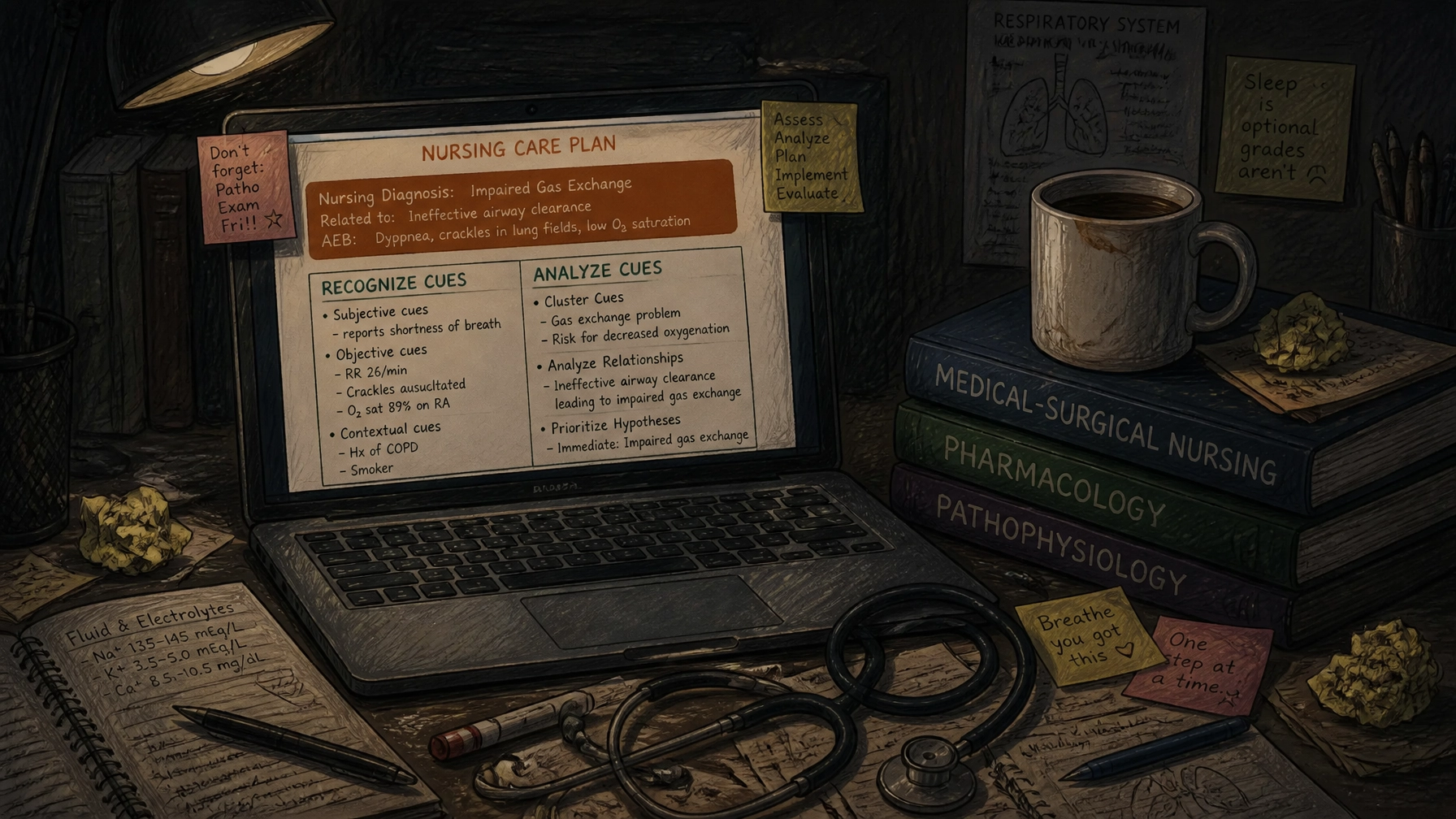
It’s 2:00 AM. You just finished a 12-hour shift at the John Sealy Hospital, your feet are throbbing, and you still have three clinical judgment plans due for your UTMB nursing instructors by Monday morning. The temptation to just dump your patient data into a chatbot and ask it to “write a nursing care plan” is real. But then you remember that email from the dean about Turnitin’s new AI detection features, and the panic sets in.
You know the vibe: the sheer weight of the nursing grind makes you want to take a shortcut, but you can’t risk your degree on a generic, robotic-sounding paper. The truth is, most AI-generated care plans look exactly like what they are: a computer trying to play nurse. They lack the "clinical gut feeling" that professors at the University of Texas Medical Branch look for.
If you're going to use AI as a study aid, you have to do it smartly. You need to know how to prompt it so the output sounds like a stressed-out, highly capable nursing student: not a textbook on autopilot.
Quick Tips for Humanizing Your Nursing Writing
Before we dive into the heavy-duty prompts, here are a few quick ways to keep your writing from looking like a bot wrote it:
- Add "Noise": AI loves perfect grammar and rhythmic sentences. Real students use fragments sometimes. Start a sentence with "And" or "But" to break the machine's flow.
- Specific Patient Details: Don't just say "the patient had high blood pressure." Say "The patient's BP spiked to 162/94 at 1400, shortly after their family left the room."
- Use Subjective Data: AI struggles with the "feel" of a room. Include what the patient said in their own words, quirks and all.
- Focus on the "Why": Professors want to see your clinical reasoning. Don't just list interventions; explain why this intervention mattered for this specific human being.

Why Professors Flag Your AI Care Plans
The main reason nursing care plans for UTMB students get flagged isn't just a software score: it's that they often miss the mark on the UTMB Clinical Judgment Model. If your paper just spits out a NANDA diagnosis and a list of interventions, it’s a dead giveaway.
UTMB instructors are looking for the "Recognize Cues" and "Analyze Cues" steps. Most AI tools just want to give you the answer. When you skip the "thinking" part of the process, the writing becomes dry and clinical. Human writing is messy. It shows the struggle of deciding whether "Impaired Gas Exchange" or "Ineffective Airway Clearance" is the real priority for a patient with bronchiolitis.
To bypass AI detection prompts for nursing students, you have to prompt the AI to show its work, and then you have to "de-robotize" that work with your own clinical voice.
Prompting for the UTMB "Clinical Judgment" Style
If you want to use AI to brainstorm your care plans, stop using generic prompts like "Write a care plan for pneumonia." Instead, you need to provide a persona and a specific framework.
Try this prompt structure to get a more human-sounding starting point:
"Act as a second-year nursing student at UTMB. I am working on a Clinical Judgment Plan. Here is my patient data: [Insert vitals, labs, and assessment]. First, help me 'Recognize Cues' by identifying the 5 most critical pieces of data. Write this in a conversational but professional tone, using the kind of language a student would use in a clinical post-conference. Avoid overly formal transitions like 'in addition' or 'consequently.'"
By telling the AI to act as a student rather than a medical professional, you immediately shift the tone away from the "textbook" style that detectors love to flag.

Humanizing the "Recognize Cues" and "Analyze Cues" Sections
Once the AI gives you a draft, the real work begins. Humanizing AI content for professors means adding the "meat" to the bones.
- The "Because" Test: For every intervention the AI suggests, add a sentence starting with "because" that links it back to your specific patient's history.
- AI says: "Monitor pulse oximetry every 2 hours."
- You add: "Monitor pulse oximetry every 2 hours because the patient's SpO2 dropped to 88% on room air during the previous shift."
- Use Your Own "Voice": If the AI uses a word you’ve never said in your life (looking at you, "comprehensive"), swap it out. "Detailed" or "thorough" usually sounds more like a real person.
- Incorporate "Clinical Gut": Add a section in your reflection about what made you nervous or what surprised you during the shift. AI can't fake the feeling of a patient's hand shaking or the look on a mother's face.
Pro-Tips for Bypassing AI Detection Prompts
If you're worried about the technical side of detection, you have to understand that detectors look for "burstiness" and "perplexity." Basically, they look for how predictable the text is.
To break that predictability, use prompts that force the AI to vary its sentence structure:
- "Write the 'Prioritize Hypotheses' section using a mix of short, punchy sentences and longer, explanatory ones."
- "Explain the pathophysiology of the patient's condition as if you were explaining it to a fellow student during a quick break in the hallway."
- "Don't provide a list. Write it as a narrative reflection of my clinical day."
As we said earlier, the goal isn't just to "trick" a machine. It's to ensure your work actually reflects the clinical judgment you're learning in the lab and on the floors at UTMB.

When the Grind Gets Too Real
Listen, we get it. Nursing school is a beast. Sometimes, no amount of prompting is going to save you from the burnout of a 60-hour week. That’s where we come in. At Submit Your Assignments, we don't just "generate" text. We provide custom writing services that are built from the ground up by actual humans who understand the nursing field.
Whether you need a model paper to help you understand a complex case or an editor to look over your clinical judgment plan, we’ve got your back. We’re based right here in Houston, and we know exactly what the professors in the local nursing programs are looking for.
Trust our writers to help you find your voice again. We offer a 100% Human Authenticity Promise, so you can have peace of mind knowing your work won't trigger any red flags. Stop worrying about "bypassing" a detector and start focusing on becoming the best nurse you can be.
Check out our blog post on why relying solely on AI is a bad move or meet the SYA team to see the humans behind the magic.
A few nursing "fun facts" for the road:
- The first nursing school was established in India in 250 BC.
- Nursing is consistently voted the most trusted profession in the U.S.
- The average nurse walks about 4-5 miles during a 12-hour shift: no wonder your feet hurt!
- Galveston (home of UTMB!) was the site of the first medical school in Texas.
Submit Your Assignments provides custom reference materials and tutoring services for research and educational purposes only. We encourage all students to follow their institution's academic integrity policies.