hwgA2NAE9d8

7 Mistakes You’re Making with Nursing Clinical Reports (and How to Fix Them Instantly)

You’re finally home after clinicals. Your feet hurt. Your brain is still hearing call lights. And now you’re staring at a “clinical report” assignment like… what even counts as good writing here?

If your instructor’s feedback keeps sounding like:

  • “Too vague”
  • “Missing clinical reasoning”
  • “Where’s your evaluation?”
  • “This reads like a story, not a report”

…you’re not alone. Clinical reports are a weird mix of professional documentation + academic grading. With that being said, you can fix most issues fast, without rewriting your whole life.

Below are 7 mistakes nursing students make all the time, plus quick, practical fixes you can apply tonight (yes, even if you’re running on iced coffee and stress).


First: what your instructor actually wants (usually)

Most nursing “clinical reports” (case studies, clinical paperwork, narrative notes, reflections, patient summaries) are graded on the same core things:

  • Accuracy: correct patient info, correct clinical facts, correct meds/labs
  • Clarity: easy to follow, no rambling, no missing steps
  • Clinical reasoning: why you chose an intervention, what data supported it
  • Nursing process: assessment → diagnosis → plan → interventions → evaluation
  • Professional tone: objective language, clean formatting
  • References: when you mention guidelines/meds/evidence-based practice

Keep that in your head as you read the mistakes.


Mistake #1: You write like it’s a diary (instead of a clinical report)

What it looks like:
“I went into the room and the patient seemed upset so I tried to comfort them…”

That’s relatable. But your instructor is looking for objective, clinical language and a clear chain of care.

Fix it instantly (swap style):
Use this mini format in paragraphs or bullets:

  • What you assessed (objective data)
  • What you did
  • How the patient responded
  • What you monitored next

Example rewrite:

  • Instead of: “Patient seemed bad.”
  • Write: “Patient reported nausea 7/10 with two episodes of emesis; skin pale and diaphoretic. Administered ordered antiemetic; nausea decreased to 3/10 within 30 minutes. Continued to monitor I&O and hydration status.”

Quick tip: If you can’t measure it or observe it, phrase it as patient-reported.


Mistake #2: Your report is missing the “why” (clinical reasoning is invisible)

What it looks like:
You list tasks (vitals, meds, education), but there’s no explanation connecting the data to your choices. That’s when instructors write “needs rationale” in the margins.

Fix it instantly (add one sentence per key action):
After any major intervention, add a short rationale:

  • “This supports ___ because ___.”
  • “This is indicated due to ___.”
  • “Priority was ___ given ___.”

Micro-example:
“Elevated RR (26/min) and SpO₂ 90% on room air indicated impaired oxygenation; initiated supplemental O₂ per protocol and reassessed.”

You don’t need a novel. You need a reason.


Mistake #3: You don’t follow a structure (so your grader gets lost)

You might understand your report. Your instructor shouldn’t have to decode it.

Fix it instantly: pick ONE structure and stick to it
Two common options:

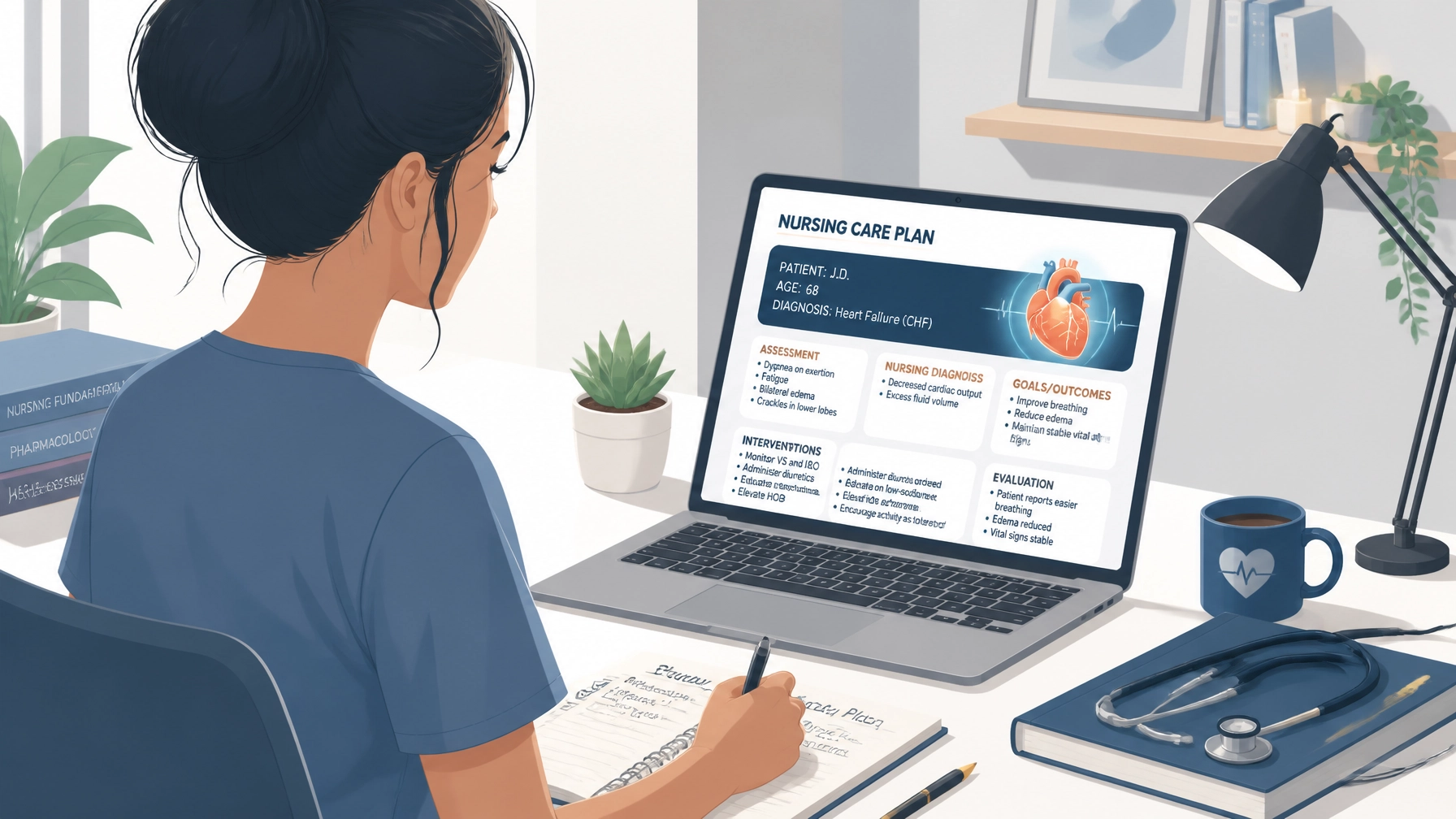
  1. Nursing process headings
  • Assessment
  • Nursing Diagnoses / Problems
  • Goals/Outcomes
  • Interventions
  • Evaluation
  1. SBAR (especially for patient summaries / shift-style reports)

Lo-fi hand-drawn SBAR framework doodle in four boxes with nursing scribbles and sticky-note vibes

SBAR cheat lines you can literally copy:

  • S: “Primary concern today was ___.”
  • B: “Relevant history includes ___.”
  • A: “Current assessment findings show ___.”
  • R: “Plan/recommendation: continue ___ / notify provider if ___.”

As we said earlier: if your reader can’t follow the flow, you lose points even if your care was solid.


Mistake #4: You stay vague because you’re scared of being “wrong”

This is such a nursing-student thing. You write: “Patient stable.” “Wound looks okay.” “Pain improved.”

But “stable” is not data. “Okay” is not charting. And your instructor can’t grade vibes.

Fix it instantly (replace vague words with specifics):
Swap these:

  • “Stable” → vitals + trend + symptoms
  • “Improved” → pain scale before/after + timeframe
  • “Tolerated well” → what happened during + after

Mini template:
“Before: ___. After: ___. Timeframe: ___. Evidence: ___.”

Example:
“Pain decreased from 8/10 to 4/10 within 45 minutes after repositioning and PRN analgesic; patient able to deep breathe without grimacing.”


Mistake #5: You forget the evaluation piece (so it feels unfinished)

A lot of clinical reports stop right after interventions, like the story cuts off mid-season.

Fix it instantly (write a 2–3 sentence evaluation for each goal/problem):
Answer:

  • Did the intervention work?
  • What evidence shows that?
  • What will you do next?

Example:
“Goal partially met: SpO₂ improved to 95% on 2 L NC. Patient still SOB with exertion; will continue to monitor respiratory status, encourage incentive spirometry, and report worsening symptoms.”

Evaluation is where your clinical thinking shows up the loudest.


Mistake #6: You use unsafe abbreviations or sloppy formatting

Your school may not be a hospital, but they’re training you like it is.

What it looks like:

  • Random abbreviations your instructor doesn’t allow
  • Inconsistent units
  • Missing dates/times
  • Typos in med names (big yikes)

Fix it instantly (tighten your “professional polish” checklist):

  • Use only approved abbreviations from your course/facility
  • Write units clearly (mg, mL, L/min, mmHg)
  • Keep tense consistent (past tense usually works best for clinical reports)
  • Proofread med names against a drug guide

If you mention medication rationale, use a credible source (drug guide, textbook, facility policy, whatever your course accepts).


Mistake #7: Your citations are missing (or dropped in like confetti)

Clinical reports often require at least some evidence-based support, especially for teaching, interventions, and rationales.

Fix it instantly (cite only where it matters most):
You don’t need to cite “I assessed lung sounds.” You do need to cite:

  • best-practice interventions (turning schedules, fall precautions, wound care basics)
  • medication education/rationale
  • guideline-based care (e.g., diabetes education, HTN management basics)

Fast workflow (that doesn’t ruin your night):

  1. Highlight 3–5 statements that are clearly evidence-based
  2. Add 1 source per statement (textbook/drug guide/journal)
  3. Format once at the end in your required style (APA is common)

Your “Fix-It-Instantly” clinical report checklist

Print this in your brain before you submit.

Lo-fi collage checklist on crumpled paper titled Clinical Report Quick Check with tick boxes, coffee rings, binder clip, and highlighter streaks

Clinical Report Quick Check

  • Uses a clear structure (SBAR or nursing process headings)
  • Objective data included (vitals, labs, assessment findings, scales)
  • Interventions include rationale (“why”) and patient response
  • Evaluation is written (did it work? what next?)
  • Professional tone (no diary language, no “seems fine”)
  • Abbreviations are safe/approved
  • Citations are included where clinical claims are made
  • Grammar/formatting are clean and consistent

Behind the scenes: how we help nursing students clean up reports (without changing your voice)

When you’re juggling clinical prep, commute time, and a stack of assignments, the hardest part is usually organizing and polishing what you already know.

At Submit Your Assignments, we typically support nursing students like this:

  1. You share your assignment prompt + rubric + any clinical details you’re allowed to use
  2. We help you outline the structure (SBAR vs nursing process) so nothing gets missed
  3. We support your writing with editing, clarity upgrades, and citation help
  4. If you’re stuck, we can provide custom reference materials/model papers so you can see what “meets expectations” looks like

And yes: keeping it realistic matters. Nursing instructors can spot “perfect but empty” writing a mile away. You want clean, clinical, and human.

If you want to see how our process works, start here:

With that being said, if your biggest fear is your report sounding “too AI” or not like you, this may also help: how we humanize your paper.


A realistic late-night example: what “better” looks like in 15 minutes

Let’s say your report paragraph is:

“Patient had high blood pressure. Gave meds. Patient better.”

Try this upgrade:

“BP elevated at 168/96 with complaint of headache 6/10. Reviewed MAR and administered scheduled antihypertensive per order. Reassessed BP 60 minutes post-administration: 148/88; headache decreased to 3/10. Continued monitoring and reinforced education on low-sodium diet and medication adherence.”

Same situation. Way more grade-friendly.


If you only fix ONE thing tonight…

Make your report show this chain, every time:

Data → Interpretation → Action → Response → Next step

That’s nursing. That’s safety. That’s what instructors grade.


Nursing student in scrubs at a kitchen table writing a clinical case report with laptop, drug cards, and late-evening tired-focused vibe


FAQs (because you’re probably wondering)

Should I write my clinical report in first person?

Usually, minimize first person unless it’s a reflection assignment. For most clinical/case reports, objective language reads more professional. If your prompt explicitly asks for reflection, first person is fine: just keep it structured.

What if I don’t remember exact times or numbers?

Don’t invent data. Use the documented values you have access to in your allowed materials, and be transparent (e.g., “per charted vitals”). If you truly don’t have a number, write what you do know in objective terms and focus on your clinical reasoning.

Is SBAR okay for school assignments?

Often yes: especially for patient summaries, provider-call write-ups, and “handoff-style” reports. For care plan-style assignments, nursing process headings may match the rubric better.


1PMrwmUUE04

25 Creative Nursing Capstone Project Ideas You’ve Never Thought Of

So, you’ve finally made it to the home stretch. The finish line of nursing school is literally right there, but there’s one giant, terrifying obstacle standing in your way: the Capstone Project.

It’s the "final boss" of your degree. And if you’re like most students we talk to, you’re probably staring at a blank Google Doc, riding a wave of caffeine and panic, wondering how you’re supposed to come up with something "original" and "evidence-based" while also working 12-hour clinical shifts.

The struggle is real. You want a topic that isn't just another boring "handwashing initiative" (no shade to handwashing, but we've seen it a million times), yet it needs to be doable in a single semester.

But don't worry, we've got you. Whether you’re looking for nursing capstone project ideas that will actually impress your professors or you're just trying to survive the week, this list is for you.

Quick Tips to Nail Your Topic Choice

Before we jump into the ideas, keep these three things in mind so you don't accidentally create a project that’s too big to finish:

  1. Keep it Narrow: Don’t try to solve "World Hunger in Hospitals." Try to solve "Improving snacks for diabetic patients in the ER on Tuesday nights." Okay, maybe not that specific, but you get the point.
  2. PICO is Your Bestie: If you can’t turn your idea into a PICO question (Population, Intervention, Comparison, Outcome), it’s probably too vague.
  3. Check the Data: Make sure you can actually measure something. If you can't get the data, you can't write the paper.

And hey, if you find yourself drowning in research or you just can't get the wording right, remember that you can always buy capstone project support from experts who actually know what a PICOT question is.


25 Creative Nursing Capstone Ideas for 2026

The Tech & Telehealth Wave

Telehealth isn't just a "COVID thing" anymore; it's the future. These ideas focus on how digital tools are changing the game.

  1. Telehealth Triage for Mental Health: Implementing a nurse-led video screening protocol for anxiety in primary care settings.
  2. Postpartum Support via App: Using mobile mood-tracking apps combined with weekly nurse check-ins to reduce postpartum depression rates.
  3. AI-Assisted Sepsis Prediction: Evaluating the accuracy of AI-driven alerts in the ICU versus traditional bedside nursing assessments.
  4. Virtual Reality (VR) for Pediatric Pain: Using VR headsets during minor procedures (like IV starts) to reduce pain and anxiety in kids.
  5. Smart Watch Monitoring for Seniors: A pilot program using wearable tech to track heart rate variability and prevent falls in assisted living.

Close-up of a nurse's hands holding a tablet with a medical chart and digital star accents.

Mental Health & "The Grind"

Nursing is hard. These ideas focus on the wellbeing of both patients and the nurses who care for them.

  1. The "Quiet Room" Initiative: Creating a designated decompression space for nurses after a traumatic event or "code blue."
  2. Mindfulness for Med-Surg Nurses: A 10-minute guided meditation program before shifts to see if it lowers burnout scores.
  3. Pet Therapy in Psych Units: Measuring the impact of therapy dog visits on patient agitation levels in inpatient psychiatric wards.
  4. Music Therapy for Dementia: Using personalized playlists to reduce the use of PRN (as-needed) anti-psychotics in memory care units.
  5. Peer Support for Nursing Students: Creating a structured "mentorship loop" where seniors help juniors manage clinical stress.

Specialty Care (ER, OB, & Peds)

These are for the "adrenaline junkies" or the ones who live for the L&D (Labor and Delivery) floor.

  1. ER Wait-Time Communication: Implementing a digital "status board" to see if keeping patients informed reduces verbal aggression toward staff.
  2. Skin-to-Skin in the OR: A protocol for initiating immediate skin-to-skin contact after elective C-sections.
  3. Vaping Education for Teens: Creating a nurse-led "truth about vaping" workshop for local high schools.
  4. Safe Sleep for Newborns: A visual checklist for parents to complete before discharge to ensure they know safe sleep habits.
  5. Transgender-Inclusive Intake: Revising ER intake forms to include gender-affirming language and measuring patient comfort levels.

A flat lay of a clinical bag, trauma shears, and a notebook titled 'Capstone Ideas'.

Community Health & Education

Moving the care from the hospital bed to the neighborhood.

  1. Food Deserts & Diabetes: A community workshop on "cooking on a budget" for low-income patients with Type 2 Diabetes.
  2. Refugee Health Literacy: Developing pictorial medication guides for non-English speaking refugee populations.
  3. LGBQT+ Health Fairs: Hosting a nurse-led health screening event specifically for the local LGBTQ+ community.
  4. Narcan Training for Bar Staff: Training local nightlife workers on how to recognize overdoses and administer Naloxone.
  5. Gardening for Mental Health: Starting a community garden program for veterans with PTSD.

Leadership & Workplace Vibes

Because sometimes the system itself is what needs a check-up.

  1. The "Check-In" Huddle: Measuring the impact of a 2-minute "safety and vibe check" at the start of every shift.
  2. Paperless Charting Transition: A qualitative study on the barriers nurses face when moving to a new EMR system.
  3. Inclusive Hiring in Nursing: Analyzing the impact of diverse interview panels on new-hire retention rates.
  4. Reducing Waste in the OR: A project to audit and reduce unused sterile supplies in surgical kits.
  5. Night Shift Nutrition: Implementing a "healthy snack" vending machine specifically for the 3 AM slump.

Abstract illustration of a brain and heart connected by a pulse line.

Why You Should Stop Worrying (and Start Writing)

Look, we know that looking at a list of 25 ideas is one thing, but actually writing a 40-page evidence-based paper is another. It’s a lot. And honestly? It’s okay to ask for a hand.

At Submit Your Assignments, we aren't just about "getting it done." We’re about helping you understand the material and turn in something you’re actually proud of. Whether you need a custom research paper to use as a model or you just need someone to help you structure your PICO question, we’ve got your back.

The SYA Loyalty Perks

We know being a student is expensive (that iced coffee habit adds up, right?). That’s why we try to keep our affordable writing services student-friendly. Check out how we hook you up:

  • Newbie Vibes: You get 15% off your first three orders. This is perfect for when you're just starting the capstone and need a few "model" sections to get you going.
  • The "Lifer" Discount: Once you’ve hit 5+ orders, you get a permanent 10% "SYA Loyalty" discount.

With that being said, don't let the capstone consume your entire life. You’ve worked too hard for this degree to spend your final months in a state of constant breakdown. Trust our writers to help you cross that finish line with your sanity intact.

As we said earlier, the Capstone is just the final boss. And every hero needs a sidekick with a really good library card.

Ready to get that Capstone off your plate?
Stop worrying and let's get to work!


Fun Facts for the Nursing Grind:

  • Did you know that nurses walk an average of 4-5 miles per 12-hour shift? That's basically a marathon every week.
  • The first nursing school was actually established in India back in 250 BC.
  • "Nightingale" wasn't just a name: Florence Nightingale was a literal math whiz who pioneered the use of pie charts in medical data.
  • The most common "stress food" for nursing students? Tacos and excessive amounts of energy drinks. (Don't quote us on the science, but the vibes are 100%).

Submit Your Assignments provides custom reference materials and tutoring services for research and educational purposes only. We encourage all students to follow their institution's academic integrity policies.

Wl6h9hGVd6P

Perfecting Your APA 7 Title Page: Requirements and Examples

It’s 2:00 AM, the cursor is blinking like a rhythmic heartbeat, and you’ve finally typed the last sentence of your research paper. You’re ready to celebrate, but then you realize: the title page. Is it supposed to be bold? Does it need a running head? Does your professor’s middle initial matter?

Suddenly, that "done" feeling evaporates into a cloud of APA 7th Edition anxiety. We’ve all been there: staring at a blank page, wondering if a misplaced margin will be the difference between an A and a B. If you’re feeling the pressure of "getting it right" before you hit submit, take a deep breath. You’ve found your safe harbor.

At Submit Your Assignments, we see thousands of papers every month. We know that while the title page is just one page, it’s your paper’s first impression. It’s the "suit and tie" your research wears to the party. Today, we’re breaking down exactly how to structure an APA 7 student title page so you can stop second-guessing and start sleeping.

This post is a core part of our comprehensive APA Writing Help Pillar, designed to make academic life a little less "stressful" and a lot more "chill."

Quick Tips for Instant Success

Before we dive into the nitty-gritty, here are a few high-certainty wins to ensure your peace of mind:

  • Font Consistency: Use the same font for your title page as you do for the rest of your paper (12-pt Times New Roman or 11-pt Calibri are your best friends).
  • Double Space Everything: No extra gaps, no single spacing. Keep it consistent.
  • Page 1 is the One: The title page is always page number 1, located in the top right.
  • No Running Head: Unless your instructor specifically asks for one, APA 7 for students does not require a running head.

The Anatomy of a Perfect APA 7 Student Title Page

Formatting might feel detrimental to your sanity, but it’s actually a very structured process that expedites the grading process for your professor. Here is the step-by-step breakdown of what your title page should look like from top to bottom.

1. The Header: Keep It Simple

In the 6th edition, students were haunted by the "Running head: TITLE" requirement. In APA 7, that’s gone for student papers! All you need is the page number.

  • Location: Top right-hand corner.
  • Content: Just the numeral 1.
  • Requirement: Ensure it’s flush right and in the same font as your text.

2. The Title: Make It Bold

Your title is the star of the show. To make it stand out, APA 7 requires specific formatting:

  • Placement: Centered and positioned about 3–4 lines down from the top of the page.
  • Style: Bold.
  • Case: Title Case (Capitalize all major words).
  • Length: Keep it focused. While there’s no strict word limit, it should be concise and descriptive.

3. The Author Name

Skip one double-spaced line after the title, then type your name.

  • Format: First Name, Middle Initial(s), Last Name (e.g., Alex J. Rodriguez).
  • Pro Tip: Do not include titles like "Student" or "Senior." Your name alone carries the weight here.

A vector graphic showing a stylized document with callouts highlighting the title, author name, and course details.

4. Author Affiliation

This tells the reader where you’re studying. For most students, this is your department and university.

  • Example: Department of Nursing, University of Houston or College of Business, Texas Southern University.

5. Course Number and Name

Your professor needs to know exactly which class this is for.

  • Format: Use the code and the full title found on your syllabus.
  • Example: ENGL 1301: First-Year Writing.

6. Instructor Name

Check your syllabus one last time to ensure you have the correct spelling and title.

  • Format: Use the instructor's preferred title (Dr., Professor, etc.).
  • Example: Dr. Sarah Jenkins.

7. Due Date

Finally, include the date you are submitting the assignment.

  • Format: Use the standard date format (e.g., October 24, 2026).

Student vs. Professional: What’s the Difference?

You might be wondering, "Why do some examples online look different?" That’s because APA 7 distinguishes between Student Papers and Professional Papers (the kind meant for publication).

As we said earlier, student papers are streamlined. Professional papers require a "Running Head" (a shortened version of the title in the header) and an "Author’s Note" at the bottom. Unless you are submitting your work to a peer-reviewed journal, stick to the student format we’ve outlined. It’s cleaner, easier, and exactly what 99% of professors expect.

Why Formatting Often Feels Like a Trap

Does it feel like professors flag these tiny details just to be difficult? While it might feel that way, consistent formatting helps instructors navigate a plethora of papers quickly. However, we understand that when you’re juggling a part-time job, family responsibilities, and four other classes, "perfect margins" are the last thing you want to worry about.

That’s where our behind-the-scenes workflow comes in. When you use our model paper services, our writers don’t just write; they follow a rigorous checklist. Every document goes through an editing phase where we ensure the APA 7 requirements are met to the letter. We act as your academic "messenger," delivering a polished template that shows you exactly how your specific paper should look.

How to Expedite Your Writing Process

If you're staring at your screen and the formatting still isn't "clicking," here are three ways to move faster:

  1. Create a Template: Once you get your title page perfect, save it as "APA_Template" so you never have to do it from scratch again.
  2. Use Modern Tools: Most word processors have an "APA Style" setting, but be careful: they often default to the older 6th edition. Always double-check!
  3. Trust Our Writers: If you’re overwhelmed by a complex assignment like a Nursing Care Plan or a long-form dissertation, we can provide a perfectly formatted model to guide you.

A relaxed student sitting in a comfortable chair, smiling while looking at a tablet, representing academic freedom.

Freedom Beyond the Grade

At the end of the day, a title page is just a gateway. The real goal is academic success that allows you to live your life. Imagine finishing your assignment, knowing the formatting is flawless, and having the freedom to spend your weekend at Hermann Park or catching a game instead of wrestling with indentation settings.

Trust our team to provide the professional support you need. Whether it’s editing your research proposal or providing a brainstorming consultation, we are here to ensure you have the tools to succeed without the burnout.

Fun Facts: The Houston Academic Scene

Since we’re talking about "getting it right," here are some fun facts about the academic world around our home base:

  • University of Houston is a powerhouse of research, but did you know it was founded in 1927? That’s almost a century of title pages!
  • The Texas Medical Center is the largest in the world, which is why we specialize so heavily in helping nursing students with their APA-formatted care plans.
  • Rice University's library is often cited as one of the best places to study in the city: if you can find a quiet corner!
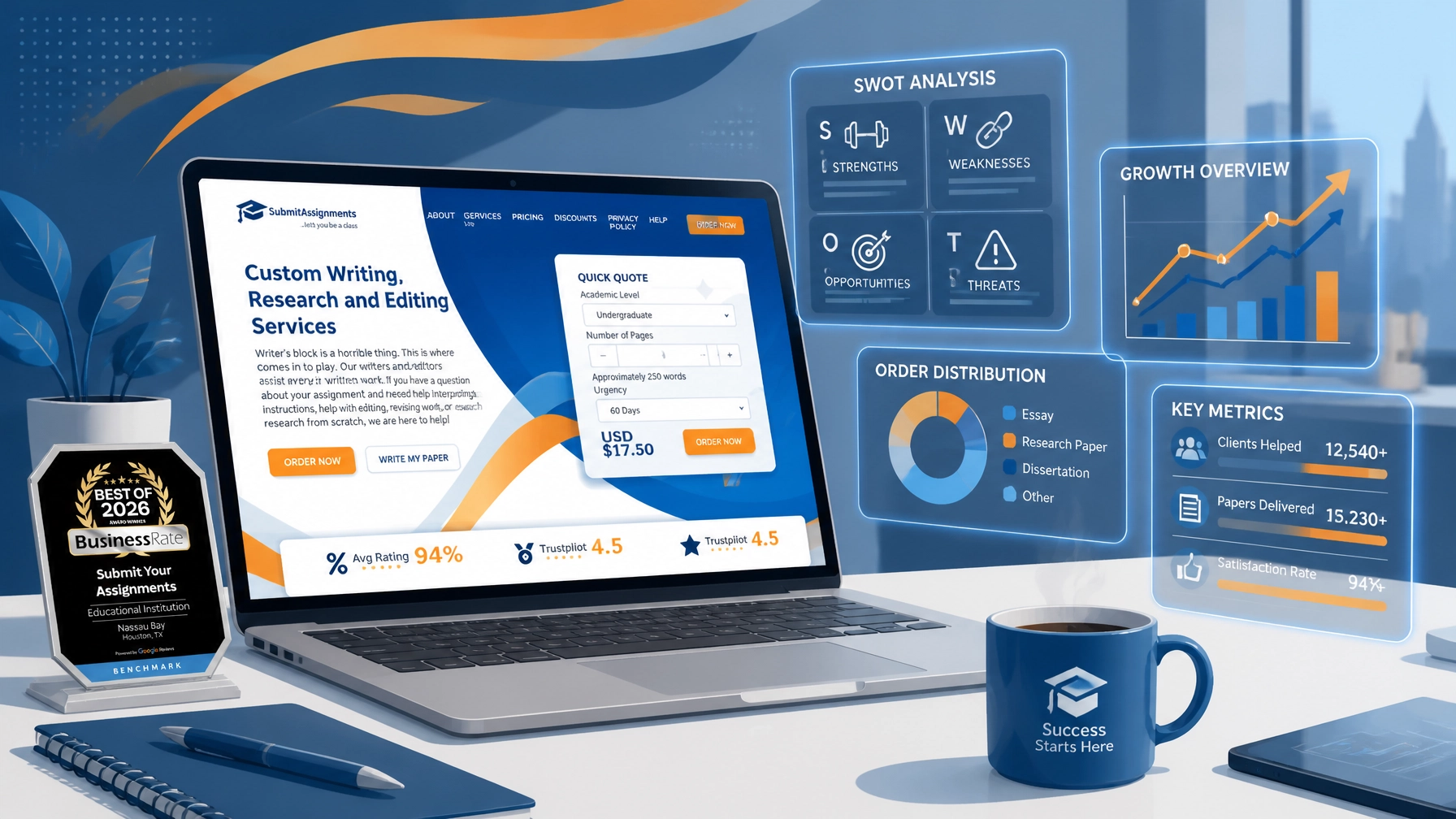
  • Our team at Submit Your Assignments recently won the "Best of 2026" award for educational support in Nassau Bay, Houston. We take that local pride into every paper we help with.

Stop worrying about the technicalities and start focusing on your future. Check out our student services today and see how easy it can be to "No Homework and Chill."


Submit Your Assignments provides custom reference materials and tutoring services for research and educational purposes only. We encourage all students to follow their institution's academic integrity policies.
dSe6LKotU5l

How to Rewrite AI Essay: Making It Human Again

You know the feeling. It’s 11:30 PM, you just finished "writing" that 1,500-word essay on the socio-economic impacts of the Industrial Revolution with a little, okay, a lot, of help from ChatGPT. You feel like a genius for about five minutes. Then, you decide to run it through an AI detector just for peace of mind.

BAM. 98% AI detected.

Suddenly, your heart is doing a drum solo in your chest. You can already see the "Please see me after class email" from your professor. And let's be real, nobody wants to explain to a professor why their essay sounds like it was written by a very polite but slightly soulless toaster.

If you’re staring at a wall of text that sounds way too perfect (and way too boring), don't panic. You don't have to start from scratch, but you do need to put in some manual labor to get that human vibe back. Here’s how to handle rewriting AI text for college without losing your mind.

Quick Tips to Humanize Your Essay Right Now

Before we get into the heavy lifting, here are a few "emergency" fixes you can apply to any paragraph to make it sound less like a bot:

  • Kill the "Robot Words": If you see words like "delve," "tapestry," "furthermore," or "testament," delete them immediately. AI loves these words; real students rarely use them.
  • Mess up your sentences: AI writes in very predictable, medium-length sentences. Break them up. Use a super short sentence for emphasis. Then follow it with a long, slightly rambling one.
  • Add "I" or "Me": Whenever possible, weave in a personal thought or a connection to a class discussion. "As we talked about in Tuesday's lecture…" is something a bot would never know.
  • Read it out loud: If you run out of breath or feel like you’re reading a technical manual, it’s too "AI." Rewrite it until it sounds like something you’d actually say to a friend.

A hand crossing out text on a draft, illustrating the human editing process.

Why AI Writing Sets Off Red Flags

To fix the problem, you have to understand why professors flag AI in the first place. It’s not just about the software they use: it’s about the "vibe."

AI is trained to be helpful and professional, which means it’s incredibly repetitive. It often follows a strict "Introduction – Point 1 – Point 2 – Point 3 – Conclusion" structure that feels more like a template than a real argument. It lacks what we call "burstiness": the natural peaks and valleys of human thought.

When you’re humanizing AI content for professors, you’re basically trying to re-inject some personality and imperfection back into the work. Professors look for your unique voice, your specific interpretations of the prompt, and those little "aha!" moments that only happen when a human brain is actually engaging with the material.

The Humanizing Routine: A Step-by-Step Guide

If you really want to know how to humanize chat gpt essay drafts, you can't just swap a few words and call it a day. You need a routine.

1. The Structural Overhaul

AI loves to start every paragraph with a transition word like "Moreover" or "Additionally." Stop that. Try starting with a question or a direct statement instead. Instead of "Additionally, the economic impact was significant," try "But the money wasn't the only thing changing." It feels more natural and keeps the reader (your professor) engaged.

2. The "Five-Year-Old" Test

AI tends to use big words just because it can. If you find a sentence that looks like it swallowed a thesaurus, simplify it. You aren't trying to impress the professor with how many syllables you can fit into a paragraph; you're trying to show you understand the concepts. A human sounding essay service works because it focuses on clarity, not complexity.

3. Add Specificity (The Bot Killer)

AI is notoriously vague. It will say things like "many scholars believe" without naming a single scholar. Go back into your course materials and pull out specific names, dates, or quotes from your textbook. This proves you actually did the reading and didn't just let a bot hallucinate some facts for you.

4. Use a "Human in the Loop"

Sometimes, you're just too close to the work to see the patterns. This is where getting a second pair of eyes matters. Whether it's a friend or a professional editor, having someone else read your draft can help identify the parts that still feel "uncanny valley."

A student editing and writing at a cozy desk with warm lighting, notes, and a laptop, capturing an authentic lo-fi study grind vibe.

How SYA Can Help You Get It Right

At Submit Your Assignments, we get the grind. We know that sometimes the semester just gets away from you and you end up relying on tools that don't quite get the job done. That’s why we don’t just "generate" stuff: we provide custom reference materials and research services that are built from the ground up by real, living, breathing humans.

We have a SYA Authenticity Promise because we know how much is at stake for you. When you work with us, you’re not getting a bot’s best guess. You’re getting a model paper that you can use as a guide to write your own assignment with total confidence.

The Submit Your Assignments Authenticity Certificate, guaranteeing human-written work.

Our writers are experts who know exactly how to structure an academic argument without making it sound like a robot wrote it. Whether you need help brainstorming or a full outline, we’re here to make sure your work reflects your voice, not an algorithm's.

Stop the AI Panic and Start Living

At the end of the day, college is supposed to be about learning, not stressing over a percentage on a detector screen. If you've spent the last three hours trying to "trick" a piece of software, you've already lost that time.

Trust our writers to help you get back on track. We offer a reliable and professional service that lets you focus on the stuff that actually matters: like finally getting some sleep or actually going to that party on Friday night.

Some Fun (And Relatable) Student Facts:

  • The average student drinks about 3 cups of coffee during a deadline night. (We call that a "rookie number").
  • "All-nighter" is the most searched academic term during finals week.
  • Most "AI Detectors" have a 15-20% false-positive rate, which is why having a human-written paper is your best defense.
  • Submit Your Assignments has a 94% average rating because we treat your GPA like it’s our own.

Listen up: Don't let a bot ruin your semester. If you're stuck in the "AI loop," reach out to us. We’ll help you turn that robotic draft into something you can actually be proud to turn in.

Submit Your Assignments Logo - No Homework and Chill.

Submit Your Assignments provides custom reference materials and tutoring services for research and educational purposes only. We encourage all students to follow their institution's academic integrity policies.

The Ultimate MLA Format Guide for 2026: Get Your Citations Right Every Time

It’s 2:14 AM. You’ve just finished the last paragraph of your literature essay, and your brain feels like a browser tab that’s been frozen for twenty minutes. You’re about to hit "submit" when you remember: the citations.

Suddenly, you’re spiraling. Is it a comma or a period after the author’s name? Do I need the URL for that TikTok video I cited? Why is the hanging indent so hard to find in Google Docs?

We’ve all been there. Formatting is the final boss of every assignment, and honestly, it feels like professors care more about your margins than your actual genius ideas. But don't stress. Whether you’re looking for an MLA format generator free tool or you just want to know if MLA 10 is actually a thing yet (spoiler: it's not), we’ve got your back.

Quick MLA 9 Tips for the Fast-Paced Student

Before we get into the nitty-gritty, here are three things you can fix right now to make your paper look 10x more professional:

  • Check your font: Times New Roman 12pt is the classic, but MLA 9 allows any "readable" font. Stick to the classics to stay safe.
  • The Header: It’s your last name and the page number in the top right. No "p." or "page": just "Smith 1."
  • Double Space Everything: And we mean everything. The header, the title, the quotes, and the Works Cited page. No extra gaps!

Is There an MLA 10th Edition in 2026?

Let's clear the air. As of right now in 2026, MLA 9 is still the gold standard. There have been plenty of rumors about a 10th edition, but the Modern Language Association is sticking with the 9th edition's "container" system for now.

Why? Because it works. MLA 9 is designed to handle everything from a 19th-century novel to a 15-second Reel. It’s flexible, and honestly, once you learn the "core elements" system, you won't need to hunt for specific rules every time you find a weird source.

A digital illustration showing a 'container' box with various icons like a book, a laptop, and a film reel floating inside it, representing the MLA 9 container system, authentic textured style

Step-by-Step: Formatting Your Paper Like a Pro

If you want to avoid that "See me after class" comment on your feedback, follow this checklist for your page setup.

1. The "Vibe Check" (Margins and Spacing)

Set your margins to 1 inch on all sides. Most Word docs do this by default, but it’s always worth a double-check. Every single line of your paper should be double-spaced. If you see a big gap between your paragraphs, your "After Paragraph" spacing is probably set to something other than zero. Fix that immediately.

2. The First Page Header

You don't need a fancy title page unless your professor is old-school and specifically asked for one. In the top-left corner, list:

  • Your Full Name
  • Your Professor’s Name
  • The Course Name (e.g., English 1301)
  • The Date (e.g., 25 May 2026)

3. The Title

Center your title. Don't bold it, don't underline it, and definitely don't put it in "all caps." Just use standard Title Case. It might look boring, but boring is "correct" in the world of academic citations.

Mastering In-Text Citations (The "Who and Where")

In-text citations are where most students lose points. In MLA, it’s all about the Author-Page method.

  • The Basic Rule: (Author 42)
  • The "I already said the name" Rule: If you say "According to Smith," you just put the page number in the parentheses at the end: (42).
  • The No-Author Struggle: If there’s no author, use a shortened version of the title in quotes: ("Global Warming" 12).

And here’s a pro tip: punctuation goes after the parentheses.

  • Correct: "The grind never stops" (Student 5).
  • Incorrect: "The grind never stops." (Student 5)

A close-up view of a printed essay page with hand-drawn red circles around an in-text citation and the page header, showing the correct placement of periods and names

The Works Cited Page: Handling the Containers

Think of a "container" as the place where your source lives. If you read an article on a website, the article is the source, and the website is the container.

The Order of Elements:

  1. Author.
  2. "Title of Source."
  3. Title of Container,
  4. Other contributors,
  5. Version,
  6. Number,
  7. Publisher,
  8. Publication date,
  9. Location (URL or DOI).

With that being said, don't forget the hanging indent. The first line is flush to the left, and every line after that is indented half an inch. It makes the list easy to scan so your professor can find your sources without getting a headache.

Why You Should Be Careful with an "MLA Format Generator Free"

We get it. You're tired, and clicking a button to "Generate Citation" sounds like a dream. But let's be real: free generators are often stuck in 2018. They miss the "Inclusive Language" updates of MLA 9 or they mess up the capitalization of titles.

As we said earlier, MLA 9 now emphasizes using specific, respectful language. If your generator is spitting out outdated terms or failing to include the DOI (Digital Object Identifier) for your scholarly articles, it's doing you more harm than good.

At Submit Your Assignments, our writers are basically citation ninjas. We don't just "plug and play"; we actually check the 2026 standards to ensure every period and comma is exactly where it needs to be. Whether it's a term paper or a complex research project, we handle the heavy lifting of formatting so you can actually enjoy your weekend.

A happy student sitting on a couch with a laptop closed next to them, looking relieved and holding a phone with the SYA app open, 'No Homework and Chill' vibes

The SYA Advantage: More Than Just Margins

When you work with us, you’re not just getting a paper; you’re getting peace of mind. Our writers are experts at navigating the shifting sands of academic styles.

  • Accuracy: We stay updated on the latest 2026 manual tweaks.
  • Formatting: Every paper comes perfectly formatted in MLA, APA, or Chicago: no extra charge.
  • Human-Centric: We believe in authenticity. No AI-generated "word salad," just solid research and clean citations.

Stop worrying about whether that period goes inside or outside the quotes. Trust our writers to polish your work to perfection.

Fun Facts & Local Vibes

  • Did you know? The MLA style was originally created in 1951. It’s been through a lot of "phases" since then.
  • Local Tip: If you're a student in Houston or the surrounding areas, we're right in your backyard! We know exactly what local professors are looking for.
  • Coffee Count: Our writers consume roughly 4,000 cups of coffee a year to keep your assignments on track. (Probably).

Listen up: Your time is valuable. Don't spend four hours fighting with a bibliography when you could be living your life. Check out our how it works page and let’s get that paper submitted.

Submit Your Assignments provides custom reference materials and tutoring services for research and educational purposes only. We encourage all students to follow their institution's academic integrity policies.

61q5YMz3QV1

Engineering Excellence at Texas A&M Galveston: Mastering the Lab Report and Beyond

It’s 2:00 AM on Pelican Island. The humid Gulf breeze is hitting the window, the distant hum of a tanker in the ship channel is the only sound, and you’re staring at a spreadsheet that refuses to make sense. You’ve got the data, the experiment actually worked (for once), and your MATLAB code didn't crash. But now comes the real monster: the 20-page engineering lab report due in six hours.

If you’re an engineering student at Texas A&M Galveston, you know the drill. Whether you’re in Marine Engineering, Ocean Engineering, or navigating the foundational ENGR 102/216 courses, the "Aggie standard" is high. They don’t just want the answer; they want to see the rigorous, precise path you took to get there.

But let’s be real: who actually enjoys formatting tables for three hours? The struggle is real, and the "formatting traps" are everywhere. One wrong unit or a sloppy discussion section, and that "A" you worked so hard for starts drifting away like a loose buoy in a storm.

Quick Fixes for Your Lab Report Grind

Before we get into the heavy stuff, here are three quick wins you can apply to your report right now:

  • Ditch the Vague Language: Swap "the results were very high" for "the measured force peaked at 15.4 N." Engineering is about numbers, not vibes.
  • Caption Everything: Every table needs a title above it; every figure needs a caption below it. It’s a small detail, but professors will dock points faster than you can say "Gig 'em."
  • Check Your Tense: What you did is in the past tense ("We measured…"). What the data shows is in the present tense ("Figure 1 shows…").

The Anatomy of a TAMUG Engineering Report

Lab report on desk with sticky note tips

Most engineering courses at Galveston follow the IMRaD format (Introduction, Methods, Results, and Discussion). While every professor has their own "quirks" in the syllabus, this is the standard architecture of excellence.

1. The Abstract: Your Elevator Pitch

Think of the Abstract as the "TL;DR" for a busy engineer. You have about 200 words to explain why you did the lab, how you did it, what you found (give us the raw numbers!), and what it means. Don't fluff it up. If someone only reads this page, they should still know exactly what happened.

2. Introduction & Theory

This is where you set the stage. What’s the objective? What engineering principles are we testing? If you're calculating Bernoulli’s equation or analyzing stress-strain curves, state the governing equations clearly.

Pro Tip: Use an equation editor. Please. Don’t just type "P + 0.5 * rho * v^2." It looks messy and unprofessional.

3. Materials and Methods

Write this so another student could walk into the lab and replicate your work. Mention the specific equipment, like those massive flumes or the specific sensors used in the marine engineering labs. Keep it concise. We don’t need a diary entry; we need a manual.

4. The Results: Let the Data Speak

This section is for processed data. Don't dump your raw scratchpad notes here.

  • Tables: Clean, labeled, and consistent.
  • Graphs: Use SI units, clear legends, and ensure the axes are actually readable.
  • Sentences: Don't just post a graph and move on. Tell us what we're looking at. "As shown in Figure 2, the displacement increased linearly until the yield point."

Imrad flow chart lo-fi art

5. The Discussion: The "Meat" of the Grade

This is usually where students lose the most points. The Discussion isn't just a summary; it’s an investigation.

  • Error Analysis: Did you have a 15% error? Don't hide it. Explain why. Was it instrument resolution? Human error? Friction?
  • Comparison: How does your data stack up against the theoretical values in your textbook?
  • Significance: Why does this matter in the real world of maritime engineering?

Common Formatting Traps to Avoid

Even the smartest engineers get tripped up by the "little things." When you’re tired, these are the first things to go:

The "Significant Figure" Slip-Up

If your measurement tool only goes to two decimal places, your final calculation shouldn't have eight. Over-precision is a sign of an amateur. Keep your sig figs consistent throughout the report.

Passive vs. Active Voice

While science used to be strictly passive ("The weight was dropped"), modern engineering writing is moving toward a more direct, active style ("We dropped the weight"). However, always check your specific instructor’s preference in the syllabus. When in doubt, consistency is key.

Units, Units, Units

Every number needs a "last name" (units). Reporting a value as "5.2" is meaningless. Is it 5.2 meters? 5.2 Newtons? 5.2 knots? In the maritime world, mixing up units can lead to literal shipwrecks. Don't let it wreck your grade.

Why Technical Writing is a Career Skill

You might feel like these reports are just busy work, but here’s the truth: being a great engineer who can't write is like being a chef who can't plate food. You might have the best ideas in the world, but if you can't communicate them to a client, a boss, or a regulatory body, they’re going to stay on your hard drive.

Mastering the lab report now prepares you for writing technical specs, safety manuals, and project proposals later in your career.

Student typing on laptop with lab gear nearby

How SYA Can Help You Cross the Finish Line

We get it. You’re balancing 18 credit hours, maybe a part-time job, and trying to maintain some semblance of a social life in Galveston. Sometimes, you just need a second pair of eyes to make sure your report is actually coherent.

At Submit Your Assignments, we don't just "do homework." We provide the support you need to excel. Our team can help you with:

  • Outlining and Brainstorming: Not sure how to structure that complex Discussion section? We can help you map it out.
  • Editing and Proofreading: We’ll catch those "their/there" mistakes and the unit inconsistencies that your tired eyes missed.
  • Reference Materials: If you're struggling to understand a concept, our writers can provide model papers and tutoring materials to help you grasp the material faster.

The process is straightforward and student-friendly. We "charge like a bird" (affordable and light on the wallet) because we know what the student budget looks like. If you're worried about the cost, you can even check our pricing upfront.

Living the Galveston Student Life

Engineering at TAMUG is a unique grind. It’s hard work, but there’s something special about studying on an island. To keep your sanity during those long lab weeks, remember to:

  • Take a break and watch the sunset over the West Bay.
  • Grab a late-night bite on the Strand when the "brain fog" hits.
  • Remember that everyone else in your cohort is struggling through the same thermal dynamics lab. You're not alone.

Fun Facts for the Pelican Island Grind:

  • The "Seawall Walk": Sometimes, walking the Seawall is the only way to reset your brain after a 4-hour coding session.
  • Coffee is King: Galveston has some hidden gem coffee spots that are way better for late-night sessions than the campus library.
  • The Humidity Factor: Yes, it actually affects your paper if you leave it in your car. Print it last minute!

Stop worrying about the formatting and start focusing on the engineering. If you need a hand getting that report to "Excellent" status, reach out to us. We’ve got your back.

Submit Your Assignments provides custom reference materials and tutoring services for research and educational purposes only. We encourage all students to follow their institution's academic integrity policies.

XsFIk6a5WVQ

7 Mistakes You’re Making with AI in Rice University Essays (and How to Fix Them)

You’re sitting in the Fondren Library, the third cup of coffee from Coffeehouse is starting to wear off, and that 1,500-word essay for your Poverty, Justice, and Human Capabilities minor is due in exactly six hours. The cursor is blinking like a taunt. In a moment of sheer deadline-induced panic, you open a tab, prompt a popular AI tool to "write a critical analysis of urban inequality," and watch the text flow effortlessly across the screen.

Relief washes over you. You’ve got the word count. You’ve got the structure. You’ve got… a one-way ticket to a meeting with the Honor Council.

At a prestigious institution like Rice University, the academic standards aren't just high; they are legendary. The "Culture of Care" extends to your academic integrity, and professors are becoming increasingly adept at spotting the "robot fingerprints" left behind by generative AI. If you think you’re being subtle, think again.

Before you hit "submit" and risk everything you’ve worked for, let’s talk about why your AI-generated draft is likely a ticking time bomb: and how you can turn things around with the help of a real, human ally.

Quick Writing Tips for the Rice-Level Rigor

  • Outline First, Write Later: Never let an AI dictate your structure. Create a manual outline based on your professor's unique prompt.
  • The "Read Aloud" Test: If a sentence sounds like something a Victorian ghost or a corporate PR bot would say, delete it.
  • Verify Every Fact: AI is notorious for "hallucinating" (making things up). If you didn't see the source with your own eyes, don't use it.
  • Focus on the "Why": Professors at Rice don't just want the "what." They want your unique perspective on the "why."

1. The "Generic Tone" (The Robot Voice)

Have you ever noticed how AI loves words like "delve," "tapestry," and "multifaceted"? While these words aren't inherently bad, AI uses them as a crutch to sound sophisticated. To a Rice professor who reads hundreds of papers, this generic tone sticks out like a thumb at a Beer Bike race.

AI lacks the ability to sound like you. It doesn't know your specific writing style, your vocabulary, or the way you naturally bridge ideas. When your essay sounds like a generic encyclopedia entry, it signals a lack of engagement.

The Fix: Use professional essay writers in Houston who understand how to capture a student's authentic voice while maintaining academic polish.

Human vs AI Writing

2. Ignoring the "Culture of Care"

Rice isn't just a collection of buildings; it’s a community built on a specific ethos known as the "Culture of Care." Whether you're writing a supplemental essay or a response for a Sociology class, failing to weave in this specific cultural context is a missed opportunity.

AI can define "Culture of Care" because it scraped it from the web, but it cannot demonstrate it. It doesn't understand the nuance of the Residential College system or how collaboration over competition defines the Rice experience. If your essay lacks that specific "Rice heart," it feels hollow.

3. The Hallucination Trap (Fake Citations)

This is perhaps the most detrimental mistake. AI models don't "look up" information; they predict the next likely word. This often leads them to create incredibly convincing citations for books and journals that do not exist.

Imagine your professor looking for the "Journal of Houston Urban Studies, Vol 4" only to find it was a figment of a chatbot’s imagination. That’s an immediate academic integrity flag.

The Fix: Trust our research paper services where our writers use legitimate databases like JSTOR and PubMed to provide real, verifiable reference materials.

4. Stale Syntax and Repetitive Structure

AI-generated text often follows a very predictable rhythm: "Sentence. Sentence. Transition word, sentence." It lacks the varying sentence lengths and rhythmic flow that characterize high-level academic writing.

Professors look for "syntactic variety": the ability to use short, punchy sentences for emphasis and longer, complex sentences for detailed explanation. AI is notoriously bad at this, leading to a "monotone" reading experience that screams "unoriginal."

Organized Study Space

5. The Ghost of Personal Narrative

Why are you pursuing this degree? What was that specific moment during your internship at the Texas Medical Center that changed your worldview?

AI can't tell your story because it wasn't there. When you rely on a bot to write your personal statements or reflection papers, you’re stripping away the most valuable part of the assignment: you. Without your personal narrative, the essay becomes a skeleton without any skin.

6. Over-Reliance on Jargon

There is a common misconception that "academic" means "confusing." AI takes this to the extreme, often stuffing sentences with unnecessary jargon to appear smarter. This makes your writing dense and difficult to follow.

At Rice, clarity is king. If you can’t explain a complex concept simply, you probably don't understand it. AI hides behind jargon; a great writer uses it sparingly and effectively.

7. Failing the "Why Rice" Specifics

If you’re applying to Rice or writing a school-specific project, the "Why Rice" component is critical. Generic AI responses will talk about "world-class faculty" and "a beautiful campus."

But does it mention the O-Week traditions? The specific lab at the BioScience Research Collaborative (BRC) you want to work in? The unique architecture of the Moody Center for the Arts? If you could swap "Rice" with "Duke" or "Stanford" and the essay still makes sense, you’ve failed the assignment.


How Submit Your Assignments Expedites Your Success

Stop worrying about AI detectors and the stress of a blank page. At Submit Your Assignments, we don't just "give you a paper." We provide a supportive, educational framework designed to help you excel within the bounds of academic integrity.

Our Human-Led Workflow:

  1. Consultation: We talk to you about your prompt, your ideas, and your professor's expectations.
  2. Brainstorming & Outlining: Our experts help you structure your thoughts into a coherent, high-level plan.
  3. Model Papers: We provide custom reference materials that you can use as a guide for your own research and writing.
  4. Editing & Feedback: Already have a draft? We’ll help you "humanize" it, checking for logic, flow, and those pesky AI hallucinations.

With that being said, your education is an investment in your future. Don't let a chatbot jeopardize your degree. Trust our writers to give you the peace of mind you deserve so you can get back to living your life: whether that's grabbing a bite at Rice Village or finally getting some sleep.

AI Detection Badge

Fun Facts About Life at Rice

  • The 13th College: While there are 11 residential colleges currently, there are always rumors and plans for more as the university expands.
  • No Mascots allowed in Essays? While we love Sammy the Owl, we keep our focus on the academic rigor that gets you the results you need.
  • Valhalla: The graduate student pub is a staple of campus life, tucked away under Keck Hall: a perfect spot for post-essay celebrations.

Ready to level up your academic game? Explore our essay writing services and see why we have a 4.5 rating on Trustpilot. Listen up: your success is just a click away.

Submit Your Assignments provides custom reference materials and tutoring services for research and educational purposes only. We encourage all students to follow their institution's academic integrity policies.
UiiQG3HIqQH

Studying Sucks, So We Made These Free AI Tools to Make It Easier

Let’s be real for a second: studying is a grind. You’re sitting there at 2:00 AM, staring at a 40-page PDF that feels like it was written in a different language. Your eyes are blurring, your third cup of coffee is cold, and you’re wondering if you actually need a degree to live your life.

We get it. At Submit Your Assignments, we’ve spent years helping students tackle the "big" stuff: those monster research papers and complex essays. But we know the day-to-day struggle is just as real. You shouldn't have to choose between your GPA and your sanity every single night.

That’s exactly why we launched a suite of free AI student tools. We aren't here to replace your brain; we’re here to give it a break. Think of these as your digital study buddies that handle the busywork so you can get back to the "chill" part of "No Homework and Chill."

1. Short Notes: The "TL;DR" Your Life Needs

We’ve all been there. You have a massive textbook chapter to read by tomorrow morning, but you also have a shift at work, a gym session, or, you know, a desire to actually sleep.

Our Free Short Notes tool is your secret weapon. It takes those 50-page academic snoozefests and turns them into a 5-minute read. It picks out the key concepts, the main arguments, and the "will definitely be on the test" facts.

Quick Writing Tip: When you're using summaries, don't just read them. Glance at the original headings first to give your brain a "map," then use the short notes to fill in the gaps. It’s called "skimming with a purpose," and it’s a total game-changer.

2. Audio Transcription: No More Frantic Typing

Have you ever sat in a lecture where the professor talks like they’re trying to win a speed-reading contest? You’re typing so fast your fingers hurt, but you’re still three slides behind.

Stop the madness. With our audio transcription for lectures, you can just hit "record" on your phone (with permission, of course!) and let the AI do the heavy lifting. You get an organized, searchable study guide instead of a mess of typos. You can actually listen and participate in class instead of being a human stenographer.

A student relaxing with headphones while audio is transcribed

Quick Study Tip: If you're recording a lecture, jot down the timestamp whenever the professor says "this is important" or "remember this." It makes it way easier to find the gold in your transcript later.

3. Flashcards from Notes: Active Recall on Autopilot

Rereading your notes is the biggest lie in education. It feels like you’re learning, but your brain is actually just recognizing the words. If you want to actually know the material for the final, you need active recall.

Usually, making flashcards takes forever. You have to cut them out, write on them… it’s a whole project. Our tool creates flashcards from notes instantly. You upload your assignment or lecture transcript, and boom: a deck of cards ready to grill you. It’s the fastest way to turn "I think I know this" into "I definitely know this."

A hand-drawn style image of digital flashcards scattered on a table

Quick Test Tip: Try the "Blurting Method." Read a summary, close the laptop, and write down everything you remember. Then, use the AI-generated flashcards to see what you missed.

The "Everything is Fine" Button: The 13-Point Free Essay Check

Sometimes, you’ve done the work, but you’re still terrified. Is the formatting right? Did I accidentally cite a source that doesn't exist? Will my professor think I used AI to write the whole thing?

Before you hit "Submit" on Canvas or Blackboard, you need peace of mind. Our 13-Point Check is a deep-dive scan that makes sure your work is ready for the grading red pen. We catch the stuff that makes professors grumpy, like:

  • Source & Citation Validation: Making sure your APA/MLA game is actually on point.
  • Hallucination & Logic Scan: Catching those weird AI glitches and logical gaps.
  • Professor Suspicion Indicators: Checking for red flags that might trigger an "academic integrity" meeting.
  • Grade Estimate: Giving you an honest look at where your paper currently stands.

A stylized magnifying glass checking a paper for errors

When the AI Isn't Enough (The Human Touch)

These tools are great for the daily grind, but let’s be honest: sometimes you’re just done. Maybe the prompt is impossible, the deadline is in four hours, or you’re staring at a blank screen and nothing is happening.

That’s when you call in the pros. While our free AI student tools are perfect for prepping and polishing, our team of custom academic writers is here for the heavy lifting. We provide reference materials, model papers, and editing services that are 100% human-written and tailored specifically to your instructions.

We’re not just a service; we’re your safety net. We charge "like a bird" (student-friendly prices!) because we know you’re on a budget. Whether you need a full research paper or just someone to "humanize" your thoughts, we’ve got your back.

Why We Give This Stuff Away for Free

You might be wondering why we’re giving away tools that make studying easier. It’s simple: we’ve been there. We know how much it sucks to feel overwhelmed. We want to be the brand you trust when things get tough.

We believe that when you have the right tools, you have more freedom. Freedom to hang out with friends, freedom to sleep, and freedom to actually enjoy your college years instead of just surviving them.

A student finally relaxing after finishing their work

A Few Fun Facts (Because Why Not?)

  • Our most popular tool? The Short Notes. Apparently, nobody likes reading 60 pages of biology. Same.
  • Our writers have an average rating of 4.5 on Trustpilot. We take this seriously.
  • We’re based in Houston, but we help students from UT to NYU and everywhere in between.
  • "No Homework and Chill" isn't just a slogan; it's a lifestyle.

Stop stressing and start using the tools that actually help. Check out the Submit Your Assignments Student App and see how much easier your life can be.

Trust the process. Ensure your success. Get your peace of mind back.


Submit Your Assignments provides custom reference materials and tutoring services for research and educational purposes only. We encourage all students to follow their institution's academic integrity policies.

Dvr0Vqv6oUH

Nailing Your Future: The Value of an Admission Essay Writing Service

You’re sitting there, the cursor blinking rhythmically like a taunting heartbeat on a stark white screen. You’ve got the coffee, you’ve got the snacks, and you definitely have the pressure. This isn't just any paper. This is the paper: the admission essay that stands between you and the college of your dreams. You’ve spent years building your GPA, participating in every extracurricular under the sun, and late nights studying for exams. Now, it all comes down to a few hundred words.

Does it feel like your entire future is resting on your ability to be charming, profound, and unique all at once? If that realization feels a bit detrimental to your sanity, take a deep breath. You aren't alone. Thousands of students face this same mountain of stress every year. But what if you didn't have to climb it barefoot and alone?

With that being said, let’s talk about why your story matters and how an admission essay writing service can be the ally you never knew you needed.

Why the Admission Essay is Your "Golden Ticket"

In the world of higher education, you are often reduced to a set of numbers: a GPA, a SAT score, a class rank. While those numbers are important, they are fundamentally flat. They don't tell the admissions committee about the time you failed and got back up, or the specific passion that keeps you awake at night.

The admission essay is the only part of your application where you get to speak directly to the people making the decisions. It is your opportunity to humanize your data. Admissions officers aren't just looking for "smart" students; they are looking for interesting humans who will contribute to their campus culture. This high-stakes piece of writing is your chance to shine, but the plethora of expectations can make it feel impossible to start.

Are you worried that your life isn't "dramatic" enough? Or perhaps you have so much to say that you don't know how to fit it into the word count? This is exactly where professional guidance changes the game.

Storytelling Spark

The Magic of Storytelling: Show, Don't Tell

We’ve all heard the advice: "Show, don't tell." But what does that actually mean when you’re writing about yourself? It means instead of telling a recruiter you are "resilient," you describe the moment your car broke down in the rain and how you managed to fix it and still make it to your volunteer shift.

Great storytelling involves:

  • A Compelling Opening: You need to grab their attention in the first three sentences.
  • Sensory Details: Make them feel the cold air or hear the bustling crowd.
  • Authenticity: A credible voice that sounds like you, not a thesaurus.
  • Reflection: It’s not just what happened; it’s what you learned from it.

Writing about yourself is notoriously difficult. It’s hard to be objective about your own life. You might skip over the most interesting parts of your story because they seem "normal" to you. An admission essay writing service provides that external perspective, identifying the hidden gems in your experience and polishing them until they sparkle.

Why You Should Trust a Professional Writing Service

Listen up: seeking help isn't "cheating": it’s strategic. Successful people in every industry use editors, coaches, and consultants to ensure their work is the best it can possibly be. Why should your college future be any different?

When you work with a service like Submit Your Assignments, you aren't just getting a writer; you're getting a partner in your success. Our writers understand the nuances of academic storytelling. They know what admissions committees are tired of reading (the "big game" essay, we’re looking at you) and what they are hungry for.

Student and Mentor Collaboration

In addition, a professional service ensures that your grammar is flawless and your structure is logical. Even the most moving story can be ruined by a few "its/it's" errors or a disjointed flow. We provide that professional authority that ensures your paper is taken seriously.

Living Your Life While We Handle the Work

Let’s be real for a second. You are busy. Between finishing your senior year, maintaining your social life, and maybe even working a part-time job, who has the time to spend forty hours drafting and re-drafting an essay?

Choosing to use an admission essay writing service is about reclaiming your freedom. Imagine the peace of mind you’ll feel knowing that while you’re out living your life, a professional is crafting a narrative that will help secure your future. It’s about working smarter, not harder.

As we said earlier, we like to "charge like a bird": keeping our pricing affordable and student-friendly. We believe that high-quality help should be accessible to everyone, not just those with huge budgets. You can check out our pricing and payment options to see just how easy it is to get started.

Focused Academic Environment

The Guarantee of Excellence

When you trust someone with your future, you need to know they are reliable. We are proud of our 94% average customer rating and our 4.5 score on Trustpilot. We don't just write; we deliver results that change lives.

Our process is straightforward:

  1. Tell us your story: Give us the raw details and your goals.
  2. Collaborate with experts: Our writers take your input and weave it into a professional narrative.
  3. Review and Approve: You get to see the work and ensure it reflects your voice perfectly.
  4. Submit with Confidence: Walk into your future knowing you’ve put your best foot forward.

Stop worrying about the "what-ifs." Trust our writers to help you navigate the complexities of the admissions process. Whether it's a term paper, a research project, or your crucial admission essay, we’ve got your back.

Award Winning Service

Fun Facts & Local Vibes

Because we love our community and the students we serve, here are a few fun facts to clear your mind before you head back to your studies:

  • Did you know? The most common word in college admission essays is "I," but the most effective ones balance it with "we" and "them" to show community involvement.
  • Houston Proud: Based in the Nassau Bay area of Houston, TX, we’re neighbors to NASA! We know a thing or two about reaching for the stars.
  • The "Bird" Philosophy: Our "charge like a bird" slogan isn't just a gimmick: it’s a promise to keep our services light on your wallet.
  • 24/7 Support: Whether it’s 2 PM or 2 AM, our team is here to help.

Your future is waiting, and it looks bright. Don't let a blank page hold you back. Let’s get to work and nail that admission essay together!

Ready to start your journey? Submit Your Assignment today and breathe easy!

How to Choose the Best Admission Essay Writer (Compared)

You’ve spent four years keeping your GPA in the "respectable" zone. You’ve volunteered, joined clubs you didn’t always love, and survived finals week on nothing but iced coffee and sheer willpower. Now, you’re staring at a blank screen, trying to figure out how to summarize your entire human existence into 650 words that will make an admissions officer at your dream school weep with joy.

It’s a lot. The pressure to sound "unique" while also hitting every rubric requirement is enough to make anyone want to close their laptop and hide under the covers. This is exactly why so many students start searching for an admission essay writer to help them navigate the chaos. But the internet is a crowded place, and finding someone who actually gets your "vibe" and doesn't just churn out a generic template is harder than it looks.

Before we get into the nitty-gritty of comparing services, let's look at a few quick wins for your draft.

Quick Tips for a Better Admission Essay

  • Skip the "Thesaurus Phase": Don't use words like "plethora" or "myriad" if you don't use them in real life. Admissions officers can tell when you're trying too hard. Keep it real.
  • Focus on the "Small" Moments: You don't need to have saved the world. Writing about how you learned patience while teaching your younger brother to play chess is often more impactful than a generic "mission trip" story.
  • Show, Don't Tell: Instead of saying "I am a hard worker," describe the time you stayed up until 2 AM to finish a project because you cared about the result.

The Search for the Perfect Admission Essay Writer

When you start looking for help, you’ll notice that not all services are created equal. Some are basically "paper mills" that give you the same essay they gave ten other people (yikes), while others are high-end consultants who charge more than your car is worth.

To find the best fit, you need to know what to look for. And trust us, it’s more than just looking at the price tag.

A hand-drawn style digital illustration of a student wearing a hoodie, looking at two different paths: one labeled 'Generic Templates' with a red X and one labeled 'Authentic Voice' with a gold star. The style is textured and lo-fi.

What to Actually Compare

1. Writer Credentials

Who is actually writing or editing your work? You want someone who understands the current academic landscape. Some services use generalist writers who handle everything from 5th-grade math to PhD dissertations. For an admission essay, you want someone who knows how to tell a story.

At Submit Your Assignments, we focus on matching you with writers who have a background in academic storytelling. We aren't just here to fill a page; we’re here to help you find your voice. If you're curious about how we operate, check out the SYA difference to see why we aren't just another faceless website.

2. Originality and AI Detection

This is a huge one in 2026. Schools are using super-sensitive AI detectors now. If your "writer" just prompts a bot and hands it to you, you’re in trouble. You need a guarantee that the work is 100% human-written.

Look for services that provide an authenticity report. We’re so serious about this that we provide a Human Authenticity Certificate to ensure your paper won't get flagged by those pesky detectors.

3. Revision Policies

What happens if the first draft doesn't feel like "you"? A good service won't charge you extra to fix a tone that feels off. You want a clear policy on revisions: ideally, free ones within a certain timeframe.

4. The "Vibe" Check

Does the service sound like they actually care? If their website is full of corporate jargon and "unlock your potential" clichés, they probably won't be great at capturing a student's authentic voice. Look for a team that speaks your language.

Comparing the Different Types of Services

Service Type Pros Cons
High-End Consulting Extremely personalized, often ex-admissions staff. Costs thousands of dollars; often out of reach for most students.
Bidding Marketplaces You pick your own price; lots of options. Quality is hit-or-miss; hard to verify who the writer actually is.
Boutique Services (Like SYA) Balanced pricing, human-focused, reliable quality. Might have a smaller pool of writers than the massive "mills."

Why Students Keep Coming Back to SYA

We know you have choices. But we also know that the "grind" of being a student is real. You're juggling classes, a social life, maybe a job, and the looming threat of "the future." We want to give you some of that time back so you can actually live your life.

And let’s be real: budget matters. We don't believe in overcharging students. We "charge like a bird" (light and easy) because we know what it’s like to live on a student budget.

The SYA Loyalty Ladder

We love building long-term relationships with our students. That’s why we have a simple discount strategy:

  1. 15% off for your first three orders. It’s our way of saying "welcome to the family."
  2. 10% permanent "SYA Loyalty" discount once you’ve completed 5+ orders.

Whether you need a full admission essay or just some editing and brainstorming help, we’ve got your back. Stop worrying about the word count and start thinking about what you're going to do with your free weekend.

A student sitting on a park bench with headphones on, eyes closed, and a peaceful smile. A laptop is closed next to them. The lighting is warm 'golden hour' sun. The vibe is 'freedom.'

Final Thoughts

Choosing an admission essay writer isn't about "cheating" the system. It’s about getting the support you need to present the best version of yourself to the world. It’s about learning how to structure your thoughts and seeing a professional model of what a great essay looks like.

Trust your gut. If a service feels too "robotic" or too good to be true, it probably is. Look for transparency, human connection, and a team that wants to see you succeed as much as you do.

Ready to get started?

  • Stop worrying about the blank page.
  • Trust our writers to help you find your story.
  • Listen up: You don't have to do this alone.

Fun Facts About Us (Because why not?):

  • Our average customer rating is a 94%.
  • We drink way too much coffee (but it keeps the drafts flowing).
  • Our favorite part of the job is hearing about those "I got in!" emails.
  • We believe "no homework and chill" should be a universal right.

Submit Your Assignments provides custom reference materials and tutoring services for research and educational purposes only. We encourage all students to follow their institution's academic integrity policies.