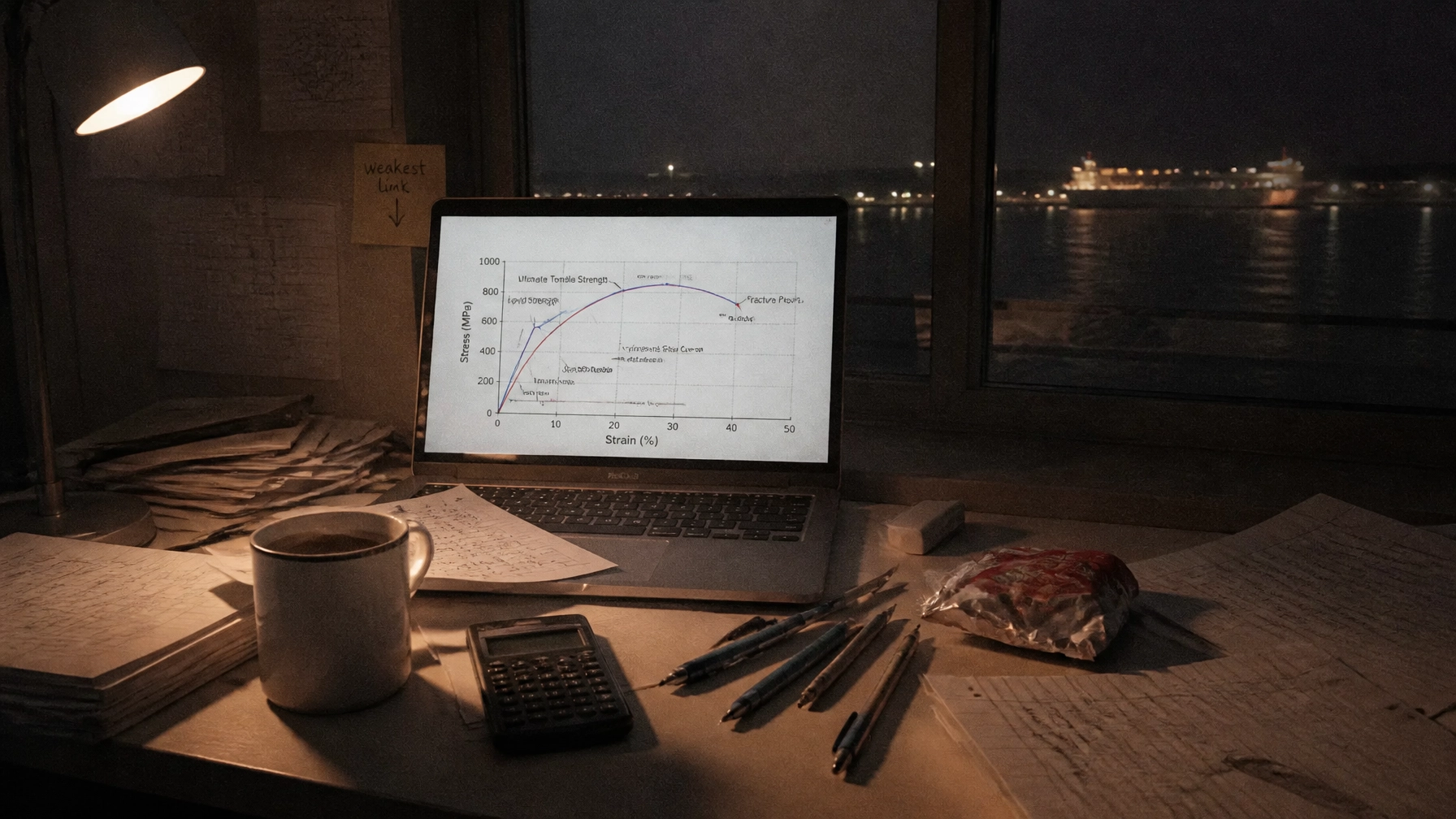
It’s 2:00 AM on Pelican Island. The humid Gulf breeze is hitting the window, the distant hum of a tanker in the ship channel is the only sound, and you’re staring at a spreadsheet that refuses to make sense. You’ve got the data, the experiment actually worked (for once), and your MATLAB code didn't crash. But now comes the real monster: the 20-page engineering lab report due in six hours.
If you’re an engineering student at Texas A&M Galveston, you know the drill. Whether you’re in Marine Engineering, Ocean Engineering, or navigating the foundational ENGR 102/216 courses, the "Aggie standard" is high. They don’t just want the answer; they want to see the rigorous, precise path you took to get there.
But let’s be real: who actually enjoys formatting tables for three hours? The struggle is real, and the "formatting traps" are everywhere. One wrong unit or a sloppy discussion section, and that "A" you worked so hard for starts drifting away like a loose buoy in a storm.
Quick Fixes for Your Lab Report Grind
Before we get into the heavy stuff, here are three quick wins you can apply to your report right now:
- Ditch the Vague Language: Swap "the results were very high" for "the measured force peaked at 15.4 N." Engineering is about numbers, not vibes.
- Caption Everything: Every table needs a title above it; every figure needs a caption below it. It’s a small detail, but professors will dock points faster than you can say "Gig 'em."
- Check Your Tense: What you did is in the past tense ("We measured…"). What the data shows is in the present tense ("Figure 1 shows…").
The Anatomy of a TAMUG Engineering Report

Most engineering courses at Galveston follow the IMRaD format (Introduction, Methods, Results, and Discussion). While every professor has their own "quirks" in the syllabus, this is the standard architecture of excellence.
1. The Abstract: Your Elevator Pitch
Think of the Abstract as the "TL;DR" for a busy engineer. You have about 200 words to explain why you did the lab, how you did it, what you found (give us the raw numbers!), and what it means. Don't fluff it up. If someone only reads this page, they should still know exactly what happened.
2. Introduction & Theory
This is where you set the stage. What’s the objective? What engineering principles are we testing? If you're calculating Bernoulli’s equation or analyzing stress-strain curves, state the governing equations clearly.
Pro Tip: Use an equation editor. Please. Don’t just type "P + 0.5 * rho * v^2." It looks messy and unprofessional.
3. Materials and Methods
Write this so another student could walk into the lab and replicate your work. Mention the specific equipment, like those massive flumes or the specific sensors used in the marine engineering labs. Keep it concise. We don’t need a diary entry; we need a manual.
4. The Results: Let the Data Speak
This section is for processed data. Don't dump your raw scratchpad notes here.
- Tables: Clean, labeled, and consistent.
- Graphs: Use SI units, clear legends, and ensure the axes are actually readable.
- Sentences: Don't just post a graph and move on. Tell us what we're looking at. "As shown in Figure 2, the displacement increased linearly until the yield point."

5. The Discussion: The "Meat" of the Grade
This is usually where students lose the most points. The Discussion isn't just a summary; it’s an investigation.
- Error Analysis: Did you have a 15% error? Don't hide it. Explain why. Was it instrument resolution? Human error? Friction?
- Comparison: How does your data stack up against the theoretical values in your textbook?
- Significance: Why does this matter in the real world of maritime engineering?
Common Formatting Traps to Avoid
Even the smartest engineers get tripped up by the "little things." When you’re tired, these are the first things to go:
The "Significant Figure" Slip-Up
If your measurement tool only goes to two decimal places, your final calculation shouldn't have eight. Over-precision is a sign of an amateur. Keep your sig figs consistent throughout the report.
Passive vs. Active Voice
While science used to be strictly passive ("The weight was dropped"), modern engineering writing is moving toward a more direct, active style ("We dropped the weight"). However, always check your specific instructor’s preference in the syllabus. When in doubt, consistency is key.
Units, Units, Units
Every number needs a "last name" (units). Reporting a value as "5.2" is meaningless. Is it 5.2 meters? 5.2 Newtons? 5.2 knots? In the maritime world, mixing up units can lead to literal shipwrecks. Don't let it wreck your grade.
Why Technical Writing is a Career Skill
You might feel like these reports are just busy work, but here’s the truth: being a great engineer who can't write is like being a chef who can't plate food. You might have the best ideas in the world, but if you can't communicate them to a client, a boss, or a regulatory body, they’re going to stay on your hard drive.
Mastering the lab report now prepares you for writing technical specs, safety manuals, and project proposals later in your career.

How SYA Can Help You Cross the Finish Line
We get it. You’re balancing 18 credit hours, maybe a part-time job, and trying to maintain some semblance of a social life in Galveston. Sometimes, you just need a second pair of eyes to make sure your report is actually coherent.
At Submit Your Assignments, we don't just "do homework." We provide the support you need to excel. Our team can help you with:
- Outlining and Brainstorming: Not sure how to structure that complex Discussion section? We can help you map it out.
- Editing and Proofreading: We’ll catch those "their/there" mistakes and the unit inconsistencies that your tired eyes missed.
- Reference Materials: If you're struggling to understand a concept, our writers can provide model papers and tutoring materials to help you grasp the material faster.
The process is straightforward and student-friendly. We "charge like a bird" (affordable and light on the wallet) because we know what the student budget looks like. If you're worried about the cost, you can even check our pricing upfront.
Living the Galveston Student Life
Engineering at TAMUG is a unique grind. It’s hard work, but there’s something special about studying on an island. To keep your sanity during those long lab weeks, remember to:
- Take a break and watch the sunset over the West Bay.
- Grab a late-night bite on the Strand when the "brain fog" hits.
- Remember that everyone else in your cohort is struggling through the same thermal dynamics lab. You're not alone.
Fun Facts for the Pelican Island Grind:
- The "Seawall Walk": Sometimes, walking the Seawall is the only way to reset your brain after a 4-hour coding session.
- Coffee is King: Galveston has some hidden gem coffee spots that are way better for late-night sessions than the campus library.
- The Humidity Factor: Yes, it actually affects your paper if you leave it in your car. Print it last minute!
Stop worrying about the formatting and start focusing on the engineering. If you need a hand getting that report to "Excellent" status, reach out to us. We’ve got your back.
Submit Your Assignments provides custom reference materials and tutoring services for research and educational purposes only. We encourage all students to follow their institution's academic integrity policies.