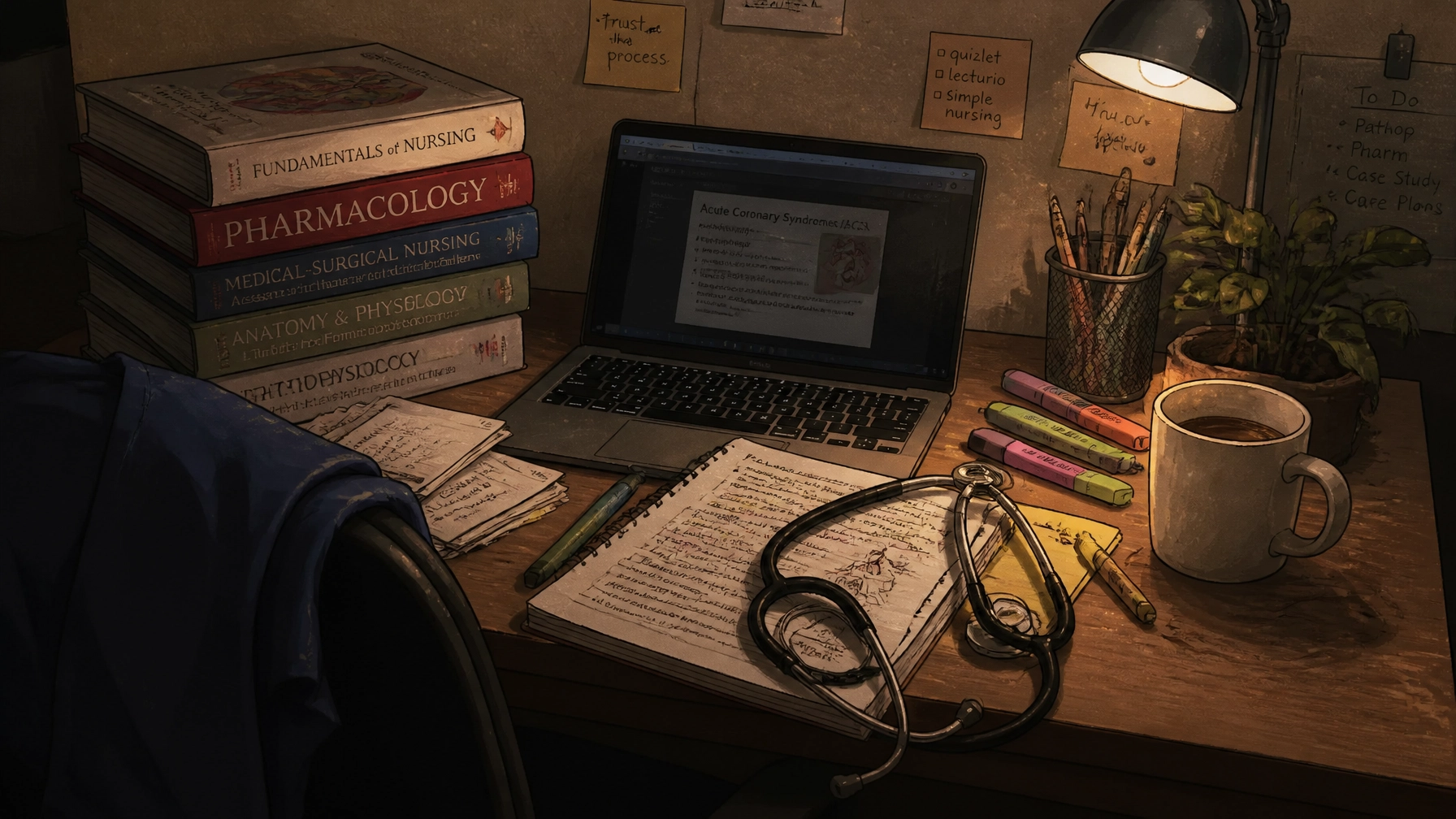
It’s 3:00 AM. You’ve just finished a 12-hour clinical shift where you basically lived on adrenaline and lukewarm cafeteria coffee. Your feet ache, your brain is mush, and then you remember: that 10-page evidence-based practice (EBP) paper is due in two days.
You open your laptop, stare at the blinking cursor, and realize that while you’re great at starting IVs, explaining the pathophysiology of heart failure in "technical nursing prose" feels like learning a foreign language. Why does nursing school feel like a writing degree sometimes?
If you’re feeling the grind, you aren’t alone. Nursing technical writing isn't about being fancy; it’s about being precise, objective, and backed by the kind of evidence that would stand up in a court of law (or at least a very strict grading rubric).
The "Emergency Protocol" for Nursing Papers
Before we get into the heavy lifting, here are some quick wins you can use right now to make your assignments suck less:
- Ditch the "I": Unless it’s a reflection paper, stay in the third person. It’s not about what you think; it’s about what the research says.
- PICO is your best friend: If you’re stuck on a topic, use the PICO (Population, Intervention, Comparison, Outcome) framework to narrow it down.
- Active over Passive: Instead of "The medication was administered by the nurse," try "The nurse administered the medication." It’s punchier and saves your word count.
- Control-F is a lifesaver: Use it to find "fluff" words like "very," "really," or "extremely" and delete them. Clinical writing is lean.
What Exactly is Nursing Technical Writing?
Nursing technical writing is the bridge between the chaotic reality of patient care and the structured world of healthcare science. It’s not the place for flowery metaphors or creative storytelling. It’s the "no fluff" zone.
When you’re writing a research paper or a clinical report, your goal is to convey complex info as clearly as possible. Think of it like a hand-off report: if the next nurse can't understand what you wrote, patient safety is at risk. In the world of assignments, if your professor can't follow your logic, your GPA is at risk.
Precision is everything. You don’t say a patient is "doing better." You say the patient’s oxygen saturation increased from 88% to 94% on 2L of oxygen via nasal cannula. See the difference? One is a vibe; the other is data.

The Nursing Care Plan: ADPIE or Cry?
Ah, the nursing care plan. The assignment every student loves to hate. It’s the ultimate test of your technical writing skills because it requires you to follow the nursing process (ADPIE) perfectly.
- Assessment: Don't just list symptoms. Group them. Objective data (vitals, labs) vs. Subjective data (what the patient says).
- Diagnosis: Use NANDA-I labels. No, you can't make them up. "Impaired Gas Exchange" sounds a lot more professional than "Patient can't breathe good."
- Planning: Your goals must be SMART (Specific, Measurable, Achievable, Relevant, Time-bound). "Patient will feel better" is a fail. "Patient will report a pain level of 3/10 or less within 4 hours" is a win.
- Interventions: This is where the technical part kicks in. You need to provide rationales for why you’re doing what you’re doing.
- Evaluation: Did it work? If not, why?
With that being said, the hardest part of a care plan isn't the patient data: it’s finding the peer-reviewed sources to back up your rationales.
Evidence-Based Practice (EBP): Finding the "Good" Stuff
You can’t just Google your way through a nursing degree. Professors want to see that you’ve been "in the trenches" of databases like PubMed, CINAHL, or Cochrane.
When you’re writing an essay or coursework, evidence-based practice means you aren't just giving an opinion. You’re synthesizing what the latest science says.
Pro Tip: Don’t just summarize one article after another. That’s a "laundry list," not a paper. You want to synthesize. Group articles by themes. "Recent studies (Smith, 2022; Jones, 2023) agree that early ambulation reduces the risk of DVT, though Brown (2021) suggests…" That’s the kind of writing that gets the "A."

The Capstone Project: Defeating the Final Boss
The Capstone is like the final boss in a video game. It’s the culmination of everything you’ve learned, and it usually involves a massive paper that feels impossible to finish.
Whether you’re doing a quality improvement project or a deep-dive literature review, the key is organization. Break it into sections:
- Problem Statement: Why does this matter? (Use stats!)
- Literature Review: What do we already know?
- Implementation/Methods: What did you do?
- Evaluation: What were the results?
As we said earlier, starting early is the only way to survive. But we know life happens. Between clinicals, work, and trying to have a social life (what’s that?), sometimes the Capstone feels like the weight of the world.

How We Support Your Nursing Journey
Look, we get it. Nursing school is a literal marathon. Sometimes you just need a second pair of eyes on your care plan or a professional to help you brainstorm your Capstone outline.
At Submit Your Assignments, we don't just "write papers." We provide high-quality custom academic writing services that act as your secret weapon. Whether you need a model paper to understand APA formatting or a deep-dive consultation on a tricky clinical topic, our experienced writers are here to help you cross the finish line.
We charge "like a bird" (student-friendly pricing!) because we know you’re probably living on ramen and dreams. Our goal is to give you back your freedom so you can actually catch some sleep or, heaven forbid, see your friends.
Check out our pricing page to see how we can help you turn that 3:00 AM panic into a "just submitted" vibe. Plus, we promise every piece of work is 100% human-written, so you never have to worry about AI "glitches" or generic content.
Some Fun (and Stress-Relieving) Facts
- The "Nurse Smell": Did you know that after a few months of clinicals, your nose becomes immune to almost everything? It’s a superpower.
- Caffeine Science: The average nursing student consumes enough caffeine to power a small city. (Not scientific, but we all know it’s true).
- The Pen Thief: In a hospital, a good clicking pen is more valuable than gold. Protect yours with your life.
- Community: Nursing students have the tightest bonds. You’re all trauma-bonded by the same pharmacology exams and care plan marathons.
Stop worrying about that mounting pile of assignments. Trust our writers to help you navigate the technicalities so you can focus on becoming the amazing nurse the world needs.
Submit Your Assignments provides custom reference materials and tutoring services for research and educational purposes only. We encourage all students to follow their institution's academic integrity policies.