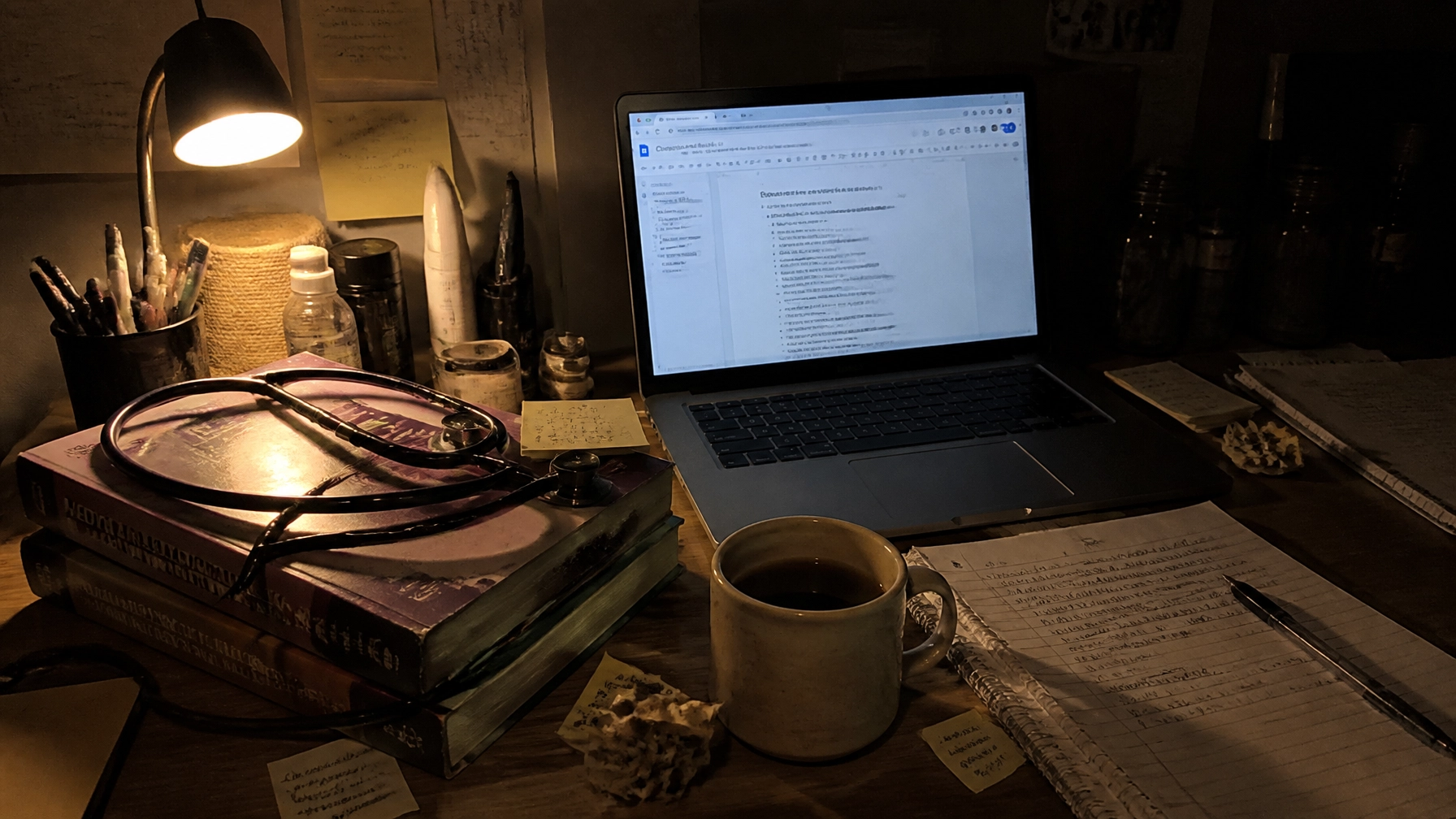
You just finished a 12-hour clinical shift. Your feet are throbbing, your brain feels like it’s been through a blender, and all you want to do is face-plant into your pillow. But then you remember: that 2,000-word nursing essay on evidence-based practice is due in forty-eight hours. Or maybe it’s a complex Nursing Care Plan that requires you to dive deep into NANDA-I diagnoses and rationales that actually make sense.
The struggle is real. Nursing school isn't just about mastering the art of the perfect IV start or memorizing the cranial nerves. It’s a mountain of paperwork that feels like it’s designed to test your sanity as much as your clinical knowledge. But what if writing these papers didn't have to feel like a second shift?
At Submit Your Assignments, we see the grind you're putting in every day. We know that between the labs, the exams, and the bedside care, finding the headspace to craft a perfectly cited APA paper is a lot to ask. That’s why we’ve put together this ultimate guide to help you navigate the technical world of nursing assignments with your sanity intact.
Quick Hacks for the Weary Nursing Student
Before we get into the heavy lifting of care plans and capstones, let’s start with some quick wins. These are the small things that make a massive difference when you’re staring at a blank screen at 2 AM.
- The "Rule of Five": When looking for evidence, try to find sources from the last five years. Nursing is a rapidly evolving field, and professors will dock points for "outdated" info faster than you can say "tachycardia."
- The Headings are Your Friends: Don't write a giant wall of text. Use clear subheadings. It helps your professor see exactly where you’ve met the grading criteria.
- Quote Sparingly: Your instructors want to hear your clinical reasoning, not just a string of quotes from a textbook. Paraphrase the research and cite it properly instead.
- Dictate Your First Draft: If you’re too tired to type, use a voice-to-text app while you’re driving home or making coffee. You can clean up the "ums" and "ahs" later, but getting your ideas down is the hardest part.
Decoding the Nursing Essay: Evidence is Everything
A nursing essay isn't a creative writing piece. It’s a professional document that needs to be grounded in hard data and peer-reviewed research. Whether you’re discussing health promotion, ethics, or a specific pathophysiology, the structure is your roadmap to success.
Start with the Learning Outcomes
Before you write a single word, look at your assignment rubric. Seriously. Most students skip this and wonder why they lost points. If the rubric asks for a discussion on "Cultural Competence," make sure you have a dedicated section for it.
The Structure That Works
Most successful nursing essays follow a predictable path:
- Introduction: Briefly set the stage. What is the clinical issue? Why does it matter to patient outcomes? State your aim clearly.
- The Body: Break this down by themes. Don’t just list facts; synthesize them. How does the research apply to the patient at the bedside?
- Conclusion: Summarize the "so what?" No new info here: just a strong closing on how this knowledge improves nursing practice.
And remember, the Submit Your Assignments Human Authenticity Promise ensures that when you're looking for reference materials, you're getting high-quality, human-researched content that respects the integrity of your education. If you're stuck trying to make a clinical paper sound more natural and less robotic, our guide on How to 'Dumb Down' Your Essay can help you decode what professors actually want from your writing.

Mastering the Nursing Care Plan (ADPIE)
If there’s one thing that keeps nursing students up at night, it’s the dreaded Care Plan. It’s more than just a list of tasks; it’s a reflection of your ability to think like a nurse. If you want a school-specific walkthrough, check out The Nursing Student's Guide to Winning Care Plans at UTMB for extra help on structuring this assignment.
The ADPIE framework is the gold standard, and getting each section right is crucial:
- Assessment: This is where you gather your subjective and objective data. If the patient says they’re in pain, that’s subjective. If their blood pressure is 160/95, that’s objective. Be specific.
- Diagnosis: Use the NANDA-I terminology your school requires. A common pitfall is using a medical diagnosis (like "Diabetes") instead of a nursing diagnosis (like "Knowledge Deficit related to insulin administration").
- Planning: Set SMART goals. Instead of writing "Patient will feel better," try "Patient will report a pain level of 3/10 or less within 2 hours of analgesic administration."
- Implementation: What are you actually doing? Checking vitals? Repositioning? Educating the family?
- Evaluation: Did it work? If the goal wasn't met, why? This shows your instructor that you can pivot your care based on patient response.
One of the hardest parts of a care plan is finding rationales. Why are you turning the patient every two hours? You know it’s for pressure injury prevention, but you need the evidence to back it up. That's where we can step in with custom nursing care plan help to provide the models and reference materials you need to understand the why behind the do.
The Capstone Project: Your Final Hurdle
The capstone is the "Final Boss" of nursing school. It’s where you take everything you’ve learned and apply it to a real-world clinical problem. Most capstones use the PICOT format to narrow down a research question:
- Population (e.g., elderly patients in long-term care)
- Intervention (e.g., implementing a new fall prevention protocol)
- Comparison (e.g., compared to current standard care)
- Outcome (e.g., reduction in fall rates)
- Time (e.g., over a six-month period)
Building a capstone requires a massive literature review and a deep dive into quality improvement (QI) processes. It’s overwhelming because it’s meant to be. But you don't have to navigate the PICOT maze alone.

How We Support Your Journey
We get it: sometimes the "grind" is just too much. You aren't just a student; you're often a parent, a worker, and a human being who deserves a life outside the library. And if deadline stress has you spiraling because your writing suddenly feels "too polished" or gets flagged unfairly, read Why Your Neurodivergent Writing Style Might Flag AI Detectors for some real talk and practical guidance. Our goal at Submit Your Assignments is to provide the educational support that lets you breathe again.
When you work with us, you aren't just getting a file. You're getting a consultation on how to structure your thoughts. Our professional writers: many with backgrounds in healthcare: act as your personal tutors, helping you brainstorm topics, outline your capstone, or edit your reflective journals.
The SYA Workflow: Behind the Scenes
We don't do "factory-style" writing. Each request is handled with a personal touch:
- The Briefing: You tell us exactly what your professor is looking for.
- The Match: We find a writer who understands the clinical nuances of your topic.
- The Research: We dig into the latest databases (think PubMed and CINAHL) to find the evidence you need.
- The Review: Every piece goes through a quality check to ensure it meets our high standards: and yours.
You can even check out our hidden free tools to help you get started on your own. We’re here to empower you, not just to finish the work for you.

Peace of Mind and Living Your Life
Think about what you could do with an extra ten hours this week. You could catch up on sleep, actually go to the gym, or spend time with the people who matter most. Academic success shouldn't come at the cost of your mental health.
Stop worrying about the perfect APA citation and start focusing on becoming the best nurse you can be. Trust our writers to help you bridge the gap between clinical practice and academic theory.
Fun Facts & Local Vibes (Just for You)
Since we’re based right here in the Houston area (Nassau Bay represent!), we know the local scene. If you're studying in the Texas Medical Center or prepping for clinicals at Memorial Hermann, you know the traffic is a nightmare. Here are some quick tips for the local student:
- Best Coffee for All-Nighters: If you’re near the TMC, check out the local spots that stay open late: sometimes that hospital cafeteria "sludge" just won't cut it.
- Study Break: If you need to clear your head, a quick walk by the water in Nassau Bay is the perfect reset.
- The Houston Humidity: Pro-tip: keep a spare set of scrubs in your car. You never know when a Houston downpour will leave you soaked before a shift!
Nursing is a calling, but the paperwork is a chore. Let us help you handle the chore so you can answer the calling.
Ready to get started? Check out our pricing or submit your assignment details today for a quote. Let’s get that weight off your shoulders.
Submit Your Assignments provides custom reference materials and tutoring services for research and educational purposes only. We encourage all students to follow their institution's academic integrity policies.