Can professors tell if you use ChatGPT? Often, yes: but usually not because an AI detector delivers a magical yes-or-no answer. Professors may notice unverifiable sources, sudden changes in your writing style, generic transitions, oddly perfect structure, or an inability to explain your own argument. Submit Your Assignments (SYA) helps high school, college, and university students nationwide with brainstorming, outlining, editing, research support, and custom writing services designed for educational use. If you are worried about a ChatGPT essay detected by software, remember this: authentic notes, drafts, sources, and your genuine voice matter more than chasing an AI score. A cheap shortcut can create expensive academic stress. A clear, human-led process gives you confidence and peace of mind.
Last updated: September 21, 2026
By: Shannon Nicole
Table of Contents
- Can professors tell if you use ChatGPT?
- Why professors notice AI writing without a detector
- ChatGPT fake citations and source red flags
- AI detector false positives are real
- Deep Dive: what your professor compares
- A better path: use ChatGPT as a tutor, not a ghostwriter
- What to do before submitting
- Frequently asked questions
- Let's Get You That A!
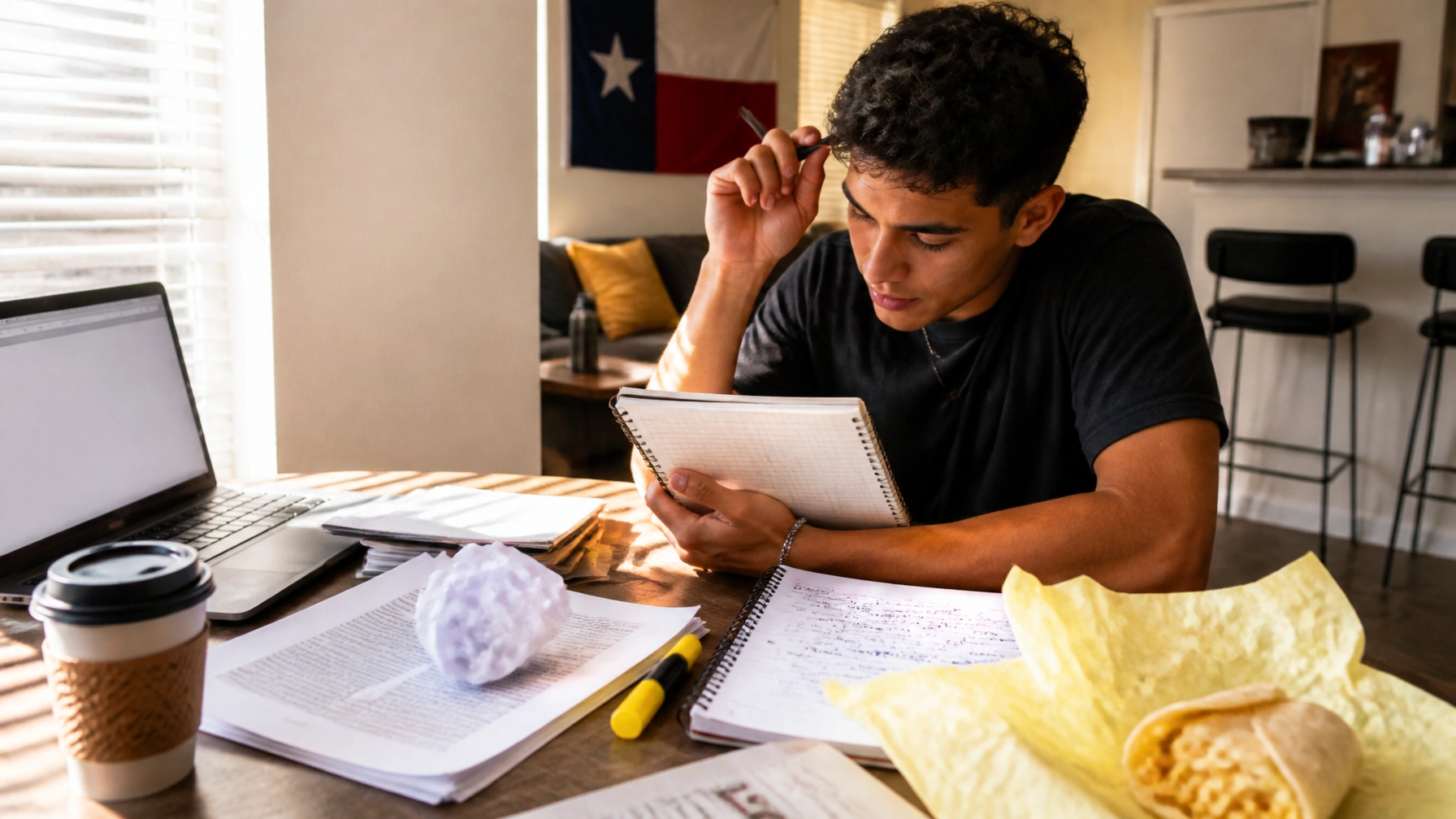
Picture this: you are in Houston, it is 11:47 p.m., your midterm paper is due before breakfast, and your laptop has three tabs open: your course portal, a half-finished Google Doc, and ChatGPT. You paste in the prompt. Two minutes later, you have a neat essay with polished transitions and a bibliography that looks convincing.
Then you read the first citation.
The journal article does not exist.
Or maybe the paper sounds nothing like your discussion posts from last month. The sentences are smooth, but the argument feels like it belongs to a textbook written by someone who has never sat through your class. That “hmm” moment is what gets students nervous.
SYA Weekly Corner
Want practical study and writing guidance delivered to your inbox? Join the SYA Weekly Corner for student-friendly tips on research, organization, editing, and academic integrity.
Subscribe to the SYA Weekly Corner
Can professors tell if you use ChatGPT?
Professors can often identify heavy, undisclosed ChatGPT use by combining human reading with source checks, previous assignments, course materials, and follow-up questions. A detector score may support concern, but it is rarely the entire case.
A professor who has read your work all semester may recognize your usual rhythm. Maybe you write short sentences. Maybe you explain ideas with a specific kind of humor. Maybe your citations are usually careful but your wording is informal.
A sudden jump from “I think this shows…” to highly polished, generalized academic language can stand out.
Quick writing tips after the panic
Before you submit, stop and check:
- Can you explain every paragraph without rereading it?
- Did you personally open and verify every source?
- Does the paper answer your actual course prompt?
- Does the tone sound like you on your best writing day: not like a completely different person?
- Do you have notes, drafts, or version history showing how the paper developed?
- Does your course policy require you to disclose AI assistance?
Do not use an “AI detector bypass” tool as a substitute for honest writing. And “beating Turnitin” should never be the goal. The goal is work you understand, can defend, and are permitted to submit.
Why professors notice AI writing without a detector
Professors may notice AI writing through patterns that a detector cannot fully explain: formulaic organization, empty transitions, over-explained points, missing course details, and a voice that does not match your earlier work. Reading closely can be enough to trigger a conversation.
ChatGPT often produces writing that is grammatically clean but academically thin. It may explain a simple idea for three sentences when one clear sentence would do. It may move through every paragraph with the same polished rhythm.
Watch for classic phrases such as:
- “It is important to note that…”
- “This highlights the importance of…”
- “In conclusion…”
- “On the other hand…”
- “Additionally…”
- “This plays a crucial role in…”
- “There are several factors to consider…”
One phrase proves nothing. Real students use common transitions, too. But a paper packed with them can feel assembled from a template.
Professors also notice structure. Every paragraph may begin with a broad claim, provide a safe example, and finish with a tidy summary. That structure is not automatically wrong. The problem appears when the paper never makes a specific, course-connected point.

ChatGPT fake citations and source red flags
ChatGPT fake citations are one of the clearest warning signs because a source can look scholarly while being nonexistent, misquoted, or unrelated to the claim. Verify each author, title, publication, page number, DOI, and argument before relying on it.
ChatGPT can confidently invent:
- Journal articles with realistic-sounding titles
- Authors who wrote about a different subject
- Incorrect publication years
- Page numbers that do not exist
- DOI links that lead nowhere
- Books with the right topic but the wrong publisher
- Real sources that do not support the sentence attached to them
Try this source audit:
- Search the title in your library database or Google Scholar.
- Confirm the author and publication details.
- Open the source instead of trusting a citation copied into a bibliography.
- Read the relevant pages yourself.
- Ask whether the source actually supports your claim.
- Replace anything you cannot verify.
A bibliography full of impressive-looking entries does not rescue a weak paper. It makes the problem louder.
AI detector false positives are real
An AI detector false positive means software labels human-written work as likely AI-generated. Scores are estimates based on language patterns, not proof of who wrote a paper, so instructors should consider drafts, context, and conversation before making a judgment.
False positives can affect students who write in formal English, use predictable academic structures, or are multilingual writers. Short assignments can also produce unstable results because there is less text for a tool to evaluate.
That does not mean you should ignore a high score. It means you should treat it as a reason to review your process, not as a verdict.
If your work is questioned:
- Stay calm and ask which parts raised concern.
- Show outlines, notes, earlier drafts, and version history.
- Explain how you found and used your sources.
- Describe your thesis in your own words.
- Review your course’s permitted-AI policy.
- Ask whether you can revise or clarify the work.
Do not panic-buy the cheapest “humanizer” online. A tool that swaps words may make your writing stranger, damage your meaning, or create another integrity concern.
Deep Dive: what your professor compares
The strongest evidence is often alignment: does your submission match the prompt, assigned readings, previous writing, drafting history, and your ability to discuss the ideas? Professors look for a believable chain from classwork to final paper, not just a suspicious percentage.
Consider a prompt asking you to evaluate a theory using two assigned readings. A generic ChatGPT response may define the theory correctly but ignore the professor’s lecture example, use outside sources instead of the assigned texts, and “evaluate” when it only summarizes.
That mismatch matters.
A professor may compare:
- Your sentence rhythm with earlier discussion posts
- Your vocabulary with timed in-class writing
- Your examples with the syllabus and lectures
- Your citations with the actual library records
- Your version history with the claimed drafting process
- Your ability to explain why you chose each piece of evidence
This is the hidden trap many students miss: the paper is not graded in isolation. It sits inside a semester of work.
A better path: use ChatGPT as a tutor, not a ghostwriter
You can use ChatGPT more responsibly when your course permits it by asking for explanations, brainstorming questions, study quizzes, or organizational help while keeping the thinking, research, drafting, and final voice genuinely yours. Always follow your instructor’s policy.
A safer workflow looks like this:
- Read the prompt and rewrite its requirements in your own notes.
- Ask ChatGPT to explain a difficult concept, not write your submission.
- Build your thesis from your class materials and your own position.
- Research through credible library sources.
- Draft paragraphs yourself.
- Use permitted tools for organization or proofreading.
- Verify every citation and acknowledge AI use when required.

Need a second set of eyes? Submit Your Assignments provides supportive consultations, outlining, editing, citation review, reference materials, and model papers for students. You can also learn how our human-led team works or contact us before deciding what kind of help fits your assignment.
For students who already have a draft, essay review and editing support can focus on clarity, source use, prompt alignment, and authentic voice. SYA also explains its originality guarantee, while eligible students can review the Price Match Blitz. Turnitin/Originality Reports are available for $5.00.
What to do before submitting
The best final check combines academic honesty, source verification, voice review, and policy compliance. You should be able to explain your argument, prove where your information came from, and show that your submission reflects your own approved process.
Use this five-minute pre-submission check:
- Read the paper aloud. Where do you sound stiff or unlike yourself?
- Circle broad claims and add specific evidence from class.
- Delete transitions that only fill space.
- Check every citation manually.
- Compare the paper with your earlier work for major voice shifts.
- Save your final draft and supporting notes.
- Confirm whether you must disclose AI assistance.
Students in Houston and students nationwide deserve support that protects their learning: not a rushed shortcut that creates more questions. SYA keeps its services affordable, aims to “charge like a bird,” and has earned positive Google reviews alongside a 94% average customer rating.
Frequently asked questions
Can professors tell if you use ChatGPT?
Professors can often notice heavy, undisclosed ChatGPT use through writing-style changes, generic language, missing course details, suspicious citations, drafts, version history, and follow-up questions. A detector score alone is not definitive proof.
What are ChatGPT fake citations?
ChatGPT fake citations are invented or inaccurate references that may include nonexistent articles, incorrect authors, false page numbers, broken DOI links, or sources that do not support the claims in your paper. You should verify every citation independently.
Can a ChatGPT essay be detected without software?
Yes. A professor may notice a ChatGPT essay through a sudden shift in vocabulary, sentence rhythm, organization, specificity, or argument quality compared with your earlier work. Manual reading can raise questions even when no detector is used.
What is an AI detector false positive?
An AI detector false positive occurs when software labels human-written work as likely AI-generated. Detector results are estimates based on language patterns, so instructors should consider drafts, writing context, source use, and student explanations.
Is using ChatGPT for school always prohibited?
No. Policies vary by course and instructor. Some allow limited use for brainstorming, studying, outlining, or proofreading, while others prohibit it. You should read your course policy and ask your instructor when the rules are unclear.
Can Submit Your Assignments help me avoid an AI accusation?
Submit Your Assignments can provide educational support such as consultation, outlining, editing, citation review, reference materials, and model papers. You should follow your institution’s academic-integrity policy and submit only work you are permitted to use.
SYA Weekly Corner
Keep your academic workflow human, organized, and a lot less chaotic. Sign up for the SYA Weekly Corner for practical writing tips, deadline strategies, and student support.
Subscribe to the SYA Weekly Corner
Let's Get You That A!
Stop letting one suspicious citation or robotic paragraph ruin your whole week. Get organized. Get clarity. Get back to sleeping, working, studying, and living your life.
Whether you’re attending college in Houston, Dallas, Los Angeles, Atlanta, Chicago, or anywhere else in the U.S., our team is available to help.
- Text your Academic Success Advisor: 832-926-5551
- WhatsApp: https://wa.me/13466176123
- Call Only: 346-603-6340
- Email: info@submityourassignments.org
- Website: submityourassignments.org
Our writers and editors can help you brainstorm, outline, revise, check citations, and strengthen your authentic academic voice. Support is available to students nationwide, with affordable options for busy schedules.
Compliance and academic-integrity disclaimer
This article is for general educational information only. AI policies differ by instructor and institution, so you are responsible for reviewing your course requirements and asking for clarification when needed.
Submit Your Assignments provides custom reference materials and tutoring services for research and educational purposes only. We encourage all students to follow their institution's academic integrity policies.
Submit Your Assignments