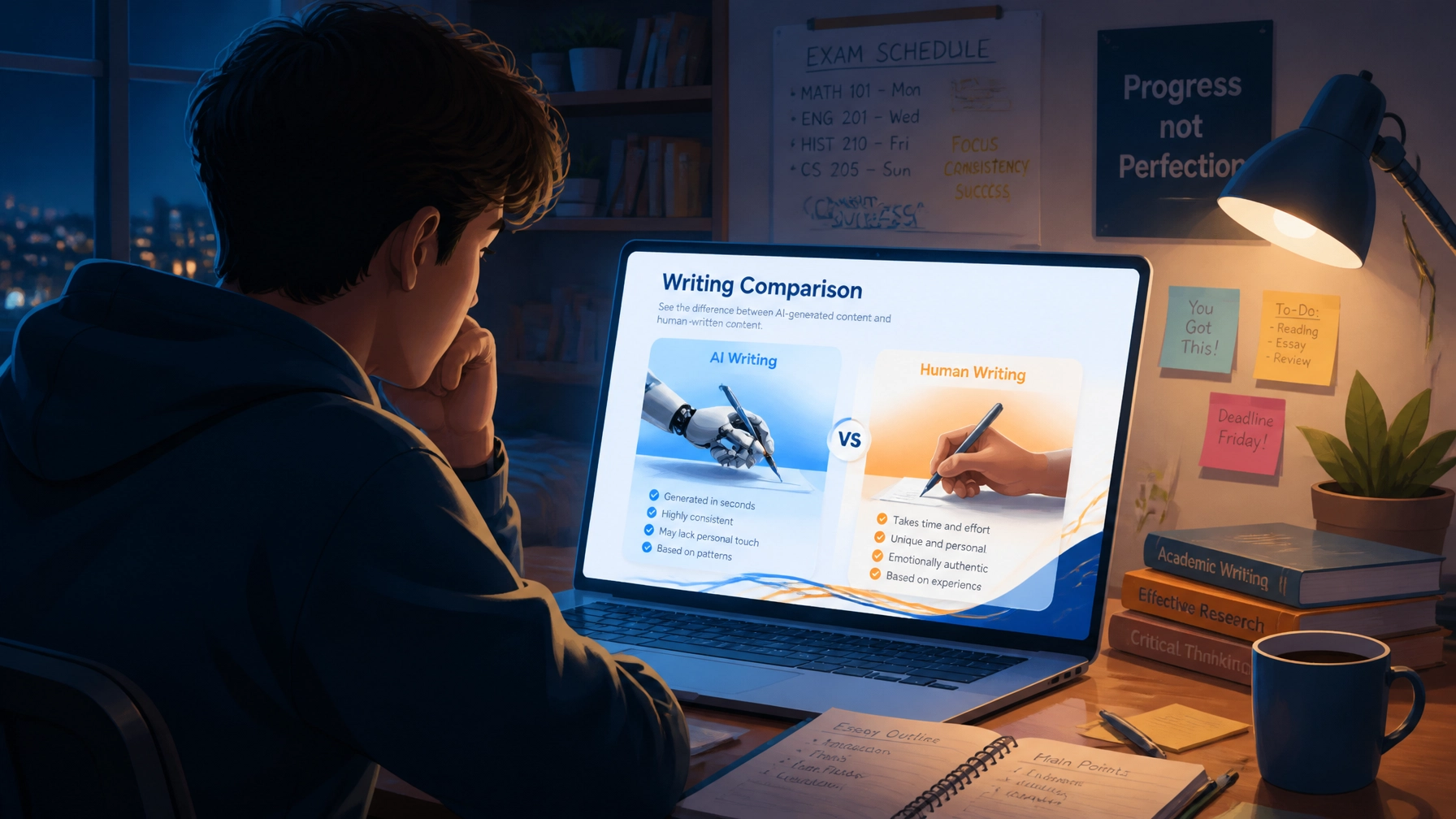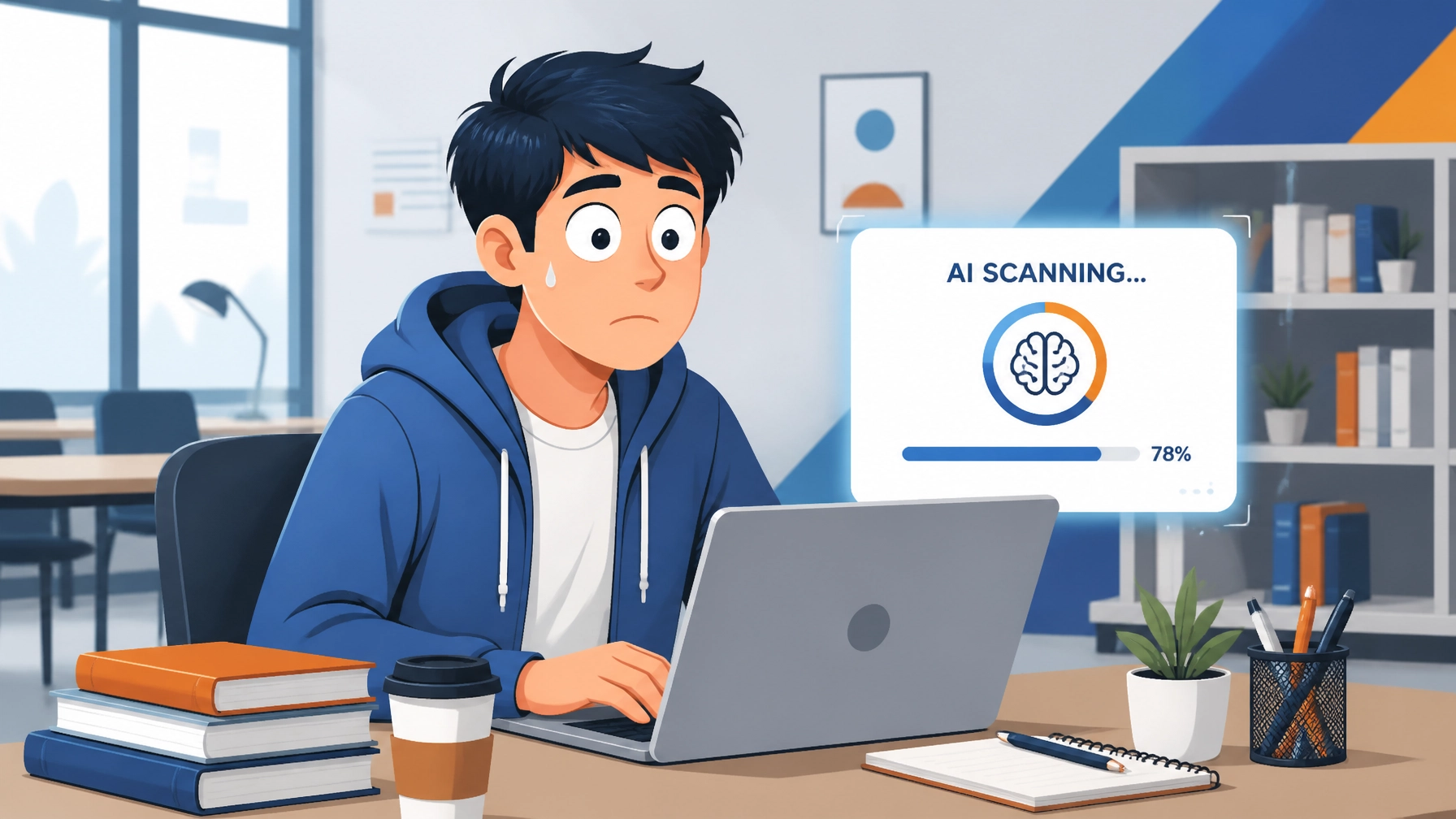
You know that sinking feeling in your stomach? You’ve just finished a long day of classes, you open your laptop, and you look at the prompt for your latest 2,000-word essay. Your first thought might be to ask a certain chatbot for a little "inspiration." But then you read the requirements: “Connect this theory to our specific guest speaker’s lecture from Tuesday and include a screenshot of your handwritten notes.”
Suddenly, the easy way out feels like a dead end.
If you feel like your professors are playing a high-stakes game of cat and mouse, you aren’t imagining it. Educators are pivoting. They are tired of reading the same generic, bot-generated paragraphs that sound like they were written by a very polite encyclopedia. To counter this, they are designing "AI-proof" assignments specifically intended to trip up algorithms.
While these new requirements are meant to catch bots, they often end up making your life twice as hard. With that being said, understanding these tactics is the first step toward conquering them. Let’s dive into how the game is changing and why a genuine human touch is becoming the most valuable currency in your academic career.
The Evolution of the "Bot-Trap"
For a while, it was easy. You could feed a prompt into a generator, and out came a passable (if boring) essay. But professors are smart. They’ve noticed the patterns: the lack of specific detail, the "hallucinated" citations, and the weirdly perfect but soulless structure.
Now, they are moving beyond simple essay prompts. They are building "fortresses" around their assignments that require lived experience, real-time data, and multi-layered proof of work.

Tactic #1: The "Me, Myself, and I" Factor
One of the most common ways professors are "AI-proofing" work is by requiring deep personal reflection. A bot knows what a "Growth Mindset" is, but it doesn't know how you felt when you failed your first chemistry mid-term and had to regroup.
Professors are now asking for:
- Connections between course concepts and your specific identity or career goals.
- Reflections on how your thinking changed between Week 1 and Week 15.
- Direct quotes from your own previous discussion board posts.
When an assignment asks you to "analyze your personal evolution," a bot can only guess. It can’t replicate the nuances of your specific voice or your unique history. This is where the missing link why AI drafts still need a human touch becomes painfully obvious. Without your actual "self" in the paper, the professor knows something is up.
Tactic #2: Breaking the Training Data (Current Events)
Have you ever noticed that AI tools often have a "knowledge cutoff"? Professors certainly have. To ensure you aren't just hitting "generate," many instructors are tying assignments to hyper-current events: things that happened last week, or even this morning.
Imagine a prompt that says: "Analyze the local economic impact of yesterday’s city council vote on the new transit tax, citing the specific objections raised by the three citizens who spoke during the public comment period."
A bot simply cannot do this. It wasn't there. It doesn't have access to the live stream of your local city council meeting. In addition, professors are starting to require citations from very recent news articles or specialized local reports that haven't been indexed by search engines yet. This level of "real-time" requirement forces you to actually engage with the world around you.
Tactic #3: Beyond the Text Box (Multi-modal Tasks)
Why assign a 5-page paper when you can assign a 5-minute video presentation, an infographic, and a written rationale? Professors are increasingly using "multi-modal" assignments because they are incredibly difficult to fake.
When you have to:
- Design a visual layout.
- Record a voice-over that sounds natural and unrehearsed.
- Explain your design choices in writing.
…you are showing a level of integrated thinking that current AI models struggle to replicate in a cohesive way. They might be able to help with one part, but they can't easily connect the dots between your spoken words and your visual data.

Tactic #4: Old School is the New High-Tech
Is there anything more "AI-proof" than a dusty book in a basement? Surprisingly, professors are returning to physical archives and local institutions to protect their curricula.
We are seeing a rise in assignments that require:
- Visits to the university’s special collections.
- Citations from physical textbooks that aren't available as PDFs.
- Photos of yourself at a local museum or historical site.
- Interviews with local community leaders.
These "grounded" assignments require a physical presence and a level of effort that a bot sitting on a server in another country just can't provide. If you're struggling with how to integrate these physical sources, checking out 7 mistakes you're making with AI drafts might help you see where the disconnect often happens.
Tactic #5: The Paper Trail (Process-Focused Grading)
Finally, professors are no longer just grading the "final product." They want to see your work. They are requiring a "paper trail" that includes your initial proposal, an annotated bibliography, a rough outline, and a revision memo explaining exactly what you changed between drafts.
If you suddenly show up with a perfect final paper but have no "process" documents to back it up, it raises a massive red flag. This shift toward process-oriented grading is designed to ensure you are actually doing the thinking, one step at a time.

Quick Tips for Surviving "AI-Proof" Prompts
Don't panic! You can still excel in these classes. Here are a few ways to handle these complex requirements:
- Take "Live" Notes: Even if you plan on getting help later, jot down specific phrases or "vibes" from class. These small details are what make a paper feel authentic.
- Save Everything: Every brainstorm, every messy outline, and every deleted paragraph is proof of your "human" process. Keep them in a folder.
- Focus on the "Why": When a professor asks for a reflection, don't just say what happened. Tell them why it mattered to you.
- Verify Your Sources: If you use a tool for research, double-check that the sources actually exist. Bots love to make up convincing-sounding book titles.
Why the Human Touch Still Wins
At the end of the day, your professor isn't just looking for "correct" information: they are looking for your perspective. They want to see that you are growing, thinking, and engaging with the material. This is exactly why AI vs human editing is such a hot topic right now. Context is king, and a machine just doesn't understand the context of your specific classroom or your personal life.
This is where Submit Your Assignments steps in. We don't just "hit a button." Our professional writers are real people who understand how to weave your personal reflections, local context, and specific course requirements into a cohesive, high-level academic model.
Think of us as your academic consultant. We help you brainstorm the ideas, structure the complex multi-modal requirements, and ensure that your voice remains the star of the show. We provide the "model papers" and "reference materials" that give you the blueprint for success.

Stop Worrying and Start Living
You shouldn't have to spend your entire weekend stressed out about a "bot-proof" assignment that feels like a trap. Trust our writers to help you navigate these complex requirements. Whether it's a nursing care plan that needs specific clinical reflections or a history paper requiring archival research, we've got the expertise to guide you.
Listen up: you deserve the freedom to focus on your actual learning (and maybe a little "no homework and chill") while we handle the heavy lifting of formatting, referencing, and structure. Stop staring at that intimidating prompt and let us help you find the way forward.
Ready to get started? Check out our services and see how we can help you bridge the gap between a generic draft and a human-grade masterpiece.
Fun Facts & Local Vibes
- The First AI?: Some historians consider the "Mechanical Turk" (a fake chess-playing machine from 1770) the first "AI scam," though it was actually just a person hiding in a box!
- Archival Treasure: Many university archives contain weird things like 100-year-old student protest signs and even locks of hair from famous professors.
- Houston Strong: Did you know Houston is home to some of the most extensive medical archives in the world? Perfect for those "local source" nursing assignments.
- Podcast Fever: Over 47% of college students have listened to a podcast for a class assignment in the last year.
Submit Your Assignments provides custom reference materials and tutoring services for research and educational purposes only. We encourage all students to follow their institution's academic integrity policies.