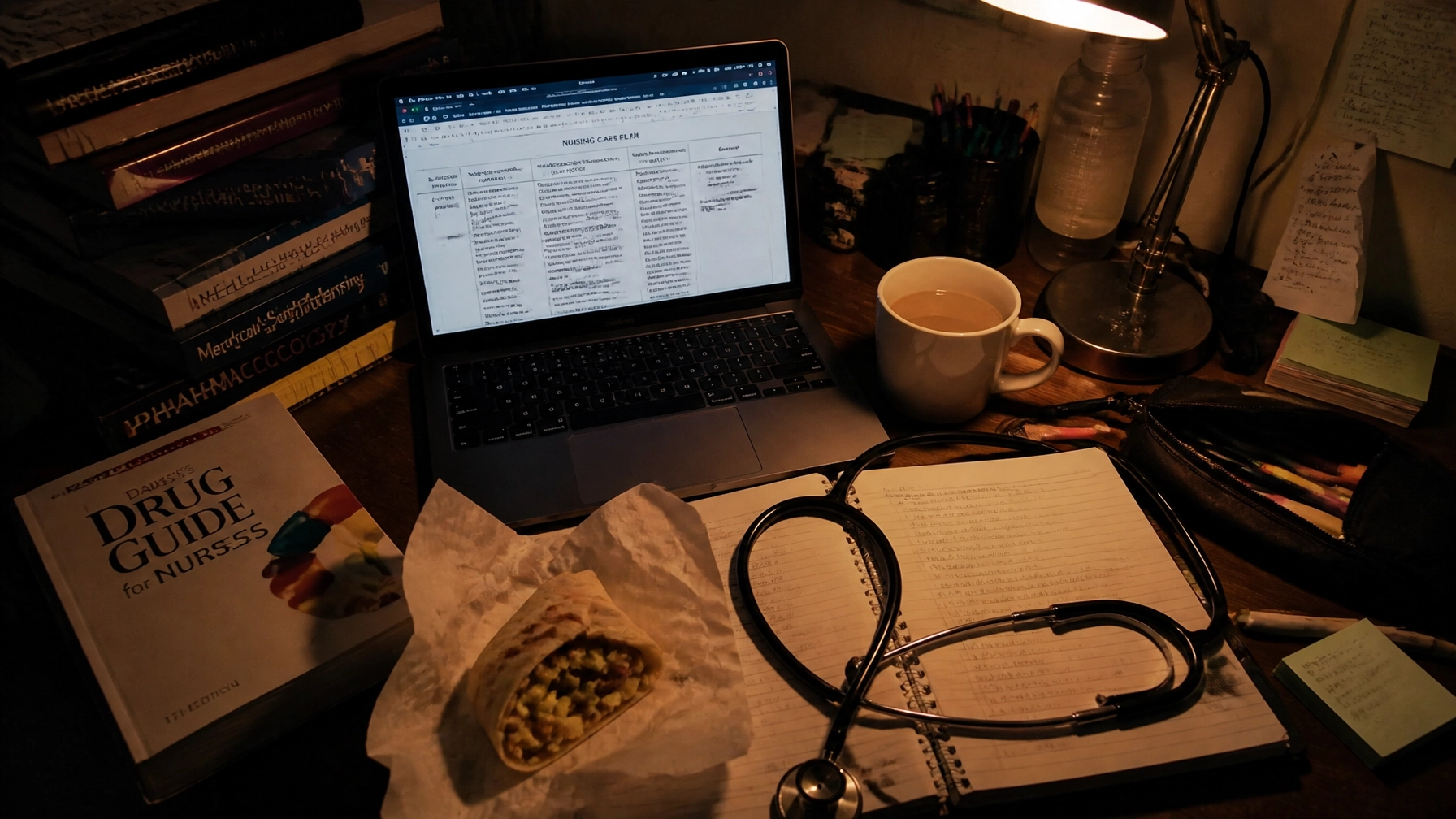
You’re sitting in the Galveston sun, or maybe hunched over a desk in League City, and all you can think about is that 15-page document due by midnight. You’ve got your clinical data, your head-to-toe assessment is scribbled on a piece of paper that smells like hospital sanitizer, and now you have to turn it into a "Nursing Care Plan."
But it’s not just any care plan. It’s a UTMB care plan. That means you aren't just listing problems; you’re navigating the Clinical Judgment Model. You have to "Recognize Cues," "Analyze Cues," and somehow find evidence-based rationales that don't sound like they were spat out by a robot.
If you’ve ever stared at a blinking cursor and thought about just letting ChatGPT handle the rationales, you aren’t alone. But here’s the kicker: nursing professors are getting really good at spotting that "AI voice." They want to see your clinical brain at work, not a language model’s.
In this guide, we’re going to break down how to tackle these nursing care plans for UTMB students, how to revise machine-generated brainstorming into natural student writing, and why human-driven support is your actual secret weapon for academic freedom.
Understanding the UTMB Clinical Judgment Model
At UTMB, they’ve moved beyond the basic ADPIE (Assessment, Diagnosis, Planning, Implementation, Evaluation) to the more modern Clinical Judgment Model. It sounds fancy, but it’s basically just a way of showing your work. Think of it like a math problem where the answer matters, but how you got there matters more.
When you’re filling out your template, you’ll usually see sections like:
- Recognize Cues: This is your "What do I see?" section. You’re looking at vitals, lab values, and that weird lung sound you heard during clinicals.
- Analyze Cues: This is the "What does it mean?" part. Why does that high blood pressure matter for this specific patient?
- Prioritize Hypothesis: You have ten things wrong with the patient, but which one is going to kill them first? (Hint: ABCs: Airway, Breathing, Circulation: are usually a good start).
- Generate Solutions: What are we going to do about it? These are your interventions.
The biggest mistake students make is being too generic. Your professors want "Patient-Specific" details. If you write "Encourage fluids," they’ll ask "Which fluids? How much? Why?"

The Rationale Rabbit Hole: Why APA Matters
This is where the "grind" really starts. For every intervention you list, UTMB usually requires an evidence-based rationale. This means you can't just say "I’m giving them water because they are thirsty." You have to find a textbook or a peer-reviewed article that says hydration improves cellular function (or whatever the scientific reason is) and cite it in perfect APA format.
And let's be real: looking up APA citations at 2 AM is a special kind of torture. Professors at UTMB are strict about this because it proves you aren't just making things up. They want to see that your care is grounded in science.
Pro-tip: Keep a "Rationale Bank." Every time you find a good citation for a common diagnosis like "Acute Pain" or "Risk for Infection," save it in a separate doc. You’ll thank yourself next semester.
The AI Trap: Why Professors Flag "Robot Talk"
We get it. You’re tired. You’re juggling clinicals, labs, and maybe a part-time job or a family. Using AI to help with your nursing care plan sounds like a dream. But there's a reason why professors are cracking down.
AI-generated content often lacks clinical nuance. A generic tool doesn't know that your patient at UTMB Galveston was a 70-year-old fisherman with a specific history. It gives generic advice. When a professor sees words like "pivotal," "comprehensive," or "multifaceted" in every other sentence, their "AI alarm" goes off.
Tools like Turnitin and SafeAssign are now equipped with AI detectors. Even if you aren't "cheating," if your writing sounds too structured and clinical without any human "voice," you might find yourself in a meeting you don't want to have.
How to Humanize Your Writing (and Your Drafting Prompts)
If you do use a drafting tool for brainstorming or to help explain a complex pathophysiology concept, you need to know how to turn that rough output into a believable student care plan. You can’t just copy-paste.
Here is a quick workflow for humanizing AI content for professors:
- Inject the "Vibe": Machine-written text often sounds too balanced and boring. Humans use varied sentence lengths. Some are short. Some are longer and more descriptive.
- Add Patient Specifics: Take the generic AI rationale and tie it directly to your patient’s specific lab values or symptoms.
- Use Student-Level Language: You’re a student, not a medical journal. It's okay to sound like a person who is learning.
- The "Reverse Prompt": Instead of asking for a full care plan, ask for three common nursing interventions for a patient with pneumonia who also has a history of smoking, plus the scientific reasoning behind each one. Then, take those reasons and put them into your own words.
But honestly? The safest move is to have a human help you shape the final draft. That’s where we come in.

Quick Tips for Nursing Paperwork Success
Before you hit the panic button, try these quick fixes:
- Focus on the "Why": If you understand the pathophysiology, the care plan writes itself.
- Use the Rubric: UTMB professors literally give you the answers in the rubric. If it says "Must include 3 interventions," don't provide 2.
- Collaborate: Talk to your clinical group. Sometimes they caught a "cue" you missed.
- Step Away: If the words are blurring together, go for a walk on the seawall. A 10-minute break can save you two hours of frustrated typing.
How Submit Your Assignments Gives You Your Life Back
We know you aren't just looking for "an essay." You’re looking for freedom. You’re looking for the chance to sleep more than four hours, or to actually hang out with your friends without feeling the weight of a 20-page care plan on your shoulders.
At Submit Your Assignments, we don't do the "AI thing." We have real, experienced writers who understand the specific needs of nursing students. When you work with us, you aren't getting a bot-generated template. You’re getting custom reference materials and tutoring support that is:
- 100% Human-Written: Our writers know how to sound like a student, not a software program. This helps you avoid that stiff, overprocessed tone professors notice fast.
- Affordable: We "charge like a bird" because we know students aren't exactly swimming in cash. Check out our affordable pricing.
- Reliable: We’ve earned strong Google reviews and a 94% average customer rating, which gives you extra peace of mind when you need support fast.
Whether you need help outlining a complex coursework project, want to review our homepage to see how the process works, or want to learn more about us, we’re here to help you navigate the "grind." We help students nationwide, not just in Houston, while still keeping our support tuned in to the local pressure and pace students around Galveston and the greater Houston area deal with. You can also check our originality guarantee, compare options with the Price Match Blitz, and read more student-focused guides like Bypassing AI Detection Prompts for Nursing Students: A Survival Guide, Write Essay Cheap: Getting the Most Bang for Your Buck, and Cheapest Essay Writing Service – Is Cheap Essay Help Worth It?.
Stop worrying about the Turnitin score and start focusing on becoming a great nurse. Let us handle the clinical paperwork stress so you can go back to living your life.
Let's Get You That A!
Stop stressing. Start breathing again. Trust our writers to help you with custom reference materials, brainstorming, outlining, editing, and model papers that actually fit your class vibes. Whether you’re attending college in Houston, Dallas, Los Angeles, Atlanta, Chicago, or anywhere else in the U.S., our team is available to help.
- Text Academic Success Advisor: 832-926-5551
- WhatsApp: https://wa.me/13466176123
- Call Only: 346-603-6340
- Email: info@submityourassignments.org
Ready to get started? Click here to order your custom reference material!
Fun Facts for the Houston/Galveston Student:
- Did you know UTMB is the oldest medical school in Texas? (Established in 1891!)
- The Galveston seawall is 10 miles long: perfect for a "mental health walk" when the care plans get too much.
- Nursing is consistently ranked as the most trusted profession in the US. You’re joining a legendary crew!

All university names, logos, and trademarks mentioned in this post are the property of their respective owners. Use of these names does not imply any affiliation with or endorsement by the institutions.
Submit Your Assignments provides custom reference materials and tutoring services for research and educational purposes only. We encourage all students to follow their institution's academic integrity policies.
Submit Your Assignments