Blog

pexels photo 8197555

Best AI Tool for Writing Essays in 2026: A Reality Check

If you are searching for the best AI tool for writing essays in 2026, you are likely looking for a shortcut. But the shortcuts are closing. The temptation is real: a blank page, a looming deadline, and the promise of a perfectly structured paper generated in seconds. AI writing tools have exploded in popularity, with some platforms reporting over 78,000 essays generated monthly and more than 62 million texts processed through humanization filters. The numbers suggest a generation of students quietly outsourcing their thinking to machines. Yet the technology designed to catch you has evolved just as quickly. This is not a standard roundup of features and pricing. It is a reality check on what these tools actually deliver, where they fail catastrophically, and why the only safe path forward involves keeping AI in its proper place: as a brainstorming partner, not a ghostwriter.

Table of Contents

The 2026 Reality Check: Why AI-Generated Essays Are a Losing Bet

The detection arms race has shifted decisively in favor of institutions. AI detectors like Turnitin, GPTZero, and Originality.ai no longer simply scan for obvious GPT patterns. They now identify the subtle fingerprints left by paraphrasing tools, humanizers, and hybrid writing workflows where a student generates text and then manually edits it. If a machine wrote the foundation, there is a high probability the final product will be flagged. Universities have invested heavily in these systems, and their accuracy rates in 2026 are the highest they have ever been.

Then there is the hallucination trap. Every major AI writing tool, including those marketed as the best AI tool for writing essays, will confidently invent citations, historical facts, and scientific data. A paper might reference "Harrison et al. (2023)" with a perfectly formatted DOI that leads nowhere. Professors have learned to spot these fabrications within seconds. Submitting a paper with hallucinated sources is not a minor error. It is academic suicide that raises immediate questions about the integrity of everything else you have submitted.
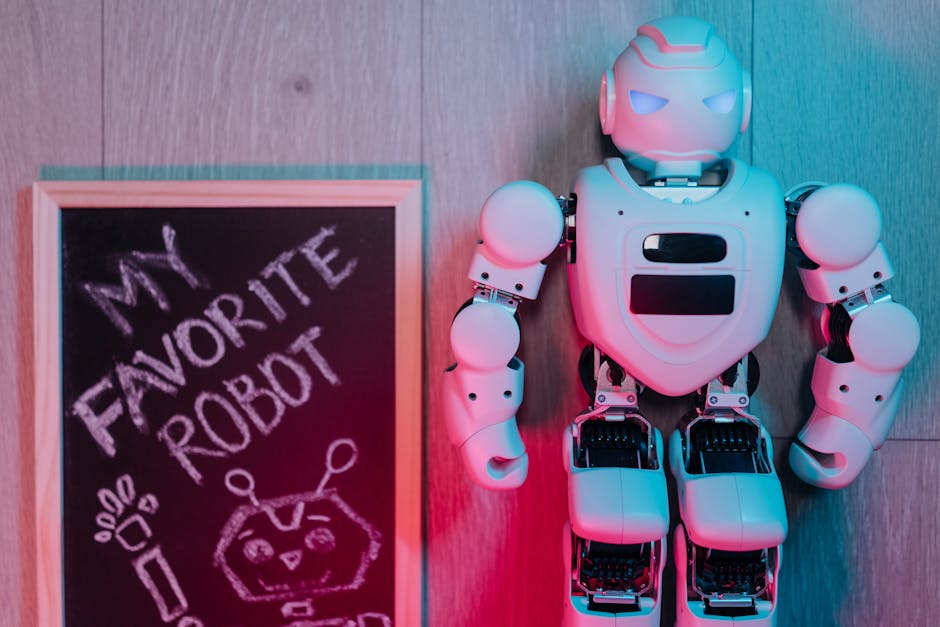
A futuristic toy robot standing beside a chalkboard on wooden flooring, highlighted by colored lighting.
Photo by Pavel Danilyuk on Pexels

The so-called AI humanizer myth deserves special attention. Tools like GPTinf claim to transform machine text into something undetectable. Their marketing boasts of millions of texts processed. But in 2026, these humanized outputs follow predictable statistical patterns. The sentence variety is too perfect. The word choice is too evenly distributed. Real human writing contains awkward phrasing, inconsistent rhythm, and personal idiosyncrasies that no algorithm can replicate. Universities have updated their academic integrity policies accordingly: any text that appears to have been run through a humanizer is now treated as a violation, regardless of whether the original source can be proven.

The ethical bottom line is straightforward. Using AI to create thoughts rather than organize your own violates nearly every university honor code. The risk of expulsion, a permanent mark on your transcript, or even degree revocation far outweighs any time saved. The search for the best AI tool for writing essays is ultimately a search for a problem, not a solution. The real solution is original, expert-written content that carries zero detection risk.

The Top AI Essay Tools in 2026 (And Where They Fail)

The market is crowded with platforms promising academic salvation. Understanding what they offer, and where they break down, helps clarify why none of them deserve your trust for final submissions.

GPTinf: The All-in-One Suite

GPTinf markets itself around a "Write, Polish, Verify" workflow. The idea is appealing: generate text, humanize it, and then check it against detection models, all within a single interface. The pricing runs up to $29.99 per month for unlimited access, and the platform reports users in over 80 countries. The 2026 failure point is the circular nature of its verification step. The tool checks text against its own detection model, not the university-grade systems your professor uses. Students consistently report that text verified as human by GPTinf is still flagged by Turnitin. You are paying a premium for a false sense of security.

The Good AI: The Outliner's Friend

A spacious historic library with wooden tables and stained glass windows.
Photo by Louie Cepeda on Pexels

The Good AI has built a reputation around its essay outliner and structure generator. It claims a user base of over three million writers and is trained on millions of high-quality essays. For organizing your own ideas into a coherent skeleton, it performs reasonably well. The failure point in 2026 is precisely that training data. Because it learned from such a massive corpus of existing essays, its output patterns are highly recognizable to detection algorithms. It is excellent for planning. It is dangerous for writing. Use the outliner to build a skeleton, then write the content yourself.

Yomu AI: The Academic Specialist

Yomu AI positions itself as the number one AI writing tool for students, with features like figure and table management, citation search via Sourcely, and a personal source library. Testimonials come from PhDs, lawyers, and researchers. The tool handles citations better than most competitors. The 2026 failure point is the prose itself. While the references may be real, the body text still carries the unmistakable rhythm of machine generation. Universities now flag the style of writing, not just the accuracy of sources. Even with perfect citations, the voice will feel sterile and generic to a trained professor.

Paperguide: The Literature Review Tool

Paperguide offers a free plan with ten AI generations per day and 300 words of output, with paid plans starting at $12 per month. Its standout feature is a full literature review capability that helps surface relevant academic sources. The free plan is far too restrictive to write a complete essay, and the paid tiers still produce text that requires heavy rewriting to avoid detection. Paperguide is useful for finding sources. It is dangerous for generating final copy.

ChatGPT: The General-Purpose Baseline

ChatGPT remains the most accessible option and the one most students try first. It is versatile but generic. As one widely cited assessment notes, ChatGPT can write a good college essay but cannot write a great one. In 2026, professors expect great work, or they grow suspicious. ChatGPT's output is the most heavily tracked by every major detector. The model's prose patterns are so well documented that even light editing rarely masks its origin. Use ChatGPT for brainstorming bullet points. Do not use it for writing paragraphs you plan to submit.

The Hidden Danger: AI Hallucinations and False Citations

A hallucination occurs when an AI invents a fact, statistic, or source that looks entirely real but does not exist. The paper might cite "Richardson and Chen (2022)" with a plausible-sounding journal name and volume number. That study never happened. The authors do not exist. The DOI leads nowhere.

A single hallucinated citation can destroy the credibility of your entire paper. Professors in 2026 are trained to spot these fabrications. Many now spot-check references as a standard part of their grading workflow. Students have faced academic misconduct hearings because their AI-generated paper cited a non-existent Supreme Court case or a fabricated clinical trial. The consequences extend beyond a failing grade. They raise questions that follow you through your academic career.

No AI tool can guarantee 100 percent factual accuracy. These are language models, not databases of truth. They predict which words should follow other words. They do not verify whether those words describe something real. If you use AI for research, verify every single fact and citation manually. If you cannot confirm a source exists, delete it. That level of diligence takes time, which undermines the very reason you turned to AI in the first place.

Why AI Humanizers Still Get Flagged in 2026

Humanizers work by swapping synonyms and rephrasing sentences. The result is text that avoids the most obvious AI markers but introduces a new problem: a statistical fingerprint of being too perfectly varied. Real human writing has natural inconsistencies. A student might write a long, winding sentence followed by a fragment. They might repeat a word because they like how it sounds. Humanizers smooth all of that out, creating a uniformity that detection algorithms now recognize instantly.

Universities have also adopted stylometric analysis. This technique compares the writing style of a submitted essay to the student's previous work. If your past papers show a consistent voice and your new submission suddenly reads like it was run through a humanizer, the contrast triggers a flag. The tool does not need to prove AI was used. The stylistic discrepancy alone is enough to launch an investigation.

The numbers that humanizer companies promote, like 62 million texts processed, create a false sense of safety. Popularity does not equal effectiveness. The only safe humanizer is a real human writer. No software can replicate the nuance, personal experience, and unique voice of a custom-written paper. The best AI tool for writing essays cannot be a humanizer, because humanizers are a losing game.

The Smarter Strategy: Use AI for Thought, Not Creation

AI belongs in the early stages of your writing process, not the final output. Treat it as a thinking partner that helps you clarify your own ideas. The golden rule is simple: AI can help you figure out what to say, but you must say it yourself.

A practical workflow looks like this. First, use AI to brainstorm. Ask it for ten potential thesis statements on your topic. Read through them and identify which ones resonate with your understanding of the material. Second, select and refine. Pick the thesis that feels most aligned with your perspective and sharpen it with your own insights. Third, build an outline. Ask AI to structure your chosen thesis into a logical sequence of arguments and supporting points. Fourth, write the essay yourself. Use the outline as a guide, but produce every sentence in your own voice. Fifth, polish selectively. Use AI to check grammar or suggest a better transition between two paragraphs you have already written. Do not let it rewrite entire sections.

This approach works because you retain ownership of both the ideas and the voice. The essay is yours. A professor reading it will hear a human mind working through a problem, not a machine assembling statistically probable sentences.

When you hit a wall and cannot write the essay yourself, whether due to time constraints, skill gaps, or the complexity of the topic, do not turn to an AI tool. Turn to a professional custom writing service like Submit Your Assignments. Using AI to help you write is risky. Hiring an expert to write for you is a guaranteed, safe solution that delivers original work tailored to your requirements.

The Only Safe Alternative: Expert Custom Writing

The problems with AI are now well documented: detection by sophisticated software, hallucinated sources that destroy credibility, a generic voice that professors recognize instantly, and ethical violations that can derail your academic career. The alternative is straightforward. A human expert who knows your subject, writes in your required style, and delivers original, undetectable work eliminates every one of those risks.

Submit Your Assignments operates on a simple principle: every paper is written from scratch by a qualified writer. There is no AI risk because no AI is involved in the creation of your content. There are no hallucinations because human experts use real, verifiable sources and cite them properly. Every order includes a plagiarism-free guarantee backed by a report. The paper matches your academic level and personal tone because a real person writes it with your specific needs in mind.

The cost versus risk analysis deserves honest consideration. Paying for a custom paper is an investment in your grade and your academic record. Using a free AI tool risks your entire degree. The math is not complicated. Stop searching for the best AI tool for writing essays. You have found the best solution: expert, human-written content. Visit Submit Your Assignments to get started on a paper that is genuinely yours, written by someone who understands what your professor expects.

Frequently Asked Questions

Is it illegal to use ChatGPT to write essays? No, it is not illegal in a criminal sense. However, it violates most university academic integrity policies. In 2026, those policies have been updated to explicitly ban AI-generated content as a form of plagiarism. The consequences are academic, not legal, but they can be severe.

Can professors tell if I used AI in 2026? Yes. Detection tools are highly accurate and continue to improve. Beyond software, professors can often tell by the writing style alone. Overly formal tone, repetitive sentence structures, and a lack of personal voice are telltale signs that experienced educators recognize immediately.

What is the best AI tool for writing essays that will not be detected? There is no such tool. All AI-generated text leaves a trace. Humanizers reduce the risk slightly but do not eliminate it. The only undetectable essay is one written by a human.

Can I use AI to help with research? Yes, but with extreme caution. Use AI to find keywords or summarize articles you have already read. Never use AI to generate citations or facts without manual verification. Treat every AI output as potentially false until you confirm it yourself.

What should I do if I am struggling with an essay? Use AI for brainstorming and outlining. If you are still stuck, invest in a custom writing service like Submit Your Assignments. It is safer, faster, and guarantees a better grade than any AI tool on the market.


pexels photo 9572547

How Do I Write My Essay? A Step-by-Step Guide for 2026

If you have ever asked yourself, "How do I write my essay," you are not alone. That moment of staring at a blank screen, cursor blinking, deadline creeping closer, is something every student knows too well. The good news is that writing an essay is not a mystical talent reserved for a chosen few. It is a process, a system you can learn and repeat. This guide walks you through that entire process, from the first flicker of an idea to the final period, using a practical three-stage framework that works for high school assignments, college papers, and even personal admissions essays. Here is exactly how to write your essay, step by step.

Table of Contents

Why Writing an Essay Feels So Hard (And How to Fix It)

The struggle to start writing is rarely about a lack of skill. It is almost always about a psychological barrier that turns a blank document into something intimidating. You might recognize the feeling from a Reddit user who described sitting in front of an empty document with a brain that "just cant write." This is blank page syndrome, and it tricks you into believing you need to produce a polished, brilliant essay on the first attempt.

Close-up of a black pen resting on an open spiral notebook with lined pages.
Photo by Rahul Shah on Pexels

The truth is that writing is not about producing a perfect product immediately. Think of an essay as a mirror or a problem-solving method. You do not write because you have everything figured out. You write to figure out what you think. The act of putting words on the page gives you perspective on your own thoughts, a perspective you cannot access by just thinking in circles inside your head. This reframing is powerful. Your goal right now is not to write a final draft. Your goal is to build a rough structure, a skeleton of ideas that you will shape and polish later. The antidote to overwhelm is breaking the task into three manageable stages: Preparation, Writing, and Revision. When you focus on just one stage at a time, the impossible becomes entirely doable.

Stage 1: Preparation – Building Your Essay’s Foundation

The biggest mistake students make is skipping the preparation stage and jumping straight into writing. Preparation is not wasted time. It is the foundation that prevents you from getting lost halfway through your draft.

Start by decoding the prompt. Read the assignment question carefully and circle the keywords. Words like "analyze," "compare," "argue," or "describe" tell you exactly what type of essay you need to write. An argumentative essay requires you to take a position and defend it. An expository essay asks you to explain a topic clearly. A narrative essay invites you to tell a story. Understanding this upfront saves you from writing a beautiful essay that completely misses the assignment's requirements.

Overhead shot of a person organizing notes and study materials on a cluttered desk with a laptop.
Photo by cottonbro studio on Pexels

Once you understand the task, move into brainstorming. Use the freewriting technique that experienced writers swear by. Set a timer for ten minutes and write everything you know or think about the topic. Do not edit. Do not correct spelling. Do not judge whether an idea is good or bad. Just dump every thought onto the page. This process bypasses your inner critic and often uncovers connections and insights you did not know you had. After the timer goes off, read through your freewrite and highlight the most promising ideas.

Now it is time to research with purpose. A common trap is endless reading, convincing yourself you are working when you are really just delaying the writing. Instead, identify the main ideas from your brainstorming session and look for three to five credible sources that support or challenge those ideas. Your goal is not to become an expert on the entire subject. Your goal is to find specific evidence, data, or expert opinions that strengthen your argument. As you find useful material, note the full citation details immediately. This small habit saves hours of frantic searching later.

With your research in hand, craft a working thesis. A thesis is a single sentence that states your main argument. It does not need to be perfect at this stage. Think of it as a compass that keeps your writing headed in the right direction. A weak thesis might say, "Social media affects teenagers." A stronger working thesis would say, "Social media platforms contribute to rising anxiety among teenagers by promoting unrealistic comparisons and disrupting sleep patterns." The second version is specific, arguable, and gives you a clear path forward.

Finally, create a simple outline. This is your roadmap, and it does not need to be fancy. Use a basic bullet-point structure: Introduction with your hook and thesis, Body Point A with supporting evidence, Body Point B with supporting evidence, Body Point C with supporting evidence, and Conclusion. This outline takes ten minutes to create and will save you hours of staring at a half-finished essay wondering where to go next.

Stage 2: Writing – Getting the Words on the Page

With your outline ready, the writing stage becomes much less daunting. You are no longer facing a blank page. You are simply expanding bullet points into sentences and paragraphs.

The Introduction: Hook, Context, Thesis

Your introduction has one job: to make the reader want to continue. Start with a hook that grabs attention. You can share a surprising fact, ask a thought-provoking question, or tell a brief, relevant anecdote. Avoid generic openings like "Since the beginning of time" or "In today's society." These phrases signal to your reader that the essay will be boring, and they are often factually inaccurate.

After the hook, provide two or three sentences of context. Briefly explain why the topic matters or what background information the reader needs to understand your argument. This bridges your hook to your thesis. End the introduction with your thesis statement, the anchor for the entire essay. Every paragraph that follows should connect back to this sentence in some way.

The Body Paragraphs: The MEAL Plan

Each body paragraph should follow a simple structure known as the MEAL plan: Main idea, Evidence, Analysis, and Link. Start with a topic sentence that states the main idea of the paragraph. This sentence tells the reader what the paragraph will argue or explain. Next, present your evidence. This might be a quote from a source, a statistic, or a specific example. Then comes the most important and often overlooked part: analysis. Explain what the evidence means and why it supports your main idea. Never assume the evidence speaks for itself. Your job is to interpret it for the reader. Finally, link back to your thesis or transition to the next paragraph.

Integrating sources smoothly is a skill that separates strong essays from weak ones. When you use a quote, introduce it with a signal phrase like "According to Smith (2020)" or "As Johnson argues." After the quote, explain it in your own words. A dropped quote, one that appears without introduction or explanation, confuses the reader and breaks the flow of your argument.

Transitions between paragraphs are equally important. They guide your reader through your logic. Use words and phrases like "furthermore," "in contrast," "as a result," or "similarly" to show the relationship between ideas. These small words make a big difference in how professional and coherent your essay feels.

The Conclusion: Wrap It Up Without Repeating

A strong conclusion does more than just summarize. Restate your thesis in new words, reflecting the deeper understanding the essay has developed. Do not copy and paste your original thesis from the introduction. Briefly summarize your main points in one or two sentences, then end with a "so what" statement. This final thought should leave the reader with something to consider. It might be a call to action, a look toward the future, or a broader implication of your argument. The conclusion is your last chance to make an impression, so make it count.

Stage 3: Revision – Turning Good into Great

Many students submit their first draft as their final draft. This is a mistake. Revision is where strong writing emerges, and it happens in distinct passes.

Start with the big picture pass. Read your essay for structure and flow. Ask yourself whether each paragraph supports the thesis. Is the argument logical and easy to follow? Are there sections that feel repetitive or irrelevant? At this stage, be willing to move paragraphs, delete sentences, or even rewrite entire sections. This is not about fixing commas. This is about making sure the essay works as a whole.

Next, move to the sentence-level pass. Read for clarity and concision. Cut unnecessary words and phrases that add bulk without meaning. Vary your sentence length to create rhythm. A series of short sentences can feel choppy. A series of long sentences can feel exhausting. Mix them intentionally. This is also the time to check for the five C's of essay writing: Clarity, Cogency, Completeness, Concision, and Conventionality. Each sentence should be clear, logically sound, thorough, efficient, and appropriate for academic writing.

The grammar and mechanics pass comes next. Use a grammar checker as a first line of defense, but do not rely on it completely. Read your essay aloud, slowly. Your ears will catch awkward phrasing and errors that your eyes skip over. Listen for subject-verb agreement issues, comma splices, and sentences that simply sound wrong. If you stumble while reading, your reader will stumble too.

Finally, perform a citation check. Verify that every source you used is cited correctly in the required style, whether that is APA, MLA, or Chicago. Check both your in-text citations and your reference list or works cited page. Missing or incorrect citations can undermine your credibility and, in some cases, lead to accusations of plagiarism. This step takes time but is non-negotiable.

How to Handle Specific Essay Types (A Quick Guide)

Different essay types require slightly different approaches. For an argumentative essay, focus on the counterargument and rebuttal technique. Acknowledge the strongest opposing viewpoint, then explain why your position is more convincing. This shows intellectual honesty and strengthens your credibility. For an expository essay, prioritize clear explanation and solid evidence. Use straightforward topic sentences and avoid inserting personal opinion unless the assignment specifically asks for it. For a narrative or personal essay, write in your natural voice. Use sensory details to show rather than tell. Describe what you saw, heard, and felt. For a college admissions essay, authenticity matters more than impressiveness. Write about a small, specific moment that reveals something true about your character. Do not try to sound like someone else. Admissions officers read thousands of essays and can spot a manufactured voice immediately. Rewrite multiple times, and show your drafts to people you trust for honest feedback.

Common Essay Writing Mistakes to Avoid in 2026

Procrastination remains the number one enemy of good writing. Break your essay into manageable chunks using the Pomodoro Technique: write for twenty-five minutes, then take a five-minute break. Repeat. You do not need inspiration to start. You just need to start. A weak thesis is another common problem. If your thesis is too broad or too obvious, your entire essay will lack direction. Fix it by making it specific and arguable. Overusing passive voice drains energy from your writing. "The experiment was conducted by the team" is weaker than "The team conducted the experiment." Active voice creates clearer, more direct sentences. Finally, the most common mistake of all is ignoring the prompt. After you finish your draft, return to the assignment question and read it again. Does your essay answer it directly and completely? If not, revise until it does.

Get Expert Help with Your Essay at Submit Your Assignments

If you have followed these steps and still feel stuck, or if a deadline is approaching faster than you can manage, Submit Your Assignments offers professional essay writing assistance tailored to your specific prompt and academic level. Our team of US-based writers can help you brainstorm, outline, write, or revise your essay, always focusing on original, plagiarism-free work delivered on time. Whether you need a model essay to study and learn from or a full draft ready for submission, visit Submityourassignments.org to get started. Let us help you turn that blank page into a finished grade.

bzTvj6DgbQO

How to Create Custom Study Flashcards in 5 Minutes Using AI

It’s 11 PM on a Sunday. You’re staring at a 40-slide PowerPoint deck that looks like it was written in a different language, and you have a midterm at 8 AM. Your brain is essentially a fried egg. You know you should make flashcards because everyone says they’re the "holy grail" of studying, but the thought of manually typing out "The Mitochondria is the powerhouse of the cell" for the 500th time makes you want to throw your laptop out the window.

We’ve all been there. The "grind" is real, but it doesn't have to be this soul-crushing. What if you could take that mountain of notes and turn them into a perfect deck of study cards before your coffee even gets cold?

And no, you don't need to stay up until 3 AM doing it.

Why Your Current Study Method is Probably Mid

Let’s be honest: rereading your notes is a trap. You scroll through the highlighted text, your eyes glaze over, and you think, "Yeah, I know this." Then the exam hits, and suddenly you’re staring at a blank page like it’s a personal insult.

The secret sauce to actually remembering stuff is Active Recall. This is just a fancy way of saying you need to force your brain to pull information out of thin air instead of just looking at it. Flashcards are the best tool for this, but the time it takes to make them is the literal worst.

But here’s the good news: you can stop the manual labor. Using our free AI Flashcard Generator, you can skip the setup and get straight to the learning.

Quick Tips for God-Tier Flashcards

Before you start generating, keep these three things in mind:

  1. One Idea Per Card: Don't try to fit a whole paragraph on one side. Keep it punchy.
  2. Use Simple Language: If you can’t explain it to a five-year-old, you don't know it yet.
  3. Mix It Up: Ask questions, use fill-in-the-blanks, and throw in some "Why" questions.

Hand-drawn sketchy lightbulb and brain sparks, lo-fi student art style

Step 1: Feed the Beast (Your Notes)

First, grab your messy lecture notes, that PDF you haven't read, or even a transcript of a recorded lecture. Don't worry about formatting; the AI is smarter than it looks.

Head over to the SYA Student Tools page and find the Flashcard Generator. This isn't some complex software you need a PhD to run. You just paste your content into the box.

Step 2: Let the AI Do the Heavy Lifting

Once you hit that generate button, the AI combs through your text faster than you can check your TikTok notifications. It identifies the key terms, the tricky concepts, and the dates you’re definitely going to forget.

Within seconds, you’ve got a full deck of cards ready to go. It’s like having a personal tutor who actually likes reading your boring history notes.

Close-up of a student using a smartphone to flip through digital flashcards in a cozy room

Step 3: Review and Refine (The "Human" Part)

As we said earlier, the AI does the hard work, but you’re still the boss. Take two minutes to scroll through the cards. Delete the ones that are too easy, and tweak the ones that feel a bit "bot-ish."

This part is actually a secret study hack. By just reviewing the cards the AI made, you’re already doing a "pre-study" session. Your brain starts making connections before you’ve even started the actual grind.

Step 4: Study Smarter, Not Harder

Now that you have your deck, use the time you saved to actually live your life. Go for a walk, grab a snack, or: dare we say it: get a full eight hours of sleep.

When you do study, focus on the cards you get wrong more often. This is called Spaced Repetition, and it’s how the "straight-A" kids manage to have a social life while you’re stuck in the library.

Why are we giving this away for free?

Because at Submit Your Assignments, we know being a student is expensive enough. We "charge like a bird" for our custom writing and tutoring services, but we wanted to build a toolbox that helps you handle the day-to-day chaos without spending a dime.

Whether you need a full custom research paper or just a quick set of cards for your bio quiz, we’ve got your back.

A student relaxing on a beanbag chair, looking at their phone, textbooks piled nearby

Stop Worrying and Start Testing

Listen up: your time is the most valuable thing you have. Don't waste it on the "busy work" of making flashcards when you could be using that time to master the material.

Trust our tools to handle the boring stuff. Head over to our Student Hub right now and try the Flashcard Generator for yourself. It’s free, it’s fast, and it might just save your GPA.

Wait, what else can you do for free?

  • Audio Transcription: Turn your 2-hour lectures into readable text.
  • AI Essay Review: Check your work for "bot vibes" before your professor does.
  • Quiz Generator: Turn any text into a practice test.

Fun Facts for the Road:

  • Active recall can improve your memory retention by up to 50%.
  • The human attention span is now shorter than a goldfish's (allegedly).
  • Coffee doesn't actually give you energy; it just borrows it from later.
  • Our writers have an average rating of 4.5 on Trustpilot because they actually care.

Submit Your Assignments provides custom reference materials and tutoring services for research and educational purposes only. We encourage all students to follow their institution's academic integrity policies.

pexels photo 3807759

Best Website to Write My Essay in 2026 | Submit Your Assignments

The clock is ticking, the cursor blinks on a blank page, and your deadline feels like a freight train bearing down on you. You have searched for the best website to write my essay more times than you can count, only to land on sites that feel slick but hollow, promising the world while hiding their real costs and credentials. The anxiety is real, and the stakes are high. This guide cuts through the noise. It is not a rehash of marketing slogans or paid rankings. It is a clear-eyed look at what separates a genuinely trustworthy writing service from the rest, and why Submit Your Assignments has earned its reputation as the complete answer for students who refuse to gamble with their grades. By the time you finish reading, you will understand exactly what makes a service worth your money and your trust.

Table of Contents

What Makes a Website the “Best” for Writing Essays?

Finding the best website to write my essay is not about picking the first name that appears in a search ad. It is about evaluating a service against a set of non-negotiable standards that directly affect your academic safety and your final grade. The flashiest website means nothing if the writer behind your paper lacks subject expertise or a command of academic English.

Graduation cap with diploma roll tied with red ribbon on concrete surface.
Photo by Feyza Tuğba on Pexels

The quality of writers is the foundation. Degrees, years of experience, subject specialization, and verifiable writing samples matter far more than stock photos of smiling graduates. A service that cannot tell you who will write your paper is a service you cannot trust. Pricing transparency comes next. Hidden fees, vague per-page costs, and surprise charges at checkout are red flags that signal a company more interested in your wallet than your success. Honest services quote clear prices based on academic level, deadline, and page count, with no last-minute additions.

Deadline reliability is equally critical. The best services deliver on time, every time, even for urgent orders in the three-to-six-hour range. A missed deadline can mean a failed course, and no refund policy fully repairs that damage. Plagiarism guarantees are non-negotiable. Original content backed by a plagiarism report is the minimum standard for academic safety. Finally, customer support separates professionals from amateurs. Twenty-four-hour availability, live chat, and responsive account managers who solve problems instead of deflecting them are hallmarks of a service that respects its clients.

The Current Landscape of Essay Writing Services in 2026

The essay writing industry in 2026 is more crowded and more confusing than ever. These platforms advertise starting prices around eight to twelve dollars per page and showcase writer profiles with ratings and order histories. They position themselves as AI-free and human-only, a claim that resonates with students worried about AI detection software.

Explore a peaceful library setting with rows of books offering knowledge and inspiration.
Photo by Matteo Basile on Pexels

At the same time, AI writing tools are rising fast and represent a new wave of automated assistance, with the former trained on millions of essays and the latter built around a structured writing methodology. These tools offer speed and low cost, but they carry significant academic integrity risks. Universities are deploying increasingly sophisticated AI detectors, and submitting AI-generated content can trigger honor code violations that follow a student for years.

Price wars continue to shape the market. The Reddit effect has also reshaped how students research services. More and more, students seek peer recommendations on Reddit threads, valuing unfiltered real experiences over polished marketing copy. This hunger for authenticity reveals a deep skepticism toward traditional advertising claims.

Why Submit Your Assignments Stands Out as the Best Website to Write My Essay

Human Writers with Real Academic Credentials

Submit Your Assignments builds its reputation on the strength of its writing team. Every writer holds at least a bachelor’s degree, and a significant portion of the team carries master’s or PhD qualifications in their specialized fields. This is not a platform where anyone with a laptop can sign up and start taking orders. Writers are vetted through a rigorous process that includes subject-specific tests, sample submissions, and thorough background checks. The result is a team of professionals who understand academic expectations at every level, from freshman composition to doctoral dissertations.

Clients have the flexibility to request a specific writer whose work they have come to trust, or they can be matched with the best available expert based on subject expertise and past performance. This personalized matching process ensures that a nursing student gets a writer with healthcare knowledge, not a generalist guessing at medical terminology.

Transparent, Student-Friendly Pricing

Pricing at Submit Your Assignments is built on a principle of radical transparency. There are no hidden fees, no surprise charges tacked on at checkout, and no vague per-page costs that shift depending on who you talk to. The pricing structure is clear from the start, based on academic level, deadline proximity, and page count. Competitive rates beat what other services advertise, without the quality compromises that often accompany bargain-basement services.

Comprehensive Services Beyond Essays

While the search for the best website to write my essay starts with essays, Submit Your Assignments offers a full spectrum of academic support. The service covers research papers, term papers, dissertations, case studies, lab reports, book reviews, and more. Students who have already written drafts but need professional polish can access editing and proofreading services that sharpen arguments, correct grammar, and perfect formatting.

Custom formatting is included as a standard feature, not an upsell. Whether your professor requires APA, MLA, Chicago, or Harvard style, your paper arrives properly formatted with accurate citations and a complete reference list. This attention to detail saves students hours of tedious formatting work and protects against lost points for citation errors.

Ironclad Quality Guarantees

Submit Your Assignments backs every order with guarantees that remove the risk from the equation. The plagiarism-free guarantee means every paper is written from scratch and scanned with industry-standard detection tools. Reports are available upon request, giving you documented proof of originality.

Unlimited revisions are included at no extra charge. If any part of the paper does not meet your expectations or your professor’s instructions, the writer revises it until you are satisfied. There are no caps, no time limits, and no hidden fees for revision requests. The money-back guarantee provides a final safety net: if a deadline is missed or quality standards are not met, you are entitled to a full refund. These guarantees are not marketing fluff. They are enforceable commitments that shape how the company operates.

24/7 Support and Real-Time Order Tracking

Support at Submit Your Assignments is available around the clock through live chat, email, and phone. Questions do not wait for business hours, and neither does the support team. The client dashboard provides real-time order tracking, allowing you to message your writer directly, upload additional materials, and monitor progress from start to finish.

For repeat clients and large projects like dissertations, dedicated account managers provide personalized oversight. This level of attention ensures that complex, multi-chapter projects stay on schedule and maintain consistent quality throughout.

How Submit Your Assignments Compares to Top Competitors

Submit Your Assignments vs. Paper Mills

Some paper mills start at eight dollars per page and offers a pay-after-delivery model that reduces financial risk. However, writer ratings on the platform vary widely, ranging from 4.89 to 4.96, which means quality can be inconsistent depending on which writer you draw. Submit Your Assignments maintains consistent quality across its entire writer pool through stricter vetting and ongoing performance monitoring. Some services offer payment protection, but Submit Your Assignments provides more generous revision flexibility, ensuring that a paper that misses the mark gets fixed without additional charges.

Submit Your Assignments vs. The biggest Competitors

Major Writing Services estimate to have served over 250,000 students and completed more than 1.5 million papers, impressive numbers that speak to its scale. But scale can work against personalized attention. High-volume services sometimes assign writers who are stretched thin across multiple orders, which can compromise depth and originality. Submit Your Assignments prioritizes personalized attention, matching each client with a writer who has the bandwidth and expertise to give the project full focus. Both companies use trust signals, but Submit Your Assignments relies on verified client testimonials and transparent writer profiles rather than a wall of media logos.

Submit Your Assignments vs. AI Tools

AI writing tools offer speed and low cost, but they come with risks that human-written papers avoid. AI-generated content is increasingly detectable by Turnitin and other AI checkers, and the consequences of getting caught can include course failure or academic probation. Human-written essays from Submit Your Assignments are 100 percent original and pass all detection scans.

Beyond detection risks, AI tools lack the subject depth and nuanced argumentation that human experts bring. An AI can string together plausible sentences, but it cannot synthesize complex research, construct original arguments, or adapt to a professor’s specific expectations. When you need a completed paper that meets rigorous academic standards, human writers deliver faster and better results.

Services We Offer: More Than Just Essays

Submit Your Assignments covers the full range of academic writing needs. Essays of all types are available: argumentative, persuasive, descriptive, narrative, expository, and analytical. Each essay is tailored to the specific prompt, audience, and grading rubric you provide.

Research papers and term papers receive comprehensive treatment, including full literature reviews, methodology sections, data analysis, and well-supported conclusions. For graduate students, dissertation and thesis support is available chapter by chapter, from proposal writing through final submission and defense preparation. Homework and assignments span every subject area: math, science, programming, business, humanities, and social sciences. No subject is too specialized.

Editing and proofreading services help students who have drafts but need professional polish. Grammar fixes, structural improvements, and formatting checks transform rough drafts into submission-ready papers. Admission essays and personal statements receive special attention, helping applicants stand out in competitive college and graduate school admissions. Professional career documents, including resumes and cover letters, are written by industry experts who understand what hiring managers look for.

Real Student Success Stories

A nursing student faced a 48-hour deadline for a ten-page research paper on patient safety protocols. The topic required current clinical research and proper APA formatting. Submit Your Assignments matched her with a writer holding a master’s in nursing. The paper was delivered in 36 hours, giving her time to review it before submission. She earned an A and has since returned for multiple assignments.

A graduate student in history had completed his dissertation draft but knew it needed structural editing and citation cleanup. The editor assigned to his project restructured two chapters for better argument flow, corrected inconsistent footnote formatting, and flagged several gaps in the literature review that needed attention. The revised dissertation passed his committee review with minimal requested changes.

An international student applying to competitive US graduate programs struggled with the nuances of English grammar and idiomatic expression in her personal statement. Her assigned writer worked with her through multiple drafts, preserving her voice while polishing the language. She gained admission to her top-choice program and credited the personal statement as a deciding factor in her application.

Frequently Asked Questions About Essay Writing Services

Is it safe to use a writing service?

Submit Your Assignments guarantees complete confidentiality. All transactions are secured with industry-standard encryption, and no personal or order data is ever shared with third parties. Your identity and your academic information remain protected at every stage.

Will my professor know I used a service?

Every paper is written from scratch, checked for plagiarism, and delivered as a reference model. The intended use is as a guide, a source of ideas, or a study aid. Submitting the paper as your own work is not recommended and violates academic integrity policies. The service provides high-quality reference material that helps you understand how to approach your topic.

How fast can you write my essay?

Standard deadlines range from fourteen days down to six hours. Urgent orders in the three-to-six-hour window are available for shorter papers with clear, complete instructions. The feasibility of any deadline depends on the paper’s length and complexity, and the support team provides honest guidance before you place an order.

Can I communicate directly with my writer?

Yes. The client dashboard includes a direct messaging system that allows you to communicate with your writer throughout the process. You can provide additional instructions, share files, ask questions, and request updates at any time.

What if I need revisions?

Unlimited free revisions are included with every order. If any aspect of the paper does not align with your instructions, you can request changes until you are fully satisfied. There are no extra charges and no limits on the number of revision requests.

Final Verdict: Why Submit Your Assignments Is the Best Website to Write My Essay in 2026

The search for the best website to write my essay ends when you find a service that combines human expertise, transparent pricing, comprehensive academic support, and guarantees that actually mean something. Submit Your Assignments delivers on all four fronts. The writers are qualified professionals with real academic credentials. The pricing is clear, competitive, and free of hidden charges. The service catalog covers everything from a three-page essay to a full dissertation, with editing and career documents available as well. The guarantees, including plagiarism-free work, unlimited revisions, and a money-back policy, remove the risk that makes students hesitate.

Submit Your Assignments serves the whole student, not just the immediate assignment. It provides reference materials that help you learn, editing that improves your drafts, and support that reduces the stress of overwhelming academic workloads. If you are searching for the best website to write my essay, Submit Your Assignments delivers on every promise. Visit Submityourassignments.org, place your first order, and experience the difference that a truly student-focused service makes.

pexels photo 8423452

How to Find Motivation to Write My Essay: 7 Proven Strategies

You are staring at a blinking cursor on a blank white screen, and it feels like it is staring back. The deadline is real, the guilt is building, and yet your fingers refuse to move. If you have typed "motivation to write my essay" into a search bar at 11 p.m., you are not broken, and you are certainly not alone. This is a specific kind of academic paralysis that hits millions of students every semester. The good news is that motivation is not a magical lightning strike reserved for the naturally disciplined. It is a system you can build in the next ten minutes. This article will walk you through seven concrete strategies to move you from frozen to finished, blending psychological tricks, environmental design, and a modern approach to technology that goes beyond the standard "just turn off your phone" advice.

Table of Contents

Why You Have No Motivation to Write Your Essay (And Why That’s Normal)

The blank page paralysis you are experiencing is a near-universal student ritual. It is crucial to separate the concept of laziness from a genuine motivation block. Laziness is a conscious choice to avoid work in favor of pleasure, and it usually feels pretty good. A motivation block, on the other hand, feels awful. It is characterized by anxiety, guilt, and a frustrating inability to start a task you desperately want to finish. You are not choosing to watch Netflix; you are just not choosing to write.

A frustrated woman using a laptop with coffee at a home table, expressing concern.
Photo by Helena Lopes on Pexels

The root of this block usually comes down to two psychological culprits. The first is overwhelm. Your brain looks at a 2,000-word research paper and sees a monolithic, impossible mountain. Because the task is not broken down, your brain’s threat response activates, and it steers you toward easier, safer tasks like cleaning the fridge. The second culprit is perfectionism. You have an idealized version of the essay in your head, and you know that the first words you type will not match that ideal. The fear of producing bad writing is so strong that it prevents you from producing any writing at all. Understanding this is the first step. Motivation is not a feeling you wait for; it is a state you engineer by lowering the stakes and shrinking the task.

Strategy #1 – Hack Your Environment Before You Hack Your Brain

Your brain takes behavioral cues from your surroundings. If you are trying to write in a space your brain associates with sleep, gaming, or socializing, you are fighting an uphill battle against your own neurology. Before you write a single word, perform a "Two-Minute Reset." Clear your physical desk of everything except your laptop, a glass of water, and any necessary notes. Then, close every single browser tab that is not directly related to the essay. A clean visual field signals to your brain that a new mode of operation is beginning.

A well-organized home office desk with a laptop, stationery, and warm lighting.
Photo by Claudio Mota on Pexels

Distraction-proofing goes far beyond the standard advice of silencing your phone. The mere presence of a smartphone on your desk, even face down, reduces cognitive capacity. Place the phone in a different room entirely. If you need a digital lock, use a focus app like Forest or Freedom to block distracting sites for a set period. Finally, curate your audio environment. Generic "study music" can be hit or miss. Instead, try instrumental playlists specifically engineered for concentration, such as Lo-fi hip hop streams, ambient drone music, or video game soundtracks. These genres are explicitly composed to keep you engaged without pulling your focus toward lyrics. If possible, position your desk near natural light, which regulates circadian rhythms and boosts alertness. If it is dark outside, a cool-white desk lamp is far better for focus than a dim, warm overhead light.

Strategy #2 – The "Terrible First Draft" Permission Slip

The single biggest barrier to finding the motivation to write my essay is the internal editor living in your head. This is the voice that criticizes a sentence before you even finish typing it. To beat the blank page, you must fire the internal editor and explicitly give yourself permission to write badly. The goal of a first draft is not eloquence; the goal is existence. You cannot sculpt a statue without first dumping a heap of clay on the table.

Start with a 15-minute brain dump. Set a timer, open a blank document, and write everything you know about the topic in a stream of consciousness. If you do not know what to write, type "I don't know what to write and I am stuck because the topic is too broad" over and over until a real thought breaks through. This physical act of typing breaks the inertia of stillness. Crucially, you must separate the writing process from the editing process. Do not correct a typo. Do not rephrase a clunky sentence. If you use a tool like Grammarly or Hemingway, turn off the real-time correction features. Those red underlines are kryptonite for a first draft. Anne Lamott famously championed the concept of the "shitty first draft" in her book Bird by Bird, and it remains the most liberating truth in writing. All good writing is rewriting, and you cannot rewrite a blank page.

Strategy #3 – Use the Pomodoro Technique for Essay Sprints

The Pomodoro Technique is popular for a reason: it hacks your brain’s perception of time. Committing to writing for 25 minutes feels psychologically safe. It is a finite, survivable chunk of time, not an endless marathon. The standard cycle is 25 minutes of focused work followed by a 5-minute break. For essay writing, do not just set the timer and stare at the screen. Attach a micro-goal to each sprint. Sprint one might be "Write the thesis statement and three topic sentences." Sprint two could be "Write the body paragraph for Point A, no matter how rough."

The break is just as important as the sprint. During your 5 minutes, do not check social media or open a messaging app. Social media is a context-switching trap that will hijack your dopamine and make it painful to return to the essay. Instead, stand up, stretch, look out a window, or refill your water glass. These physical resets keep your brain in the academic zone while giving your eyes and posture a rest. Productivity researchers have noted that short, timed sprints can reduce task aversion significantly because they replace the fear of an infinite task with the certainty of a short, defined block. After two or three cycles, you will often find that you have tricked yourself into a state of flow and no longer need the timer.

Strategy #4 – The "Why" Reminder: Reconnect to Your Goal

When you are deep in the weeds of a thesis statement about 18th-century economic policy, it is easy to forget why any of it matters. Reconnecting to your larger purpose provides the emotional fuel to push through the boring parts. Before you start your first Pomodoro sprint, close your eyes for 30 seconds and run a visualization exercise. Do not visualize yourself writing; visualize the moment after you submit. Imagine the physical sensation of relief, the click of the submit button, the freedom of closing the laptop without guilt.

Make that "why" tangible. Grab a sticky note and write a single sentence that connects this essay to a concrete, personal outcome. "This essay protects my GPA for grad school." "Finishing this lets me enjoy the weekend guilt-free." "This is one step closer to the diploma." Stick it directly on your monitor bezel. Another powerful tactic is to look at past wins. Open up an old assignment where you received a good grade or a positive comment from a professor. Re-reading evidence of your competence triggers a dopamine response and reminds you that you are capable of doing this. The key is to avoid the "big picture" trap. Do not think about the entire semester or your entire GPA. Focus only on the next 30 minutes of this single essay.

Strategy #5 – The 3 C’s of Writing: Clarity, Concision, Coherence

Sometimes, a lack of motivation is actually a mask for confusion. You may be stuck because you do not fully understand your own argument, and your brain knows it. This is where the "3 C’s of writing" become a diagnostic tool. The first C is Clarity. If you cannot write, pause and try to explain your main argument out loud in one sentence. If you cannot do that, you are not ready to write; you need to go back to the research phase. A fuzzy thesis creates a fuzzy paper, and your brain will resist that ambiguity.

The second C is Concision. The fear of "not having enough to say" or, conversely, "having too much to say" can cause paralysis. Set a strict word count budget for each section before you begin. For example, allocate 300 words for the introduction, 400 words for the first body paragraph, and so on. This removes the anxiety of the infinite page and gives you a clear finish line for each section. The third C is Coherence. A lack of a clear roadmap creates a massive mental load because you have to figure out "what comes next" while also trying to write. Use a simple, old-school outline: I. Introduction, II. Point A with supporting evidence, III. Point B with supporting evidence, IV. Conclusion. A visible structure acts as a safety net, catching you every time you get lost.

Strategy #6 – Technology as a Motivational Tool (Not a Distraction)

Most advice about technology and essay writing is purely negative: turn it off, block it, hide it. But in 2026, treating technology only as an enemy is a missed opportunity. Used correctly, AI and digital tools can reduce the friction that causes procrastination. The blank page is terrifying because it represents infinite possibility. An AI assistant like ChatGPT or Claude can shrink that infinity. Ask it to generate a rough essay outline based on your thesis, or ask it to provide three counterarguments to your main point. The critical caveat is that you must use this as a brainstorming partner, not a ghostwriter. The generated outline is a starting point to react against, not a final product to copy.

Grammar anxiety is another hidden motivation killer. If you freeze up worrying about comma splices, use a tool like Grammarly or ProWritingAid, but only after the draft is complete. Knowing that a safety net exists for the polishing phase frees you to write messily in the creation phase. If typing feels physically impossible, switch modalities entirely. Open a voice-to-text tool like Google Docs voice typing or Otter.ai and simply dictate your thoughts. Speaking is often faster and less intimidating than typing, and it bypasses the perfectionist loop because you cannot easily backspace and edit spoken words. Finally, outlining apps like Workflowy or Notion allow you to create collapsible, checkbox-style outlines. The simple act of checking off a sub-point provides a micro-hit of accomplishment that fuels the next step.

When Motivation Fails: The "Test the Consequences" Method

If you have tried every strategy and you are still frozen, there is a contrarian approach that can work: deliberately choose not to write, but do so mindfully. This is a behavioral experiment, not a surrender. Remove the guilt and the half-hearted scrolling. Make a conscious decision to skip the essay and observe what happens. What are the real-world consequences? You might receive a zero, which drops your grade. You might have to send an uncomfortable email to your professor. You might lose a scholarship threshold.

For some students, the abstract fear of failure is paralyzing, but the concrete experience of failure is clarifying. Experiencing the natural consequences of inaction can re-calibrate your motivation for the next assignment far more effectively than any pep talk. However, if you are 24 hours from the deadline and reading this, you need an emergency backup plan, not a behavioral experiment. In this scenario, your goal shifts immediately from "write a great essay" to "submit a complete essay." Done is infinitely better than perfect. Use a basic five-paragraph template, write the absolute minimum required word count, cite only the sources you already have open, and hit submit. A C-minus paper that exists is worth more than an A-plus paper that lives only in your imagination.

How to Build a Long-Term Motivation System for the Semester

The strategies above are rescue missions for a single essay. To stop finding yourself in this crisis every two weeks, you need a system that runs in the background of your semester. The first rule is the "No Zero Days" rule. On any day where you have an essay assigned, you must write at least one sentence or one bullet point. This keeps the project alive in your mind and prevents the cold start problem that makes each writing session so painful.

Second, schedule non-negotiable writing blocks in your calendar. Treat these 30-minute blocks like a mandatory class you cannot skip. Tuesday and Thursday from 3:00 to 3:30 p.m. is Essay Time, no exceptions. Third, create an accountability contract with a peer. Tell a classmate or a roommate that you will send them a completed draft by Friday at 5 p.m. The social pressure of not wanting to admit failure to another person is a remarkably powerful motivator. Finally, after you submit each essay, conduct a five-minute retrospective. Ask yourself what worked and what did not. Did the Pomodoro Technique help? Did you start too late? Did the voice-to-text method unlock something? Tweak your system based on this data. Over a semester, you will build a personalized motivation engine that makes the blank page far less intimidating.

Frequently Asked Questions

Q: How do I motivate myself to write my essay when I’m tired?
A: Do a 5-minute micro-sprint. Set a timer and commit to writing only the first three sentences. Often, the act of starting dissolves the resistance. However, if you are genuinely sleep-deprived, a 20-minute power nap or a full night of sleep is more productive than forcing low-quality work. Exhaustion is a biological reality, not a character flaw.

Q: What are the 3 C’s of writing?
A: The 3 C’s are Clarity, Concision, and Coherence. Clarity means your argument is easily understood. Concision means you use only the words necessary to make your point. Coherence means your ideas flow logically from one to the next. Focusing on these three structural elements reduces the anxiety of "writing beautifully" and keeps you focused on communication.

Q: Can I use AI to help me write my essay?
A: Yes, but only as a tool for brainstorming and structure. You can use AI to generate a rough outline, suggest counterarguments, or help you rephrase a clunky sentence. You must never submit AI-generated text as your own work. The thinking, the argument, and the final prose must be yours. AI reduces friction; it does not replace the work.

Final Checklist: Your 5-Step Motivation Rescue Plan

  • Step 1: Clear your desk and put your phone in another room.
  • Step 2: Set a 15-minute timer and write a "terrible first draft" brain dump.
  • Step 3: Use the Pomodoro Technique (25 min work / 5 min break) for two cycles.
  • Step 4: Read your "Why" sticky note out loud.
  • Step 5: Submit the draft, even if it is not perfect. You can edit a bad page; you cannot edit a blank one.
pexels photo 29545234

I Don’t Want to Write My Essay: A Guide for Stuck Students

You're staring at a blank page, the cursor blinking, and every fiber of your being is screaming, "I don't want to write my essay." You're not alone, and you're not lazy. That feeling of dread sitting in your chest right now is something millions of students experience every single semester. The good news is that this guide will give you three things: emotional validation that what you're feeling is completely normal, practical strategies to start writing even when you have zero motivation, and a clear path to professional help when you decide you'd rather spend your time on literally anything else. Whether you need a 10-minute jumpstart or a fully written essay, we've got your back.

Table of Contents

Why You Feel Like You Can’t Write Your Essay (And Why That’s Normal)

The shame cycle is real, and it follows a predictable pattern. You avoid the essay, which triggers guilt about not working on it, which leads to more avoidance, which deepens the shame. Rinse and repeat until the deadline is breathing down your neck. If you've ever fallen down a Reddit rabbit hole searching "I don't want to write my essay," you already know how many students are trapped in this exact loop. Those threads are filled with thousands of comments from people who get it, and that peer validation matters because it proves you're not broken.

Top view of closed laptop placed near mug of hot americano and white hardcover book on table
Photo by Monstera Production on Pexels

Three core emotional drivers are usually at play here. First, fear of failure: what if your essay isn't good enough? Second, perfectionism: you want every sentence to be brilliant before you've written a single word. Third, a complete lack of intrinsic motivation: you didn't choose this topic, you don't care about it, and no amount of self-talk is going to make you care.

Steven Pressfield called this force "resistance" in his book The War of Art, describing it as a universal creative block that attacks anyone trying to do meaningful work. It's not a personal failing. It's a psychological phenomenon. For some students, there's also an underlying factor at play: ADHD, which makes task initiation and sustained focus exponentially harder. We'll address that in detail shortly. Understanding why you're stuck is the first step. The second is taking action, starting with the smallest possible task.

What to Do When You Don’t Want to Write an Essay (7 Low-Effort Strategies)

The 10-Minute Rule (Your New Best Friend)

Set a timer for 10 minutes. Write anything. No editing, no judgment, no backspacing. Parkinson's Law states that work expands to fill the time you give it. When you tell yourself you have to write for three hours, your brain rebels. When you shrink the commitment to 10 minutes, the resistance shrinks with it. Open the document. Write one sentence. That's a win. If you keep going after the timer beeps, great. If not, you've still made progress.

The "Smallest Possible Task" Method

Break the essay into atomic actions so tiny they feel ridiculous. Open your laptop. Type the title. Write one bullet point. The People Also Ask section on Google captures this perfectly: "Do only the very smallest possible writing task." Your only goal for the next five minutes is to write the first sentence of your introduction. That's it. Once that sentence exists, the blank page is gone, and the next sentence becomes easier.

Brain Dump Before Structure

Open a separate document or grab a physical notebook. Freewrite everything you know about the topic with no order, no grammar, and no pressure. The goal is to bypass your inner critic and get ideas onto the page in any form. This externalizes your thoughts so you're not holding everything in your head. Once the brain dump is done, you'll find that organizing existing material is far less intimidating than creating from scratch.

A tired woman surrounded by books, studying in a library, feeling overworked and stressed.
Photo by Ron Lach on Pexels

Body Doubling (Accountability Partner)

Body doubling means working alongside someone else, either in person or virtually. The presence of another person who is also working creates a subtle accountability that makes it harder to drift off into distraction. Research on ADHD has shown body doubling to be particularly effective for neurodivergent writers who struggle with task initiation. Find a friend, join a study group, or pull up a "write with me" video on YouTube. Seeing someone else work can trick your brain into doing the same.

The "One Bite" Analogy (How to Eat an Elephant)

A popular Quora answer uses this metaphor: you eat an elephant one bite at a time. Break your essay into a five-paragraph structure, and break each paragraph into five sentences. Suddenly, you're not writing an essay. You're writing 25 sentences. That's it. Start with your thesis statement, then outline three body points, then draft the introduction and conclusion. One sentence at a time, the elephant disappears.

Set a Timer and Walk Away

The Pomodoro Technique works because it removes the "forever" feeling from a task. Set a timer for 25 minutes of focused work, then take a five-minute break. During those breaks, physically move: stretch, walk around, drink water. The movement resets your attention and prevents the mental fatigue that makes writing feel like torture. After two or three cycles, you'll have a surprising amount of content.

Change Your Environment

Your brain associates your dorm room or bedroom with relaxation and sleep. Move to a coffee shop, a library, or even a different room in your house. The psychological shift signals "it's time to work" in a way that your usual space cannot. Leave your phone in another room or in your bag. The combination of a new environment and reduced distractions can break the paralysis almost instantly.

ADHD and Essay Writing: Why It’s Harder (And What Actually Works)

The People Also Ask question "Do people with ADHD struggle with essays?" exists for a reason, and the answer is a definitive yes. Three specific challenges make essay writing uniquely difficult for ADHD brains. Working memory issues mean ideas evaporate between your brain and the page: you have a perfect sentence in your head, and by the time your fingers reach the keyboard, it's gone. Executive dysfunction makes task initiation feel physically impossible, like there's a wall between you and the assignment that no amount of willpower can scale. And the cycle of hyperfocus versus distraction means you might write furiously for an hour at 2 a.m. but be completely unable to engage during normal working hours.

Several strategies can help that aren't widely covered in the top search results. Voice-to-text dictation bypasses the writing bottleneck entirely: speak your essay into your phone or computer, then edit the transcript. Breaking the essay into micro-tasks of five minutes each, with small rewards built in, makes the work feel manageable rather than overwhelming. Body doubling, as mentioned earlier, is particularly powerful for ADHD writers and has research backing its effectiveness. Self-accommodation is valid, and so is recognizing when you need to outsource the task entirely. But even with the best strategies, sometimes you just need a professional to take the wheel.

The 10% Rule and 5 C’s: Quick Structural Frameworks to Unstick Your Essay

The 10% Rule Explained

The 10% rule is a structural guideline that makes essay formatting simple. Your introduction should take up about 10% of your total word count. Your conclusion should take another 10%. The remaining 80% is your body paragraphs. For a 1500-word essay, that means a 150-word introduction, a 150-word conclusion, and 1200 words spread across your body paragraphs. Writing your introduction and conclusion first can actually frame everything else: once you know where you're starting and where you're ending, the middle becomes a matter of connecting the dots.

The 5 C's of Essay Writing

The 5 C's framework is underrepresented in search results, which makes it a valuable tool to have in your arsenal. Clarity means your argument is easy to follow and free of ambiguity. Cogency means your reasoning is logical and persuasive. Conventionality means you follow academic formatting and citation standards. Completeness means you've addressed all parts of the prompt without leaving gaps. Concision means you've cut unnecessary words and said what you mean efficiently. Use these five criteria as a checklist before submitting any essay. If your work passes all five, you're in excellent shape.

When You’ve Tried Everything: How SubmitYourAssignments.org Can Help

Our Full Suite of Services (Tailored to Your Needs)

Sometimes the strategies aren't enough, and that's where SubmitYourAssignments.org comes in. We offer custom essay writing from outline to final draft, covering any topic and any academic level. Our editing and proofreading services polish your existing draft to perfection, catching errors you've read past a dozen times. We handle formatting and citation in APA, MLA, Chicago, and every other style your professor might require. Every order includes a free plagiarism check because your peace of mind matters. And our free resources, including topic brainstorming guides, outline templates, and sample essays, are available whether you place an order or not.

Yes, Some Services Are Free

We believe in providing value before you spend a dime. Your initial quote and consultation are completely free with no obligation. Every completed order comes with free revisions within 14 days because we don't stop until you're satisfied. Our blog library contains hundreds of writing tips, templates, and guides that you can access right now without creating an account. And every order includes a free plagiarism report so you know your essay is original.

How It Works (Simple, Fast, Confidential)

The process takes four straightforward steps. First, submit your assignment details: deadline, length, topic, and any specific instructions from your professor. Second, you'll be matched with a qualified writer who specializes in your subject area. Third, you'll receive your completed essay on time, every time, with no excuses and no delays. Fourth, if anything needs adjustment, request revisions for free within 14 days. Your privacy is guaranteed: your information and order details are never shared with anyone, period.

Why Students Choose Us Over Competitors

Our writers are based in the United States and hold advanced degrees in their fields. You communicate directly with your writer, with no middlemen filtering your instructions or delaying responses. Our pricing is affordable and we offer student discounts because we remember what it's like to be on a ramen budget. Our customer support team is available 24/7, and they're real humans, not chatbots reading from scripts. When you email or call, you get a person who listens and solves problems.

Frequently Asked Questions (PAA-Inspired)

What to do when you don't want to write an essay?

Start with the 10-minute rule or the smallest-task method described above. If those don't work, let our writers handle it while you focus on what matters to you.

Do people with ADHD struggle with essays?

Yes, significantly, due to working memory issues, executive dysfunction, and attention regulation challenges. We offer ADHD-friendly services including dictation support, micro-deadlines, and body doubling resources.

What is the 10% rule in essay writing?

Your introduction and conclusion should each take about 10% of your total word count, with the remaining 80% dedicated to body paragraphs. A free 10% rule template is available on our site.

What are the 5 C's of essay writing?

Clarity, Cogency, Conventionality, Completeness, and Concision. Need help applying the 5 C's to your draft? Our editors can review your essay within 24 hours.

Final Thoughts: You Don’t Have to Do This Alone

It's okay to not want to write your essay. It's okay to ask for help. Those two truths don't make you a bad student; they make you a realistic one. You have two paths forward: use the strategies in this guide to write the essay yourself, one small step at a time, or let SubmitYourAssignments.org do the heavy lifting while you reclaim your evening, your weekend, and your sanity. Visit SubmitYourAssignments.org today. Get your free quote, access our free resources, or place an order. Your essay and your peace of mind are just a click away. You're not giving up. You're being smart with your time.

pexels photo 9432952

Write My Essay in 3 Hours: A Step-by-Step Crisis Plan

If you just typed "write my essay in 3 hours" into a search bar at 2 a.m., staring down a deadline that seemed impossibly distant last week, take a breath. You are not the first student to find yourself here, and you will not be the last. The panic is real, but so is the solution. Before you hand over your credit card to an essay writing service, know this: you can write a passable, structurally sound essay in exactly 180 minutes without paying anyone a dime. This guide is not about crafting a masterpiece. It is about survival, efficiency, and submitting something you can stand behind. We will cover a timed blueprint, AI-assisted research, rapid drafting techniques, and the editing shortcuts that catch critical errors without wasting precious minutes. If you ultimately decide the DIY route is not for you, we will also explain what to look for in a service so you do not get scammed. But first, let us prove to you that three hours is enough.

Table of Contents

Is It Actually Possible to Write an Essay in 3 Hours? (The Real Math)

Let us kill the perfectionism right now. A three-hour essay is not going to win a Pulitzer. It is not going to impress your professor with lyrical prose or groundbreaking insight. What it will do is earn a passing grade, and sometimes a surprisingly decent one, because structure and clarity count more than most panicked students realize. The math is on your side. The People Also Ask data from search results confirms that a 1,000-word essay is easily achievable in three hours, with roughly 25 minutes of actual typing and the rest split between light research and planning. A 1,500-word essay sits in the sweet spot: tight but entirely doable with a disciplined schedule. Even a 2,000-word essay is possible if you are a fast typist and already know your topic well enough to skip deep research.

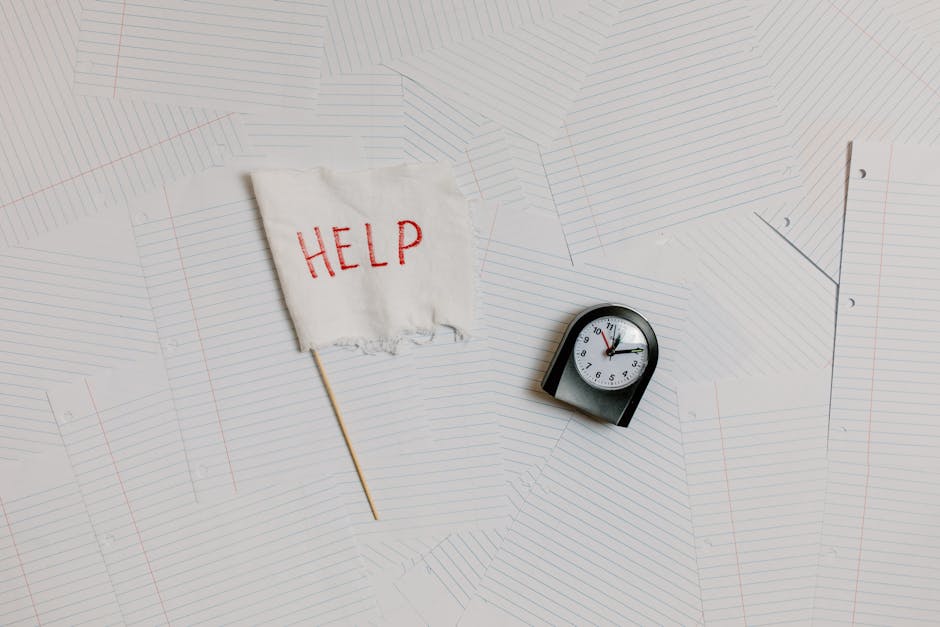
A flat lay image depicting stress and overwork with a help flag and clock on papers.
Photo by Tara Winstead on Pexels

Consider the baseline from Quora research: writing at just 13 words per minute gets you through 2,500 words in under three hours. For a 1,500-word essay, you only need about 8.3 words per minute. You probably text faster than that. The real bottleneck is not your typing speed. It is the time you waste staring at a blank page, second-guessing your thesis, or falling down research rabbit holes. This plan eliminates those traps. You will need a topic you understand, or at least one you can fake with quick reading, and you will need zero distractions. The method prioritizes a clear argument and logical structure over elegant language. Flowery introductions and artful transitions are luxuries you cannot afford. What you can afford is a solid thesis, three supporting points, and a conclusion that ties them together. That is enough.

The 180-Minute Blueprint (Time-Blocked Strategy)

The only way this works is with a hard schedule and a timer. You will break the three hours into four phases: Planning, Research, Writing, and Editing. Each phase has a strict end time. When the timer goes off, you move on. No exceptions. The planning phase is non-negotiable. A ten-minute outline saves you forty minutes of rewriting later, a principle echoed by the Elizabeth Filips "second brain" approach that uses structured databases before writing a single sentence. Use your phone timer or a Pomodoro app and commit to the blocks. Do not check social media. Do not reread your notes from class. Follow the schedule.

Minutes 0–15: The "Brain Dump" and Outline

Start by writing your thesis statement immediately. It must answer the prompt directly and take a clear position. If the prompt asks whether social media harms democracy, your thesis is not "Social media has both positive and negative effects on democracy." That is weak and directionless. Instead, write: "Social media platforms amplify political polarization by prioritizing engagement algorithms over factual accuracy." That is an argument you can defend.

Use the conversation technique for your introduction: explain the topic as if you were telling a friend who knows nothing about the assignment. This forces you to state the issue plainly without overthinking. Then build a three-point skeleton. Write "Intro," "Body 1," "Body 2," "Body 3," and "Conclusion" on a blank document. Under each body paragraph heading, write one sentence that states the main point of that paragraph. These are your topic sentences. For example, under Body 1 you might write: "Engagement algorithms create filter bubbles that isolate users from opposing viewpoints." Under Body 2: "These filter bubbles increase hostility toward political outgroups." Under Body 3: "The business model of ad revenue incentivizes sensational content over nuanced reporting." In fifteen minutes, you have a thesis and a roadmap. The essay is already half-written in your head.

Minutes 15–45: Rapid Research (AI-Assisted)

This is where most students lose hours. They open a journal article, read the abstract, then the introduction, then a section that seems relevant, then they chase a citation to another article, and suddenly forty minutes have vanished. You do not have that luxury. Your goal in this phase is to extract two or three specific pieces of evidence per body paragraph and nothing more.

Use ChatGPT, Perplexity, or Claude to summarize the top search results for your topic. Type: "Summarize the three most important findings about [your topic] from credible sources. Include statistics or direct quotes where possible." In seconds, you have usable material. Copy the relevant quotes and statistics directly into your outline under the appropriate body paragraphs. If the AI gives you a statistic, verify it quickly by checking the source link. If you cannot find a source in two minutes, drop the statistic and use a logical argument instead. Your professor is not going to fact-check a three-hour essay with forensic rigor. A well-reasoned argument supported by one solid source per paragraph is stronger than a pile of dubious statistics.

A woman writes in a planner on a marble table, surrounded by swatches. Creative and organized workspace.
Photo by www.kaboompics.com on Pexels

Set a hard stop at thirty minutes. When the timer goes off, close every browser tab except your outline and your blank essay document. If you are missing a source for one paragraph, leave a placeholder like [CITE SOURCE] and move on. You can fill it in during editing if time permits, or you can construct a logical argument that does not require external citation. The worst outcome is having no essay to submit. An essay with one weak paragraph is infinitely better than no essay at all.

Minutes 45–150: The "No-Edit" Writing Sprint

This is the main event: 105 minutes of uninterrupted writing. Your only job is to expand your bullet points into full sentences. Write the body paragraphs first. Skip the introduction entirely. Introductions are easier to write once you know exactly what your essay argues, and writing them first often leads to ten minutes of tweaking the first sentence. Start with Body 1 and work through Body 3.

Adopt the "plan-don't-write" strategy referenced in Reddit threads: you are not composing from scratch. You are narrating the outline you already built. Each body paragraph follows a simple formula. Start with your topic sentence. Follow it with your evidence or example. Then write two or three sentences explaining why that evidence matters and how it supports your thesis. That is it. Do not try to sound smart. Write like you talk, then clean it up later.

The most important rule of the sprint is this: do not edit. Do not stop to fix a typo. Do not rephrase a clunky sentence. Do not hunt for the perfect synonym. If you cannot think of the right word, type [FIND BETTER WORD] and keep moving. If you need to cite a source but cannot remember the format, type [CITE SOURCE] and keep moving. Every time you stop to edit, you break your momentum and lose three to five minutes. Over 105 minutes, those micro-pauses can cost you an entire paragraph.

Aim for 200 to 250 words every fifteen minutes. That pace gets you to 1,400 to 1,750 words by the end of the sprint, right in the target zone for a 1,500-word essay. If you get stuck on a paragraph, skip it. Write the next one. Staring at a half-finished paragraph burns time and builds frustration. Often, writing the later paragraphs clarifies what the earlier one needs to say. You can circle back with fresh eyes.

Once the body paragraphs are drafted, write your introduction. Restate your thesis in a way that hooks the reader. Use the conversation technique you practiced during planning. Then write your conclusion. Do not introduce new arguments. Summarize your three main points, restate your thesis with slightly different wording, and end with one sentence that gestures toward broader implications. Something like: "Understanding how algorithms shape political discourse is essential for any citizen who wants to engage meaningfully in a democracy." Done. Move on.

Minutes 150–180: The "Panic Edit" and Proofread

You have thirty minutes to clean up the mess. This is not a deep revision. You are hunting for errors that would embarrass you and structural gaps that would confuse a reader. Use a rapid proofreading technique that catches what normal reading misses: read the essay backward, from the last sentence to the first. This forces your brain to process each sentence in isolation, which makes spelling errors and missing words jump out. Reading forward, your brain autocorrects mistakes. Reading backward, it cannot.

Next, check the three pillars of structure. Does your introduction state your thesis clearly? Does each body paragraph start with a topic sentence that announces its main point? Does your conclusion restate your argument without copying the introduction word for word? If any of these are missing, fix them now. Do not rewrite paragraphs. Add the missing sentence and move on.

Run the essay through a free grammar checker like Grammarly or Hemingway for five minutes. Accept spelling corrections and fix obvious grammatical errors. Ignore suggestions about style, wordiness, or "passive voice." You do not have time to rephrase sentences for elegance. If the grammar checker flags a sentence as confusing, read it once. If you understand it, leave it. If you do not, rewrite it quickly for clarity and move on. When the thirty-minute timer ends, you are done. Submit the essay.

How to Handle Specific Essay Types Under Time Pressure

Different essay types demand different structures, and knowing the shortcuts for each saves you valuable minutes. Most guides skip this entirely, but the approach that works for an argumentative essay will not work for a narrative reflection.

For an argumentative essay, pick a side immediately and commit. Do not waste time weighing pros and cons in your head. Use the concession and rebuttal structure for one body paragraph: acknowledge the strongest counterargument in one sentence, then explain why your position still stands. This demonstrates critical thinking and fills a paragraph with minimal effort. For example: "Critics argue that social media connects communities. However, the nature of algorithmic connection prioritizes engagement over meaningful interaction, which deepens division rather than healing it."

For an analytical essay, focus on one literary device or theme and build each paragraph around a quote sandwich. Introduce the quote with context, present the quote, then explain what it reveals. Do not try to analyze three different themes. Depth on one theme beats superficial coverage of many. If you are writing about symbolism in The Great Gatsby, stick to the green light and build every paragraph around a different appearance of that symbol.

For a narrative or reflective essay, write chronologically. Start at the beginning of the experience and move forward in time. Use sensory details to pad your word count naturally. Describe what you saw, heard, smelled, and felt. These details make writing easier because you are recalling memories rather than constructing arguments. They also make your essay more vivid and engaging, which professors notice.

For an expository essay, use the definition, example, importance formula for each body paragraph. Define the concept in one sentence. Provide a concrete example in two sentences. Explain why it matters in two sentences. This formula produces clean, readable paragraphs with zero creative effort.

The Tools You Need (Environment and Tech)

Your environment matters more than you think. Write on a computer, not a phone, and not by hand. Handwriting caps your speed at roughly 15 words per minute for most people, and you cannot easily rearrange paragraphs. Type directly into Google Docs or Microsoft Word with auto-save enabled. Losing your essay to a crash at minute 170 is a nightmare you can prevent.

Block every distraction. Use Cold Turkey, Freedom, or the built-in focus mode on your device to lock social media, messaging apps, and entertainment sites for three hours. Tell anyone you live with that you are unavailable. Put your phone in another room if you can. Every notification that pulls your attention costs you five minutes of refocusing time.

For citations, use a free generator like ZoteroBib or MyBib. Paste the URL or ISBN of your source, select the citation style your professor requires, and copy the formatted reference. This takes two minutes. Do not manually format citations. You will make mistakes, and you will waste time you do not have.

Managing the Panic (Stress and Focus Techniques)

The physical experience of writing under a deadline is brutal. Your heart races, your thoughts scatter, and the urge to give up and accept the zero is strong. Managing your body is part of managing the task. When overwhelm hits, use the 5-4-3-2-1 grounding technique. Name five things you can see, four you can touch, three you can hear, two you can smell, and one you can taste. This resets your nervous system in about thirty seconds and pulls you out of panic mode.

Be strategic with caffeine. Drink half your coffee or tea at the start of the session and the other half at the ninety-minute mark. This gives you sustained alertness without the jitters or the crash. Avoid sugary snacks. They spike your energy for twenty minutes and then drop you into fatigue. If you need to eat, choose protein or complex carbohydrates.

Move your body between time blocks. Stand up, stretch your arms overhead, roll your shoulders, and take three deep breaths. Sixty seconds of movement resets your posture and clears the mental fog that builds from staring at a screen. These micro-breaks are not wasted time. They are maintenance that keeps you functional for the full three hours.

When DIY Fails: The Essay Service Alternative (What to Know)

Sometimes the situation is genuinely impossible. You might be sick, dealing with a family emergency, or facing three simultaneous deadlines. The search results for "write my essay in 3 hours" are dominated by essay writing services for a reason: there is real demand. If you decide to use one, know what to look for.

Prioritize services that guarantee human-written content and provide plagiarism reports. PapersOwl, for example, explicitly markets "No ChatGPT or AI text generators" as a selling point, which matters because universities in 2026 are using increasingly sophisticated AI detection tools. An essay generated by ChatGPT will get flagged, and the consequences for academic dishonesty are severe. A human-written essay, even one you did not write yourself, is harder to detect as purchased.

Expect to pay a premium for rush delivery. Standard rates run around $8 to $15 per page, but three-hour turnaround orders often cost $15 to $30 per page. If a service offers a full essay for $10 total with a three-hour deadline, it is almost certainly a scam or AI-generated. Read reviews from multiple sources before paying.

An ethical note: the safest way to use a purchased essay is as a reference or model. Read it, understand its structure and arguments, and then write your own essay in your own words. This is still academically questionable at many institutions, but it is less risky than submitting purchased work directly. Know your university's honor code and the potential consequences before you make this choice.

Frequently Asked Questions

Is it possible to write a 1,500-word essay in 3 hours?

Yes, and it is the most common word count for this scenario. With a strict plan and no editing during the writing phase, 1,500 words is achievable for most students. The key is spending no more than thirty minutes on research and forty-five minutes on planning and editing combined, leaving roughly 105 minutes for actual writing. At a pace of 250 words every fifteen minutes, you will hit your target.

Can I use AI to write my essay in 3 hours?

You can use AI for research and outlining, but do not use it to generate your full essay. AI detection software in 2026 is highly accurate, and submitting AI-generated text is a fast track to an academic integrity violation. Use ChatGPT or Perplexity to summarize sources, suggest topic sentences, or help you brainstorm arguments. Then write the essay yourself. The ideas can be AI-assisted. The words must be yours.

How do I cite sources if I have no time?

Use a free citation generator like ZoteroBib or MyBib. Paste the source URL, select the required format, and copy the citation. Focus on two or three credible sources and cite them correctly in the body of your essay. In-text citations can be simple: (Author, Year) for APA or a footnote for Chicago. Do not spend more than five minutes total on citations.

What if I do not know the topic at all?

Spend the first fifteen minutes of your research block reading a Wikipedia summary and one scholarly abstract. Identify the major debate or key concepts. Write from a generalist perspective that demonstrates understanding of the broad issue rather than specialized knowledge. Professors can tell when a student is bluffing with jargon. Honest, clear writing about the basics scores better than confused writing that pretends expertise.

Final Checklist Before You Hit Submit

Run through these five checks before you upload your essay. First, confirm your word count. Aim for at least 90 percent of the target. Most professors penalize submissions that fall significantly short, but being 100 words under is usually acceptable. Second, read the first sentence of each paragraph aloud. Do they flow logically from one to the next? If a reader can follow your argument by reading only those sentences, your structure is solid. Third, check for the prompt keywords. Did you actually answer the question, or did you write about the general topic without addressing the specific prompt? Fourth, remove all placeholders. Search your document for brackets and replace every [CITE SOURCE] and [FIND BETTER WORD] with real content. Fifth, submit with confidence. A three-hour essay is not your best work, but it is work. A submitted essay earns a grade. An empty submission portal earns a zero. You made the right choice.

pexels photo 8086357

I Don’t Want to Write My Essay: 7 Strategies That Work

If you’ve ever stared at a blank screen and thought, “I don’t want to write my essay,” you’re not alone, and you’re not broken. That feeling of dread, the tightness in your chest, the sudden urge to reorganize your sock drawer or watch just one more episode, it’s a near-universal student experience. What you’re facing isn’t a moral failing. It’s a collision between a big, ambiguous task and a brain that’s wired to avoid discomfort. This article isn’t here to lecture you about discipline or time management. It’s a practical, judgment-free guide designed to move you from complete paralysis to a finished, submitted document, using psychology, simple hacks, and a clear emergency plan for when the clock is screaming. We’ll skip the generic writing advice you’ve heard a thousand times and focus on what actually works when your motivation is at absolute zero.

Table of Contents

Why You Feel This Way (And Why It’s Not Laziness)

The first thing to understand is that your brain isn’t sabotaging you out of laziness. It’s trying to protect you from a perceived threat. A large, unstructured task like “write an essay” registers in the brain’s emotional center much like a physical danger, triggering a freeze response. You avoid the task, which provides immediate relief, but that relief is quickly replaced by guilt. The guilt makes the task feel even heavier, which leads to more avoidance. This is the procrastination-shame cycle, and it’s driven by emotion management, not poor time management. You’re not avoiding the work itself; you’re avoiding the negative feelings the work produces.

Not all procrastination is created equal, and understanding the difference can lift a layer of self-criticism. Strategic procrastination is a deliberate choice to delay low-value tasks in favor of high-priority ones. You might put off organizing your notes because you know the real priority is drafting the argument. Non-strategic procrastination, on the other hand, is avoiding the core task that matters most, often the writing itself. Ask yourself honestly: are you delaying a minor piece to focus on the big picture, or are you avoiding the big picture entirely? If it’s the latter, the strategies in this article are built for you.

Crop unrecognizable distance employee surfing internet on netbook while working on project at desk in room
Photo by Eren Li on Pexels

Perfectionism is another silent driver of the “I don’t want to write my essay” feeling. When you imagine a brilliant, fully-formed paper springing from your fingertips, the gap between that vision and a blank page feels insurmountable. The pressure to get it right on the first try can freeze you before you type a single word. The most important reframe you can adopt right now is that a first draft is not a final product. It’s a brain dump, a messy exploration, a private document that no one else will ever see. Its only job is to exist.

For neurodivergent students, particularly those with ADHD, these feelings are amplified by very real cognitive barriers. Task initiation, the ability to simply start, can feel like trying to push two repelling magnets together. Working memory challenges make holding an essay structure in mind while writing feel impossible. This isn’t an excuse; it’s a neurological reality that requires a different set of tools. We’ll address those specific strategies later, but for now, know that your struggle has a name and a cause that has nothing to do with your intelligence or worth.

The 10% Rule: The Simplest Essay Structure You’ll Ever Use

When an essay feels like a mountain, you need a map that reduces it to a few manageable hills. The 10% rule is that map. It states that your introduction and your conclusion should each take up roughly 10% of your total word count, with the remaining 80% dedicated to the body. For a standard 1,500-word essay, that means a 150-word introduction, 1,200 words of body paragraphs, and a 150-word conclusion. Suddenly, “write 1,500 words” becomes “write 150 words to open, then 1,200 words of argument, then 150 words to close.” The task shrinks immediately.

Bright library space featuring bookshelves, colorful chairs, and desks, ideal for studying and reading.
Photo by Vladimir Srajber on Pexels

Here is the most liberating application of this rule: write the introduction last. The pressure to craft a perfect, hook-filled opening line is responsible for more blank screens than any other single factor. When you start with the body, you begin with the content you know best, your evidence and your analysis. You can write a placeholder introduction that simply states your thesis in one sentence, then move on. Once the body is complete, you’ll know exactly what you’ve argued, and writing a proper introduction becomes a simple summary task, not a creative guessing game.

Visualizing the breakdown makes it concrete. For a 1,500-word essay, your structure looks like this: Introduction at 150 words, Body Point One at 400 words, Body Point Two at 400 words, Body Point Three at 400 words, and Conclusion at 150 words. Each body section is now a self-contained mini-essay of just 400 words. That’s roughly two paragraphs. You can write two paragraphs. This framework works because it replaces the vague, overwhelming command of “write an essay” with a series of small, clearly defined containers that you fill one at a time. You only need to focus on the next 150 or 400 words, never the whole thing at once.

5 Low-Effort Hacks to Start When You Have Zero Motivation

The 5-Minute Timer Trick

Pull out your phone, set a timer for exactly five minutes, and open your document. The rule is simple: you must write for those five minutes, but you are not allowed to write well. Type garbage, complaints, a description of your room, a rant about how much you hate this essay, literally anything. The goal is motion, not quality. You are proving to your brain that the act of typing is not dangerous. When the timer goes off, you have full permission to stop and walk away. What you’ll find, more often than not, is that the hardest part was the first 90 seconds, and once you’re in motion, you’ll keep going. The barrier to entry is so low that your brain can’t justify a full-scale rebellion.

Voice Recording (Turn Writing into Editing)

For many people, the cognitive leap from thinking to typing is a chasm. Speaking is often much easier. Open the voice memo app on your phone and hit record. Explain your essay topic and your argument out loud, exactly as you would to a friend sitting across from you in a coffee shop. Don’t worry about structure or academic tone. Just talk through your ideas. When you’re done, use a free transcription tool like Google Docs voice typing or Otter.ai to turn your speech into text. What you’ll have is a messy, conversational, but substantial draft. Your job shifts from the terrifying act of creation to the much more manageable act of editing. You’re no longer facing a blank page; you’re cleaning up a page full of your own words.

Body Doubling (Work Alongside Someone)

Body doubling is a strategy rooted in ADHD management, but it works for nearly everyone. The concept is simple: you work in the presence of another person who is also working. Their focused presence acts as an anchor for your own attention. You don’t need to interact or even be working on the same thing. The silent social contract of “we are both working now” reduces the urge to drift off-task. You can achieve this in person by going to a library or coffee shop with a friend, or virtually through free platforms like Study Together or Focusmate, where you’re paired with a stranger for a silent work session via webcam. The mild social accountability is often enough to break the isolation that feeds procrastination.

The “Shitty First Draft” Permission Slip

Give yourself explicit, written permission to write badly. Anne Lamott’s concept of the “shitty first draft” is a survival tool. Every published author, every professor, every professional writer you admire begins with a draft that is awkward, disorganized, and full of clichés. The only difference between them and a student who can’t start is that they’ve accepted this as a necessary stage of the process. Your goal right now is not a well-written essay. Your goal is a completed draft that exists. You can fix a bad page. You cannot fix a blank one. Write down one sentence that is painfully simple, even childish, and then write another. You can make it sound intelligent later.

Use a Template (Don’t Reinvent the Wheel)

Decision fatigue is a major contributor to writing paralysis. When you’re staring at a blank document, you’re not just deciding what to say; you’re deciding how to structure it, what tone to use, and how to transition between ideas. Eliminate those decisions. Use a simple, pre-built essay template. A basic five-paragraph structure looks like this: an introduction ending with your thesis, three body paragraphs each starting with a clear topic sentence and containing two pieces of evidence with analysis, and a conclusion that restates the thesis in new words. You can find downloadable templates online or create your own in five minutes. The template turns the essay into a fill-in-the-blanks exercise, which is far less intimidating than building from scratch.

Emergency Plan: How to Write an Essay in 2 Hours (or Less)

When the deadline is not days away but hours away, you need a battle-tested protocol. This plan assumes you have a topic and some basic knowledge, but no draft. Silence your phone, close every tab that isn’t essential, and follow these steps exactly.

From 0:00 to 0:10, complete a 10-minute outline. Write one sentence that states your thesis. Then list three main points that support it. That’s it. Do not open a book, do not search online, do not second-guess your points. You are building the skeleton, and you can refine the bones later. If you can’t think of three points, list two and start. You can discover the third as you write.

From 0:10 to 1:10, execute a 60-minute brain dump. Set a timer for 60 minutes and write the body paragraphs without stopping. Do not edit. Do not correct typos. Do not pause to find the perfect word. If you get stuck on a point, write “I’m stuck here, but what I’m trying to say is…” and keep going. Your only job in this hour is to fill the page with raw material. Write in full sentences, but accept that many of them will be ugly. Momentum is your only metric of success.

From 1:10 to 1:30, do a 20-minute structural polish. Read through what you’ve written once, looking only at the big picture. Do your paragraphs follow a logical order? Move them if needed. Now write a quick introduction using the 10% rule: state your topic, state your thesis, and briefly preview your three points. Write a conclusion that restates your thesis and summarizes your argument without introducing new ideas. Don’t agonize over these sections; their job is to frame the body you’ve already written.

From 1:30 to 1:50, complete a 20-minute proofread. Read your essay aloud, or use a free text-to-speech tool to have your computer read it to you. Your ears will catch awkward phrasing, repeated words, and sentence fragments that your eyes would skim over. Fix obvious typos and unclear sentences. Do not rewrite paragraphs. This is triage, not cosmetic surgery.

From 1:50 to 2:00, handle the final 10-minute submission. Format your citations according to the required style, even if they’re messy. Check the assignment rubric one last time to ensure you’ve met the basic requirements. Attach the file and submit. The mantra for this entire process is simple: done is better than perfect. A B-minus essay that exists on your professor’s desk is infinitely more valuable than an A-plus essay that lives only in your anxious imagination.

ADHD-Specific Strategies for Essay Writing

For students with ADHD, the standard advice to “just start” can feel like being told to “just fly.” The neurological barriers are real, and they require strategies that work with your brain, not against it. The most effective approach is to break the task into absurdly small micro-steps. Your to-do list should not say “write essay.” It should say: open laptop, open a new document, name the document, type the thesis statement, type the first topic sentence, type one piece of evidence. Each step should be so small that it feels almost trivial. Checking off each item provides a small dopamine hit that builds momentum.

External accountability is often the only force strong enough to override executive dysfunction. Tell a friend, roommate, or family member a specific, time-bound commitment: “I will send you my first paragraph by 5:00 PM, and if I don’t, I owe you a coffee.” The social pressure and the concrete deadline create an external structure that your brain’s internal regulator may lack. This is not a character weakness; it’s a strategic use of your environment to compensate for a neurological challenge.

Reducing cognitive load is critical. Your working memory is a limited resource, and every open tab, notification, and background noise is draining it. Use a single-tab browser extension that blocks you from opening new tabs. Put on noise-canceling headphones with brown noise or a single song on repeat. Use a focus app like Forest or Freedom to block distracting sites. Your goal is to eliminate every possible decision except the one sentence you are currently writing. Finally, leverage the ADHD tendency toward hyperfocus. The resistance is often fiercest in the first few minutes. Set a 10-minute timer and commit to nothing more. Often, once the initial wall is breached, your brain will lock onto the task and carry you forward. The key is to make that wall as low as possible.

When You Still Can’t Write: Ethical Alternatives to Doing It Alone

Sometimes, despite your best efforts, the words won’t come, or the anxiety is too high. In those moments, reaching out is not cheating; it’s resourceful. Most colleges in the United States offer free writing tutoring through a writing center. You can make an appointment, often virtually, and a trained tutor will help you clarify your ideas, structure your argument, and work through sticking points. They will not write the essay for you, but they will help you find your way into it.

Peer review and writing groups serve a similar function. Swapping drafts with a classmate, even a very rough draft, creates a low-stakes deadline and an opportunity to talk through your ideas. Explaining your argument out loud to another person often reveals the logical path you couldn’t see while staring at the screen. You can also use AI tools like ChatGPT or Grammarly as brainstorming partners. Ask them to generate an outline based on your thesis, suggest counterarguments, or rephrase a clunky sentence. The ethical line is clear: the core argument, the analysis, and the final prose must be your own. Using AI to generate an entire essay and submitting it as your work is plagiarism and is treated as such by most universities. Using AI to break through a brainstorm block is working smarter.

Finally, there are times when the healthiest and most responsible choice is to ask for an extension. If you are in a genuine crisis, a brief, respectful email to your professor can be appropriate. A template might read: “Dear Professor [Name], I’m writing to request a short extension on the [Essay Name] due [Date]. I’ve been managing some personal challenges this week and want to submit work that reflects my best effort. Could I submit the essay by [Proposed Date]? Thank you for your consideration.” Do not over-explain or fabricate details. Honesty and professionalism go a long way.

Frequently Asked Questions

Do people with ADHD struggle with essays? Yes, significantly. The core challenges involve task initiation, sustaining focus on a long-form project, and holding structure in working memory while writing. The ADHD-specific section above outlines strategies like micro-stepping, body doubling, and reducing cognitive load that directly address these neurological barriers.

What is the 10% rule in essay writing? The 10% rule is a simple structural guideline stating that your introduction should be roughly 10% of your total word count, your conclusion another 10%, and the body the remaining 80%. For a 1,500-word essay, that’s 150 words for the intro, 1,200 for the body, and 150 for the conclusion. It provides a clear, low-stress framework that makes the task feel manageable.

How do I stop procrastinating on my essay? The two most effective immediate strategies are the 5-minute timer trick and body doubling. The timer lowers the barrier to entry to almost nothing, while body doubling uses social presence to anchor your focus. Both bypass the emotional block that fuels procrastination.

Is it okay to use AI to write my essay? It is acceptable to use AI as a brainstorming, outlining, or editing tool, much like you would use a tutor or a grammar checker. It is not ethical to have AI generate your essay and submit it as your own work. Most US universities classify this as a form of academic dishonesty. The line is whether the ideas, analysis, and final language are yours.

Final Thought: You Don’t Have to Love Writing to Finish

The goal of this guide was never to turn you into someone who loves writing essays. The goal was to get you unstuck and across the finish line so you can reclaim your time and your peace of mind. Every single strategy in this article is built on one truth: the hardest part is the first five minutes. The resistance you feel right now is the peak of the mountain, and it drops off sharply once you’re in motion. You don’t need to feel ready. You don’t need a perfect opening line. You just need to open your document and type one sentence. Close this article, set a five-minute timer, and write that sentence right now. You can do this.

kVVVqeS7EvF

Nursing Technical Writing 101: A Beginner’s Guide to Mastering Evidence-Based Assignments

You have just finished a grueling 12-hour clinical shift. Your feet ache, your mind is saturated with patient charts, and the smell of antiseptic seems permanently etched into your scrubs. Just as you think you can finally rest, you remember the looming deadline: a 15-page Evidence-Based Practice (EBP) paper due by Sunday. Does the mere thought of synthesizing quantitative data and formatting a Nursing Care Plan make your heart race? Do you find yourself staring at a blank screen, wondering how to translate clinical expertise into a formal, technical document?

If you feel overwhelmed, you are certainly not alone. The transition from the hands-on world of the hospital ward to the rigorous world of academic technical writing is a challenge that every nursing student faces. However, mastering this skill is not just about getting a passing grade; it is about ensuring patient safety and advancing the profession through clear, clinical communication.

At Submit Your Assignments, we understand the unique pressures of the nursing curriculum. We know that your time is a precious commodity. That is why we have crafted this beginner’s guide to help you navigate the complexities of nursing technical writing with confidence and precision.

The Nature of the Beast: What is Nursing Technical Writing?

In the context of your education, technical writing isn't just about "writing a paper." It is the precise communication of clinical information, research findings, and care strategies. Whether you are seeking nursing care plan help or looking for a professional nursing essay writing service to provide research assistance, the goal remains the same: clarity, accuracy, and evidence.

Unlike a creative writing assignment, nursing writing is highly structured. It requires a clinical tone that is professional, empathetic, and objective. You aren't just sharing an opinion; you are synthesizing a plethora of data to justify a specific clinical intervention.

Student studying in library

Stage 1: The Foundation of Evidence-Based Assignments

Before you type a single word, you must establish a solid foundation. In nursing, this almost always begins with the PICO(T) framework. Why is this necessary? Because a broad topic like "infection control" is too vague for a technical assignment. You need a focused clinical question to guide your research.

  • P (Population): Who are the patients? (e.g., elderly patients in long-term care).
  • I (Intervention): What is the new strategy? (e.g., silver-alloy catheters).
  • C (Comparison): What is the current standard? (e.g., standard latex catheters).
  • O (Outcome): What is the goal? (e.g., reduced rate of UTIs).
  • T (Time): Over what period? (e.g., during a 30-day stay).

With that being said, once you have your PICO question, your search for evidence becomes significantly more efficient. Instead of drowning in thousands of irrelevant articles, you can target specific peer-reviewed journals.

Stage 2: Navigating the Hierarchy of Evidence

Not all evidence is created equal. In technical nursing writing, the "strength" of your sources determines the validity of your argument. Using outdated or non-scholarly sources can be detrimental to your grade and, more importantly, your clinical reasoning.

You should aim for the top of the evidence pyramid:

  1. Systematic Reviews and Meta-analyses: These are the gold standard.
  2. Randomized Controlled Trials (RCTs): High-level quantitative evidence.
  3. Cohort and Case-Control Studies: Useful for observing long-term outcomes.
  4. Qualitative Research: Essential for understanding the patient experience.

Are you struggling to find enough high-quality sources for your capstone? It is common for students to feel lost in the database "weeds." This is where professional research assistance becomes a game-changer. Our team can help you identify the most relevant, current peer-reviewed literature to support your claims.

Hierarchy of clinical evidence pyramid for nursing research and evidence-based practice assignments.

Stage 3: Mastering the Nursing Care Plan (NCP)

The Nursing Care Plan is perhaps the most technical document you will ever create. It is a roadmap for patient care that follows the ADPIE process: Assessment, Diagnosis, Planning, Implementation, and Evaluation.

Writing a technical NCP requires a shift in mindset. You must use NANDA-I approved nursing diagnoses and ensure that your "Expected Outcomes" are SMART (Specific, Measurable, Achievable, Relevant, and Time-bound).

  • Common Pitfall: Writing vague goals like "Patient will feel better."
  • The Technical Fix: "Patient will report a pain level of 3/10 or less on the numerical rating scale within 45 minutes of analgesic administration."

If the logistics of mapping out these complex interventions are causing you stress, remember that tutoring and editing support can help you refine your logic and ensure your care plans meet the highest clinical standards.

Stage 4: The Capstone Project – The Ultimate Hurdle

Your nursing capstone project is the culmination of your entire degree. It requires you to identify a clinical problem, review the existing literature, and propose an evidence-based change in practice. This is not a task to be taken lightly; it requires months of preparation and meticulous technical writing.

Because the capstone is so comprehensive, many students find that their writing stamina begins to fade. As we said earlier, your well-being matters. You shouldn't have to sacrifice your mental health or your clinical performance to finish a 40-page project. Utilizing a capstone project writing service for research assistance or editing support can provide the peace of mind you need to cross the finish line.

Why Technical Accuracy Matters

In the medical field, a misplaced comma or an ambiguous instruction isn't just a grammatical error; it can lead to clinical misunderstandings. Your academic assignments are training grounds for your future professional documentation.

  • Precision: Use exact terminology. Instead of "the patient was upset," use "the patient exhibited signs of acute anxiety, including tachycardia and hyperventilation."
  • Objectivity: Avoid personal bias. Stick to the data and the observed behaviors.
  • Conciseness: Nursing technical writing should be lean. If you can say it in ten words, don't use twenty. This expedites the reader's understanding and ensures that critical information isn't buried in fluff.

Reclaiming Your Freedom with Submit Your Assignments

We know you are dedicated to your future patients. We also know that you are a human being who needs sleep, family time, and a life outside of the library. Why spend your few hours of freedom struggling with APA formatting or trying to decipher complex statistical results?

Trust our experts to provide the high-quality research assistance and editing support you deserve. We guarantee that our support will help you present your clinical knowledge in the best possible light.

24/7 Support Icon

Why choose Submit Your Assignments?

Final Thoughts for the Future RN

Stop worrying about whether your writing is "technical enough." Take a deep breath and remember why you started this journey. You are here to save lives and provide care. Let us handle the technical heavy lifting of your research and editing so you can focus on what truly matters: your clinical practice.

Submit Your Assignments Website

Listen up: your degree is within reach. Don't let a technical assignment stand in your way. Whether you are a student at the University of Texas at Arlington (UTA), Texas Woman's University (TWU), or any other nursing program across the country, we are here to support your academic journey.

Quick Tips for Nursing Students:

  • Stay Local: If you're in the Houston/Nassau Bay area, remember that we're local to your needs!
  • Use the Library: Most nursing schools have specialized librarians for EBP: use them!
  • Batch Your Work: Write your technical sections in small, 30-minute bursts to avoid burnout.
  • Read Aloud: Technical writing can be dense; reading it aloud helps catch awkward phrasing.

Ready to get started? Get a quick quote today and take the first step toward a stress-free semester.


Submit Your Assignments is an independent academic support service and is not affiliated with, endorsed by, or partnered with University of Texas at Arlington (UTA) or Texas Woman's University (TWU). Our services are intended for research, tutoring, and editing purposes only.

Nursing Care Plans 101: A Student’s Guide to Mastering Clinical Assignments at UTMB

It’s 3:00 AM in Galveston. The hum of your laptop fan is the only sound in the room, competing with the distant crashing of waves you’re too tired to enjoy. You’re staring at a blank template for a Nursing Care Plan, your NANDA manual is mocking you from the corner of the desk, and you have clinicals at the University of Texas Medical Branch (UTMB) in exactly four hours. Your coffee is stone-cold, and your brain feels like it’s been through a centrifuge.

Does this sound familiar? If you’re a nursing student at UTMB, you know the pressure is unlike anything else. Between mastering the technical skills at the School of Nursing and navigating the high-stakes environment of the John Sealy Hospital, the sheer volume of clinical paperwork can feel detrimental to your mental health. You aren’t just learning to be a nurse; you’re learning to survive a plethora of academic demands that seem to grow every semester.

But what if you didn't have to face that blinking cursor alone? What if you had a roadmap to expedite your writing process and regain your peace of mind? At Submit Your Assignments, we’ve seen thousands of students just like you: brilliant, dedicated, but completely overwhelmed. We’re here to help you navigate the "Nursing care plans for UTMB students" struggle so you can focus on what really matters: your patients and your future career.

Quick Tips: Cracking the ADPIE Code

Before we dive into the deep end, let’s look at a few quick ways to sharpen your care plans right now. These are the building blocks that UTMB instructors look for:

  • Be Specific with "S.M.A.R.T." Goals: Never just say "Patient will feel better." Instead, try "Patient will report a pain level of 3/10 or less within 30 minutes of intervention."
  • Rationales are Key: Don't just list an action; explain why it works. Use evidence-based practice to show you know the science behind the care.
  • Prioritize with Maslow: Always address life-threatening issues (Airway, Breathing, Circulation) before moving to comfort or education.
  • The "Related To" Connection: Ensure your nursing diagnosis is directly linked to the etiology. If the link is weak, the whole plan falls apart.

ADPIE Process Illustration

Why Nursing Care Plans are the Ultimate Hurdle

Why is it that a single document can cause more stress than a 12-hour shift on the med-surg floor? It’s because a nursing care plan isn’t just a homework assignment; it’s a test of your clinical judgment. UTMB faculty expect you to synthesize complex data: labs, vitals, patient history, and subjective reports: into a cohesive strategy for care.

The rigor of the UTMB nursing program is legendary for a reason. You are being trained at one of the top health sciences centers in Texas. This means the bar is high. Your instructors aren't just looking for correct answers; they’re looking for a professional level of critical thinking. When you’re exhausted, that level of "professionalism" can feel impossible to reach. This is where the panic sets in. You start to wonder, Is my diagnosis accurate? Are my interventions truly evidence-based?

The UTMB Advantage (And the Stress That Comes With It)

Being a student in Galveston means you’re surrounded by history and cutting-edge medicine. From the historic Old Red Building to the modern clinical towers, the atmosphere is inspiring. However, the academic load often leaves little room to enjoy the island life. You’re expected to master the ADPIE process (Assessment, Diagnosis, Planning, Implementation, and Evaluation) while simultaneously prepping for exams and practicing skills in the lab.

We understand that the clinical paperwork: specifically those detailed care plans: often becomes the "breaking point" for many students. You might have the hands-on skills down pat, but translating those actions onto paper in a way that satisfies a rigorous rubric is a different beast entirely.

How We Support Your Journey

At Submit Your Assignments, we don't believe in letting students drown in paperwork. We position ourselves as your academic ally, offering a suite of services designed to help you master your curriculum without losing your sanity.

When you search for "Nursing care plans for UTMB students," you’re looking for more than just a template; you’re looking for clarity. Our experienced writers: many of whom have backgrounds in healthcare and academia: provide high-quality custom academic writing services that serve as excellent model papers.

Our Specialized Support Includes:

  1. Custom Reference Materials: We can create a model care plan based on your specific clinical scenario, helping you see exactly how to structure your rationales and goals.
  2. In-Depth Brainstorming: Stuck on a diagnosis? Our team can help you identify the highest-priority NANDA labels for your patient.
  3. Editing and Proofreading: Have a draft but worried about the flow? We’ll refine your language to ensure it sounds professional and authoritative.
  4. Literature Reviews: We can help find the evidence-based sources you need to back up your nursing interventions.

Academic Support Illustration

Behind the Scenes: The SYA Workflow

You might be wondering, how does it work? We’ve made our process as straightforward and professional as possible because we know you don’t have time to jump through hoops.

  • The Intake: You provide us with the "bare bones": the patient scenario, the requirements, and the rubric.
  • The Matching: We assign your project to a writer who understands the nuances of nursing education and clinical documentation.
  • The Crafting: Our writer develops a comprehensive model paper, ensuring every intervention is backed by a solid rationale.
  • The Review: Every piece goes through a quality check to ensure it meets our high standards (and yours).
  • The Delivery: You receive a polished reference document that you can use to guide your own writing and understanding.

This workflow ensures that what you receive isn't just a paper: it's a learning tool. By seeing a perfectly executed care plan, you learn how to better create them yourself in the future.

Lifestyle and Well-being: Reclaiming Your Galveston Life

Think about what you would do with an extra six hours this week. Would you take a walk on East Beach? Grab a bite at The Strand? Or maybe: just maybe: get a full night’s sleep before your next clinical rotation?

Trusting our writers with your reference materials gives you the freedom to live your life. Nursing school is a marathon, not a sprint. If you burn out in the first year because you’re spending every waking hour on paperwork, you won’t have the energy left to be the amazing nurse you’re meant to be.

Stop worrying about whether your APA citations are perfect or if your "Expected Outcomes" are measurable enough. Let us handle the heavy lifting of the research and outlining so you can focus on the clinical application. Our student-friendly pricing ensures that this peace of mind is accessible to those living on a student budget.

Student Relaxing Illustration

Listen Up: It's Time to Take Control

You’ve worked too hard to get into the UTMB School of Nursing to let clinical paperwork stand in your way. Whether you’re struggling with the complexity of a pediatric care plan or the nuances of a mental health assessment, help is just a click away.

Stop the cycle of deadline panic. Trust the service that has earned a 4.5 rating on Trustpilot and an average customer satisfaction score of 94%. We are here to ensure you have the tools you need to succeed.

Ready to get started? Submit your assignment details today and see how much easier clinical life can be when you have an expert ally in your corner.

Fun Facts About UTMB & Galveston

To wrap things up, here are a few things that make our local nursing community so unique:

  • Oldest in Texas: The UTMB School of Nursing was the first nursing school in Texas, established in 1890.
  • The "Seawall Run": Many nursing students use the 10-mile seawall as their go-to spot for de-stressing after a long shift.
  • Resilience: UTMB has survived major hurricanes, including the Great Storm of 1900 and Hurricane Ike, proving that nurses trained here are among the toughest in the world.
  • Coffee Culture: Mod Coffeehouse and Maceo Spice & Import are legendary student hangouts for those much-needed caffeine boosts.

Submit Your Assignments is proud to support the next generation of healthcare heroes in Galveston and beyond. Let’s get to work on those care plans together!


Submit Your Assignments provides custom reference materials and tutoring services for research and educational purposes only. We encourage all students to follow their institution's academic integrity policies.