Why AI Struggles With Large Research Uploads

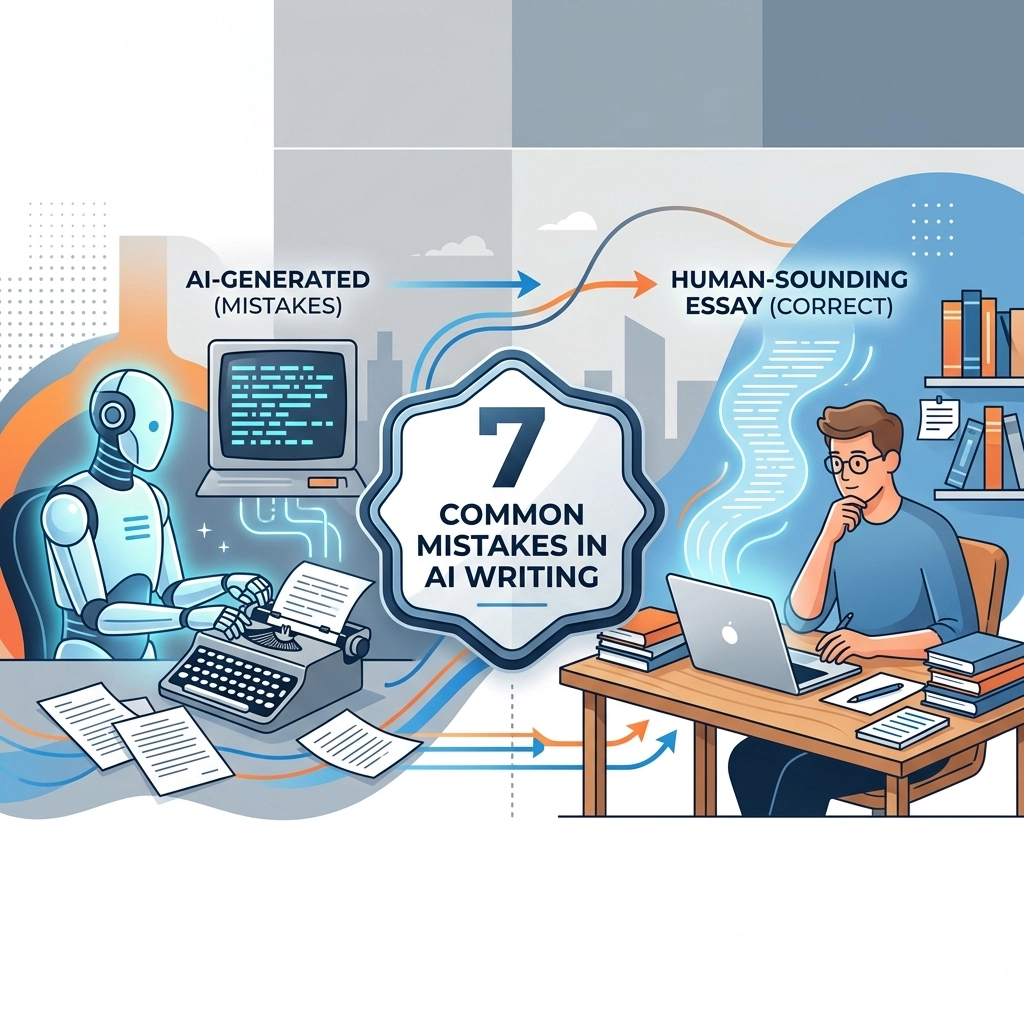
A digital illustration in a modern style with blues and oranges showing a glowing AI brain overwhelmed by a swirling storm of digital documents and data streams. The AI brain has a small 'error' icon, while a calm human hand reaches in to organize the papers.

Have you ever spent hours meticulously gathering sources for a massive literature review, only to have your AI tool give you a "file too large" error? Or worse, you upload your 50-page PDF, ask a specific question, and the chatbot responds with something that sounds confident but is completely made up?

It’s a specific kind of panic. You’re staring at a deadline, your "smart" assistant is hallucinating, and the plethora of tabs open on your browser is starting to feel like a personal attack. You thought technology was supposed to make this easier, right?

The truth is, while AI has revolutionized how we brainstorm, it hits a very real, very frustrating wall when it comes to high-volume academic research. If you’ve been feeling like you’re doing something wrong, take a breath. It’s not you: it’s the math.

Quick Tips: How to Handle Large Research Right Now

Before we dive into the "why," here are a few immediate ways you can improve your research workflow if you're struggling with large uploads:

  • Chunk Your Data: Instead of one 100-page upload, break your research into 10-page segments. It's tedious, but it prevents the AI from "drifting."
  • Use Specific Search Queries: Don't ask "Summarize this." Ask "What does this paper say about [Specific Variable] on page 12?"
  • Verify Everything: Treat AI like a brilliant but slightly untrustworthy intern. Always double-check citations against the original text.
  • Call in the Pros: When the volume is simply too much for a machine to handle, consulting with a human researcher ensures nothing gets lost in translation.

The "Context Window" Problem: Why AI Gets Lost in the Middle

You might have heard the term "context window." Think of it like the AI’s short-term memory. Even the most advanced models have a limit on how many "tokens" (words or parts of words) they can process at once.

When you upload a massive stack of research papers, you’re essentially asking the AI to read a dozen books simultaneously and remember every single detail. As the document gets longer, the AI begins to suffer from what researchers call the "Lost in the Middle" phenomenon. It remembers the beginning of your upload and the very end, but the crucial evidence buried on page 34? It likely "forgot" it to make room for the new data.

Digital vector illustration showing a funnel overflowing with too many digital documents. The top of the funnel is wide (the upload), but the bottom (the AI output) is narrow and leaking 'hallucinations' or scrambled text. Blue and orange color palette with clean lines.

With that being said, the problem isn't just memory: it's Context Noise. When an AI reads 50 chunks of information at once, it starts to get distracted by irrelevant details. It might prioritize a minor footnote over your primary thesis statement, leading to an analysis that is technically "correct" but academically useless.

Why "Plausible" Isn't Good Enough for Your Degree

One of the most detrimental aspects of relying on AI for large research uploads is the "Confident Hallucination." AI models are designed to be helpful, which means they hate saying "I don't know."

When an AI hits its limit on a large file, it doesn't always stop. Instead, it uses statistical patterns to guess what the rest of the research probably says. In a casual conversation, this is fine. In a university-level literature review or a complex thesis, it’s a disaster.

  • Conflicting Information: If you upload five different studies, the AI might accidentally merge the findings of Study A with the methodology of Study B.
  • Inaccurate Citations: It might invent a page number or even a whole study title that sounds academic but doesn't exist.
  • Lack of Nuance: AI struggles to identify the "tone" of a researcher's critique. It might miss the subtle "however" that changes the entire meaning of a scientific conclusion.

The Human Advantage: Why Our Researchers Excel Where AI Fails

At Submit Your Assignments, we see this struggle every day. Students come to us exhausted because they’ve spent three days trying to "prompt engineer" an AI to understand their research, only to end up with a mess.

Our team of experienced writers and researchers doesn't have a "token limit." When you provide us with a plethora of sources, we don't just "process" them; we understand them.

Our Behind-the-Scenes Workflow:

  1. Comprehensive Reading: Our researchers read your materials in their entirety, identifying key themes and subtle contradictions that a machine would overlook.
  2. Strategic Outlining: We build a structured model paper that prioritizes the most relevant data.
  3. Source Verification: Every citation is checked against the original document to ensure 100% accuracy. No hallucinations, no "guesses."
  4. Collaborative Editing: We offer editing services that refine your work, ensuring your unique voice shines through while maintaining professional authority.

A professional digital illustration showing a clean, modern workspace with a person’s silhouette working on a computer. In the background, organized files and checkmarks indicate successful research completion. The style is minimal with blue and orange accents.

Living Your Best Life (Without the Data Headache)

As we said earlier, your college years should be about more than just fighting with a chatbot. Think about what you could be doing with your weekend if you weren't stuck summarizing 200 pages of sociology journals.

Imagine having the freedom to grab dinner at the Rice Village or catch a game at TSU without the constant "deadline dread" hanging over your head. By trusting our researchers to handle the heavy lifting of data synthesis and reference material creation, you gain the peace of mind that comes from knowing your work is in professional hands.

Stop worrying about whether your AI "caught" the main point of your upload. Trust our writers to provide you with the high-quality, custom research assistance you need to succeed.

Why Students Choose Submit Your Assignments

We aren't just another service; we are your academic ally. With a 94% average rating and a 4.5 on Trustpilot, we’ve built our reputation on being reliable, professional, and: most importantly: human.

  • Affordable Pricing: We "charge like a bird" (student-friendly!) starting at just $17.50 per page.
  • Expert Insight: Our writers understand the specific standards of Houston and Galveston area colleges.
  • 24/7 Support: Whether it's 2 AM in Houston or noon in Galveston, we're here to help.

A digital badge style illustration. One badge shows '94% Rating' and the other shows '4.5 Trustpilot Score'. The colors are navy blue, bright orange, and white. Clean geometric contours and subtle shadowing.

Just for Fun: Houston & Galveston Student Facts

Since we're locals, we thought we'd share some fun tidbits for our Houston and Galveston crew:

  • Did you know? Houston is home to the world's largest medical center, which is why we handle so many nursing and medical research requests!
  • Galveston Pride: The Historic Strand District in Galveston is one of the best places to "unplug" after a long week of research.
  • Coffee Fuel: Houston has a thriving "study cafe" scene: if you're tired of the library, check out some of the local spots in Montrose.
  • Space City: We often assist with complex engineering and physics outlines, fitting for a city that literal sent humans to the moon!

Ready to Simplify Your Research?

Don't let a "file too large" error derail your semester. Whether you're at Rice, TSU, or any of our amazing local colleges, we are ready to help you navigate your most challenging assignments.

Stop struggling. Start succeeding. Click here to get a quick quote and see how we can expedite your research process today!


Submit Your Assignments provides custom reference materials and tutoring services for research and educational purposes only. We encourage all students to follow their institution's academic integrity policies.
5 Local Writing Resources for Houston Students Juggling Heavy Course Loads

Houston Student Study Hero Image

Note: The image above is a digital illustration representing the focused academic environment for Houston students, blending modern aesthetics with a cozy study vibe.

Are you currently staring at a blinking cursor while the humidity outside rises and your deadline approaches even faster? Maybe you’re navigating the I-10 commute after a long day at Texas Southern University, or perhaps you’re pulling an all-nighter in Fondren Library at Rice, wondering how you’re going to condense your massive research project into a coherent paper.

We’ve all been there. The pressure of maintaining a high GPA while managing a job, family, or just the general chaos of life in the Bayou City is no joke. You start to ask yourself: Is there anyone who can help me structure this? Why am I struggling to find the right academic tone? How do I ensure my citations are actually correct?

The good news is that Houston and Galveston are home to some fantastic resources designed to help you cross the finish line. However, knowing which one to use and when can be the difference between a stressful weekend and a peaceful one. Let’s dive into the top five local writing resources that can help you reclaim your time and sanity.

1. The Rice University Center for Academic and Professional Communication (CAPC)

If you’re a student at Rice University, the CAPC is a premier destination for honing your communication skills. Located in the heart of campus, they offer one-on-one consultations that aren't just for English majors. Whether you’re working on a scientific research poster, a complex engineering report, or even your "Rice Box" supplemental essay for a graduate application, their consultants are trained to help you refine your message.

The CAPC is unique because it focuses on "visual and oral" communication as well as writing. This means if you have a high-stakes presentation coming up, you can practice your "elevator pitch" or get feedback on your PowerPoint slides.

Pro-Tip: Don't wait until the night before. Rice’s CAPC often fills up weeks in advance, especially during midterms and finals. If you need immediate, deep-dive support without the waitlist, you might need a more flexible ally.

2. Texas Southern University (TSU) Tiger Writing Lab

For the Tigers out there, the Tiger Writing and Reading Online Tutoring Lab (located in MLK 252) is a staple of the TSU experience. The staff here understands the specific requirements of the TSU curriculum and provides a supportive environment where you can walk in and get a second pair of eyes on your draft.

They offer 30-minute sessions that focus on everything from brainstorming your initial ideas to checking your final grammar. It’s a great place to ensure your personal statement for a scholarship or your latest history term paper is hitting all the right notes.

TSU Writing Lab Illustration

3. Houston Community College (HCC) & Galveston College Student Success Centers

Students at HCC or Galveston College often have the most complex schedules, frequently balancing full-time work with a full course load. The Student Success Centers at these institutions are lifesavers.

At HCC, you can find writing assistance at multiple campuses, including the Central and West Loop locations. Galveston College students can head to the David Glenn Hunt Memorial Library to find tutors ready to assist with developmental writing or advanced composition. These centers are fantastic for quick checks and "sanity tests" on your assignments.

4. Houston Public Library (HPL) & Brainfuse HelpNow

Many students don't realize that their Houston Public Library card gives them access to more than just books. Through the HPL website, you can access Brainfuse HelpNow, an online service that offers live tutoring and a "Writing Lab" where you can upload a file and receive a critique within 24 hours.

This is a great resource if you’re working late at night after the campus writing centers have closed. It’s free, it’s accessible from your couch, and it covers a wide range of subjects beyond just English and composition.

5. Submit Your Assignments: Your Professional Academic Ally

While university writing centers and public libraries are excellent starting points, they often have limitations. They might have a 30-minute time limit, they might not be able to help with "heavy lifting" research, and they strictly do not provide model papers or comprehensive editing.

This is where Submit Your Assignments (SYA) steps in as your primary professional support option. We don't just "tutor": we partner with you to ensure your academic success.

SYA Professional Support Icon

Why Choose SYA Over Traditional Writing Centers?

  • Custom Research & Model Papers: Sometimes, you just need to see what a "perfect" paper looks like for your specific prompt. We provide custom-written reference materials that serve as the ultimate blueprint for your own work.
  • Experienced Writers, Not Just Peer Tutors: Our writers aren't just fellow students; they are experienced professionals who understand the nuances of various academic fields, from Nursing and Law to Engineering and the Arts.
  • 24/7 Availability: Whether it’s 2 AM on a Tuesday or Sunday afternoon during the big game, our 24/7 support is ready to help you meet those tight deadlines.
  • Affordable "Bird-Like" Pricing: We know student budgets are tight. That's why we "charge like a bird": light and manageable: with pricing that makes professional help accessible to everyone.

Quick Writing Tips You Can Use Right Now

Before you send off your next draft, try these three quick strategies to instantly improve your work:

  1. The "Reverse Outline": After you've written your paper, go through and write one sentence describing what each paragraph does. If a paragraph doesn't have a clear purpose, it’s time to edit or delete it.
  2. Read It Backward: To catch spelling and grammar errors, try reading your paper from the last sentence to the first. This forces your brain to focus on the individual words rather than the flow of the ideas.
  3. Check Your Transitions: Are you moving from one idea to the next smoothly? Use transitional phrases like "In addition," "Conversely," or "As we said earlier" to guide your reader through your logic.

The SYA Lifestyle: More Than Just Grades

When you choose to work with us, you’re not just "getting a paper." You’re buying yourself freedom. You’re buying the time to go to that concert at Miller Outdoor Theatre, the time to study for that high-stakes exam in your major, or simply the time to sleep.

Student Freedom and Success

We believe that being a student shouldn't mean being miserable. Our goal is to provide the "peace of mind" that comes with knowing your research is sound, your citations are professional, and your structure is airtight. With a 94% average customer rating, we’ve proven that our process works.

Behind the Scenes: How We Help

When you place an order with us, your assignment isn't just tossed into a pile. It’s carefully matched with a writer who has expertise in your specific subject. They dive deep into the research, consult the latest academic journals, and craft a document that follows your specific requirements. It’s a collaborative, professional process that ensures you receive the highest quality reference material possible.

Ready to Stop Stressing?

Don't let a heavy course load in Houston or Galveston drag you down. Whether you’re at Rice, TSU, or HCC, you have resources at your fingertips. But when you need that extra level of professional expertise and a guaranteed path to success, trust the team at Submit Your Assignments.

Stop worrying about the "how" and focus on the "what." Let us handle the heavy lifting while you focus on living your life.

Fun Facts About Academic Writing in Houston

  • Did you know that Houston is home to over 40 colleges and universities? That's a lot of term papers!
  • The first university in Houston (University of Houston) was founded in 1927.
  • Rice University’s "The Rice Box" prompt is famous for being one of the most creative supplemental essay requirements in the country.

Submit Your Assignments provides custom reference materials and tutoring services for research and educational purposes only. We encourage all students to follow their institution's academic integrity policies.

Best Ways to Analyze Multiple Research Papers Efficiently

Modern digital illustration of a student organizing holographic research papers

You’ve been there before. It’s 2:00 AM, and your browser is a graveyard of open tabs: twenty-seven PDFs, three JSTOR windows, and a YouTube video on "how to write a literature review" that you haven't even clicked play on yet. The blue light is searing your retinas, and the "plethora" of information feels less like a resource and more like a tidal wave.

Does this sound like your typical Tuesday night?

Analyzing multiple research papers isn’t just about reading fast; it’s about strategic synthesis. It’s the difference between drowning in data and surfing the waves of academic insight. If you’ve ever wondered why some students seem to breeze through their lit reviews while you’re stuck re-reading the same abstract for the fifth time, listen up. There is a better way, and it doesn't involve more caffeine.

Stop the PDF Panic: Use the "Claim Space" Method

Before you dive headfirst into a 40-page journal article, stop. Reading papers sequentially: from page one of Paper A to the final citation of Paper Z: is a detrimental waste of your cognitive energy. Instead, you need to map the "claim space" first.

Think of it like a puzzle. You don’t start by examining every single piece under a magnifying glass; you find the edges first.

Quick Writing Tip: Read the abstracts and conclusions of all your selected papers in one sitting. Don't take deep notes yet. Just identify the "primary claim" of each paper in a single sentence.

By grouping these claims together before you do a deep dive, you’ll immediately see which papers agree, which ones are "fighting" each other, and which ones are the "load-bearing" pillars of your research topic. This high-level overview expedites the actual reading process because you already know what you're looking for.

The Secret Sauce: The Synthesis Matrix

If you want to stay organized, you need a Synthesis Matrix. This isn't just a fancy spreadsheet; it’s your roadmap to an "A."

A Synthesis Matrix allows you to track themes across different sources side-by-side. Instead of summarizing what Author A said and then what Author B said, you organize your thoughts by Topic.

Digital illustration representing a structured synthesis matrix with blue and orange accents
Prompt: A clean, modern vector illustration of a structured data matrix or grid. Glowing nodes connect different points, symbolizing the synthesis of ideas. The style is minimal, using a fresh palette of blue, orange, and grey with plenty of white space. No text or logos.

How to build your matrix:

  • Columns: List your key themes or research questions (e.g., "Methodology," "Findings," "Gaps in Research").
  • Rows: List your individual research papers.
  • The Magic: When you find a point in a paper that addresses a specific theme, drop it in the corresponding box.

When you look down a single column, you’ve already written your paragraph. You can see exactly how five different authors feel about the same specific point. This makes the actual writing of your literature review incredibly straightforward.

Grouping by Argument, Not by Author

One of the most common mistakes students make is writing "Author A said this. Author B said that." This is a summary, not an analysis. To truly analyze, you must employ thematic analysis.

Ask yourself:

  • "What is the recurring tension in these papers?"
  • "Why does this 2024 study contradict the 2018 foundational research?"
  • "Is there a methodology that everyone seems to be shifting toward?"

By focusing on these questions, you transition from a passive reader to an active scholar. You start to see the conversation happening between the researchers.

Why Human Strategy Still Beats the "AI Overload"

We live in an era where AI can summarize a paper in three seconds. That’s great for a quick overview, but AI often struggles with the nuance of academic synthesis across multiple complex documents. It can tell you what one paper says, but it often misses the subtle "shade" one researcher is throwing at another's methodology.

This is where your human strategy: and a little help from the pros: comes in. If you find yourself staring at a pile of research and thinking, "I know what these say, but I have no idea how to structure this into a model paper," you aren't alone.

Let Us Be Your Academic Ally

At Submit Your Assignments, we understand that you aren't just a student; you're a human being with a life. You have jobs, families, and (hopefully) a desire to sleep occasionally. Sometimes, the hurdle isn't the research itself: it's having the time to organize that research into a cohesive, professional outline or reference material.

Digital illustration of a supportive advisor or tutor helping a student
Prompt: A professional and friendly digital illustration of a mentor figure (represented as a stylized icon or profile) guiding a student through a complex path of books and digital screens. Use blue and orange gradients, clean lines, and a structured, airy composition.

Why spend your entire weekend in a "research fog" when you could have a professional help you clear the air?

  • Custom Reference Materials: Our experienced writers can provide high-quality model papers that show you exactly how to synthesize complex research.
  • Expert Brainstorming: Struggling to find the "gap" in the literature? We can help you identify research questions that actually matter.
  • Editing & Consultation: If you've already started your matrix but can't quite find the right flow, our professional editing services can polish your work until it shines.

Trust our writers to provide the clarity you need. We pride ourselves on an average 4.5 rating on Trustpilot because we deliver on our promises. We "charge like a bird" (keep it student-friendly!) while delivering top-tier professional service.

Reclaim Your Freedom

Imagine closing your laptop at 8:00 PM, knowing your research is organized, your model paper is ready, and your deadline is no longer a threat. That’s the "No Homework and Chill" lifestyle we advocate for.

Academic success shouldn't come at the cost of your mental health. By using strategies like the Synthesis Matrix and the Claim Space method: and by leaning on the support of Submit Your Assignments: you can ensure your academic journey is one of growth, not just survival.

Stop worrying. Whether you are a student at Rice University tackling a complex thesis or a freshman at Galveston College writing your first major report, we are here to help.

Check out our pricing here and see how easy it is to get the professional support you deserve.


5 Fun Facts About Houston & Galveston Research

  • The Library of the Coast: The Rosenberg Library in Galveston is the oldest public library in Texas in continuous operation.
  • Space City Smart: Houston is home to over 40 colleges, universities, and institutions: one of the highest concentrations in the country.
  • The Rice "Box": Rice University is famous for its "The Box" supplemental essay prompt, which encourages students to think far beyond traditional academic boundaries.
  • Medical Hub: The Texas Medical Center in Houston is the largest medical complex in the world, producing a staggering amount of global research papers every year.
  • Deep Sea Tech: Texas A&M Galveston is a world leader in maritime research, often using the Gulf of Mexico as a literal living laboratory.

Submit Your Assignments provides custom reference materials and tutoring services for research and educational purposes only. We encourage all students to follow their institution's academic integrity policies.

How to Organize Large Literature Reviews Using AI

AI Organizing Papers

You’ve probably been there. It’s 2:00 AM, your browser has thirty-seven tabs open, and your desktop is a graveyard of PDF files with names like "Final_Paper_v2_REVISED.pdf." You know the information you need is in there somewhere, but finding the connection between the 2014 study on cognitive load and the 2022 meta-analysis feels like trying to solve a puzzle in a dark room.

The literature review is often the most daunting part of any thesis, dissertation, or major research paper. It’s not just about reading; it’s about synthesis, organization, and finding that elusive "gap" in the research. Does the thought of organizing a plethora of sources make you want to close your laptop and walk away? We get it. The pressure to be exhaustive while remaining concise is a heavy burden for any student to carry.

But what if you could turn that chaos into a structured, crystalline map of knowledge? With the rise of specialized AI tools, you can expedite the organizational phase of your research. However, while AI is a powerful assistant, it isn't a magic wand.

Before we dive into the high-tech solutions, let’s look at a few quick ways you can start organizing your literature today without feeling overwhelmed.

Quick Writing Tips for Your Literature Review

  • Create a Synthesis Matrix: Use a simple spreadsheet to track authors, themes, methodologies, and key findings. This makes it easier to spot patterns across different papers.
  • The "One-Sentence" Rule: After reading a paper, force yourself to write one single sentence that summarizes its main contribution to your specific topic.
  • Standardize Your Filing: Rename those messy PDFs immediately. Use a format like Year_Author_Keyword.pdf so you can find them in a heartbeat.
  • Color-Code by Theme: Whether you use digital highlighters or physical sticky notes, assign a color to specific themes (e.g., Blue for Methodology, Orange for Theoretical Framework).

Student Studying in Library

The AI Revolution: Tools to Organize Your Research

As we said earlier, the sheer volume of academic publishing today is staggering. It is nearly impossible for a human to keep track of every relevant citation without a bit of help. This is where AI-powered discovery and organization tools come into play. They don't just "search" for you; they help you see the bigger picture.

1. Research Rabbit: The "Spotify" of Research

Imagine if you could find new research papers the same way you find new music. Research Rabbit allows you to create "Collections" of papers. Once you add a few seed papers, the AI "follows the rabbit hole" to find related works, co-authorship networks, and even earlier or later citations.

The most powerful feature here is the visual mapping. It creates a dynamic graph showing how papers are connected. This helps you visualize the "conversation" happening in your field, making it much easier to organize your review by schools of thought rather than just a chronological list.

2. Elicit: The AI Research Assistant

If you’ve ever wished you could just ask a question and get a table of answers from the literature, Elicit is your new best friend. You can type in a research question like, "What are the effects of mindfulness on student retention?" and Elicit will scan millions of papers to find the most relevant ones.

What makes it an organizational powerhouse is that it automatically extracts key information: like sample sizes, interventions, and outcomes: into a customizable table. Instead of manually digging through 50 papers for their methodology sections, Elicit does the heavy lifting for you.

3. Sourcely and Scholarcy: Summarization at Scale

Sometimes, the hurdle isn't finding the papers; it's getting through them. Scholarcy acts as a "digital highlighter," breaking down dense articles into bite-sized summaries and key "flashcards." Similarly, Sourcely can reduce your review time by 30% by identifying gaps in your existing bibliography and suggesting credible sources to fill them.

Visual Research Map

Why AI Struggles with the Big Picture

With all these amazing tools, you might be wondering: Is the literature review officially "solved"? Not quite. While AI is incredible at organization and data extraction, it has significant limits that can be detrimental to your final grade if ignored.

First, there is the issue of nuance. An AI can tell you that two papers talk about "urban planning," but it might miss the subtle, critical disagreement between the two authors regarding socio-economic impact. Synthesis requires a level of critical thinking and "reading between the lines" that current algorithms simply haven't mastered.

Second, the "hallucination" problem is real. Some AI tools have been known to invent citations or misattribute findings. Relying solely on an automated summary without verifying the original source is a recipe for academic disaster.

Finally, a literature review isn't just a list of what exists; it’s an argument for why your research matters. AI can give you the bricks, but it can't build the house for you. It doesn't know your unique voice, your specific thesis, or the "story" you are trying to tell with your research.

Human Strategy: The Missing Piece of the Puzzle

In addition to using these tools, you need a human-led strategy to ensure your literature review is more than just a collection of summaries. This is where many students get stuck. You have the data, you have the organized folders, but you don't know how to weave it all together into a compelling narrative.

How do you transition from one theme to the next? How do you ensure your tone remains professional while still being engaging? These are questions that require a human touch.

At Submit Your Assignments, we see this struggle every day. We’ve helped countless students move past the "data dump" phase and into the "expert synthesis" phase. Whether you need a consultation on your research framework or professional editing to polish your final draft, our experienced writers act as your strategic allies.

Expert Human Guidance

Trust the Experts to Bring Your Research to Life

Think about what your time is worth. Do you want to spend another weekend wrestling with formatting and citation consistency, or would you rather have the freedom to focus on your actual findings?

We provide custom academic writing services that go beyond simple "assistance." Our team can help you with:

  • Comprehensive Outlining: We help you structure your literature review so it flows logically.
  • Custom Reference Materials: We can provide model papers that show you exactly how to synthesize complex topics.
  • Professional Editing: Our editors ensure your work is polished, professional, and free of the common pitfalls that professors often flag.

Stop worrying about the "mountain" of research in front of you. Trust our writers to help you organize, refine, and perfect your assignments. We "charge like a bird" (student-friendly pricing!) and maintain an average rating of 94% because we truly care about your success.

Listen up: Your academic journey shouldn't be defined by stress and missed deadlines. It should be about growth and discovery. Let us handle the heavy lifting of the literature review process so you can get back to living your life.

Ready to streamline your research? Check out our services here!

Stress-Free Success

Fun Facts About Houston & Galveston Research

  • The Rice Connection: Rice University's Fondren Library is one of the largest in the region, housing over 2.5 million print volumes!
  • TSU Pride: Texas Southern University is home to the Barbara Jordan: Mickey Leland School of Public Affairs, a hub for critical research in social justice.
  • Maritime Excellence: Texas A&M at Galveston is a leader in maritime research, often focusing on the unique ecology of the Gulf Coast.
  • Medical Hub: UTMB in Galveston was the first medical school in Texas and remains a powerhouse for biomedical literature.

Disclaimer: Submit Your Assignments provides custom reference materials and tutoring services for research and educational purposes only. We encourage all students to follow their institution's academic integrity policies.

5 Local Writing Resources for Houston Students Juggling Heavy Course Loads

Student studying with Houston skyline

You know the feeling. You’re sitting in traffic on I-10, the Houston humidity is doing its thing, and all you can think about is the mountain of coursework waiting for you at home. Whether you’re a Rice Owl balancing a rigorous STEM curriculum, a TSU Tiger working through complex social science theories, or a student in Galveston trying to manage maritime studies between beach days, the pressure is real.

Do you ever feel like there just aren't enough hours in the day to get your ideas onto the page? Have you ever stared at a blank Google Doc at 2:00 AM, wondering why your professor’s rubric feels like it’s written in a foreign language?

It's detrimental to your well-being to let academic stress consume your entire life. You deserve a bit of freedom: the chance to actually enjoy a Saturday at Discovery Green or a trip to the Seawall without a deadline hanging over your head.

With that being said, help is closer than you think. Houston and Galveston are home to some fantastic resources designed to help you navigate the tricky waters of academic writing. Before we dive into the big list, let’s look at a few quick ways you can jumpstart your writing process right now.

Quick Writing Tips to Beat the Block

  • The "Zero Draft" Method: Stop worrying about grammar for thirty minutes. Just get your thoughts down. You can’t edit a blank page!
  • Reverse Outlining: Already written something? Go through and write a one-sentence summary of each paragraph. If a paragraph doesn't fit your main argument, it's time to cut it.
  • The Pomodoro Technique: Set a timer for 25 minutes. Write. Take a 5-minute break. Repeat. This makes a 2,000-word essay feel like a series of small, manageable sprints.
  • Read Out Loud: Your ears often catch mistakes that your eyes skip over. If it sounds clunky when you say it, it will read clunky to your professor.

1. The University of Houston Writing Center

If you’re a student at UH, you already have a powerhouse of support right on campus. Located in the Classroom & Business Building, the University of Houston Writing Center is a hub for brainstorming and refining your work.

They don't just "fix" papers; they offer individual consultations that teach you how to become a better writer. Whether you're working on a first-year composition or a complex "Writing-in-the-Disciplines" project, their consultants provide the constructive feedback you need to ensure your message is clear.

Pro-Tip: They even have Saturday hours (10 AM – 1 PM), which is a lifesaver if your weekdays are packed with classes and work.

Student studying in library

2. Texas Southern University (TSU) – MTM Tiger Writing Lab

For the scholars at TSU, the MTM Tiger Writing Lab is your go-to ally. Located in the MLK building, this lab specializes in helping you navigate the nuances of MLA and APA formatting: something that can be incredibly detrimental to your grade if handled incorrectly.

They offer 15-to-30-minute sessions that are perfect for those quick "is my thesis statement strong enough?" checks. If you’re a graduate student, they even have dedicated advisors to help you with the more rigorous demands of higher-level academic research.

3. Rice University – Center for Academic and Professional Communication (CAPC)

Rice University is known for its academic intensity, and the CAPC (located in the Fondren Library) is designed to meet that challenge. This resource is unique because it isn't just about the written word; they provide consultations for oral and visual communication as well.

Working on a presentation for a research symposium? Their consultants can help you structure your slides and polish your delivery. For graduate students and postdocs, they even offer "dissertation camps": intensive sessions that provide the structure and support needed to cross the finish line of a major project.

4. Galveston College Multiliteracy Center

If you're closer to the coast, the Galveston College Multiliteracy Center in the Student Success Center is a hidden gem. Writing in the 21st century often involves more than just text, and this center acknowledges that by helping with audio, visual, and web-based writing production.

Whether you're outlining a traditional essay or creating a digital portfolio, their tutors are there to brainstorm with you. It’s a free resource for all GC students and even alumni, making it a vital part of the local educational community.

Academic balance and success

5. Submit Your Assignments: Your Professional Academic Ally

We’ve talked about the great resources provided by your schools, but what happens when the writing center is closed? What if you need help at 11:00 PM on a Sunday, or if you need a more comprehensive "model paper" to understand how to structure a complex research project from scratch?

That’s where we come in. At Submit Your Assignments, we position ourselves as your supportive partner in the academic journey. We don't just provide "papers"; we provide custom research materials, detailed outlines, and professional editing services that act as a roadmap for your own success.

Why Students Trust Our Consultation Services:

  • Expert Tutoring & Brainstorming: Our writers are experienced professionals who know how to navigate complex prompts and rubrics. Think of us as your personal academic consultants.
  • "Charge Like a Bird" Pricing: We know you’re on a budget. Our services are student-friendly and affordable, ensuring you get high-quality support without breaking the bank.
  • Peace of Mind: With an average rating of 94% and a 4.5 on Trustpilot, you can trust that our team will deliver professional, reliable help when you need it most.
  • Lifestyle Freedom: By letting us handle the heavy lifting of research and outlining, you gain the freedom to live your life. Go to that Astros game. Spend time with your family. We’ve got the academic "heavy lifting" covered.

Consultant helping student

As we said earlier, academic success shouldn't come at the cost of your mental health. Our straightforward process makes it easy to get the help you need. You simply provide your requirements, and our team gets to work creating a custom reference piece that you can use to guide your own writing.

In addition, our 24/7 support ensures that no matter when panic strikes, a professional is ready to assist you. Stop worrying about how you'll finish that literature review and start focusing on the parts of your education that you actually love.

Submit Your Assignments Homepage

Fun Facts About Houston & Galveston for the Busy Student

  • Energy Capital: Houston is home to over 4,700 energy-related firms: so if you're writing a paper on economics or engineering, you're in the right place!
  • Galveston's History: The 1900 Great Storm led to the building of the 10-mile-long Seawall, a feat of engineering often cited in local civil engineering assignments.
  • The "Six Degrees": Houston is the only major U.S. city without formal zoning land-use laws, which makes for some very interesting urban planning essays.
  • Space City: The phrase "Houston, we've had a problem" was famously uttered during the Apollo 13 mission. Let us make sure your grades don't have a problem!

Trust our writers to provide the professional foundation you need. Whether it's a model paper for a challenging Rice philosophy course or a detailed outline for a TSU criminal justice report, we ensure you have the tools to succeed.

Listen up: Your time is your most valuable asset. Don't waste it in a state of constant stress. Visit our student portal today and see how our consultation and research services can change your semester for the better.


Disclaimer: Submit Your Assignments provides custom reference materials and tutoring services for research and educational purposes only. We encourage all students to follow their institution's academic integrity policies.

How Students Are Using AI for Literature Reviews

A student at a desk with holographic research papers and data charts, modern digital illustration

You know that feeling when you have forty-seven browser tabs open, and every single one of them is a dense, thirty-page PDF about urban sociology or deep-sea maritime engineering? Your eyes are crossing, your coffee is cold, and you still haven't written a single sentence of your literature review. Whether you are navigating the intense research requirements at Rice University or drafting a leadership thesis at TSU, the pressure to synthesize a mountain of information is real.

In recent years, a new ally has entered the library: Artificial Intelligence. According to recent surveys, over 50% of students are now leveraging AI specifically to help manage the "lit review" phase of their assignments. But how exactly is this technology being used, and where does it fall short? More importantly, how can you use these tools without compromising your academic integrity or losing your own unique voice?

The AI Revolution in the Stacks

For students across Houston and Galveston, AI isn't just about "writing papers"; it's about managing the sheer volume of data. The traditional way of reading every single page of every single source is becoming a thing of the past. Instead, students are using a plethora of tools to expedite the discovery process.

Summarization and Speed Reading

One of the most common student trends is using tools like Scholarcy or Elicit to create "flashcards" or high-level summaries of long academic articles. Imagine taking a dense, forty-page report on Galveston's coastal erosion and boiling it down to five key findings in seconds. This allows you to quickly decide if a source is actually relevant before you invest hours of your life into it.

Brainstorming and Thematic Mapping

Have you ever struggled to see the connection between two different studies? Students are now using AI to identify themes across multiple papers. By feeding AI a list of abstracts, you can ask questions like, "What are the common criticisms of this theory?" or "How have these authors' perspectives changed over the last decade?" This brainstorming phase can be a game-changer for building a solid outline.

Human hand editing a digital document with a glowing brain-like network represent AI support

The Detrimental Side of "Pure AI"

While AI can feel like a superpower, it has a few "Kryptonite" flaws that can be devastating if you aren't careful. As we said earlier, AI tools are messengers, but they aren't always reliable ones.

The Hallucination Headache

The biggest risk? AI has a tendency to "hallucinate": it can confidently cite research papers that don't actually exist or misinterpret complex data. If your professor at a top-tier institution like Rice catches a fake citation, "peace of mind" will be the last thing you have.

The Missing Critical Voice

AI is excellent at summarizing, but it is often detrimental to the synthesis. A great literature review isn't just a list of summaries; it’s a conversation between sources. AI often fails to capture the nuanced debate, the subtle biases of authors, or the specific context of your local research. It lacks the "human touch" that demonstrates true mastery of the subject.

Quick Tips for a Stellar Literature Review

Before you dive back into your research, keep these quick writing tips in mind to ensure your work stands out for the right reasons:

  • Organize by Theme, Not Author: Don't just say "Smith says X, and Jones says Y." Instead, say "There are three main perspectives on X," and then group the authors under those themes.
  • Use the "Synthesis Matrix": Create a grid where rows are themes and columns are authors. This makes it easy to see where people agree or disagree.
  • Focus on the Gap: The whole point of a lit review is to show what isn't there yet. What have other researchers missed that your paper will address?
  • Double-Check Every Citation: If an AI suggested a source, go to the library database and find the actual PDF. Never cite something you haven't seen with your own eyes.

How Submit Your Assignments Bridges the Gap

At Submit Your Assignments, we understand that you aren't looking for a shortcut: you're looking for a strategy. We position ourselves as your supportive ally in the academic world. While AI can help you brainstorm, our team of experienced human writers and editors helps you refine and verify that content to meet the highest standards.

A student in a library study session, focused on a laptop with notes and books

Consultation and Brainstorming

Struggling to find the "gap" in the research? Our consultation services allow you to speak with experts who can help you refine your thesis and identify the right themes for your review. We don't just provide content; we help you understand the why behind your research.

Humanizing and Editing AI Content

Many students use AI for a first draft but worry about "AI detection" or, more importantly, a lack of flow. Our editing team specializes in "humanizing" text. We ensure your paper has a professional, academic voice that sounds like you, not a machine. We check for those pesky hallucinations and ensure every reference is real and properly formatted.

Model Papers and Reference Materials

Sometimes, you just need to see what a perfect literature review looks like. We provide high-quality custom reference materials that serve as a model for your own work. This isn't about skipping the work: it's about having a clear map to follow so you can work more efficiently.

Freedom to Live Your Life

Think about the time you could save. Instead of spending your entire weekend trapped in the library, you could be enjoying a stroll through Hermann Park or grabbing a bite at the Seawall in Galveston. By using our professional research and editing services, you gain the freedom to focus on your well-being without sacrificing your academic success.

Stop worrying about whether your literature review is "good enough." Trust our writers to help you polish your work to perfection.

A student standing confidently with a modern skyline silhouette in the background

Fun Facts for the Houston-Galveston Scholar

  • Rice University has a secret tunnel system that spans miles: perfect for avoiding the Houston humidity (but not for avoiding your lit review!).
  • Texas Southern University (TSU) was founded in 1927 and has one of the most prominent law schools in the region.
  • Galveston Island is actually a barrier island, which makes it a unique geographic case study for students in environmental science or maritime studies.
  • The Houston Public Library system offers free access to academic databases that can supplement your university's collection.

Listen Up: Your Academic Ally is Here

Don't let a literature review become the wall you can't climb. Whether you need a brainstorming session, a detailed outline, or a professional edit of your AI-assisted draft, we are here to help. Our straightforward process makes it easy to get the professional support you need.

Stop the panic and start your journey to academic clarity today. Click here to get a quick quote and see how we "charge like a bird" (student-friendly!) to help you soar.


Submit Your Assignments provides custom reference materials and tutoring services for research and educational purposes only. We encourage all students to follow their institution's academic integrity policies.

The Limits of AI Tools for Academic Research

A modern digital illustration representing the limits of AI in research, featuring a glitched digital brain being outshone by a human hand with a pen.

Have you ever found yourself hunched over your laptop at 3:00 AM, the blue light of the screen burning into your retinas while you pray that ChatGPT can finish your literature review before your morning class? You enter the perfect prompt, and the AI spits out a list of brilliant-sounding citations. You feel a wave of relief: until you try to actually find those sources. One by one, you realize they don't exist. The authors are real, the journals are real, but the articles? They’re complete fabrications.

This is the "Hallucination Trap," and if you’ve been there, you know the absolute panic of realizing your academic foundation is built on digital sand. While AI tools are a plethora of information, relying on them blindly for high-level research can be detrimental to your academic standing.

At Submit Your Assignments, we see this struggle every day. You aren't lazy; you’re overwhelmed. You're trying to balance a full course load, maybe a part-time job in Downtown Houston, and a social life that’s currently on life support. AI feels like a lifesaver, but it’s often a leaky one.

Quick Tips for Smarter Writing (Before You Hit 'Generate')

Before we dive into why AI often misses the mark, here are three quick ways to tighten up your own writing process:

  • Reverse Outline: After you finish a draft, write one sentence summarizing each paragraph. If the sentences don't flow logically, your structure needs a fix.
  • The "Read Aloud" Test: Read your work out loud. If you run out of breath during a sentence, it’s too long.
  • Fact-Check the AI: If you do use AI for brainstorming, never copy a citation without searching for it in your university library database first.

The Mirage of "Artificial" Intelligence

AI isn't actually "thinking." It’s a sophisticated prediction engine. It guesses the next word in a sentence based on patterns. While this is great for writing a catchy Instagram caption, it’s a massive liability for academic research.

1. The Hallucination Problem (Fake Citations)

An illustration of digital books pixelating into nothingness, representing fake AI citations.

As we said earlier, AI tools frequently hallucinate. They create fake data, non-existent case studies, and phantom sources because their primary goal is to provide a "helpful" response, not necessarily a factual one. In the world of academia, a single fake citation can lead to a zero on an assignment: or worse, a meeting with the dean.

2. Contextual Blindness

AI doesn't understand nuance. It doesn't know the specific requirements of your professor's rubric or the subtle political climate of the historical period you’re analyzing. It can’t connect the dots between two seemingly unrelated theories in a way that shows original thought. It’s a echo chamber of the data it was trained on, which is often outdated or biased.

3. The "Generic" Slump

Have you noticed that all AI writing sounds… the same? It’s filled with phrases like "In conclusion," "It is important to note," and "Furthermore." Professors and AI detectors pick up on these formulaic patterns instantly. When your work lacks a unique voice, it fails to demonstrate the critical thinking that university-level assignments require.

Why AI Struggles with Large Research Uploads

Many students try to solve these issues by uploading dozens of PDFs to an AI tool and asking for a summary. However, most AI models have a "context window" limit. If you feed it too much information, it starts to "forget" the beginning of the documents or skips over the tiny details that actually matter for your thesis. It produces a surface-level summary that misses the "meat" of the research.

A student sitting at a library desk, overwhelmed by notes and a laptop, illustrating the struggle of deep research.

The Human Advantage: Why Strategy Still Matters

With that being said, there is a better way. If you want a paper that actually stands up to scrutiny, you need a human touch. This is where the team at Submit Your Assignments steps in as your academic ally.

Our professional writers don't just "generate" content; they consult, brainstorm, and research. They are subject matter experts who understand the difference between a credible peer-reviewed source and a random blog post.

What We Offer vs. What AI Offers:

  • Real Research: Our writers use actual academic databases to find legitimate reference materials. No hallucinations, just hard facts.
  • Custom Outlining: We help you structure your thoughts so your paper flows logically and persuasively.
  • Professional Editing: We take your ideas and polish them until they shine, ensuring your unique voice remains the star of the show.
  • Peace of Mind: You can trust that the model papers we provide are built on a foundation of integrity and expertise.

Living Your Life (Instead of Fighting an Algorithm)

Imagine for a second what your weekend would look like if you weren't wrestling with a research paper that refuses to cooperate. You could be catching a game at Minute Maid Park, grabbing coffee at a local spot in Galveston, or just getting a full eight hours of sleep for once.

A modern badge illustration of a student giving a thumbs up, representing the reliability of professional academic support.

Academic success shouldn't come at the cost of your well-being. By using our services for tutoring and brainstorming, you’re not just getting a better grade; you’re getting your time back.

Trust the Process, Trust the Results

We pride ourselves on being student-friendly. We "charge like a bird" because we know what it's like to live on a student budget. Our process is straightforward: you tell us what you need, and we connect you with a professional who can provide the high-quality reference materials you need to succeed.

Don't let a "hallucinating" AI put your degree at risk. Stop worrying about fake citations and trust our writers to give you the support you deserve. Whether you need help with a complex research paper or just need a fresh pair of eyes to edit your draft, we are here to ensure you reach your goals.

A digital landscape representing academic success with a student silhouette against a Houston-style skyline at sunrise.

Fun Facts for the Houston & Galveston Student

Since we’re local to the Houston/Galveston area, we thought we’d share a few fun tidbits to keep things light:

  • Did you know that the Texas Medical Center in Houston is the largest medical complex in the world? (A great topic for any nursing or med-school research papers!)
  • Galveston was once the "Wall Street of the South" before the Great Storm of 1900.
  • Houston is one of the most diverse cities in the country, with over 145 languages spoken.
  • The "Be Someone" bridge in Houston is a local landmark: consider it your academic motto for the semester!

Listen up: Your education is an investment in yourself. Don't leave it to chance. Reach out to Submit Your Assignments today and see how we can expedite your path to graduation with professional, reliable, and human-led support.

Submit Your Assignments average rating of 4.58 stars, showing high customer satisfaction.

Submit Your Assignments provides custom reference materials and tutoring services for research and educational purposes only. We encourage all students to follow their institution's academic integrity policies.

How to Structure a Literature Review Without Getting Overwhelmed

A modern, minimalist digital illustration of a student's workspace showing an organized literature review structure.

You’ve been staring at the screen for three hours. You have forty-seven browser tabs open, three half-empty cups of coffee on your desk, and a growing sense of dread in your chest. You know the research is there: you’ve read the papers: but every time you try to put digital pen to paper, the sheer volume of information feels like a tidal wave. How are you supposed to organize dozens of conflicting studies into one cohesive, logical argument without losing your mind?

Sound familiar? You aren't alone. The literature review is arguably the most intimidating part of any major assignment, whether it's a capstone project, a thesis, or a high-stakes research paper. It’s the point where many students hit a wall, feeling like they are drowning in a plethora of data. But here’s the good news: the "overwhelm" usually doesn't come from the research itself. It comes from a lack of structure.

At Submit Your Assignments, we see this every day. We act as the supportive ally for students who have the passion for their subject but struggle with the structural "heavy lifting." Before we dive into the deep end, let’s get you some immediate relief.

Quick Tips for Immediate Structure

  • Stop reading and start grouping: If you have more than 10 sources, stop searching for new ones. Categorize what you already have into three main "buckets" or themes.
  • The "One-Sentence" Rule: Force yourself to summarize the main finding of each source in exactly one sentence. This prevents you from getting bogged down in the methodology of every single paper.
  • Use a Synthesis Matrix: Create a simple table. Rows are your sources; columns are your main themes. If a source talks about a theme, put a checkmark. This visually reveals your structure for you.
  • Step away from the screen: Sometimes, sketching your structure on a physical piece of paper or a whiteboard can break the digital brain-fog.

Why the Literature Review Feels So Detrimental to Your Sanity

Why is this specific task so difficult? Is it because you aren’t smart enough? Absolutely not. It’s because a literature review requires a different kind of thinking than a standard essay. In a regular essay, you provide your opinion and back it up. In a literature review, you are the narrator of a conversation that has been happening long before you arrived.

The primary pitfall is the "Summary Trap." You might feel the urge to simply list what Author A said, then what Author B said, and so on. This approach is not only tedious to write, but it also fails to provide the critical analysis your professors are looking for. When you just summarize, you aren't showing mastery; you’re just "stamp collecting."

Does the thought of synthesizing fifty different viewpoints into a single narrative make you want to close your laptop and never look back? We understand. That’s why we offer specialized consultation and model papers to help you see exactly how a high-level literature review should flow.

A flowchart style graphic showing 'Thematic', 'Chronological', and 'Methodological' academic structures.

Choosing Your Structural Blueprint

To avoid getting overwhelmed, you need to choose a "blueprint" before you start writing the first paragraph. Think of it like building a house; you wouldn't start laying bricks without a floor plan, would you? Here are the four most effective ways to structure your review:

1. The Thematic Approach (The Most Popular)

This is the "gold standard" for most university assignments. Instead of organizing by author or date, you organize by the central themes or issues that keep popping up in your research.

  • Best for: Identifying major debates, recurring concepts, or specific sub-topics.
  • Example: If you’re researching "Remote Work Productivity," your themes might be Technological Barriers, Psychological Well-being, and Management Strategies.

2. The Chronological Approach

This structure tracks the development of a topic over time. It’s not just a timeline, though; it’s an analysis of how the conversation has changed.

  • Best for: Topics that have undergone significant shifts or "paradigm changes" over the decades.
  • Example: The evolution of climate change policy from the 1970s to today.

3. The Methodological Approach

Sometimes, the most interesting thing about a topic isn’t what was found, but how it was studied.

  • Best for: Comparing qualitative vs. quantitative research or contrasting different experimental frameworks.
  • Example: Reviewing how "Student Engagement" is measured differently through surveys versus eye-tracking technology.

4. The Conceptual (or Theoretical) Approach

If your research is heavily based on theories or models, this is your best bet. You group your literature based on the specific theoretical lenses the authors used.

  • Best for: Advanced theoretical papers or when you are trying to propose a new model.

From Outline to Draft: The SYA Workflow

Once you’ve chosen your structure, the real work begins: and this is where most students get stuck again. How do you move from a list of themes to a polished draft?

At Submit Your Assignments, we’ve perfected a workflow that takes the pressure off your shoulders. When you reach out for an outline or a model paper, our experienced writers don't just "write an essay." They engage in a deep-dive research process. They look for the "gaps" in current literature: those missing pieces that your professor is waiting for you to find.

We provide reference materials that serve as a roadmap. Imagine having a professionally crafted outline that tells you exactly which source goes where and how to transition between them. It’s not just about getting the grade; it’s about having the peace of mind to actually enjoy your life.

A student-friendly snapshot of the Submit Your Assignments website homepage showing professional writing services.

The Power of Synthesis: Stop Summarizing, Start Connecting

The secret sauce of a great literature review is synthesis. This is a fancy word for showing how different sources relate to one another. Do Author A and Author B agree? Does Author C completely debunk Author A’s theory?

As we said earlier, your job is to be the "host" of the party. You wouldn't introduce two friends and then walk away; you’d explain why they should talk to each other. Your writing should reflect this. Use transitional phrases like, "In contrast to Author A’s findings, Author B suggests…" or "Building upon the framework established by Author C…"

This level of writing takes time and practice. If you are facing a tight deadline and don't have the luxury of weeks to practice your synthesis, our editing and brainstorming services can expedite the process, ensuring your work meets the high standards of professional academic writing.

Reclaim Your Freedom

Why spend your entire weekend locked in the library, feeling frustrated and exhausted? Think about what you could do with those extra twenty hours. You could catch up on sleep, visit family, or simply enjoy a night out in Houston without the "lit review cloud" hanging over your head.

Academic success is important, but your well-being is paramount. Using supportive services like ours isn't "taking the easy way out": it's working smart. It's about recognizing that you need a professional consultation to get over a hurdle so you can move forward with confidence.

A digital illustration of a student looking relaxed and confident, reflecting a stress-free lifestyle.

Let’s Get Started Today

Stop worrying about "how to structure this paper" and start taking action. Whether you need a comprehensive outline, help with brainstorming your themes, or professional editing of your current draft, we are here to help.

  1. Check our pricing: See how affordable student-friendly help can be.
  2. Submit your requirements: Tell us about your topic and the structure you’re aiming for.
  3. Breathe easy: Trust our writers to provide the reference materials you need to succeed.

Order Your Model Literature Review Now


Fun Facts About Academic Writing in Houston

  • The Rice Connection: Rice University’s Fondren Library is one of the largest in the region, holding millions of volumes: just thinking about that many books is enough to give anyone literature review anxiety!
  • TSU's Legacy: Texas Southern University is home to the Barbara Jordan Archives, a goldmine for students researching political science and civil rights.
  • Medical Research Hub: With the Texas Medical Center right here in Houston, our local students are often working on some of the most complex medical literature reviews in the world.
  • Coffee is King: Houston has some of the best "study cafes" in the country. From the Heights to Montrose, there’s always a place to find that necessary caffeine boost.

Submit Your Assignments provides custom reference materials and tutoring services for research and educational purposes only. We encourage all students to follow their institution's academic integrity policies.

AI Can Help With Research , But Human Strategy Still Matters

A modern digital illustration of a student at a desk with a holographic AI brain vs. a physical human-penned notebook

It’s 2:00 AM, and you’re staring at a blank Google Doc. You’ve got a 10-page research paper due in three days, and the "Literature Review" section feels like a mountain you’re just not ready to climb. You decide to give that shiny new AI tool a spin. You type in your prompt, hit enter, and, voila!: a plethora of perfectly formatted paragraphs and citations appear.

For a second, you feel a massive weight lift off your shoulders. But then, you start looking closer. That citation from 2023? It doesn't exist. That "groundbreaking study" it mentioned? Never happened.

Have you ever felt that sinking feeling when you realize the tool meant to save you time just created a whole new mess for you to clean up? If you’ve been there, you’re not alone. While AI is a powerful tool for brainstorming and getting a rough draft moving, it’s not a magic wand. In fact, relying on it too heavily can be detrimental to your academic record.

At Submit Your Assignments, we’ve seen it all. We know the pressure you're under to perform, but we also know that true academic success requires something AI just doesn't have: human strategy.

Quick Writing Tips to Keep Your Research on Track

Before we dive into why the human touch is so vital, here are a few quick tips to help you manage your next research project:

  • Verify Every Source: Never take an AI-generated citation at face value. Search for it in your university library database or Google Scholar first.
  • Outline Before You Prompt: Don't let the AI decide the structure of your paper. Create your own outline first, then use tools to help fill in specific sections.
  • Write Your Thesis Yourself: Your thesis is the heart of your paper. If it’s generic (like most AI output), your entire paper will lack depth.
  • Check for "AI Voice": AI tends to use repetitive sentence structures. Read your work out loud to ensure it sounds like a human wrote it.

The AI Mirage: Why It’s Not as Smart as It Looks

A student looking frustrated at a computer screen with glitched text vs a calm human advisor pointing to a structured outline

AI tools are essentially "prediction machines." They don't actually know things; they just guess the next most likely word in a sequence based on the massive amounts of data they were trained on. This leads to several major issues that can ruin an otherwise great paper.

1. The Hallucination Problem

AI "hallucinations" occur when the software presents fictitious information as fact. In academic research, this is a nightmare. It might invent a quote, misattribute a theory to the wrong scholar, or: worst of all: create fake references. If you turn in a paper with fabricated sources, your professor won't just give you a bad grade; they might flag you for academic dishonesty.

2. Outdated Knowledge and "The Cutoff"

Most AI models have a "training cutoff." If your research topic involves current events, recent medical breakthroughs, or the latest legal rulings, the AI might be working with information that is two or three years old. In the fast-paced world of academia, using outdated data is a surefire way to lose credibility.

3. The "Monoculture of Knowing"

AI models are biased toward the most common information found on the internet. This means they often overlook minority perspectives, niche research, and unconventional theories. If you want your paper to stand out, you need to go beyond the generic "middle-of-the-road" ideas that AI churns out.


Why Human Strategy Still Wins (Every Single Time)

A high-quality digital badge icon for Human Strategy featuring a bold geometric shield shape

Think of AI as a high-powered calculator. It can do the math, but it doesn't know why it's doing it or what the results actually mean for your specific project. This is where human strategy comes in.

Critical Thinking and Nuance

A human writer understands context. We understand that a source might be credible in one context but biased in another. We can read between the lines, identify sarcasm, and understand the subtle nuances of a complex argument. AI can't feel the "weight" of an argument; it can only measure its frequency.

Synthesis vs. Summary

AI is great at summarizing. It can take a long article and give you five bullet points. But research writing isn't just about summarizing; it's about synthesis. It’s about taking three different ideas from three different authors and weaving them together to support a brand-new argument. This requires a level of creative "stitching" that AI simply hasn't mastered yet.

Authenticity and Voice

Your professors want to hear your voice. They want to see how you've grappled with the material. An AI-generated paper often feels clinical, cold, and, frankly: boring. A human-led strategy ensures that the paper reflects a genuine intellectual journey, which is exactly what top-tier colleges and universities are looking for.


How Submit Your Assignments Bridges the Gap

A digital illustration of three students collaborating in a modern study lounge without university logos

We get it. You’re busy. You’re juggling a part-time job, family responsibilities, and a course load that would make anyone's head spin. You need help, but you want help that actually works and keeps your integrity intact.

That’s where we come in. We don't just "generate" text. We provide human-powered strategy.

Our Supportive Process

When you work with us, you’re not just getting a document; you’re getting a consultation. Our professional writers and editors act as your expert allies.

  • Custom Brainstorming: Not sure how to start? We help you develop a unique thesis and a solid research plan.
  • Model Papers: We provide high-quality, custom-written reference materials that show you exactly how a professional would tackle your specific prompt. Think of it as a masterclass in a PDF.
  • Expert Editing: Already have a draft? Our human editors will go through it to fix the flow, verify the citations, and ensure it meets your specific rubric's requirements.
  • Literature Review Support: We can help you navigate the sea of research, identifying the most relevant and real sources for your topic.

High-Certainty Quality

With an average customer rating of 94% and a 4.5 on Trustpilot, you can trust that we know what we’re doing. We ensure that every piece of reference material we provide is grounded in actual research and professional expertise. We don't "guess" like an AI; we research.

Check out our pricing here: we promise we "charge like a bird" (small and student-friendly!).


Freedom: The Ultimate Lifestyle Benefit

Why do students really use our services? It’s not just about the grades. It’s about freedom.

Imagine having your Saturday back. Imagine not spending your entire weekend hunched over a laptop, feeling like you’re failing even when you’re trying your hardest. By letting us handle the heavy lifting of research strategy and drafting model papers, you gain the peace of mind to live your life.

Stop worrying about whether your AI "hallucinated" a source. Trust our human writers to provide the professional foundation you need.

Listen up: Your education is too important to leave to an algorithm. Let us help you navigate the complexities of your assignments with the human touch they deserve.

Start your order today and take your time back!


Fun Facts & Local Love: The Houston/Galveston Connection

Since we're proud to serve students in the Houston and Galveston areas, here are a few things we love about our local academic community:

  • Did you know? The Texas Medical Center in Houston is the largest medical complex in the world: no wonder we get so many requests for nursing and bio-med research support!
  • Galveston Vibes: There’s nothing like finishing a tough paper and heading down to the Seawall for some fresh air. We highly recommend a study break at the historic Pleasure Pier.
  • Coffee Fuel: If you're looking for a great place to review our model papers, check out some of the local gems near the University of Houston or Rice: nothing beats a local roast while you're leveling up your academic game.

Mandatory Disclaimer: Submit Your Assignments provides custom reference materials and tutoring services for research and educational purposes only. We encourage all students to follow their institution's academic integrity policies.

Mapping the Field: Using AI to Identify Research Gaps

Mapping the Field: Using AI to Identify Research Gaps

You’ve been there before. You’re sitting at your desk, surrounded by forty open browser tabs, three different citation managers, and a feeling of absolute dread. You know your professor wants you to find a "research gap": that elusive, magical space where no one else has explored yet: but everything you read seems to cover every possible angle. It feels like trying to find a needle in a haystack, except the haystack is made of 50-page PDFs written in academic jargon.

The panic starts to set in. How am I supposed to contribute something new if I can’t even finish reading what’s already been written? If your literature review feels like a sinkhole that’s slowly swallowing your semester, listen up. You don't have to navigate this labyrinth alone.

At Submit Your Assignments, we see this struggle every day. Whether you are a graduate student at Rice University or an undergrad at the University of Houston, the pressure to "map the field" is real. That’s why we’ve shifted our focus toward helping you master these modern tools. We aren't just here to provide a model paper; we’re here to act as your academic ally, helping you brainstorm and outline your way to a breakthrough.

Quick Writing Tips for Research Gap Success

Before we dive into the high-tech stuff, here are three quick wins you can use today:

  • Look at "Future Research" sections: The last few paragraphs of recent papers are goldmines. Authors literally tell you what they couldn't find or do.
  • Check for conflicting results: If Study A says "X works" and Study B says "X doesn't work," there is a gap in understanding why they differ.
  • Focus on a niche population: Has a theory been tested in the US but never in a local context like the Houston-Galveston area? That’s a potential gap.

What Exactly is a "Research Gap"?

Before you can use AI to find it, you have to know what you’re looking for. A research gap isn't just "something that hasn't been done." It’s an area where the current body of knowledge is insufficient to reach a certain conclusion. It could be a lack of data, a methodological flaw in previous studies, or a theoretical framework that has never been applied to a specific problem.

Identifying this gap is detrimental to your academic success because without it, your paper is just a summary. To get those top marks, you need to show that you are adding value. This is where AI tools like ResearchRabbit, Elicit, and Litmaps come into play, effectively turning a manual, weeks-long process into a streamlined consultation with the data.

AI Student Illustration
Digital illustration of a student utilizing modern AI tools to organize complex research data into a clear map.

Tool #1: ResearchRabbit – The "Spotify for Papers"

Imagine if your research papers had a "Discovery Weekly" playlist. That is essentially what ResearchRabbit does. You start with a "seed paper": a core article that is central to your topic: and the AI begins to build a visual network.

With that being said, the real power isn't just in finding more papers; it’s in seeing the sparse regions of the map. When you look at the visual graph, you’ll see clusters of papers that are all citing each other. If you see a topic that stands alone with very few connections, or a bridge that hasn't been built between two different clusters, you’ve likely found your research gap.

Why this expedites your workflow:

  • Visual Mapping: You can literally see the "shape" of the conversation.
  • Forward Citations: It tracks who has cited your paper since it was published, ensuring you aren't missing the most recent updates.
  • Collaborative Collections: You can share these maps with our tutoring consultants to get expert feedback on your findings.

Tool #2: Elicit – The Research Assistant

If ResearchRabbit is about the "map," Elicit is about the "content." Elicit uses large language models to scan thousands of papers and answer specific questions. Instead of reading every abstract, you can ask Elicit: "What are the limitations of current studies on urban flooding in coastal Texas?"

It will scan the literature and provide a table of summaries. By looking at these summaries side-by-side, you can quickly identify which methodologies have been overused and which ones are missing. For example, you might notice that while there is a plethora of research on the engineering side of flooding, there is very little on the socio-economic impact on small business owners in Galveston. Boom: research gap identified.

Tool #3: Litmaps – Visualizing the Timeline

Litmaps is another incredible tool that focuses on the "provenance" of an idea. It helps you see how an idea has evolved over time. If you notice that research into a specific topic suddenly stopped in 2015, you have to ask yourself why. Is the technology outdated, or did researchers simply lose interest before reaching a definitive conclusion? Re-opening an "old" case with modern data is a fantastic way to structure a thesis.

Research Gap Visualization
A digital graphic showing a magnifying glass over a gap in a structured grid of data, symbolizing the discovery of an underexplored research area.

The Human Strategy: Why AI Still Needs You

As we said earlier, AI is a powerful ally, but it isn't a replacement for your brain. AI can show you a "sparse region" on a map, but it can't tell you if that gap is meaningful. Maybe no one has researched the "impact of purple socks on physics exams" because it’s a nonsensical topic, not because it’s a brilliant new research frontier.

This is where the professional services at Submit Your Assignments come in. Once you've used AI to map the field and identify potential gaps, you need to validate those ideas.

How we support your research journey:

  1. Brainstorming Sessions: Our experienced writers can help you take the raw data from your AI tools and turn it into a coherent research question.
  2. Outline Creation: Don't let the plethora of papers overwhelm you. We can help you create a logical structure for your literature review that highlights the gaps you’ve found.
  3. Model Papers: If you're struggling to understand how to actually write a gap analysis, we provide custom reference materials that show you exactly how to phrase your arguments.
  4. Editing & Refinement: We ensure your tone is professional and your citations are flawless, giving you the peace of mind you deserve.

Stop Worrying and Start Mapping

The goal of your academic journey shouldn't be to survive the library; it should be to learn, grow, and eventually, reclaim your freedom. Why spend eighty hours doing something that a combination of AI and expert tutoring can help you finish in ten?

Trust our team to help you navigate the complexities of modern academia. Whether you need a full consultation or just a helping hand to get your outline straight, we are here to ensure you don't just get through your degree: you thrive.

Professional Consultation Icon
A clean, professional icon representing the collaborative process of academic tutoring and research consultation.

Fun Facts & Local Touches

  • Did you know? The Texas Medical Center in Houston is the largest medical complex in the world: a literal goldmine for students looking for "research gaps" in healthcare administration!
  • Galveston History: Much of the research on hurricane preparedness and coastal engineering actually started right here after the 1900 storm.
  • Coffee Fuel: If you're stuck in a research hole in Houston, check out Common Bond or Agora: the perfect spots to open your laptop and start mapping your field.

Ready to get started? Check out our process here and see how easy it is to get the support you need. Stop the deadline panic and start your journey toward academic clarity today.

Submit Your Assignments provides custom reference materials and tutoring services for research and educational purposes only. We encourage all students to follow their institution's academic integrity policies.