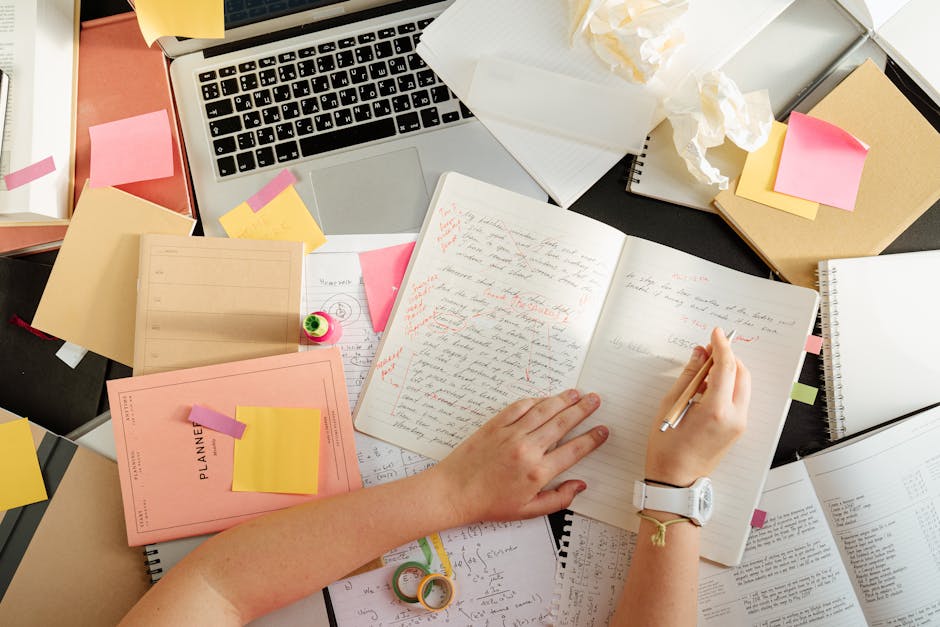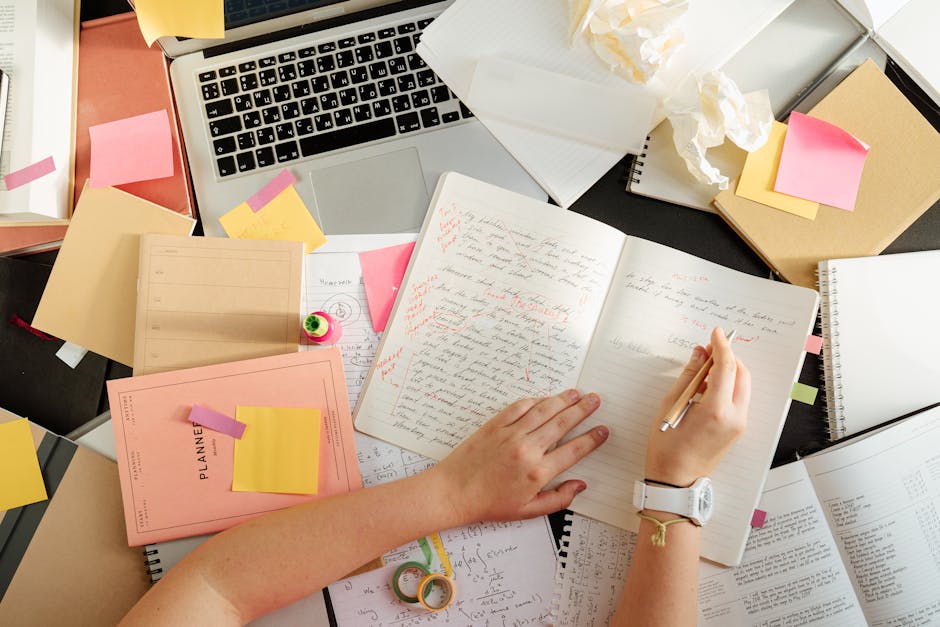
pexels photo 30215681

I Waited Until the Last Minute to Write My Paper: A Survival Guide

It is 11:47 PM and you are staring at a blank document, the cursor blinking like a tiny, judgmental metronome. Your coffee is cold. Your roommate is asleep. You have a paper due at midnight, or maybe by 8 AM, and the only complete sentence in your head is the one you just typed and immediately deleted. I know this moment because I have lived it, and so have millions of other students. If you searched for "I waited until the last minute to write my paper," you are not looking for a lecture. You are looking for a lifeline. This article is that lifeline. No shame, no scolding, just a realistic plan to get words on the page, submit something coherent, and find support if you need it.

Table of Contents

First, Let’s Talk About That Sinking Feeling

Your heart is beating faster than it should be at this hour. Your thoughts are a tangled loop of self-blame: Why do I always do this? I had three weeks. I'm so stupid. That sinking feeling has physical symptoms. Shallow breathing, tight shoulders, a foggy brain that refuses to cooperate. If you are experiencing any of this right now, take a slow breath. Seriously. Inhale for four counts, hold for four, exhale for six. Do it again.

A tired woman surrounded by books, studying in a library, feeling overworked and stressed.
Photo by Ron Lach on Pexels

If you are reading this, you are in staggeringly good company. Research consistently shows that 80 to 95 percent of college students procrastinate on academic tasks, and 30 to 50 percent struggle specifically with starting papers, preparing for exams, and completing readings on time. You are not uniquely broken. You are not the one student in your program who cannot get it together. You are normal. The panic you feel is not proof of failure. It is proof that you care about this assignment and your education. Panic is a signal, not a verdict. This article will not tell you to "just start earlier next time." You already know that. What you need right now is a way through tonight.

Why You Procrastinated (And Why It’s Not a Character Flaw)

Before we build your survival plan, let us spend a few minutes understanding why you are in this position. Not to wallow, but because understanding the cause helps you stop the shame spiral that is burning through your limited time and energy. Procrastination is rarely about laziness. It is almost always about something deeper.

The Real Reasons Students Delay Writing

Academic burnout and mental exhaustion are real and pervasive. After weeks of lectures, labs, discussion posts, quizzes, and assignments, your brain is exhausted. When you sit down to write and feel immediate resistance, that is not a moral failing. That is your nervous system protecting itself from more cognitive load. You are not avoiding the paper because you are undisciplined. You are avoiding it because you are depleted.

Fear of failure and perfectionism are equally powerful drivers. Many students delay starting because they are terrified the final product will not be good enough. So they wait. And wait. Until the deadline is so close that "good enough" becomes the only option. In a strange way, procrastination gives perfectionists an emotional escape hatch: if the paper is not great, they can blame the time constraint rather than their ability. This is not a conscious calculation for most people, but it is a well-documented psychological pattern.

Cozy workspace featuring latte art, notebook, and glasses, perfect for creative thoughts.
Photo by Pixabay on Pexels

For neurodivergent students, particularly those with ADHD, task initiation is neurologically different. Executive dysfunction makes starting a large, unstructured task feel genuinely impossible, not just unpleasant. This is not a choice or an excuse. It is how the brain works. If you have ADHD and you procrastinated your essay, you were not being lazy. You were up against a neurological barrier that requires specific strategies, not willpower.

Then there are the overwhelming life demands that no one talks about in the syllabus. You might be working a full-time job, caring for a family member, raising a child, or managing a chronic illness. You might be a first-generation student navigating a system no one in your family can help you decode. Multiple deadlines converge. Something has to give. Often, it is the paper that gets pushed to the last minute, not because it is unimportant, but because you are human and your capacity is finite.

Finally, sometimes you do not start because you genuinely do not understand what is being asked. Confusing rubrics, vague prompts, and poor professor communication leave students frozen. You cannot write what you cannot conceptualize, and staring at an unclear assignment sheet for two weeks does not make it any clearer.

The Psychology of "Active Procrastination"

Here is something surprising: not all procrastination is created equal. Researchers Chu and Choi, in a 2005 study, identified a phenomenon called "active procrastination." Some students deliberately delay their work because they perform better under pressure. They make a strategic choice to wait until the deadline looms, using the adrenaline rush to focus and produce efficiently. These students often report that their last-minute work is genuinely good, and sometimes it is.

This is distinct from passive procrastination, which is the anxiety-driven avoidance most people think of when they hear the word. Passive procrastinators are paralyzed. Active procrastinators are planning, just on a compressed timeline. If you are an active procrastinator, you might recognize yourself in this description. You have pulled this off before. You might even prefer the intensity of working against a clock.

However, a word of caution: even active procrastination has limits. When life adds extra stressors, when the assignment is more complex than anticipated, or when your energy reserves are already low, the strategy can collapse. If you are reading this in a state of genuine distress, you may have crossed the line from strategic delay into crisis. That is okay. Understanding which type of procrastinator you tend to be helps you make better choices next time. For now, the goal is simple: finish the paper.

What to Do Right Now – A Step-by-Step Survival Plan

You have limited time. You have limited emotional bandwidth. What follows is a practical, no-frills sequence designed to move you from frozen to finished. Do not read ahead and worry about step five. Start at step one.

Step 1: Stop Spiraling and Start Typing (The 5-Minute Brain Dump)

Open a new document or grab a piece of paper. Set a timer on your phone for five minutes. Write everything you know about your topic. Do not structure it. Do not worry about grammar, spelling, or whether it sounds intelligent. Just dump every fact, idea, quote fragment, argument, and question onto the page. If your brain offers "I have no idea what I'm doing," write that down too and keep going.

This exercise works because it bypasses the perfectionism circuit in your brain. You are not writing a paper. You are just writing. By minute three or four, you will likely surprise yourself with how much material you actually have. The blank page is the enemy. Fill it with anything, and the real writing becomes much easier.

Step 2: Build a Skeleton Outline (10 Minutes Max)

Now look at your brain dump. You are going to pull out the bones of a paper. Identify your thesis, or the closest thing you have to one. Write it at the top of a fresh page. Underneath, list three main points that support that thesis. These are your body paragraphs. Under each main point, jot down two or three supporting details, examples, or pieces of evidence from your brain dump.

Use the "10 percent rule" from essay structure guidelines to allocate your word count. For a 1500-word paper, your introduction and conclusion each get about 150 words. The remaining 1200 words are your body, roughly 400 words per main point. This gives you a clear, achievable target for each section. Do not overthink this outline. A rough, imperfect structure is infinitely better than no structure at all. You can adjust as you write.

Step 3: Write the Body First, Then the Intro

This is the single most effective piece of advice for last-minute writers. Do not start with the introduction. Starting with the intro is how you lose 45 minutes crafting and deleting the same three sentences while the clock ticks. Skip it entirely.

Begin with your strongest body paragraph. You already have the main point and supporting details from your outline. Turn those notes into complete sentences. Do not worry about elegant transitions or sophisticated vocabulary. Just explain your point clearly. When that paragraph is done, move to the next one. You will write a much better introduction once you know what your paper actually argues. By the time you finish the body, the intro will almost write itself.

Step 4: Use the Pomodoro Technique (25 Minutes On, 5 Minutes Off)

Your brain is already in crisis mode, so channel that adrenaline productively. Set a timer for 25 minutes and write without stopping. No editing, no researching, no checking your phone. When the timer goes off, take a five-minute break. Stand up, stretch, drink water, use the bathroom. Then do another 25-minute sprint.

After two or three Pomodoros, you will have a rough draft. It will not be pretty. That is not the point. The point is that a completed rough draft is a paper. An incomplete perfect draft is a zero. Do not edit while you write. Editing is a separate cognitive process, and switching between writing and editing slows you down dramatically. Save it for the next step.

Step 5: Edit Like You're Running Out of Time (Because You Are)

When your rough draft is complete, take a five-minute break. Then read it aloud. Your ears will catch awkward phrasing, missing words, and logical gaps that your eyes skip over. As you read, ask yourself one question: does each paragraph support my thesis? If a paragraph does not, cut it or revise it until it does.

Run spellcheck. Fix obvious typos. Check that your citations are roughly in the right format. Do not try to make this paper perfect. Perfect is the enemy of submitted. A coherent, complete paper with a few rough edges will earn a passing grade. A brilliant half-paper will not. Submit something.

When You Need More Than a Survival Plan – Emergency Academic Support

Sometimes, despite your best efforts, the survival plan is not enough. Maybe the topic is too complex. Maybe your research is incomplete. Maybe the brain fog will not lift. Maybe you are so exhausted that coherent sentences feel impossible. In these moments, reaching out for help is not a failure. It is a mature, strategic decision.

SubmitYourAssignments.org exists for exactly these situations. The site offers academic support for students who need paper assistance, writing help, or assignment guidance, whether you are in the middle of a crisis or trying to prevent the next one. The services available include proofreading support to catch the errors your tired eyes missed, essay editing services to tighten your argument and improve clarity, research assistance when you are stuck finding credible sources, and formatting help for APA, MLA, Chicago, and other style guides.

Using these resources ethically means submitting your own work and using professional guidance to improve it. Think of it like visiting a writing center, but available when you actually need it. Getting help is what successful students do. The myth of the solitary genius toiling alone is just that: a myth. Real academic growth happens in community, with support.

How to Write a Paper Overnight (Without Losing Your Mind)

If you have a full night ahead of you rather than just a few hours, you have options. The key is to structure your limited time so you do not burn out before the paper is done.

The 48-Hour Method (Adapted for Less Time)

A Quora contributor named Lori Jones once described a "48-hour method" that produced what she called award-level papers. The structure was simple: 24 hours for brain dumping and organizing, 24 hours for editing and polishing. Most students in crisis do not have 48 hours, but the principle scales down.

For a six-hour deadline, compress proportionally: three hours for drafting, two hours for revising, one hour for proofreading. For a three-hour deadline: 90 minutes drafting, 60 minutes revising, 30 minutes proofreading. The point is to separate drafting from editing. They use different parts of your brain, and trying to do both simultaneously is the fastest route to a blank page at 4 AM.

Tools and Tricks for Speed Writing

If typing feels too slow, use your phone's voice memo app or a text-to-speech tool. Talk through your argument out loud, then transcribe and clean up the text. Speaking is often faster than typing, and it bypasses the inner critic that lives in your fingertips.

Set a minimum word count for each section and track your progress. Knowing you need 400 words for a body paragraph makes the task concrete and achievable. Remove every possible distraction: phone in another room, browser tabs closed, notifications off. If music helps, choose instrumental tracks without lyrics. Lyrics compete with the language centers in your brain.

If you get stuck on a particular section, do not stop. Write a placeholder in brackets, like [INSERT ARGUMENT ABOUT CLIMATE POLICY HERE], and move to the next section. You can fill in the gap during revision. Momentum matters more than completeness in the drafting phase.

What About Quality? Can a Last-Minute Paper Still Be Good?

Let us be honest: a paper written at the last minute is rarely your best possible work. But that is not the question. The question is whether it can be good enough. And the answer, in most cases, is yes.

There is no definitive empirical research proving that last-minute papers consistently earn lower grades than carefully planned ones. Some students genuinely produce strong work under pressure. The adrenaline sharpens their thinking. The constraints force clarity. If you are one of those students, you already know it. If you are not, you can still produce a competent, passing paper by focusing on the fundamentals: a clear thesis, a logical structure, and correct citations.

In survival mode, "good enough" is the goal. A paper that meets the basic requirements and demonstrates reasonable understanding will get you through. You can pursue brilliance next time, with more time and support. For tonight, aim for complete and coherent. Submit it. Move on.

How to Avoid This Next Semester (Without Shame or Guilt)

Once this paper is submitted, you will probably feel relief. You might also feel a wave of resolve: I am never doing this again. That resolve is useful, but only if you channel it into small, sustainable changes rather than grand promises that collapse under the next wave of stress.

Small Changes That Actually Stick

Break every future assignment into micro-tasks with their own mini-deadlines. "Choose a topic by Tuesday," "Find three sources by Thursday," "Write thesis statement by Saturday." These tasks are small enough that starting does not trigger avoidance, and completing them builds momentum.

Try body doubling. This is a technique where you work alongside someone else, either in person or virtually. The other person does not need to be working on the same thing. Their presence provides external accountability and reduces the isolation that makes starting so hard. There are free online body doubling communities and study-with-me streams available around the clock.

Schedule writing appointments in your calendar as if they were classes. Treat them as non-negotiable. A two-hour block labeled "work on history paper" is more likely to happen than a vague intention to "write sometime this week."

If you have ADHD or another condition that affects executive function, contact your school's disability services office. Accommodations like extended deadlines, quiet testing environments, and access to assistive technology exist for a reason. You are entitled to an equitable learning environment.

When to Ask for Help Before the Crisis

Learn to recognize your personal warning signs. Avoiding the syllabus. Ignoring emails from your professor. Feeling numb or indifferent about a looming deadline. Telling yourself "I work better under pressure" when you know that is not entirely true for this particular assignment. These are signals that you need support, not signals that you are failing.

Reach out to SubmitYourAssignments.org for college writing assistance before the night before. The site offers tutoring, coaching, and academic support that works as a regular practice, not just an emergency measure. Building a support system, whether through study groups, writing centers, accountability partners, or professional services, is one of the most academically mature decisions you can make.

You Are Not Alone – Community and Validation

Every semester, millions of students type variations of "procrastinated my essay," "stressed about a paper deadline," and "I have a paper due tomorrow" into search engines. The statistics confirm what those searches suggest: 80 to 95 percent of college students procrastinate. You are not an outlier. You are the norm.

This does not mean procrastination is harmless or that you should not work on it. But it does mean you can stop beating yourself up. Shame is a terrible motivator. It drains the energy you need to write. It convinces you that you are uniquely broken when you are actually having a near-universal human experience. One late paper, one rough semester, one night of panic does not define your academic career or your worth as a student.

If you want to share your story or find community, there are forums and discussion threads full of students who get it. Read a few. You will see versions of your own experience reflected back at you, and that recognition is surprisingly calming. You are part of a very large, very tired, very determined club.

Frequently Asked Questions About Last-Minute Paper Writing

Why do I always wait until the last minute to write my paper?

Procrastination is often an emotional regulation strategy, not a time management problem. You are avoiding the anxiety, boredom, or fear that the writing task triggers. The avoidance provides short-term relief, which reinforces the behavior. Understanding this helps you address the root cause rather than just treating the symptom. Next time, notice the feeling that makes you want to close the document. Name it. Then try a five-minute brain dump to break the avoidance cycle.

How do people with ADHD write essays under pressure?

Break the task into very small sprints of 10 to 15 minutes each. Use external accountability through body doubling, timers, or telling someone your plan. Accept that your writing process may look different from neurotypical students, and that is perfectly fine. Many students with ADHD find that pressure creates focus, but the crash afterward is real. Seek paper assistance and academic support designed with neurodivergent students in mind, and consider working with a coach who understands executive dysfunction.

Can I write a good paper in one night?

Yes, if you define "good" as clear, structured, and meeting the basic requirements. No, if you are aiming for publication-quality work. Focus on a strong thesis, logical paragraph structure, and correct citations. Aim for competent and complete rather than brilliant and perfect. Many students have written perfectly acceptable papers in a single night. Many have also written terrible ones. The difference usually comes down to whether they had a plan or just panicked.

Is it okay to get help with my paper?

Absolutely. Seeking writing help, essay editing services, or proofreading support is a sign of responsibility, not weakness. Professional writers use editors. Academics use peer reviewers. Students benefit from guidance. Ethical support includes feedback, tutoring, formatting assistance, and editing. Always submit your own work. Use services to improve what you have written, not to replace your effort entirely.

What should I do if I can't finish on time?

Communicate with your professor honestly and professionally. A brief, respectful email explaining your situation and requesting an extension is far better than silence. Many professors are more understanding than students expect, especially if you reach out before the deadline passes. If an extension is not possible, use emergency essay help to salvage what you can and submit something rather than nothing. Most importantly, prioritize your mental health. No single assignment is worth a breakdown.

Final Thoughts – You’ve Got This

You are not broken. This is not the end of your academic career. Help is available, and you have a plan. Take one action right now. Start the five-minute brain dump. Open your outline. Visit the writing center website. Send the email asking for an extension. Do something, however small, to break the paralysis.

If you need support, whether it is tonight at midnight or three weeks before your next deadline, visit SubmitYourAssignments.org. You do not have to do this alone. The resources are there. The community is there. And somewhere out there, right now, thousands of other students are staring at their own blinking cursors, taking a deep breath, and starting anyway. Join them.


pexels photo 8197555 3

I Don’t Want to Write My Essay – Real Help for Stressed Students

You are not broken. You are not lazy. You are not a bad student. If you typed “I don’t want to write my essay” into a search bar at 11 p.m. with a blank document open and a stomach full of dread, you are having a completely normal human reaction to a demanding task. Millions of college students, graduate students, and adult learners have sat exactly where you are sitting right now, staring at a blinking cursor and feeling every ounce of motivation drain out of their body. This article is not going to shame you. It is not going to tell you to just try harder or stop procrastinating. What it will do is walk you through why you feel this way, give you real strategies that actually work when you are stuck, and show you where to find ethical support when you need it, including the academic support services available at SubmitYourAssignments.org.

Table of Contents

The Blank Page Stare-Down: Why You’re Stuck (And It’s Not Laziness)

The phrase “I don’t want to write my essay” is practically a universal college experience. It ranks right up there with pulling all-nighters and questioning your major at 3 a.m. Yet most students who feel this way immediately jump to the worst conclusion about themselves: I must be lazy. I must not care enough. I must not be cut out for this. None of that is true.

From above senior person taking notes while having coffee at wooden table with scattered walnuts and plants with jezve
Photo by Svetlana Ponomareva on Pexels

The real enemy is almost never the essay itself. It is what the essay represents. For some students, it is the crushing weight of burnout after a semester of nonstop deadlines. For others, it is perfectionism so intense that starting a single sentence feels like a test of their entire intelligence. For many, it is the fog of executive dysfunction that makes organizing thoughts feel physically impossible. And for a huge number of students balancing jobs, parenting, and school, it is simply the math of having nothing left to give after a day of obligations.

Before you do anything else, pause and ask yourself a quick diagnostic question: Am I tired, scared, bored, or confused about this assignment? Your answer points to different solutions. Tired means you need rest and realistic pacing. Scared means perfectionism or fear of judgment is driving the resistance. Bored means the topic is not connecting with you and you need a new angle. Confused means you might need help understanding the assignment itself, which is where assignment support from a service like SubmitYourAssignments.org can make all the difference. Graduate students writing theses, adult learners returning to school after years away, and traditional undergrads all hit this wall. Understanding why you hit it is the first step to climbing over it.

The Real Reasons You’re Thinking “I Don’t Feel Like Writing My Essay”

Burnout and Mental Exhaustion

College students in 2026 are juggling more than any generation before them. The cost of living keeps rising, which means more students are working part-time or full-time jobs while carrying a full course load. Internships are no longer optional extras; they are survival requirements. Family obligations do not pause just because a paper is due. On top of all that, mental health challenges among students have reached record levels.

When you are running on empty, writing an essay does not just feel unpleasant. It feels neurologically impossible. Your brain, depleted of the resources it needs for complex cognitive work, simply refuses to cooperate. You might notice brain fog that makes reading your own notes feel like decoding a foreign language. You might feel irritable the moment you sit down to work. You might lose interest in things you normally enjoy because all your energy is going toward keeping your head above water.

Here is the critical distinction: laziness feels fine. When someone is genuinely being lazy, they are choosing relaxation and enjoying it. Burnout feels awful. If you are sitting there feeling guilty, anxious, and physically heavy while not writing, you are not lazy. You are exhausted. Sometimes the most productive thing you can do is acknowledge that and build a backup plan, whether that means negotiating an extension with your professor or reaching out for college writing support so you can get some sleep while a professional helps you organize your thoughts.

Perfectionism and Fear of Judgment

Many students who say “I don’t want to write my essay” are not actually avoiding writing. They are avoiding writing something that might not be good enough. Perfectionism is one of the most effective forms of procrastination because it disguises itself as high standards. You tell yourself you are just waiting until you have the perfect thesis statement, the perfect opening line, the perfect argument structure. Meanwhile, the hours tick by and the page stays blank.

A student intensely studying under a desk lamp, surrounded by books, in a black and white setting.
Photo by Bikram Bezbaruah on Pexels

The truth is that your professor has read worse essays than anything you could possibly produce. They have read papers written in the parking lot ten minutes before class. They have read arguments that made no sense, citations that led nowhere, and conclusions that contradicted the introduction. Your imperfect draft is already in the top half of what they see.

The mindset shift that helps here is simple but powerful: draft for ideas, not for perfection. Give yourself explicit permission to write badly. Tell yourself out loud if you need to: “This draft is allowed to be terrible. I will fix it later.” For students with ADHD, perfectionism can be especially paralyzing. You might find yourself spending forty-five minutes rewriting a single sentence, trying to get the wording exactly right before you can move on. That is not writing. That is spinning your wheels. The only way out is to let the sentence be ugly and keep moving forward.

ADHD, Executive Dysfunction, and Essay Writing

Do people with ADHD struggle with essays? The answer is a resounding yes, and the reasons go far deeper than most people understand. Executive dysfunction, a hallmark of ADHD, affects the brain’s ability to plan, prioritize, initiate tasks, and sustain focus. When you have executive dysfunction, starting an essay does not just feel mentally hard. It can feel physically impossible, like there is an invisible wall between you and the task that your body refuses to cross.

Traditional advice like “just focus” or “stop procrastinating” is not only unhelpful for neurodivergent students. It is actively harmful because it reinforces the shame spiral that many people with ADHD already carry. You have probably heard some version of “you are so smart, if you would just apply yourself” your entire life. The problem is not effort or intelligence. The problem is that your brain’s operating system works differently.

One of the most effective strategies for ADHD-related writing blocks is body doubling. This simply means working alongside another person, either in the same room or virtually. The presence of another person who is also working provides just enough external structure to unlock focus. There are online body doubling communities, study groups, and even YouTube videos of people studying that can serve this purpose. Another ADHD-friendly approach is the “write one sentence, then stop” rule. Commit to writing exactly one sentence. If after that sentence you genuinely cannot continue, you are allowed to stop. More often than not, the act of writing that first sentence breaks the seal and you keep going. When executive function is running low and you need help with structure and organization, essay assistance from a real person who understands how to scaffold the writing process can be a lifeline.

Overwhelm from Balancing Work, Family, and School

Adult learners and non-traditional students face a set of pressures that traditional college advice rarely addresses. When you have worked an eight-hour shift, helped your kids with homework, made dinner, handled household logistics, and finally sat down at 9:30 p.m. to write a paper, the thought “I don’t want to write my essay” is not a character flaw. It is a completely rational response to being asked to perform cognitively demanding work on an empty tank.

This situation often creates a guilt spiral. You feel bad about not writing, which makes the writing feel even heavier, which makes you avoid it more, which makes you feel worse. Breaking that spiral requires giving yourself permission to be strategic about where you spend your limited energy. Getting writing guidance is not cheating. It is the same kind of resource management that leads busy professionals to hire accountants, meal prep services, or house cleaners. You are not admitting defeat. You are acknowledging that your time and mental energy are finite resources that need to be allocated wisely.

If you are determined to push through on your own, focus on protecting small windows of time rather than waiting for a big block that will never come. Twenty minutes of focused writing while your coffee brews or during a lunch break can add up to real progress. The key is lowering the barrier to entry so that starting does not feel like committing to a three-hour ordeal.

How to Finish an Essay Fast When You’ve Already Procrastinated

The 10-Minute Rule That Actually Works

There is a strategy that shows up across Reddit threads, academic coaching blogs, and psychology research, and it works for a reason. Set a timer for exactly ten minutes. During those ten minutes, you are allowed to write anything at all related to your essay. You can write a stream of complaints about how much you hate the assignment. You can write a messy outline. You can write “I have no idea what to say” over and over until something else comes out. The only rule is that you must keep writing or typing for the full ten minutes.

This technique works because it bypasses the brain’s fear response. Writing an entire essay feels threatening. Writing for ten minutes feels trivial. Your amygdala, the part of your brain that sounds the alarm when you face something stressful, does not mobilize for a ten-minute task the way it does for a five-hour marathon. Most people find that once the ten minutes are up, they have broken through the initial resistance and want to keep going. And if you genuinely cannot continue after ten minutes, you are allowed to stop, no guilt attached. You did what you committed to do. Try again with a different strategy later.

Brain Dumping and the “Say It Out Loud” Technique

For many students who feel stressed about writing a paper, the hardest part is translating thoughts into formal written language. Your brain moves faster than your fingers, and by the time you start typing a sentence, the idea has evaporated. There is a workaround that takes advantage of a skill you already have: speaking.

Pull out your phone, open a voice recording app, and talk through your essay topic as if you were explaining it to a friend over coffee. Do not try to sound academic. Just talk. What is the main point you are trying to make? What evidence do you have? What objections might someone raise? Record yourself for five or ten minutes, then play it back and transcribe the useful parts. You will often find that you have already articulated a thesis, several supporting points, and even some decent phrasing, all without the pressure of staring at a blank document.

Brain dumping works on the same principle but in written form. Open a document and write down everything you know about the topic, in any order, with zero concern for grammar, structure, or coherence. Once you have words on the page, your task shifts from writing to editing, and editing is almost always easier than generating from scratch.

The Pomodoro Method for Essay Writing

The Pomodoro method is simple: twenty-five minutes of focused work, followed by a five-minute break. After four cycles, take a longer break of fifteen to thirty minutes. This structure works for essay writing because it breaks a daunting task into manageable chunks and builds in recovery time for your brain.

For students with ADHD or anxiety, the Pomodoro method provides external scaffolding that reduces the cognitive load of deciding when to start and when to stop. The timer makes the decision for you. Pairing Pomodoro with body doubling, working alongside someone else who is also using the timer, can amplify the effect. After three or four Pomodoro cycles, you will often have a solid draft or at least enough material to work with. Even if you only manage one cycle, that is twenty-five minutes of writing you did not have before.

The 10% Rule for Essay Structure (When You Have No Idea Where to Start)

Sometimes the paralysis comes from not knowing what the essay is supposed to look like. You have a prompt, some research, and a vague sense of dread, but no roadmap. The 10% rule gives you a formula you can apply to almost any college essay.

Your introduction should be about 10% of your total word count. Your conclusion should also be about 10%. The remaining 80% is your body. For a 1500-word essay, that means a 150-word introduction, three body paragraphs of roughly 400 words each, and a 150-word conclusion. That is it. That is the skeleton.

Once you have that structure in place, you can start filling in the blanks. Write your thesis statement first, even if it is rough. Then sketch the main point of each body paragraph. Then start expanding each section. The formula gives your brain a clear target instead of an amorphous “write an essay” command. If you are still struggling to build that roadmap, assignment support services can help you create a structured outline tailored to your specific prompt and requirements.

Can Someone Help Me Write My Essay? (Ethical Support Options)

What Ethical Academic Help Looks Like

There is a world of difference between paying someone to write your essay from scratch and getting legitimate support to improve your own work. Understanding that difference is important for your academic integrity and for your own learning.

Ethical academic help includes tutoring, where someone helps you understand the material and develop your own arguments. It includes editing and proofreading, where a professional reviews your completed draft for grammar, clarity, flow, and formatting errors. It includes research guidance, where someone helps you find and evaluate sources. It includes formatting assistance for citation styles like APA, MLA, or Chicago. In all of these cases, the ideas, arguments, and core writing remain yours. The support makes your work better, not someone else’s work passed off as yours.

When you use editing and proofreading help, you are doing what professional writers do every day. Authors have editors. Journalists have copy editors. Researchers have peer reviewers. Getting feedback on your draft and polishing it before submission is a mark of professionalism, not a shortcut.

Professional Essay Editing Services vs. AI Writing Tools

AI essay detectors are now standard tools in many professors’ grading workflows, and concerns about AI-generated content are well-founded. While AI tools like ChatGPT can be useful for brainstorming topics or generating rough outlines, using them to write full essays carries significant risks. AI-generated writing often lacks the specific voice, original analysis, and nuanced argumentation that professors expect. It can also fabricate citations, make factual errors, and produce generic prose that is easy for detectors to flag.

Human academic writing assistance provides something AI cannot replicate: a real person who understands your voice, your argument, and your academic context. A human editor can help you strengthen your thesis, reorganize paragraphs for better flow, and catch logical gaps that AI would miss. They can also ensure that your essay sounds like you, not like a language model.

Professional essay editing services occupy the ethical middle ground between struggling alone and resorting to AI shortcuts. You do your own writing, but you do not have to submit it without expert review. For students worried about AI detection, human-edited work is simply your work, improved.

When to Ask for Help (And How to Do It Without Embarrassment)

There are clear signs that it is time to reach out. You have been stuck for days and made no progress. The deadline is tomorrow and you have nothing. You are experiencing panic attacks, sleeplessness, or spiraling anxiety every time you think about the assignment. These are not signs of weakness. They are signs that you are human and that your current approach is not working.

Asking for essay assistance is a sign of self-awareness, not failure. The most successful students are often the ones who know when to deploy resources strategically. When you reach out for help, frame your request honestly but constructively. “I need help with structure and organization” is specific and actionable. It shows that you have identified the problem and are looking for a solution, not a shortcut.

There is also a difference between crisis help and ongoing support. Crisis help is for when a deadline is bearing down and you need immediate editing, feedback, or guidance to get across the finish line. Ongoing support looks like regular tutoring sessions, writing coaching, or having a trusted editor review your work throughout the semester. Both are valid. Both are forms of taking responsibility for your education rather than letting overwhelm win.

How to Survive College Writing Burnout Long-Term

Building a Writing Routine That Doesn’t Drain You

Waiting for motivation to strike before you start writing is a trap. Motivation is not a prerequisite for action. It is usually the result of action. You start writing, you get a little momentum, and then motivation shows up. If you wait for it to arrive first, you might wait forever.

The “two-sentence minimum” is a habit that can carry you through an entire semester. Commit to writing just two sentences per day on your current assignment. That is it. Two sentences. Most days, you will write more. Some days, you will only write two. But over time, those sentences add up to paragraphs, pages, and finished papers, all without the adrenaline-fueled panic of last-minute writing.

Pay attention to when your brain works best. If you are sharpest in the morning, protect thirty minutes of writing time before you check your phone or email. If you are a night owl, accept that and plan your writing sessions accordingly. Fighting your natural rhythms makes everything harder. Your environment matters too. A clean desk, noise-canceling headphones, a specific coffee shop, whatever signals to your brain that it is writing time, build that association and use it consistently.

Managing the Mental Health Side of Academic Pressure

Sometimes “I don’t want to write my essay” is not really about the essay at all. It can be a symptom of anxiety, depression, or burnout that needs attention beyond writing strategies. If you are experiencing persistent hopelessness, loss of interest in activities you used to enjoy, changes in sleep or appetite, or thoughts of self-harm, please reach out to a mental health professional. Most campuses offer free or low-cost counseling services, and there are national hotlines available 24/7.

The basics matter more than most students want to admit. Sleep deprivation tanks your cognitive performance. Poor nutrition leaves your brain without the fuel it needs for complex thinking. Zero exercise means zero outlet for the stress that accumulates during the semester. You do not need to become a wellness influencer overnight, but small improvements in any of these areas can make writing feel significantly less impossible.

Give yourself grace. One bad essay, one late paper, one rough semester does not define your intelligence or your worth. The students who thrive in the long run are not the ones who never struggle. They are the ones who learn to struggle strategically, who build support networks, and who know when to lean on academic support services like SubmitYourAssignments.org instead of white-knuckling through every challenge alone.

Frequently Asked Questions

Why do I feel like I can’t write my essay even when I have time?

Having time and having capacity are two different things. Your brain can perceive writing as a threat when it is linked to fear of failure, fear of judgment, or feelings of inadequacy. That threat response triggers avoidance, which looks like procrastination but feels like paralysis. Breaking the cycle requires tiny, low-stakes actions like setting a ten-minute timer, writing one sentence, or working alongside someone else. If the feeling is chronic and extends beyond writing to other areas of your life, consider whether you need academic or mental health support.

Is it okay to get help with my essay?

Yes, absolutely, as long as the help is ethical. Tutoring, editing, proofreading, research guidance, and formatting assistance are all legitimate forms of support that improve your work while keeping the ideas and writing in your hands. Many successful students use writing guidance services to strengthen their papers before submission. Check your school’s academic integrity policy for specific guidelines, but in general, getting feedback and polishing your own work is not only acceptable, it is smart.

How do I write an essay when I have no motivation?

Stop waiting for motivation and start with the smallest possible action. Open the document. Write one sentence, even if it is terrible. Use the ten-minute timer trick to bypass the need for motivation entirely. Focus on progress over perfection. A messy draft exists and can be improved. A blank page cannot. If lack of motivation is persistent and accompanied by exhaustion, numbness, or hopelessness, consider whether burnout or depression might be the underlying issue.

What’s the best way to finish an essay in one night?

Prioritize ruthlessly. Write the body paragraphs first since they contain your actual arguments and evidence. Save the introduction and conclusion for last, once you know what you have actually said. Use the 10% rule to allocate your word count quickly without agonizing over structure. Eliminate every possible distraction: phone in another room, social media blockers activated, notifications off. If you are truly stuck and the deadline is bearing down, college paper help online can provide last-minute editing and feedback to make sure what you submit is coherent and polished.

Can professors tell if I used AI to write my essay?

Yes, and the detection tools are getting better every year. AI-generated writing tends to lack the specific voice, original analysis, and deep engagement with sources that professors look for. It can also produce plausible-sounding but factually incorrect content and fabricated citations. Human-written essays that have been reviewed by professional essay editing services are both safer and higher quality. The smartest approach is to use AI for brainstorming and outlining if you find it helpful, but to do your own writing and get human feedback before you submit.

You Don’t Have to Do This Alone

Feeling “I don’t want to write my essay” is not a moral failing. It is not proof that you are not smart enough, not disciplined enough, not cut out for college. It is a signal. Sometimes it is a signal that you need rest. Sometimes it is a signal that you need a different strategy. Sometimes it is a signal that you need to call in support so you can stop spinning your wheels and start making progress.

You have options. Small strategies like the ten-minute rule, brain dumping, and the Pomodoro method can get you unstuck in the short term. Bigger mindset shifts around perfectionism and motivation can change your relationship with writing over time. And when you are truly overwhelmed, professional support is available that respects your integrity, your voice, and your goals.

The goal is not to avoid writing forever. The goal is to make writing manageable enough that it no longer fills you with dread. You are capable of more than you think, especially when you stop trying to do it all alone.

If you are overwhelmed, stuck, or just need a hand, visit SubmitYourAssignments.org for academic support services that respect your time, your brain, and your integrity. Whether you need editing and proofreading help, writing guidance, or just someone to talk through your essay with, we are here for you. You have made it this far. You can make it through this paper too.

pexels photo 23496958

30 Smart Ways to Use AI in 2026: Daily Life to Deep Work

If you are looking for fresh ways to use AI that actually save time or spark creativity, this guide is built for you. The era of treating artificial intelligence as a novelty, a chatbot you ask to write limericks or settle bar debates, is behind us. In 2026, tools like ChatGPT, Claude, and Gemini have matured into genuine utilities. They can plan your meals, debug your code, tutor you in a second language, and even build simple apps from plain English descriptions. This article covers 30 actionable methods organized by context: daily life, work, creativity, learning, and advanced workflows. No hype, no jargon, just practical techniques you can test today.

Table of Contents

Why 2026 Is the Year to Stop Experimenting and Start Using AI

The conversation around AI has shifted. Two years ago, most users were poking at chatbots to see what they could do. Now, the demand is for utility. Ethan Mollick’s newsletter, One Useful Thing, has attracted over 438,000 subscribers precisely because it focuses on practical use cases rather than feature announcements. People want to know what works.

Close-up of an AI-driven chat interface on a computer screen, showcasing modern AI technology.
Photo by Matheus Bertelli on Pexels

The subscription question keeps coming up. Most advanced models sit behind a $20 per month paywall: ChatGPT Plus, Claude Pro, Gemini Advanced. For casual use, the free tiers are fine. But if you spend more than two hours a week on tasks AI can accelerate, a paid plan pays for itself quickly. The premium tiers unlock longer context windows, better reasoning, image analysis, and deep research capabilities. These are the features that turn AI from a toy into a colleague.

You do not need to be a coder to get a return on investment in 2026. You need a clear task, a bit of context, and a willingness to verify what the machine gives you.

Creative and Fun Ways to Use AI (The "Noir Detective" Effect)

Turn AI into a Character for Writing Projects

One of the most underrated ways to use AI is to assign it a persona. Instead of asking for generic help, tell the system to act as a noir detective, a distracted professor, or a children’s book narrator. This technique works wonders for overcoming writer’s block. A student drafting a creative essay might prompt: "You are a noir detective explaining the plot hole in Romeo and Juliet. Use a gritty, cynical tone." The result is often sharper and more engaging than anything produced by a neutral assistant.

Professionals can use the same approach for social media captions, brand voice experiments, or internal communications that need a specific tone. The persona acts as a filter, narrowing the AI’s stylistic choices and producing more consistent output.

Top-down view of an organized modern desk setup featuring Apple devices and accessories.
Photo by Tranmautritam on Pexels

Generate Unconventional Formats

Most people ask AI for emails, essays, and summaries. Few think to request a Yelp review of the French Revolution, a eulogy for a dead laptop, or a field guide to the wildlife of a messy desk. These unconventional formats force the AI to remix information in surprising ways. A history student who writes a press release announcing the fall of the Berlin Wall learns the facts while practicing a real-world format. The fun angle is under-covered in most search results, which makes it a unique hook for anyone bored with standard prompts.

Vibe Coding for Non-Coders

A new category of tools has emerged for people who cannot write a line of code but want to build simple applications. Lovable, Bolt, Replit, and Cursor let you describe what you want in plain English and watch the software assemble itself. A student might build a custom study timer that blocks distracting sites. A freelancer could create a client invoice generator tailored to their exact workflow. This approach, sometimes called vibe coding, lowers the barrier to software creation dramatically. You describe the logic, the tool writes the code, and you iterate by pointing out what needs to change.

Productivity and Work Automation (The "Do the Work" Bucket)

Email and Communication Overload

Email remains a time sink for most professionals. AI can translate messages into other languages, draft polite but firm replies to difficult clients, and condense long threads into bullet-point summaries. The key is context. Feed the AI a sentence about your role and the outcome you want. For example: "You are a customer service manager responding to a refund request. The policy allows refunds within 30 days, and this customer is on day 45. Draft a response that is empathetic but firm." The output will match your tone far better than a generic prompt.

Research and Summarization

Long articles, dense PDFs, and rambling lecture notes become manageable when you hand them to Claude or ChatGPT. Paste the text and ask for a summary organized by key themes. For deeper work, NotebookLM lets you upload multiple sources and generate a synthesized report with citations. A graduate student can feed in ten journal articles and receive a literature review outline in minutes. The time savings compound when you need to revisit material weeks later and can query your own document set.

Social Media and Marketing Analysis

AI can analyze your content performance in ways that spreadsheets cannot easily replicate. Upload a CSV of your LinkedIn posts with dates, topics, and engagement metrics. Ask ChatGPT to create a text-based heatmap showing which topics perform best by day of the week. The output might reveal that your audience engages with technical content on Tuesdays and personal stories on Fridays. This kind of pattern recognition would take hours to extract manually. You can also use AI to generate SEO keyword clusters, draft meta descriptions, and suggest content gaps based on competitor analysis.

Meeting and Note-Taking

Snap a photo of a whiteboard after a brainstorming session. Ask AI to transcribe the handwriting, organize the ideas into categories, and extract action items with assigned owners. You can also forward a long email thread and prompt: "Generate a meeting agenda based on the unresolved issues in this conversation." The AI identifies decision points, open questions, and deadlines that a human might overlook when skimming.

Learning and Education (Your Personal Tutor)

Language Learning with Context

Flashcards have their place, but context accelerates retention. Ask AI to write a short story using ten new vocabulary words you want to learn. The narrative gives each word a memorable anchor. Voice mode on ChatGPT or Gemini lets you practice conversational dialogue in a second language, with the AI correcting your grammar in real time. You can set the scenario: ordering food in a Parisian café, checking into a Tokyo hotel, or debating a topic at a Spanish university.

Skill-Based Workshops

A well-structured prompt turns AI into a curriculum designer. Try: "Create a four-week workshop plan to learn basic Python for data analysis, with one project per week and resources for each lesson." The AI will outline weekly goals, suggest practice datasets, and explain concepts in plain language. For deeper understanding, ask the AI to act as a Socratic tutor. Instead of giving answers, it asks you guiding questions that lead you to discover the solution yourself. This method works for math, philosophy, coding, and any subject where reasoning matters more than memorization.

Summarizing Lectures and Books

Upload a PDF of a textbook chapter and request a CliffsNotes version or a study guide with quiz questions. The AI can identify the thesis, supporting arguments, and key terminology faster than most readers can highlight. For exam preparation, ask it to generate multiple-choice questions with explanations for each answer. The demand for beginner-friendly ways to use AI in education is high, and these techniques require no technical skill beyond uploading a file.

Daily Life Hacks (Recipe to Repair)

Cooking from What You Have

Open your fridge, take a photo, and ask: "What can I make with these ingredients? I have 30 minutes and want a vegetarian meal." The AI identifies the items, suggests a recipe, and adjusts for dietary restrictions. You can follow up with questions about substitutions or scaling the recipe for a dinner party. This turns a common frustration, staring at a full fridge with no idea what to cook, into a solved problem.

Travel and Itinerary Planning

A detailed prompt produces a detailed itinerary. "Plan a three-day weekend in Austin, Texas, for a couple who loves live music and BBQ. Budget: $500. Include restaurant recommendations, venue schedules, and weather considerations." The AI generates a day-by-day schedule with practical notes about when to book reservations and how to get between locations. It is not a replacement for checking official sites, but it provides a starting framework that saves hours of research.

Home Troubleshooting

A leaking faucet, a strange error code on your laptop, a crack in the drywall: take a photo and ask for step-by-step repair instructions. The AI can identify the likely cause and walk you through the fix with the tools you have on hand. A necessary caution: for anything involving gas lines, electrical panels, or structural integrity, treat the AI’s advice as educational background, not a substitute for a licensed professional. Safety-critical decisions still require human expertise.

Advanced and Niche Workflows (Beyond Basic Chat)

CustomGPTs for Repetitive Tasks

If you find yourself pasting the same instructions into ChatGPT every week, build a CustomGPT. These are specialized versions of the AI that you configure once and reuse indefinitely. One example: a CustomGPT that parses international addresses from a spreadsheet and formats them correctly for shipping labels, handling country-specific quirks automatically. A teaching assistant might build a CustomGPT that grades peer reviews against a rubric, providing consistent feedback and flagging submissions that need human review. The setup takes 15 minutes. The time savings recur forever.

Deep Research for Gift Guides and Reports

Gemini and ChatGPT both offer deep research modes that scour the web, compare sources, and produce structured reports. Ask: "Find the best noise-canceling headphones under $200, with pros and cons drawn from at least ten professional reviews." The AI returns a synthesized guide with specific model recommendations, price comparisons, and a summary of consensus opinions. This positions AI as a research assistant rather than a chatbot, a gap in how most people currently use these tools. The same technique works for product comparisons, travel planning, and competitive analysis.

Heatmap Analysis of Your Own Data

Upload a CSV of your study hours, workout log, or social media performance. Ask the AI to create a text-based heatmap showing patterns by day and time. The output might reveal that your most productive study sessions happen between 9 a.m. and 11 a.m. on weekdays, or that your Instagram engagement spikes on Sunday evenings. This kind of personal data analysis, performed without any coding or spreadsheet expertise, is almost entirely absent from most AI guides. It turns raw logs into actionable insights.

The 3 Biggest Mistakes Beginners Make (And How to Fix Them)

Vague prompts are the most common error. "Write something funny" gives the AI no direction. "Write a Yelp review for a coffee shop run by squirrels, using a noir detective voice" gives it a persona, a format, and a specific detail. The structure to remember is persona plus format plus detail. Every word of context improves the output.

Not verifying outputs is the second mistake. AI systems hallucinate: they invent facts, misattribute quotes, and struggle with math. For any output that matters, ask the AI to cite sources or run a separate fact-check. Medical, legal, and financial advice should always be cross-checked with a qualified professional. The AI is a starting point, not an authority.

Using the free tier for complex tasks is the third trap. Free models have shorter context windows and weaker reasoning. For multi-step projects like research reports or code debugging, the paid tiers handle nuance and follow instructions more reliably. If a task matters, the $20 per month is a reasonable investment.

Free vs. Paid: Which AI Tool Should You Use in 2026?

ChatGPT on the free tier handles basic writing, brainstorming, and simple Q&A well. ChatGPT Plus at $20 per month unlocks GPT-4o, which excels at coding, long documents, and image analysis. Claude, available in free and Pro tiers, produces superior long-form writing and nuanced analysis; students writing essays often prefer its voice. Gemini, free and Advanced, integrates tightly with Google Workspace, making it the best choice for deep research and users who live in Docs and Gmail.

Ethan Mollick recommends maintaining access to all three systems. Each has strengths: Claude for prose, ChatGPT for reasoning and code, Gemini for research and Google integration. If you use AI for more than two hours of work per week, a paid subscription to at least one platform pays for itself in time saved. Start with the free tier of each, identify which fits your workflow, and upgrade when you hit the limits.

Conclusion: Your Next Step

This guide covered three categories: fun and creative applications, productivity and work automation, and advanced workflows for users ready to go deeper. The common thread is specificity. The more clearly you define the task, the persona, and the format, the better the AI performs.

Pick one task from this list today. Summarize a long email thread, plan a weekend trip, or ask the AI to write a field guide to your desk. Use a free tool, verify the output, and notice what works. The best way to learn is to start small, build the habit, and scale up as your comfort grows. In 2026, the tools are ready. The only missing piece is your next prompt.

pexels photo 8197555 1

AI Detector Flagged My Essay? Why It Happens and How to Fix It

If an AI detector flagged my essay, I know the sinking feeling. Your stomach drops, your mind races, and suddenly you are questioning whether hours of honest work are about to blow up in your face. But in 2026, false positives are more common than ever, and a flag does not mean you cheated. It means an algorithm made a statistical guess, and it guessed wrong. This article will walk you through exactly why your original writing got flagged, what to do right now if you are facing an accusation, and how to edit your future work so detectors see the human behind the words. You are not alone in this, and you are not powerless.

Table of Contents

Why Your Original Essay Got Flagged (It’s Not You, It’s the Algorithm)

The most important thing to understand is that AI detectors do not read essays the way a human does. They do not evaluate your ideas, your argument, or your evidence. They measure statistical patterns in your sentence structure and word choice, then compare those patterns to what they know about AI-generated text. The problem is that a lot of human writing looks statistically similar to AI output, especially when that writing is formal, structured, and polished.

Consider the Winnie the Pooh problem. A paragraph from A.A. Milne’s 1926 children’s classic was run through an AI detector and flagged as 82 percent AI-generated. Winnie the Pooh. Written decades before the first computer, let alone large language models. If a beloved children’s book from the Jazz Age can get flagged, your carefully structured term paper does not stand a chance. This example is not just amusing; it is a devastating demonstration that detectors measure patterns, not authorship. When a detector flags your essay, it is not accusing you of anything. It is admitting that your writing style falls within the same statistical range as a machine’s output.

Two core metrics drive these false positives: perplexity and burstiness. Perplexity measures how predictable your word choices are. If a reader can guess the next word in your sentence with high accuracy, your text has low perplexity. AI models generate text by predicting the most probable next word, so low perplexity text looks machine-made to a detector. Formal academic writing is inherently predictable. You use discipline-specific vocabulary, standard transitions, and expected sentence structures. That predictability is what your professors have rewarded for years, and it is exactly what makes detectors flag you.

Person in yellow sweater working at a wooden desk with documents, folders, and a laptop.
Photo by Tima Miroshnichenko on Pexels

Burstiness measures variation in sentence length and structure. Human writing tends to be bursty: we mix short, punchy sentences with longer, more complex ones. AI-generated text, especially from earlier models, often produces sentences of similar length and rhythm, creating a uniform, smooth flow. If you write with consistent, balanced paragraph structures, you trigger the burstiness alarm. The irony is painful. The more carefully you craft your prose, the more suspicious it looks.

Then there is the school template trap, a Catch-22 that deserves special attention. Many schools provide writing templates like MOST or POET to help students structure their essays. You follow the template because you want a good grade. But templates produce exactly the kind of uniform, predictable writing that detectors flag. The same goes for polished transitions: "furthermore," "in addition," "consequently," "nevertheless." These words are the glue of formal academic prose, but they are also statistical red flags. The more you follow the rules, the more you look like a robot. Students who dutifully use every resource their instructors gave them are walking directly into a false positive.

One more specific trigger worth knowing: hyphens and em-dashes. Overuse of em-dashes has become a telltale sign of ChatGPT output, and professors are increasingly aware of this pattern. If your writing is sprinkled with dramatic pauses set off by dashes, you are adding another statistical strike against yourself. This is a stylistic choice that has nothing to do with academic integrity, yet it can tip a detector’s score from clean to flagged.

Detectors flag style, not guilt. Your polished, template-driven writing is statistically similar to AI output. That is the whole story.

How AI Detectors Actually Work (And Why They’re Wrong So Often)

To defend yourself, you need to understand the machinery behind the flag. AI detectors are not magic. They are statistical classifiers trained to distinguish between text that looks like it came from a language model and text that looks like it came from a human. They do this by analyzing the same metrics we just discussed: perplexity and burstiness.

Perplexity, in simple terms, is a measure of surprise. If a detector reads your sentence and finds every word exactly where it expected to find it, perplexity is low. Low perplexity text follows predictable patterns. Formal academic writing, with its standardized vocabulary and conventional structures, is highly predictable. A history paper that begins with "The Industrial Revolution fundamentally altered European society" is not surprising anyone. Every word in that sentence is the most probable choice. Compare that to conversational or messy human writing: "Look, the Industrial Revolution didn’t just change things. It blew everything up." That second version has higher perplexity because the word choices are less predictable. The detector sees the first version as machine-like and the second as human.

Hands typing on a vintage beige keyboard with a striped sweater visible, indoors.
Photo by MART PRODUCTION on Pexels

Burstiness works on a similar principle. When humans write naturally, we vary our rhythm. A short sentence lands hard. Then we might expand into something longer and more nuanced, weaving in clauses and qualifications before snapping back to brevity. AI text, particularly from models optimized for coherence, tends toward uniformity. Sentences hover around the same length. Paragraphs follow the same structural logic. If your writing is consistently balanced and smooth, the detector assumes a machine wrote it because machines are better at maintaining that consistency than humans are.

No detector is 100 percent accurate, and the lack of independent accuracy data is telling. The companies that make these tools rarely publish their false positive rates, and the studies that do exist often come from the companies themselves. What we do know is that even Turnitin, the industry standard in academic integrity software, has faced significant pushback. Vanderbilt University publicly scaled back its reliance on Turnitin’s AI detection feature after concerns about false positives. If a major research university is walking away from the tool, that should tell you something about its reliability.

Detector differences also matter more than most people realize. GPTZero, Originality AI, and Copyleaks use different training data, different thresholds, and different underlying models. A flag on one tool does not mean a flag on all. GPTZero is commonly used in educational settings and tends to be more conservative. Originality AI is marketed to professional writers and content marketers and is generally stricter. Copyleaks falls somewhere in between. If you run your essay through one detector and get a high AI probability, try another before you panic. The inconsistency across tools is itself evidence that these systems are not definitive.

Understanding the math behind the flag helps you argue your case and choose the right tool to test your work. When you know that a detector is just measuring statistical patterns, not reading your essay for meaning, you can explain to an instructor exactly why your original writing triggered a false positive.

What to Do Right Now If an AI Detector Flagged Your Essay

You just got the notification. Your essay was flagged. Your instructor is asking questions, or you are staring at a detector score that says 92 percent AI-generated and you know you wrote every word. Here is your action plan.

Step 1: Do Not Panic, Gather Your Evidence

The first instinct is to fire off an emotional email or post a frantic message on Reddit. Resist that urge. Instead, start collecting proof of your writing process. If you used Google Docs, open the version history and take screenshots showing the essay evolving over time. If you used Microsoft Word, check your file properties for edit timestamps and track changes. Save every outline, every page of notes, every research file you consulted. The goal is to build a paper trail that demonstrates a human writing process: messy starts, revisions, dead ends, breakthroughs. AI-generated text does not have a revision history. Your essay does. That is your strongest evidence.

Also, print or screenshot the flagged detector report. Save it as a PDF. You want a record of exactly what the tool said, including the date, the score, and any specific sections it highlighted. If this escalates, you will need that documentation.

Step 2: Talk to Your Instructor the Right Way

How you approach this conversation matters enormously. Do not come in defensive, angry, or accusatory. Instructors are also navigating this new landscape, and many of them are just as frustrated with unreliable detectors as you are. Frame the conversation as a collaborative problem-solving effort. Try something like: "I ran my essay through a detector and got a false positive. I understand why the algorithm flagged it, and I have my drafts and notes here. Can we look at this together?"

Bring your evidence. Show the version history. Explain that you understand the technical reasons for the flag: your writing is formal and structured, which means low perplexity and low burstiness, which triggers the detector. Reference the Vanderbilt example or the Winnie the Pooh test to demonstrate that this is a known institutional problem, not a personal excuse. When you show that you understand how the technology works, you shift the conversation from "I didn’t cheat" to "this tool is flawed, and here is why." The second framing is much harder to dismiss.

Step 3: Know Your Rights in 2026

By 2026, many universities have implemented formal appeals processes for AI detection false positives. Before you need it, find out if your school has a written policy. Ask your instructor or department head for documentation. If an accusation escalates to an academic dishonesty hearing, you have the right to request a human review of your writing process, not just a software score. A detector report is not proof of cheating. It is a statistical guess, and it should never be the sole basis for disciplinary action.

For college and graduate school applicants, there is additional reassurance. Admissions committees, according to insider perspectives, prioritize voice and authenticity over detector scores. They are reading for who you are, not for statistical patterns. A flagged essay does not automatically sink your application, especially if the rest of your materials demonstrate a consistent, genuine voice. If you are asked about a flag, explain your process calmly and provide your evidence. Admissions officers are human beings who understand that detectors make mistakes.

Your defense is your process, not your tool. Prove you wrote it, and the flag becomes irrelevant.

How to Edit Your Essay to Avoid Future AI Flags (The Messy-First Method)

Prevention is better than crisis management. If you want your future essays to pass under the detector radar, you need to unlearn some of the "perfect writing" habits that school has drilled into you. The messy-first method is a writing process designed to produce text that reads as unmistakably human.

Break the Template, Write Messy First

Start with a stream-of-consciousness draft. Do not open an outline. Do not slot your ideas into a five-paragraph structure. Just write, as if you were explaining your topic to a friend over coffee. Let the sentences run on. Let the ideas jump around. The goal of this first draft is not coherence; it is raw human thought on the page. You will shape it later, but starting messy establishes a human rhythm that survives the editing process.

Intentionally vary your sentence length. After a long, complex sentence that winds through multiple clauses and qualifications, hit the reader with something short. Three words, even. This variation is the natural fingerprint of human writing, and it directly addresses the burstiness metric that detectors measure. Use contractions where appropriate. Write "it’s" instead of "it is," "don’t" instead of "do not," "a lot" instead of "numerous." Formal academic writing often strips out contractions, but keeping a few in signals humanity to the algorithm without sacrificing academic tone.

Humanize Your Language and Voice

Add personal anecdotes or opinions where your assignment allows. Even in formal academic writing, a brief mention of why you chose your topic or what surprised you in your research can inject human presence. Replace generic transitions with natural connectors. Instead of "furthermore" and "in addition," try "but here’s the thing," "that said," or "on the flip side." These phrases are conversational, varied, and statistically unlike the predictable transitions that AI models default to.

Read your essay aloud. This is the single most effective editing technique for catching AI-like patterns. When you hear your words, you will notice if every sentence has the same cadence, if the transitions feel mechanical, if the whole thing sounds like a textbook. If it sounds like a textbook, it will flag like one. Revise until it sounds like you.

Use Hyphens and Em-Dashes Sparingly

Limit em-dashes to one or two per 500 words. They are a dead giveaway, and professors are increasingly trained to spot them as ChatGPT artifacts. Replace them with commas, periods, or semicolons. If you are tempted to use a dash for dramatic effect, try a colon instead. It serves a similar function without triggering the pattern.

Reality Test with Multiple Detectors

Do not rely on a single detector. Run your final draft through at least two or three tools: GPTZero, Originality AI, and a free option if available. If one flags your essay, identify the sections with the lowest burstiness, usually the introduction and conclusion, and revise them. Add more sentence length variation. Swap in a few less predictable word choices. Aim for a consistent "low probability" score across all tools, not a perfect zero. A zero is suspicious in its own right, and chasing it will strip your writing of all personality.

Unlearning perfect writing is the best defense. Messy, varied, and personal text beats polished, template-driven text every time.

The Bigger Picture: Why This Matters Beyond the Classroom

This is not just a student problem. Freelance writers, journalists, and content marketers are increasingly running into AI detection issues with clients and employers. A false positive from a client’s AI checker can cost you a contract, damage your reputation, or trigger a payment dispute. Professional writers need to be just as aware of these patterns as students are, and they need to protect themselves with the same evidence-gathering habits: save drafts, document revisions, and know which detectors your clients use.

There is currently no legal standard for AI detection. A false positive has no formal recourse in most workplaces or academic settings. If a detector flags your work and someone decides to act on that flag, you have limited options for appeal outside of whatever internal process exists. This legal and policy gap is a significant vulnerability, and it is one that legislators and institutions have been slow to address. By 2026, we should expect clearer standards, but we are not there yet.

The future of writing instruction needs to change. Educators should be teaching humanized writing as a skill, not penalizing students for following old templates that now trigger false accusations. The templates themselves need to evolve. If schools want students to write like humans, they need to stop requiring them to write like machines.

This is a systemic flaw in how we evaluate writing in the AI era. The sooner we recognize that, the sooner we can build fairer systems.

Frequently Asked Questions

Can an AI detector prove I cheated? No. Detectors flag statistical patterns, not intent. They are not evidence of cheating, and no reputable institution should treat them as such.

Should I stop using AI tools entirely? No. Using AI for brainstorming, outlining, or restructuring is legitimate. The line is submitting unedited AI output as your own work. The distinction is intent and process.

Which AI detector is most accurate? None are perfectly accurate. Originality AI is stricter and geared toward professional use. GPTZero is more common in education. Test multiple tools and look for consistency.

Will this problem get worse in 2026? Yes, as detectors become more sensitive, false positives for formal writing may increase. The solution is to write more human, not more perfect.

Final Checklist: 5 Steps to Protect Your Writing in 2026

Save everything. Keep drafts, notes, and timestamps for every writing project. Your process is your proof.

Write messy first. Break the template from the start and let your human voice onto the page before you edit.

Vary your sentences. Mix short and long, simple and complex. Let your rhythm be unpredictable.

Test with two or three detectors. Do not rely on a single score. Cross-check and revise flagged sections.

Know your school’s policy. Ask for the written appeal process before you need it. Preparation beats panic.

pexels photo 5185082 1

Can Someone Edit My Paper? Yes – Professional Editing in 2026

If you have ever stared at a draft at 2 a.m. and thought, “Can someone edit my paper?” the answer is a straightforward yes. Professional editing services exist precisely for that moment, and they have become a standard part of academic life for students across the United States. But the real question is not just whether someone can edit your paper. It is what that process actually looks like, how it stays within ethical boundaries, and why it is a smarter investment than relying on free software alone. This article walks through every layer of that decision, from the difference between proofreading and editing to what you should expect when you hand over your work. By the end, you will understand exactly how Submit Your Assignments turns a rough draft into a polished, submission-ready paper without ever compromising your voice or academic integrity.

Table of Contents

Why Students Ask: “Can Someone Edit My Paper?”

The question rarely comes from laziness. More often, it comes from exhaustion. A full course load, a part-time job, family obligations, and back-to-back deadlines leave very little room for the kind of slow, meticulous revision that strong writing demands. Even when a student carves out the time, the mental fatigue from staring at the same paragraphs for weeks makes it nearly impossible to spot errors.

Photographer using a laptop and stylus for photo editing, holding a camera in an indoor setup.
Photo by Kawê Rodrigues on Pexels

Beyond the time crunch, many students simply do not trust their own command of grammar or their ability to follow a specific style guide. APA, MLA, and Chicago each have their own arcane rules, and a single misplaced comma in a citation can cost points. The search for someone to edit a paper often masks a deeper worry: “I have worked hard on this. I need someone to make sure it does not fall apart on the small stuff.” And underneath all of that sits an unspoken question about whether asking for that help is even allowed.

Is It Ethical to Hire an Editor? (Spoiler: Yes – Here’s the Line)

The short answer is that hiring an editor is not only ethical, it is a practice that universities and academic journals openly permit. The key distinction lies in what the editor does. Professional editing, the kind offered by legitimate services, focuses on clarity, grammar, syntax, and flow.

A young man concentrates on studying at his desk, taking notes indoors.
Photo by Min An on Pexels

Think of it this way. If you write a paper arguing that a particular economic policy widened inequality, an editor might flag a confusing sentence in your third paragraph and suggest a clearer way to phrase it. What an editor will not do is change your thesis to argue the opposite, insert a statistic you never found, or rewrite your conclusion to say something you did not intend. The intellectual work remains yours. The editor simply removes the linguistic obstacles that prevent your ideas from shining through.

This is the ethical line that matters. Ghostwriting, where someone else conceives and writes the paper for you, crosses into academic dishonesty. Proofreading and editing do not. Submit Your Assignments trains every editor to respect that boundary absolutely. Your voice, your argument, and your original meaning stay intact. Only the errors and awkward phrasing get cut.

What Does a Professional Paper Editing Service Actually Do?

Understanding what happens after you hit “submit” helps demystify the process and sets realistic expectations. Editing is not a single, monolithic task. It happens in layers, and different papers need different levels of attention.

The Difference Between Proofreading and Editing

Proofreading is the final polish. It catches surface-level issues: typos, misspelled words, punctuation errors, and basic subject-verb agreement mistakes. If your paper is structurally sound and you are confident in your argument but worried about small errors slipping through, proofreading is often enough.

Editing goes deeper. It examines sentence structure, word choice, tone, logical transitions between paragraphs, and overall coherence. An editor might notice that you used the same word five times in two paragraphs and suggest alternatives. They might flag a section where your argument suddenly jumps without a bridge sentence, leaving the reader confused. Many services, including Submit Your Assignments, offer both tiers so you can choose the level of support your paper actually needs.

What You Can Expect When You Submit Your Paper

When you send your paper to a professional editing service, a real human editor reads it line by line. This is not an automated scan that flags “passive voice” and calls it a day. The editor looks for awkward phrasing, redundant sentences, inconsistent tone, and formatting errors that software would never catch.

You receive back a clean document with the corrections applied, along with a summary of the major changes. This summary is valuable because it shows you patterns in your writing. If the editor notes that you consistently struggle with comma splices or unclear pronoun references, you can watch for those issues in your next draft. Turnaround times vary. A standard edit might take 24 to 48 hours, while longer documents or rush requests can shift that window in either direction.

Free Tools vs. Paid Editing: Which One Should You Choose?

Free tools like Grammarly, PaperRater, and Hemingway have made basic proofreading accessible to everyone. They are excellent at catching obvious typos, flagging passive voice, and highlighting sentences that run too long. For a quick email or a low-stakes blog post, they are often sufficient.

The problem is that these tools operate on patterns, not understanding. They cannot follow your argument. They do not know that you deliberately used a sentence fragment for rhetorical effect, or that your discipline prefers a particular phrasing that the algorithm considers “unclear.” Free tools also struggle with context-dependent errors like misplaced modifiers, inconsistent tone, or logical gaps between paragraphs.

For high-stakes papers, the kind that determine your final grade, your degree completion, or your chances of publication, human editing is the safer investment. A trained editor catches what AI misses and, just as importantly, knows what to leave alone. Submit Your Assignments pairs human expertise with a quality guarantee, offering a level of attention that no free tool can replicate.

How Much Does It Cost to Have Someone Edit Your Paper?

Editing costs depend on three main factors: the length of your document, the turnaround time, and the depth of editing you select. In 2026, typical rates for basic proofreading range from $0.02 to $0.05 per word. Comprehensive editing, which includes structural feedback and stylistic refinement, can run up to $0.10 per word.

A standard 2,000-word essay, then, might cost between $40 and $100 for proofreading, and more for a full edit. Rush orders, such as same-day or 24-hour turnaround, carry a premium because they require an editor to prioritize your work immediately. Standard turnaround times keep costs more manageable.

Submit Your Assignments provides transparent, upfront pricing. You see the cost before you commit, with no hidden fees added after the fact. Many services also offer a sample edit on a short passage for first-time customers, which lets you evaluate the editor’s style and thoroughness before paying for the full document.

How to Choose the Right Editor for Your Paper

Not all editors are interchangeable. The person who polishes a literary analysis essay may not be the right fit for a biochemistry lab report. Choosing well matters.

Look for Subject-Matter Expertise

An editor with a background in STEM fields will recognize discipline-specific conventions, such as the use of passive voice in methodology sections, that a humanities editor might incorrectly flag as a problem. Conversely, a humanities editor will understand the nuances of argumentative structure and rhetorical strategy that a science-trained editor might overlook. Submit Your Assignments matches your paper with an editor who has experience in your field, so the feedback you receive is informed by genuine familiarity with your subject.

Check Credentials and Quality Standards

Reputable editing services are selective about who they hire. Look for teams with advanced degrees, proven editing experience, and a rigorous screening process. Ask about editor acceptance rates or ongoing training programs. Submit Your Assignments editors go through a multi-step evaluation that tests both language skills and the ability to preserve an author’s voice. This vetting process ensures that the person handling your paper is qualified to improve it without distorting it.

Read Reviews and Ask for a Sample

Customer reviews on platforms like TrustPilot, Sitejabber, and Google offer unfiltered insight into what you can expect. Look for patterns. Do reviewers consistently mention fast turnaround and respectful treatment of their work? That is a good sign. You can also request a sample edit on a short passage, typically a page or two, to gauge the editor’s style and thoroughness before committing to the full document.

A Step-by-Step Guide: How to Submit Your Paper for Editing

The process is designed to be simple so you can focus on your work, not on navigating a complicated system.

Step 1: Upload your document to the Submit Your Assignments platform. The system accepts Word files, Google Docs links, and PDFs.

Step 2: Choose your service level. Decide whether you need proofreading for surface errors, full editing for deeper structural feedback, or a formatting review to ensure your citations and layout meet style guide requirements.

Step 3: Select your turnaround time. Standard, express, and rush options let you balance cost against urgency.

Step 4: Provide any specific instructions. If you want the editor to focus on APA citations, check for overuse of passive voice, or pay special attention to your transitions, note that here. The more context you give, the more targeted the edit will be.

Step 5: Review the quote, confirm payment, and receive your edited paper within the chosen timeframe. The document comes back clean, with a summary of changes so you can see exactly what was adjusted.

What Real Students Say About Using Submit Your Assignments

The experience of working with a professional editor often surprises students who were initially hesitant. The feedback tends to highlight a few recurring themes.

One student noted that their professor commented on how much clearer the argument was after editing, asking what had changed in their writing process. Another mentioned initial nervousness about the ethics of hiring an editor, but felt reassured when they saw that only grammar and awkward phrasing had been corrected. Their ideas remained entirely their own. A third student emphasized that the turnaround was faster than expected and that the pricing felt fair for the level of detail provided.

These experiences point to the same conclusion. Professional editing, when done right, does not replace the student’s work. It reveals it more clearly.

Frequently Asked Questions About Editing Services

How long does it take to get a paper edited?

Standard turnaround is typically 24 to 48 hours. Rush services can deliver in as little as 6 to 12 hours, depending on the length and complexity of the document.

Will the editor change my ideas or arguments?

No. Professional editors preserve your voice and thesis. Their job is to improve how your ideas are expressed, not to alter what you are saying.

Do you edit papers for non-native English speakers?

Absolutely. Many editors specialize in working with ESL writers and can help with article usage, preposition errors, sentence rhythm, and idiomatic phrasing that free tools often mishandle.

What file formats do you accept?

The platform supports .docx, .doc, .pdf, and Google Docs via share link. If you have a different format, customer support can usually accommodate it.

Conclusion: Stop Asking “Can Someone Edit My Paper?” – Get It Done

You can, and in many cases you should, have your paper professionally edited. It is an ethical, effective, and affordable way to ensure that your hard work gets the grade it deserves. The right editor does not replace your voice. They clear away the errors and awkward phrasing so that your ideas stand on their own. Submit Your Assignments is built to be that reliable partner for students who want polished, submission-ready papers without the stress of doing it all alone. Upload your paper today and see the difference a human editor makes.

pexels photo 8374275

Need Help with APA? Complete 2026 Guide to APA 7th Edition

You have a paper due, and staring at a blank document while trying to remember whether the running head is still a thing feels impossible. The official manual is dense, and university library guides often read like they were written by a committee of robots. If you need help with APA formatting, citations, or avoiding common mistakes, this guide covers everything for the 2026 academic year. We walk through the full paper structure, show you when to trust citation generators and when to build citations yourself, and address the modern sources your professors actually ask about, including AI-generated content and social media posts. This guide is built for undergraduate and graduate students writing course papers, not for authors submitting manuscripts to professional journals. By the end, you will have a practical checklist you can use for your next assignment.

Table of Contents

What Is APA 7th Edition? (And Why It Matters in 2026)

The American Psychological Association released the 7th edition of its Publication Manual in October 2019, and it remains the current standard for academic writing in 2026. If you last learned APA rules before 2020, you were probably taught the 6th edition, and several key rules have changed. The most noticeable shift for students is the elimination of the running head. Student papers no longer need that abbreviated title in the header, only a page number in the top right corner. In-text citation rules also changed: for sources with three or more authors, APA 7 uses only the first author's name followed by "et al." from the very first citation, unlike APA 6, which required listing all authors the first time.

A cozy, multi-level library environment featuring warmly lit bookshelves.
Photo by Helin Gezer on Pexels

Instructors require APA style because it creates consistency across papers, making it easier to evaluate your ideas rather than your formatting choices. Proper citation also builds credibility and prevents plagiarism by showing exactly where your evidence comes from. APA is the dominant style in psychology, education, nursing, business, and the social sciences. This guide covers student paper format exclusively. Professional papers intended for journal submission include additional elements like an author note and ORCID iD, which are beyond the scope of what most students need.

APA Paper Structure – The Four Essential Sections

Title Page (Student Version)

The student title page in APA 7 is straightforward. Center all text and double-space every line. Your paper title appears in bold and title case, meaning you capitalize all major words. Aim for a concise title of 12 words or fewer that clearly describes your paper's focus. Below the title, add a blank line, then list your name, your institution's name, the course number and name, your instructor's name, and the assignment due date. Each element sits on its own line. The page number belongs in the top right corner of every page, including the title page. Do not add a running head or any other header text for a student paper.

Abstract (When Required)

Student diligently studies at a desk surrounded by library card catalogs, focusing on her work.
Photo by Tima Miroshnichenko on Pexels

Not every assignment requires an abstract. Check your syllabus or assignment instructions before writing one. When an abstract is needed, it appears on page 2, with the word "Abstract" centered and bold at the top. The abstract itself is a single paragraph of 150 to 250 words that summarizes your paper's purpose, methods, key findings, and conclusions. Do not indent the first line of the abstract. Below the abstract paragraph, drop down one line and type the word "Keywords:" in italics, followed by three to five keywords or short phrases that describe your paper's main topics. These help other researchers find your work in databases.

Main Body

The main body of your paper begins on page 3, or on page 2 if you skipped the abstract. Repeat the full title of your paper at the top of this page, centered and bold. From there, organize your content using APA's heading levels. Level 1 headings are centered and bold. Level 2 headings are left-aligned and bold. Level 3 headings are left-aligned, bold, and italicized. APA 7 provides five heading levels total, but most student papers only need the first two or three. Indent the first line of every paragraph by 0.5 inches. Insert in-text citations in author-date format whenever you paraphrase or quote a source. The basic format is (Author, Year), placed at the end of the sentence before the period, or you can integrate the author's name into the sentence itself, such as "Smith (2022) argued that…"

References Page

Start the references on a new page. Center and bold the word "References" at the top. List every source you cited in the paper, alphabetized by the first author's last name. Every entry must be double-spaced and formatted with a hanging indent, meaning the first line of each reference is flush left and all subsequent lines are indented 0.5 inches. APA 7 requires a DOI or URL for any source that has one, and you no longer write "Retrieved from" before a URL unless a retrieval date is specifically needed for unarchived, dynamically updated content. A journal article reference includes the author's last name and initials, the publication year in parentheses, the article title in sentence case, the journal name in italics and title case, the volume number in italics, the issue number in parentheses, and the page range, followed by the DOI. A book reference lists the author, year, title in italics and sentence case, and the publisher name. A website reference includes the author or organization, the publication or update date, the page title in italics and sentence case, the site name, and the URL.

APA Citation Generation – Tools vs. Manual Creation

Free citation generators like Citation Machine, MyBib, and EasyBib can save time, especially when you are building a long reference list. MyBib supports both APA 6 and APA 7 and allows you to download your finished list directly into Microsoft Word or Google Docs. These tools are convenient, but they are not foolproof. They frequently miss periods, mishandle capitalization in article titles, or format author names incorrectly. Always double-check generator output against official APA rules before submitting your paper.

For unusual sources that generators do not handle well, build the citation manually. Podcasts, AI-generated content, and social media posts often produce garbled results in automated tools. If you write multiple APA papers each semester and want a more integrated solution, PERRLA is a paid software option that creates and formats both citations and full paper layouts, including margins, headers, page numbers, and title pages. It handles the formatting so you can focus on writing, but it is a subscription product, not a free resource.

APA Formatting for Modern Sources (Covering the Gaps)

Citing AI-Generated Content (ChatGPT, Gemini, etc.)

APA released official guidance on citing AI tools in 2023, and this remains the standard in 2026. Treat the AI as the author, with the company that developed it listed in the author position. An in-text citation looks like this: (OpenAI, 2023). The reference entry includes the AI company as author, the year of the version you used, the title of the response you received in italics and sentence case, the tool name and version in brackets, and the URL. Always verify any information generated by AI before citing it. You are responsible for the accuracy of every claim in your paper. More importantly, check your university's academic integrity policy before citing AI at all. Some institutions prohibit AI-generated content entirely, while others allow it only with full disclosure.

Citing Social Media Posts

Social media citations require the author's real name if it is publicly available. If not, use their handle or username. Include the exact date of the post, including the year, month, and day. The reference format places the author first, followed by the date in parentheses, then the content of the post up to the first 20 words in italics and sentence case, a bracketed description like [Tweet] or [Instagram photograph], the site name, and the URL. This format works for posts on X, Instagram, Facebook, LinkedIn, and similar platforms. If the post includes non-text content like an image or video, describe it in the bracketed description.

Citing Podcasts and YouTube Videos

For a podcast episode, list the host as the author, followed by their role in parentheses, then the full date of the episode, the episode title in italics and sentence case, the episode number if available, the description [Audio podcast episode], the podcast name in italics, the production company or publisher, and the URL. For a YouTube video, the uploader's name goes in the author position, followed by the exact upload date, the video title in italics and sentence case, the bracketed description [Video], the platform name YouTube, and the URL. If the uploader's real name is unknown, use their channel name.

Common APA 7 Mistakes (And How to Fix Them)

Incorrect margins and spacing are the most frequent errors. APA 7 requires 1-inch margins on all sides and double-spacing throughout the entire document. Do not add extra spaces between paragraphs or between headings and body text. Font inconsistency is another common problem. Choose one approved font and use it for everything, including page numbers and headings. Acceptable options include 12-point Times New Roman, 11-point Calibri, and 11-point Arial.

Missing or broken DOIs and URLs undermine your credibility. Every reference that has a DOI must include it, and every URL should be live and lead directly to the source you cited. Another widespread error involves in-text citations for sources with three or more authors. APA 7 uses the first author's name plus "et al." from the very first citation. If you learned APA 6, you might remember a rule about listing up to five authors the first time. That rule is gone. Running head confusion persists among students who learned older editions. Student papers in APA 7 do not use a running head at all. The only element in the header is the page number, flush right. Finally, reference page formatting errors are easy to miss. Check that every entry has a hanging indent, that the list is alphabetized correctly, and that the word "References" is centered and bold at the top of the page.

APA Formatting for Non-Paper Assignments (Another Gap Covered)

PowerPoint Presentations

APA style applies to slides as well as papers. Your first slide functions as a title page and should include the presentation title, your name, your institution, and the date. Use in-text citations on any slide where you reference a source, placing them in the slide's body text or in a small footnote area at the bottom. The final slide serves as your references page and lists every source you cited, formatted exactly as you would in a paper. Slide text does not need to be double-spaced, but keep font sizes at 24 points or larger for readability in a classroom setting.

Annotated Bibliographies

An annotated bibliography lists each source as a full APA reference entry, followed immediately by an annotation of 100 to 200 words. The annotation typically includes a brief summary of the source, an evaluation of its credibility or usefulness, and a reflection on how it fits into your research. Format the citation exactly as it would appear on a references page, with a hanging indent. The annotation itself is indented 0.5 inches from the left margin, sitting directly below the citation without extra line spacing. Organize the entire list alphabetically by the first author's last name.

Group Projects

Group papers require coordination. The title page should list all group members' names in alphabetical order, each on its own line, with the institution, course, instructor, and date below. The paper should use one unified references page at the end, not separate lists for each section. Agree on citation formatting rules as a group before you start writing to ensure consistency across all sections. Using a shared citation management tool like Zotero or Mendeley helps prevent formatting conflicts and duplicate entries when multiple people contribute sources.

Where to Get Real-Time APA Help (Beyond This Guide)

When you need an answer right now, several resources offer live support. Many university libraries provide 24/7 chat services where you can connect with a librarian who can clarify formatting rules or help you track down a missing DOI. Purdue OWL remains the gold standard for free, detailed APA examples, covering nearly every source type you will encounter. The official APA Style website at apastyle.apa.org provides authoritative answers, including guidance on citing emerging source types that other guides have not yet addressed. Check your university library's calendar for webinars and workshops scheduled for Spring 2026, which often include live Q&A sessions. And if you want an expert review of your draft before you submit, SubmitYourAssignments.org offers formatting checks and personalized feedback.

Final APA 7 Checklist for Your 2026 Papers

1-inch margins on all sides

Double-spaced throughout, with no extra spaces between paragraphs or sections

One consistent font used for the entire document

Page numbers in the top right corner of every page, with no running head

Title page includes paper title, your name, institution, course, instructor, and due date

Abstract included only if required, with 150 to 250 words and a keywords line

In-text citations use correct author-date format with "et al." for three or more authors

References page starts on a new page, with "References" centered and bold

All reference entries have a hanging indent and are alphabetized

Every DOI and URL is included and functional

No AI-generated content is cited without verification and proper attribution

pexels photo 8197555

Best AI Tool for Writing Essays in 2026: A Reality Check

If you are searching for the best AI tool for writing essays in 2026, you are likely looking for a shortcut. But the shortcuts are closing. The temptation is real: a blank page, a looming deadline, and the promise of a perfectly structured paper generated in seconds. AI writing tools have exploded in popularity, with some platforms reporting over 78,000 essays generated monthly and more than 62 million texts processed through humanization filters. The numbers suggest a generation of students quietly outsourcing their thinking to machines. Yet the technology designed to catch you has evolved just as quickly. This is not a standard roundup of features and pricing. It is a reality check on what these tools actually deliver, where they fail catastrophically, and why the only safe path forward involves keeping AI in its proper place: as a brainstorming partner, not a ghostwriter.

Table of Contents

The 2026 Reality Check: Why AI-Generated Essays Are a Losing Bet

The detection arms race has shifted decisively in favor of institutions. AI detectors like Turnitin, GPTZero, and Originality.ai no longer simply scan for obvious GPT patterns. They now identify the subtle fingerprints left by paraphrasing tools, humanizers, and hybrid writing workflows where a student generates text and then manually edits it. If a machine wrote the foundation, there is a high probability the final product will be flagged. Universities have invested heavily in these systems, and their accuracy rates in 2026 are the highest they have ever been.

Then there is the hallucination trap. Every major AI writing tool, including those marketed as the best AI tool for writing essays, will confidently invent citations, historical facts, and scientific data. A paper might reference "Harrison et al. (2023)" with a perfectly formatted DOI that leads nowhere. Professors have learned to spot these fabrications within seconds. Submitting a paper with hallucinated sources is not a minor error. It is academic suicide that raises immediate questions about the integrity of everything else you have submitted.

A futuristic toy robot standing beside a chalkboard on wooden flooring, highlighted by colored lighting.
Photo by Pavel Danilyuk on Pexels

The so-called AI humanizer myth deserves special attention. Tools like GPTinf claim to transform machine text into something undetectable. Their marketing boasts of millions of texts processed. But in 2026, these humanized outputs follow predictable statistical patterns. The sentence variety is too perfect. The word choice is too evenly distributed. Real human writing contains awkward phrasing, inconsistent rhythm, and personal idiosyncrasies that no algorithm can replicate. Universities have updated their academic integrity policies accordingly: any text that appears to have been run through a humanizer is now treated as a violation, regardless of whether the original source can be proven.

The ethical bottom line is straightforward. Using AI to create thoughts rather than organize your own violates nearly every university honor code. The risk of expulsion, a permanent mark on your transcript, or even degree revocation far outweighs any time saved. The search for the best AI tool for writing essays is ultimately a search for a problem, not a solution. The real solution is original, expert-written content that carries zero detection risk.

The Top AI Essay Tools in 2026 (And Where They Fail)

The market is crowded with platforms promising academic salvation. Understanding what they offer, and where they break down, helps clarify why none of them deserve your trust for final submissions.

GPTinf: The All-in-One Suite

GPTinf markets itself around a "Write, Polish, Verify" workflow. The idea is appealing: generate text, humanize it, and then check it against detection models, all within a single interface. The pricing runs up to $29.99 per month for unlimited access, and the platform reports users in over 80 countries. The 2026 failure point is the circular nature of its verification step. The tool checks text against its own detection model, not the university-grade systems your professor uses. Students consistently report that text verified as human by GPTinf is still flagged by Turnitin. You are paying a premium for a false sense of security.

The Good AI: The Outliner's Friend

A spacious historic library with wooden tables and stained glass windows.
Photo by Louie Cepeda on Pexels

The Good AI has built a reputation around its essay outliner and structure generator. It claims a user base of over three million writers and is trained on millions of high-quality essays. For organizing your own ideas into a coherent skeleton, it performs reasonably well. The failure point in 2026 is precisely that training data. Because it learned from such a massive corpus of existing essays, its output patterns are highly recognizable to detection algorithms. It is excellent for planning. It is dangerous for writing. Use the outliner to build a skeleton, then write the content yourself.

Yomu AI: The Academic Specialist

Yomu AI positions itself as the number one AI writing tool for students, with features like figure and table management, citation search via Sourcely, and a personal source library. Testimonials come from PhDs, lawyers, and researchers. The tool handles citations better than most competitors. The 2026 failure point is the prose itself. While the references may be real, the body text still carries the unmistakable rhythm of machine generation. Universities now flag the style of writing, not just the accuracy of sources. Even with perfect citations, the voice will feel sterile and generic to a trained professor.

Paperguide: The Literature Review Tool

Paperguide offers a free plan with ten AI generations per day and 300 words of output, with paid plans starting at $12 per month. Its standout feature is a full literature review capability that helps surface relevant academic sources. The free plan is far too restrictive to write a complete essay, and the paid tiers still produce text that requires heavy rewriting to avoid detection. Paperguide is useful for finding sources. It is dangerous for generating final copy.

ChatGPT: The General-Purpose Baseline

ChatGPT remains the most accessible option and the one most students try first. It is versatile but generic. As one widely cited assessment notes, ChatGPT can write a good college essay but cannot write a great one. In 2026, professors expect great work, or they grow suspicious. ChatGPT's output is the most heavily tracked by every major detector. The model's prose patterns are so well documented that even light editing rarely masks its origin. Use ChatGPT for brainstorming bullet points. Do not use it for writing paragraphs you plan to submit.

The Hidden Danger: AI Hallucinations and False Citations

A hallucination occurs when an AI invents a fact, statistic, or source that looks entirely real but does not exist. The paper might cite "Richardson and Chen (2022)" with a plausible-sounding journal name and volume number. That study never happened. The authors do not exist. The DOI leads nowhere.

A single hallucinated citation can destroy the credibility of your entire paper. Professors in 2026 are trained to spot these fabrications. Many now spot-check references as a standard part of their grading workflow. Students have faced academic misconduct hearings because their AI-generated paper cited a non-existent Supreme Court case or a fabricated clinical trial. The consequences extend beyond a failing grade. They raise questions that follow you through your academic career.

No AI tool can guarantee 100 percent factual accuracy. These are language models, not databases of truth. They predict which words should follow other words. They do not verify whether those words describe something real. If you use AI for research, verify every single fact and citation manually. If you cannot confirm a source exists, delete it. That level of diligence takes time, which undermines the very reason you turned to AI in the first place.

Why AI Humanizers Still Get Flagged in 2026

Humanizers work by swapping synonyms and rephrasing sentences. The result is text that avoids the most obvious AI markers but introduces a new problem: a statistical fingerprint of being too perfectly varied. Real human writing has natural inconsistencies. A student might write a long, winding sentence followed by a fragment. They might repeat a word because they like how it sounds. Humanizers smooth all of that out, creating a uniformity that detection algorithms now recognize instantly.

Universities have also adopted stylometric analysis. This technique compares the writing style of a submitted essay to the student's previous work. If your past papers show a consistent voice and your new submission suddenly reads like it was run through a humanizer, the contrast triggers a flag. The tool does not need to prove AI was used. The stylistic discrepancy alone is enough to launch an investigation.

The numbers that humanizer companies promote, like 62 million texts processed, create a false sense of safety. Popularity does not equal effectiveness. The only safe humanizer is a real human writer. No software can replicate the nuance, personal experience, and unique voice of a custom-written paper. The best AI tool for writing essays cannot be a humanizer, because humanizers are a losing game.

The Smarter Strategy: Use AI for Thought, Not Creation

AI belongs in the early stages of your writing process, not the final output. Treat it as a thinking partner that helps you clarify your own ideas. The golden rule is simple: AI can help you figure out what to say, but you must say it yourself.

A practical workflow looks like this. First, use AI to brainstorm. Ask it for ten potential thesis statements on your topic. Read through them and identify which ones resonate with your understanding of the material. Second, select and refine. Pick the thesis that feels most aligned with your perspective and sharpen it with your own insights. Third, build an outline. Ask AI to structure your chosen thesis into a logical sequence of arguments and supporting points. Fourth, write the essay yourself. Use the outline as a guide, but produce every sentence in your own voice. Fifth, polish selectively. Use AI to check grammar or suggest a better transition between two paragraphs you have already written. Do not let it rewrite entire sections.

This approach works because you retain ownership of both the ideas and the voice. The essay is yours. A professor reading it will hear a human mind working through a problem, not a machine assembling statistically probable sentences.

When you hit a wall and cannot write the essay yourself, whether due to time constraints, skill gaps, or the complexity of the topic, do not turn to an AI tool. Turn to a professional custom writing service like Submit Your Assignments. Using AI to help you write is risky. Hiring an expert to write for you is a guaranteed, safe solution that delivers original work tailored to your requirements.

The Only Safe Alternative: Expert Custom Writing

The problems with AI are now well documented: detection by sophisticated software, hallucinated sources that destroy credibility, a generic voice that professors recognize instantly, and ethical violations that can derail your academic career. The alternative is straightforward. A human expert who knows your subject, writes in your required style, and delivers original, undetectable work eliminates every one of those risks.

Submit Your Assignments operates on a simple principle: every paper is written from scratch by a qualified writer. There is no AI risk because no AI is involved in the creation of your content. There are no hallucinations because human experts use real, verifiable sources and cite them properly. Every order includes a plagiarism-free guarantee backed by a report. The paper matches your academic level and personal tone because a real person writes it with your specific needs in mind.

The cost versus risk analysis deserves honest consideration. Paying for a custom paper is an investment in your grade and your academic record. Using a free AI tool risks your entire degree. The math is not complicated. Stop searching for the best AI tool for writing essays. You have found the best solution: expert, human-written content. Visit Submit Your Assignments to get started on a paper that is genuinely yours, written by someone who understands what your professor expects.

Frequently Asked Questions

Is it illegal to use ChatGPT to write essays? No, it is not illegal in a criminal sense. However, it violates most university academic integrity policies. In 2026, those policies have been updated to explicitly ban AI-generated content as a form of plagiarism. The consequences are academic, not legal, but they can be severe.

Can professors tell if I used AI in 2026? Yes. Detection tools are highly accurate and continue to improve. Beyond software, professors can often tell by the writing style alone. Overly formal tone, repetitive sentence structures, and a lack of personal voice are telltale signs that experienced educators recognize immediately.

What is the best AI tool for writing essays that will not be detected? There is no such tool. All AI-generated text leaves a trace. Humanizers reduce the risk slightly but do not eliminate it. The only undetectable essay is one written by a human.

Can I use AI to help with research? Yes, but with extreme caution. Use AI to find keywords or summarize articles you have already read. Never use AI to generate citations or facts without manual verification. Treat every AI output as potentially false until you confirm it yourself.

What should I do if I am struggling with an essay? Use AI for brainstorming and outlining. If you are still stuck, invest in a custom writing service like Submit Your Assignments. It is safer, faster, and guarantees a better grade than any AI tool on the market.

pexels photo 9572547

How Do I Write My Essay? A Step-by-Step Guide for 2026

If you have ever asked yourself, "How do I write my essay," you are not alone. That moment of staring at a blank screen, cursor blinking, deadline creeping closer, is something every student knows too well. The good news is that writing an essay is not a mystical talent reserved for a chosen few. It is a process, a system you can learn and repeat. This guide walks you through that entire process, from the first flicker of an idea to the final period, using a practical three-stage framework that works for high school assignments, college papers, and even personal admissions essays. Here is exactly how to write your essay, step by step.

Table of Contents

Why Writing an Essay Feels So Hard (And How to Fix It)

The struggle to start writing is rarely about a lack of skill. It is almost always about a psychological barrier that turns a blank document into something intimidating. You might recognize the feeling from a Reddit user who described sitting in front of an empty document with a brain that "just cant write." This is blank page syndrome, and it tricks you into believing you need to produce a polished, brilliant essay on the first attempt.

Close-up of a black pen resting on an open spiral notebook with lined pages.
Photo by Rahul Shah on Pexels

The truth is that writing is not about producing a perfect product immediately. Think of an essay as a mirror or a problem-solving method. You do not write because you have everything figured out. You write to figure out what you think. The act of putting words on the page gives you perspective on your own thoughts, a perspective you cannot access by just thinking in circles inside your head. This reframing is powerful. Your goal right now is not to write a final draft. Your goal is to build a rough structure, a skeleton of ideas that you will shape and polish later. The antidote to overwhelm is breaking the task into three manageable stages: Preparation, Writing, and Revision. When you focus on just one stage at a time, the impossible becomes entirely doable.

Stage 1: Preparation – Building Your Essay’s Foundation

The biggest mistake students make is skipping the preparation stage and jumping straight into writing. Preparation is not wasted time. It is the foundation that prevents you from getting lost halfway through your draft.

Start by decoding the prompt. Read the assignment question carefully and circle the keywords. Words like "analyze," "compare," "argue," or "describe" tell you exactly what type of essay you need to write. An argumentative essay requires you to take a position and defend it. An expository essay asks you to explain a topic clearly. A narrative essay invites you to tell a story. Understanding this upfront saves you from writing a beautiful essay that completely misses the assignment's requirements.

Overhead shot of a person organizing notes and study materials on a cluttered desk with a laptop.
Photo by cottonbro studio on Pexels

Once you understand the task, move into brainstorming. Use the freewriting technique that experienced writers swear by. Set a timer for ten minutes and write everything you know or think about the topic. Do not edit. Do not correct spelling. Do not judge whether an idea is good or bad. Just dump every thought onto the page. This process bypasses your inner critic and often uncovers connections and insights you did not know you had. After the timer goes off, read through your freewrite and highlight the most promising ideas.

Now it is time to research with purpose. A common trap is endless reading, convincing yourself you are working when you are really just delaying the writing. Instead, identify the main ideas from your brainstorming session and look for three to five credible sources that support or challenge those ideas. Your goal is not to become an expert on the entire subject. Your goal is to find specific evidence, data, or expert opinions that strengthen your argument. As you find useful material, note the full citation details immediately. This small habit saves hours of frantic searching later.

With your research in hand, craft a working thesis. A thesis is a single sentence that states your main argument. It does not need to be perfect at this stage. Think of it as a compass that keeps your writing headed in the right direction. A weak thesis might say, "Social media affects teenagers." A stronger working thesis would say, "Social media platforms contribute to rising anxiety among teenagers by promoting unrealistic comparisons and disrupting sleep patterns." The second version is specific, arguable, and gives you a clear path forward.

Finally, create a simple outline. This is your roadmap, and it does not need to be fancy. Use a basic bullet-point structure: Introduction with your hook and thesis, Body Point A with supporting evidence, Body Point B with supporting evidence, Body Point C with supporting evidence, and Conclusion. This outline takes ten minutes to create and will save you hours of staring at a half-finished essay wondering where to go next.

Stage 2: Writing – Getting the Words on the Page

With your outline ready, the writing stage becomes much less daunting. You are no longer facing a blank page. You are simply expanding bullet points into sentences and paragraphs.

The Introduction: Hook, Context, Thesis

Your introduction has one job: to make the reader want to continue. Start with a hook that grabs attention. You can share a surprising fact, ask a thought-provoking question, or tell a brief, relevant anecdote. Avoid generic openings like "Since the beginning of time" or "In today's society." These phrases signal to your reader that the essay will be boring, and they are often factually inaccurate.

After the hook, provide two or three sentences of context. Briefly explain why the topic matters or what background information the reader needs to understand your argument. This bridges your hook to your thesis. End the introduction with your thesis statement, the anchor for the entire essay. Every paragraph that follows should connect back to this sentence in some way.

The Body Paragraphs: The MEAL Plan

Each body paragraph should follow a simple structure known as the MEAL plan: Main idea, Evidence, Analysis, and Link. Start with a topic sentence that states the main idea of the paragraph. This sentence tells the reader what the paragraph will argue or explain. Next, present your evidence. This might be a quote from a source, a statistic, or a specific example. Then comes the most important and often overlooked part: analysis. Explain what the evidence means and why it supports your main idea. Never assume the evidence speaks for itself. Your job is to interpret it for the reader. Finally, link back to your thesis or transition to the next paragraph.

Integrating sources smoothly is a skill that separates strong essays from weak ones. When you use a quote, introduce it with a signal phrase like "According to Smith (2020)" or "As Johnson argues." After the quote, explain it in your own words. A dropped quote, one that appears without introduction or explanation, confuses the reader and breaks the flow of your argument.

Transitions between paragraphs are equally important. They guide your reader through your logic. Use words and phrases like "furthermore," "in contrast," "as a result," or "similarly" to show the relationship between ideas. These small words make a big difference in how professional and coherent your essay feels.

The Conclusion: Wrap It Up Without Repeating

A strong conclusion does more than just summarize. Restate your thesis in new words, reflecting the deeper understanding the essay has developed. Do not copy and paste your original thesis from the introduction. Briefly summarize your main points in one or two sentences, then end with a "so what" statement. This final thought should leave the reader with something to consider. It might be a call to action, a look toward the future, or a broader implication of your argument. The conclusion is your last chance to make an impression, so make it count.

Stage 3: Revision – Turning Good into Great

Many students submit their first draft as their final draft. This is a mistake. Revision is where strong writing emerges, and it happens in distinct passes.

Start with the big picture pass. Read your essay for structure and flow. Ask yourself whether each paragraph supports the thesis. Is the argument logical and easy to follow? Are there sections that feel repetitive or irrelevant? At this stage, be willing to move paragraphs, delete sentences, or even rewrite entire sections. This is not about fixing commas. This is about making sure the essay works as a whole.

Next, move to the sentence-level pass. Read for clarity and concision. Cut unnecessary words and phrases that add bulk without meaning. Vary your sentence length to create rhythm. A series of short sentences can feel choppy. A series of long sentences can feel exhausting. Mix them intentionally. This is also the time to check for the five C's of essay writing: Clarity, Cogency, Completeness, Concision, and Conventionality. Each sentence should be clear, logically sound, thorough, efficient, and appropriate for academic writing.

The grammar and mechanics pass comes next. Use a grammar checker as a first line of defense, but do not rely on it completely. Read your essay aloud, slowly. Your ears will catch awkward phrasing and errors that your eyes skip over. Listen for subject-verb agreement issues, comma splices, and sentences that simply sound wrong. If you stumble while reading, your reader will stumble too.

Finally, perform a citation check. Verify that every source you used is cited correctly in the required style, whether that is APA, MLA, or Chicago. Check both your in-text citations and your reference list or works cited page. Missing or incorrect citations can undermine your credibility and, in some cases, lead to accusations of plagiarism. This step takes time but is non-negotiable.

How to Handle Specific Essay Types (A Quick Guide)

Different essay types require slightly different approaches. For an argumentative essay, focus on the counterargument and rebuttal technique. Acknowledge the strongest opposing viewpoint, then explain why your position is more convincing. This shows intellectual honesty and strengthens your credibility. For an expository essay, prioritize clear explanation and solid evidence. Use straightforward topic sentences and avoid inserting personal opinion unless the assignment specifically asks for it. For a narrative or personal essay, write in your natural voice. Use sensory details to show rather than tell. Describe what you saw, heard, and felt. For a college admissions essay, authenticity matters more than impressiveness. Write about a small, specific moment that reveals something true about your character. Do not try to sound like someone else. Admissions officers read thousands of essays and can spot a manufactured voice immediately. Rewrite multiple times, and show your drafts to people you trust for honest feedback.

Common Essay Writing Mistakes to Avoid in 2026

Procrastination remains the number one enemy of good writing. Break your essay into manageable chunks using the Pomodoro Technique: write for twenty-five minutes, then take a five-minute break. Repeat. You do not need inspiration to start. You just need to start. A weak thesis is another common problem. If your thesis is too broad or too obvious, your entire essay will lack direction. Fix it by making it specific and arguable. Overusing passive voice drains energy from your writing. "The experiment was conducted by the team" is weaker than "The team conducted the experiment." Active voice creates clearer, more direct sentences. Finally, the most common mistake of all is ignoring the prompt. After you finish your draft, return to the assignment question and read it again. Does your essay answer it directly and completely? If not, revise until it does.

Get Expert Help with Your Essay at Submit Your Assignments

If you have followed these steps and still feel stuck, or if a deadline is approaching faster than you can manage, Submit Your Assignments offers professional essay writing assistance tailored to your specific prompt and academic level. Our team of US-based writers can help you brainstorm, outline, write, or revise your essay, always focusing on original, plagiarism-free work delivered on time. Whether you need a model essay to study and learn from or a full draft ready for submission, visit Submityourassignments.org to get started. Let us help you turn that blank page into a finished grade.

pexels photo 3807759

Best Website to Write My Essay in 2026 | Submit Your Assignments

The clock is ticking, the cursor blinks on a blank page, and your deadline feels like a freight train bearing down on you. You have searched for the best website to write my essay more times than you can count, only to land on sites that feel slick but hollow, promising the world while hiding their real costs and credentials. The anxiety is real, and the stakes are high. This guide cuts through the noise. It is not a rehash of marketing slogans or paid rankings. It is a clear-eyed look at what separates a genuinely trustworthy writing service from the rest, and why Submit Your Assignments has earned its reputation as the complete answer for students who refuse to gamble with their grades. By the time you finish reading, you will understand exactly what makes a service worth your money and your trust.

Table of Contents

What Makes a Website the “Best” for Writing Essays?

Finding the best website to write my essay is not about picking the first name that appears in a search ad. It is about evaluating a service against a set of non-negotiable standards that directly affect your academic safety and your final grade. The flashiest website means nothing if the writer behind your paper lacks subject expertise or a command of academic English.

Graduation cap with diploma roll tied with red ribbon on concrete surface.
Photo by Feyza Tuğba on Pexels

The quality of writers is the foundation. Degrees, years of experience, subject specialization, and verifiable writing samples matter far more than stock photos of smiling graduates. A service that cannot tell you who will write your paper is a service you cannot trust. Pricing transparency comes next. Hidden fees, vague per-page costs, and surprise charges at checkout are red flags that signal a company more interested in your wallet than your success. Honest services quote clear prices based on academic level, deadline, and page count, with no last-minute additions.

Deadline reliability is equally critical. The best services deliver on time, every time, even for urgent orders in the three-to-six-hour range. A missed deadline can mean a failed course, and no refund policy fully repairs that damage. Plagiarism guarantees are non-negotiable. Original content backed by a plagiarism report is the minimum standard for academic safety. Finally, customer support separates professionals from amateurs. Twenty-four-hour availability, live chat, and responsive account managers who solve problems instead of deflecting them are hallmarks of a service that respects its clients.

The Current Landscape of Essay Writing Services in 2026

The essay writing industry in 2026 is more crowded and more confusing than ever. These platforms advertise starting prices around eight to twelve dollars per page and showcase writer profiles with ratings and order histories. They position themselves as AI-free and human-only, a claim that resonates with students worried about AI detection software.

Explore a peaceful library setting with rows of books offering knowledge and inspiration.
Photo by Matteo Basile on Pexels

At the same time, AI writing tools are rising fast and represent a new wave of automated assistance, with the former trained on millions of essays and the latter built around a structured writing methodology. These tools offer speed and low cost, but they carry significant academic integrity risks. Universities are deploying increasingly sophisticated AI detectors, and submitting AI-generated content can trigger honor code violations that follow a student for years.

Price wars continue to shape the market. The Reddit effect has also reshaped how students research services. More and more, students seek peer recommendations on Reddit threads, valuing unfiltered real experiences over polished marketing copy. This hunger for authenticity reveals a deep skepticism toward traditional advertising claims.

Why Submit Your Assignments Stands Out as the Best Website to Write My Essay

Human Writers with Real Academic Credentials

Submit Your Assignments builds its reputation on the strength of its writing team. Every writer holds at least a bachelor’s degree, and a significant portion of the team carries master’s or PhD qualifications in their specialized fields. This is not a platform where anyone with a laptop can sign up and start taking orders. Writers are vetted through a rigorous process that includes subject-specific tests, sample submissions, and thorough background checks. The result is a team of professionals who understand academic expectations at every level, from freshman composition to doctoral dissertations.

Clients have the flexibility to request a specific writer whose work they have come to trust, or they can be matched with the best available expert based on subject expertise and past performance. This personalized matching process ensures that a nursing student gets a writer with healthcare knowledge, not a generalist guessing at medical terminology.

Transparent, Student-Friendly Pricing

Pricing at Submit Your Assignments is built on a principle of radical transparency. There are no hidden fees, no surprise charges tacked on at checkout, and no vague per-page costs that shift depending on who you talk to. The pricing structure is clear from the start, based on academic level, deadline proximity, and page count. Competitive rates beat what other services advertise, without the quality compromises that often accompany bargain-basement services.

Comprehensive Services Beyond Essays

While the search for the best website to write my essay starts with essays, Submit Your Assignments offers a full spectrum of academic support. The service covers research papers, term papers, dissertations, case studies, lab reports, book reviews, and more. Students who have already written drafts but need professional polish can access editing and proofreading services that sharpen arguments, correct grammar, and perfect formatting.

Custom formatting is included as a standard feature, not an upsell. Whether your professor requires APA, MLA, Chicago, or Harvard style, your paper arrives properly formatted with accurate citations and a complete reference list. This attention to detail saves students hours of tedious formatting work and protects against lost points for citation errors.

Ironclad Quality Guarantees

Submit Your Assignments backs every order with guarantees that remove the risk from the equation. The plagiarism-free guarantee means every paper is written from scratch and scanned with industry-standard detection tools. Reports are available upon request, giving you documented proof of originality.

Unlimited revisions are included at no extra charge. If any part of the paper does not meet your expectations or your professor’s instructions, the writer revises it until you are satisfied. There are no caps, no time limits, and no hidden fees for revision requests. The money-back guarantee provides a final safety net: if a deadline is missed or quality standards are not met, you are entitled to a full refund. These guarantees are not marketing fluff. They are enforceable commitments that shape how the company operates.

24/7 Support and Real-Time Order Tracking

Support at Submit Your Assignments is available around the clock through live chat, email, and phone. Questions do not wait for business hours, and neither does the support team. The client dashboard provides real-time order tracking, allowing you to message your writer directly, upload additional materials, and monitor progress from start to finish.

For repeat clients and large projects like dissertations, dedicated account managers provide personalized oversight. This level of attention ensures that complex, multi-chapter projects stay on schedule and maintain consistent quality throughout.

How Submit Your Assignments Compares to Top Competitors

Submit Your Assignments vs. Paper Mills

Some paper mills start at eight dollars per page and offers a pay-after-delivery model that reduces financial risk. However, writer ratings on the platform vary widely, ranging from 4.89 to 4.96, which means quality can be inconsistent depending on which writer you draw. Submit Your Assignments maintains consistent quality across its entire writer pool through stricter vetting and ongoing performance monitoring. Some services offer payment protection, but Submit Your Assignments provides more generous revision flexibility, ensuring that a paper that misses the mark gets fixed without additional charges.

Submit Your Assignments vs. The biggest Competitors

Major Writing Services estimate to have served over 250,000 students and completed more than 1.5 million papers, impressive numbers that speak to its scale. But scale can work against personalized attention. High-volume services sometimes assign writers who are stretched thin across multiple orders, which can compromise depth and originality. Submit Your Assignments prioritizes personalized attention, matching each client with a writer who has the bandwidth and expertise to give the project full focus. Both companies use trust signals, but Submit Your Assignments relies on verified client testimonials and transparent writer profiles rather than a wall of media logos.

Submit Your Assignments vs. AI Tools

AI writing tools offer speed and low cost, but they come with risks that human-written papers avoid. AI-generated content is increasingly detectable by Turnitin and other AI checkers, and the consequences of getting caught can include course failure or academic probation. Human-written essays from Submit Your Assignments are 100 percent original and pass all detection scans.

Beyond detection risks, AI tools lack the subject depth and nuanced argumentation that human experts bring. An AI can string together plausible sentences, but it cannot synthesize complex research, construct original arguments, or adapt to a professor’s specific expectations. When you need a completed paper that meets rigorous academic standards, human writers deliver faster and better results.

Services We Offer: More Than Just Essays

Submit Your Assignments covers the full range of academic writing needs. Essays of all types are available: argumentative, persuasive, descriptive, narrative, expository, and analytical. Each essay is tailored to the specific prompt, audience, and grading rubric you provide.

Research papers and term papers receive comprehensive treatment, including full literature reviews, methodology sections, data analysis, and well-supported conclusions. For graduate students, dissertation and thesis support is available chapter by chapter, from proposal writing through final submission and defense preparation. Homework and assignments span every subject area: math, science, programming, business, humanities, and social sciences. No subject is too specialized.

Editing and proofreading services help students who have drafts but need professional polish. Grammar fixes, structural improvements, and formatting checks transform rough drafts into submission-ready papers. Admission essays and personal statements receive special attention, helping applicants stand out in competitive college and graduate school admissions. Professional career documents, including resumes and cover letters, are written by industry experts who understand what hiring managers look for.

Real Student Success Stories

A nursing student faced a 48-hour deadline for a ten-page research paper on patient safety protocols. The topic required current clinical research and proper APA formatting. Submit Your Assignments matched her with a writer holding a master’s in nursing. The paper was delivered in 36 hours, giving her time to review it before submission. She earned an A and has since returned for multiple assignments.

A graduate student in history had completed his dissertation draft but knew it needed structural editing and citation cleanup. The editor assigned to his project restructured two chapters for better argument flow, corrected inconsistent footnote formatting, and flagged several gaps in the literature review that needed attention. The revised dissertation passed his committee review with minimal requested changes.

An international student applying to competitive US graduate programs struggled with the nuances of English grammar and idiomatic expression in her personal statement. Her assigned writer worked with her through multiple drafts, preserving her voice while polishing the language. She gained admission to her top-choice program and credited the personal statement as a deciding factor in her application.

Frequently Asked Questions About Essay Writing Services

Is it safe to use a writing service?

Submit Your Assignments guarantees complete confidentiality. All transactions are secured with industry-standard encryption, and no personal or order data is ever shared with third parties. Your identity and your academic information remain protected at every stage.

Will my professor know I used a service?

Every paper is written from scratch, checked for plagiarism, and delivered as a reference model. The intended use is as a guide, a source of ideas, or a study aid. Submitting the paper as your own work is not recommended and violates academic integrity policies. The service provides high-quality reference material that helps you understand how to approach your topic.

How fast can you write my essay?

Standard deadlines range from fourteen days down to six hours. Urgent orders in the three-to-six-hour window are available for shorter papers with clear, complete instructions. The feasibility of any deadline depends on the paper’s length and complexity, and the support team provides honest guidance before you place an order.

Can I communicate directly with my writer?

Yes. The client dashboard includes a direct messaging system that allows you to communicate with your writer throughout the process. You can provide additional instructions, share files, ask questions, and request updates at any time.

What if I need revisions?

Unlimited free revisions are included with every order. If any aspect of the paper does not align with your instructions, you can request changes until you are fully satisfied. There are no extra charges and no limits on the number of revision requests.

Final Verdict: Why Submit Your Assignments Is the Best Website to Write My Essay in 2026

The search for the best website to write my essay ends when you find a service that combines human expertise, transparent pricing, comprehensive academic support, and guarantees that actually mean something. Submit Your Assignments delivers on all four fronts. The writers are qualified professionals with real academic credentials. The pricing is clear, competitive, and free of hidden charges. The service catalog covers everything from a three-page essay to a full dissertation, with editing and career documents available as well. The guarantees, including plagiarism-free work, unlimited revisions, and a money-back policy, remove the risk that makes students hesitate.

Submit Your Assignments serves the whole student, not just the immediate assignment. It provides reference materials that help you learn, editing that improves your drafts, and support that reduces the stress of overwhelming academic workloads. If you are searching for the best website to write my essay, Submit Your Assignments delivers on every promise. Visit Submityourassignments.org, place your first order, and experience the difference that a truly student-focused service makes.

pexels photo 8423452

How to Find Motivation to Write My Essay: 7 Proven Strategies

You are staring at a blinking cursor on a blank white screen, and it feels like it is staring back. The deadline is real, the guilt is building, and yet your fingers refuse to move. If you have typed "motivation to write my essay" into a search bar at 11 p.m., you are not broken, and you are certainly not alone. This is a specific kind of academic paralysis that hits millions of students every semester. The good news is that motivation is not a magical lightning strike reserved for the naturally disciplined. It is a system you can build in the next ten minutes. This article will walk you through seven concrete strategies to move you from frozen to finished, blending psychological tricks, environmental design, and a modern approach to technology that goes beyond the standard "just turn off your phone" advice.

Table of Contents

Why You Have No Motivation to Write Your Essay (And Why That’s Normal)

The blank page paralysis you are experiencing is a near-universal student ritual. It is crucial to separate the concept of laziness from a genuine motivation block. Laziness is a conscious choice to avoid work in favor of pleasure, and it usually feels pretty good. A motivation block, on the other hand, feels awful. It is characterized by anxiety, guilt, and a frustrating inability to start a task you desperately want to finish. You are not choosing to watch Netflix; you are just not choosing to write.

A frustrated woman using a laptop with coffee at a home table, expressing concern.
Photo by Helena Lopes on Pexels

The root of this block usually comes down to two psychological culprits. The first is overwhelm. Your brain looks at a 2,000-word research paper and sees a monolithic, impossible mountain. Because the task is not broken down, your brain’s threat response activates, and it steers you toward easier, safer tasks like cleaning the fridge. The second culprit is perfectionism. You have an idealized version of the essay in your head, and you know that the first words you type will not match that ideal. The fear of producing bad writing is so strong that it prevents you from producing any writing at all. Understanding this is the first step. Motivation is not a feeling you wait for; it is a state you engineer by lowering the stakes and shrinking the task.

Strategy #1 – Hack Your Environment Before You Hack Your Brain

Your brain takes behavioral cues from your surroundings. If you are trying to write in a space your brain associates with sleep, gaming, or socializing, you are fighting an uphill battle against your own neurology. Before you write a single word, perform a "Two-Minute Reset." Clear your physical desk of everything except your laptop, a glass of water, and any necessary notes. Then, close every single browser tab that is not directly related to the essay. A clean visual field signals to your brain that a new mode of operation is beginning.

A well-organized home office desk with a laptop, stationery, and warm lighting.
Photo by Claudio Mota on Pexels

Distraction-proofing goes far beyond the standard advice of silencing your phone. The mere presence of a smartphone on your desk, even face down, reduces cognitive capacity. Place the phone in a different room entirely. If you need a digital lock, use a focus app like Forest or Freedom to block distracting sites for a set period. Finally, curate your audio environment. Generic "study music" can be hit or miss. Instead, try instrumental playlists specifically engineered for concentration, such as Lo-fi hip hop streams, ambient drone music, or video game soundtracks. These genres are explicitly composed to keep you engaged without pulling your focus toward lyrics. If possible, position your desk near natural light, which regulates circadian rhythms and boosts alertness. If it is dark outside, a cool-white desk lamp is far better for focus than a dim, warm overhead light.

Strategy #2 – The "Terrible First Draft" Permission Slip

The single biggest barrier to finding the motivation to write my essay is the internal editor living in your head. This is the voice that criticizes a sentence before you even finish typing it. To beat the blank page, you must fire the internal editor and explicitly give yourself permission to write badly. The goal of a first draft is not eloquence; the goal is existence. You cannot sculpt a statue without first dumping a heap of clay on the table.

Start with a 15-minute brain dump. Set a timer, open a blank document, and write everything you know about the topic in a stream of consciousness. If you do not know what to write, type "I don't know what to write and I am stuck because the topic is too broad" over and over until a real thought breaks through. This physical act of typing breaks the inertia of stillness. Crucially, you must separate the writing process from the editing process. Do not correct a typo. Do not rephrase a clunky sentence. If you use a tool like Grammarly or Hemingway, turn off the real-time correction features. Those red underlines are kryptonite for a first draft. Anne Lamott famously championed the concept of the "shitty first draft" in her book Bird by Bird, and it remains the most liberating truth in writing. All good writing is rewriting, and you cannot rewrite a blank page.

Strategy #3 – Use the Pomodoro Technique for Essay Sprints

The Pomodoro Technique is popular for a reason: it hacks your brain’s perception of time. Committing to writing for 25 minutes feels psychologically safe. It is a finite, survivable chunk of time, not an endless marathon. The standard cycle is 25 minutes of focused work followed by a 5-minute break. For essay writing, do not just set the timer and stare at the screen. Attach a micro-goal to each sprint. Sprint one might be "Write the thesis statement and three topic sentences." Sprint two could be "Write the body paragraph for Point A, no matter how rough."

The break is just as important as the sprint. During your 5 minutes, do not check social media or open a messaging app. Social media is a context-switching trap that will hijack your dopamine and make it painful to return to the essay. Instead, stand up, stretch, look out a window, or refill your water glass. These physical resets keep your brain in the academic zone while giving your eyes and posture a rest. Productivity researchers have noted that short, timed sprints can reduce task aversion significantly because they replace the fear of an infinite task with the certainty of a short, defined block. After two or three cycles, you will often find that you have tricked yourself into a state of flow and no longer need the timer.

Strategy #4 – The "Why" Reminder: Reconnect to Your Goal

When you are deep in the weeds of a thesis statement about 18th-century economic policy, it is easy to forget why any of it matters. Reconnecting to your larger purpose provides the emotional fuel to push through the boring parts. Before you start your first Pomodoro sprint, close your eyes for 30 seconds and run a visualization exercise. Do not visualize yourself writing; visualize the moment after you submit. Imagine the physical sensation of relief, the click of the submit button, the freedom of closing the laptop without guilt.

Make that "why" tangible. Grab a sticky note and write a single sentence that connects this essay to a concrete, personal outcome. "This essay protects my GPA for grad school." "Finishing this lets me enjoy the weekend guilt-free." "This is one step closer to the diploma." Stick it directly on your monitor bezel. Another powerful tactic is to look at past wins. Open up an old assignment where you received a good grade or a positive comment from a professor. Re-reading evidence of your competence triggers a dopamine response and reminds you that you are capable of doing this. The key is to avoid the "big picture" trap. Do not think about the entire semester or your entire GPA. Focus only on the next 30 minutes of this single essay.

Strategy #5 – The 3 C’s of Writing: Clarity, Concision, Coherence

Sometimes, a lack of motivation is actually a mask for confusion. You may be stuck because you do not fully understand your own argument, and your brain knows it. This is where the "3 C’s of writing" become a diagnostic tool. The first C is Clarity. If you cannot write, pause and try to explain your main argument out loud in one sentence. If you cannot do that, you are not ready to write; you need to go back to the research phase. A fuzzy thesis creates a fuzzy paper, and your brain will resist that ambiguity.

The second C is Concision. The fear of "not having enough to say" or, conversely, "having too much to say" can cause paralysis. Set a strict word count budget for each section before you begin. For example, allocate 300 words for the introduction, 400 words for the first body paragraph, and so on. This removes the anxiety of the infinite page and gives you a clear finish line for each section. The third C is Coherence. A lack of a clear roadmap creates a massive mental load because you have to figure out "what comes next" while also trying to write. Use a simple, old-school outline: I. Introduction, II. Point A with supporting evidence, III. Point B with supporting evidence, IV. Conclusion. A visible structure acts as a safety net, catching you every time you get lost.

Strategy #6 – Technology as a Motivational Tool (Not a Distraction)

Most advice about technology and essay writing is purely negative: turn it off, block it, hide it. But in 2026, treating technology only as an enemy is a missed opportunity. Used correctly, AI and digital tools can reduce the friction that causes procrastination. The blank page is terrifying because it represents infinite possibility. An AI assistant like ChatGPT or Claude can shrink that infinity. Ask it to generate a rough essay outline based on your thesis, or ask it to provide three counterarguments to your main point. The critical caveat is that you must use this as a brainstorming partner, not a ghostwriter. The generated outline is a starting point to react against, not a final product to copy.

Grammar anxiety is another hidden motivation killer. If you freeze up worrying about comma splices, use a tool like Grammarly or ProWritingAid, but only after the draft is complete. Knowing that a safety net exists for the polishing phase frees you to write messily in the creation phase. If typing feels physically impossible, switch modalities entirely. Open a voice-to-text tool like Google Docs voice typing or Otter.ai and simply dictate your thoughts. Speaking is often faster and less intimidating than typing, and it bypasses the perfectionist loop because you cannot easily backspace and edit spoken words. Finally, outlining apps like Workflowy or Notion allow you to create collapsible, checkbox-style outlines. The simple act of checking off a sub-point provides a micro-hit of accomplishment that fuels the next step.

When Motivation Fails: The "Test the Consequences" Method

If you have tried every strategy and you are still frozen, there is a contrarian approach that can work: deliberately choose not to write, but do so mindfully. This is a behavioral experiment, not a surrender. Remove the guilt and the half-hearted scrolling. Make a conscious decision to skip the essay and observe what happens. What are the real-world consequences? You might receive a zero, which drops your grade. You might have to send an uncomfortable email to your professor. You might lose a scholarship threshold.

For some students, the abstract fear of failure is paralyzing, but the concrete experience of failure is clarifying. Experiencing the natural consequences of inaction can re-calibrate your motivation for the next assignment far more effectively than any pep talk. However, if you are 24 hours from the deadline and reading this, you need an emergency backup plan, not a behavioral experiment. In this scenario, your goal shifts immediately from "write a great essay" to "submit a complete essay." Done is infinitely better than perfect. Use a basic five-paragraph template, write the absolute minimum required word count, cite only the sources you already have open, and hit submit. A C-minus paper that exists is worth more than an A-plus paper that lives only in your imagination.

How to Build a Long-Term Motivation System for the Semester

The strategies above are rescue missions for a single essay. To stop finding yourself in this crisis every two weeks, you need a system that runs in the background of your semester. The first rule is the "No Zero Days" rule. On any day where you have an essay assigned, you must write at least one sentence or one bullet point. This keeps the project alive in your mind and prevents the cold start problem that makes each writing session so painful.

Second, schedule non-negotiable writing blocks in your calendar. Treat these 30-minute blocks like a mandatory class you cannot skip. Tuesday and Thursday from 3:00 to 3:30 p.m. is Essay Time, no exceptions. Third, create an accountability contract with a peer. Tell a classmate or a roommate that you will send them a completed draft by Friday at 5 p.m. The social pressure of not wanting to admit failure to another person is a remarkably powerful motivator. Finally, after you submit each essay, conduct a five-minute retrospective. Ask yourself what worked and what did not. Did the Pomodoro Technique help? Did you start too late? Did the voice-to-text method unlock something? Tweak your system based on this data. Over a semester, you will build a personalized motivation engine that makes the blank page far less intimidating.

Frequently Asked Questions

Q: How do I motivate myself to write my essay when I’m tired?
A: Do a 5-minute micro-sprint. Set a timer and commit to writing only the first three sentences. Often, the act of starting dissolves the resistance. However, if you are genuinely sleep-deprived, a 20-minute power nap or a full night of sleep is more productive than forcing low-quality work. Exhaustion is a biological reality, not a character flaw.

Q: What are the 3 C’s of writing?
A: The 3 C’s are Clarity, Concision, and Coherence. Clarity means your argument is easily understood. Concision means you use only the words necessary to make your point. Coherence means your ideas flow logically from one to the next. Focusing on these three structural elements reduces the anxiety of "writing beautifully" and keeps you focused on communication.

Q: Can I use AI to help me write my essay?
A: Yes, but only as a tool for brainstorming and structure. You can use AI to generate a rough outline, suggest counterarguments, or help you rephrase a clunky sentence. You must never submit AI-generated text as your own work. The thinking, the argument, and the final prose must be yours. AI reduces friction; it does not replace the work.

Final Checklist: Your 5-Step Motivation Rescue Plan

  • Step 1: Clear your desk and put your phone in another room.
  • Step 2: Set a 15-minute timer and write a "terrible first draft" brain dump.
  • Step 3: Use the Pomodoro Technique (25 min work / 5 min break) for two cycles.
  • Step 4: Read your "Why" sticky note out loud.
  • Step 5: Submit the draft, even if it is not perfect. You can edit a bad page; you cannot edit a blank one.