Student Discounts & Promotions 2026 | Submit Your Assignments

pexels photo 3807759 2

How to Fix AI Text for Professors: 7 Humanizing Steps

If you are searching for how to fix AI text for professors, you are likely worried about false flags, academic integrity, or a paper that just does not sound like you anymore. Maybe you used ChatGPT to brainstorm a thesis or clean up a rough paragraph, and now the final draft feels sterile. Maybe Turnitin flagged a section you wrote yourself, and you are staring at the screen wondering what went wrong. This article walks you through seven practical, ethical steps to transform generic AI output into writing that is undeniably yours. No gimmicks, no "undetectable AI" nonsense. Just real revision strategies that work.

Table of Contents

Why Professors Are Flagging Your Writing (And Why It Might Be a Mistake)

Before you panic, understand this: AI detection is not a verdict. It is a statistical guess, and a shaky one at that. Even the best tools, like Turnitin's AI detection module, are only accurate about 80 percent of the time. That means one out of every five papers gets misidentified. Your flagged paper might be that one.

The problem runs deeper than random error. AI detectors have infamously flagged the United States Constitution and passages from the Bible as machine-generated. If the founding documents of a nation can be labeled artificial, your carefully written history essay does not stand a chance against a pattern-matching algorithm that lacks context or common sense.

A group of adults engaged in conversation around a table in a library setting.
Photo by Tima Miroshnichenko on Pexels

There is also a documented bias problem. Research shows that AI detectors produce false positives for non-native English speakers up to 70 percent of the time. Students who learned English as a second language often write with precise grammar and formal vocabulary, avoiding the idiomatic messiness that detectors associate with human writing. Overly correct prose reads as suspicious, which is a cruel irony for anyone who worked hard to master academic English.

So what are these tools actually measuring? Two metrics dominate the field. The first is perplexity, which gauges how predictable your word choices are. AI models generate text by selecting the most statistically likely next word, so low perplexity, meaning high predictability, raises a red flag. The second is burstiness, which tracks variation in sentence length and structure. Human writing tends to be bursty: a short punchy sentence followed by a long, winding one. AI writing, by contrast, is uniformly medium-length and rhythmically flat.

Professors also rely on manual detection methods that go beyond software scores. They compare your current paper to past submissions, looking for sudden shifts in style or vocabulary. They check Google Docs version history to see whether text was typed in gradual chunks or pasted in one suspicious block. They verify citations and often find hallucinated sources, fake journal articles, made-up authors, and page numbers that do not exist. They also flag overuse of bullet points, generic transitions like "furthermore" and "in conclusion," and a general lack of critical analysis. If your paper reads like a Wikipedia summary with no personal stake in the argument, a professor will notice.

Step 1: Strip the AI Voice (The "Delve" and "Significant Impact" Problem)

AI-generated text has a distinct vocabulary fingerprint. Certain words appear with suspicious frequency because language models are trained on vast corpora of formal writing where these terms dominate. Your first revision pass should be a vocabulary audit.

Open your document and search for these overused AI words: delve, navigate, tapestry, landscape, leverage, crucial, paramount, multifaceted, and the phrase "it is crucial to note." Replace every single one with plain English alternatives. If the AI wrote "this paper delves into the multifaceted landscape of climate policy," you might rewrite it as "this paper examines climate policy from three angles." Shorter, clearer, more human.

Neatly organized wooden bookshelves filled with diverse books under warm lighting.
Photo by Tima Miroshnichenko on Pexels

Next, kill the adverbs. AI loves them. Words like "importantly," "significantly," "interestingly," and "notably" litter machine-generated text because the model is trying to signal emphasis without understanding what actually matters. Remove roughly 80 percent of these. Let the facts and your analysis carry the weight. If a finding is significant, show why with evidence rather than announcing it with an adverb.

Then tackle sentence length. AI often produces sentences that run 35 to 45 words, held together with commas and clauses that stack up like traffic on a freeway. Break these into chunks of 15 to 20 words. A good rule of thumb: if a sentence has more than two commas, it probably needs to be split. Read it aloud. Where you naturally pause for breath, add a period.

Finally, heed the advice from one frustrated student on a Reddit thread about AI detection: "Put aside the Grammarly." Over-polished text reads like plastic. Perfect grammar, every comma in place, every sentence diagrammed to textbook precision, that is itself a detection signal. Human writers make small mistakes. They use fragments. They start sentences with "And" or "But." Allow your writing to breathe with natural, conversational flow rather than sterile correctness.

Step 2: Inject Your Personal Voice and Experience

AI cannot fabricate your life. It does not know what you struggled with in week three of the semester or how a specific concept clicked during a late-night study session. This is your greatest advantage.

Add what I call the "Me" factor. Find a place in your paper, ideally early on, where you can insert a personal anecdote, a moment of confusion, or a specific example drawn from your own experience. If you are writing about economic inequality, mention the summer job that made the statistics feel real. If you are analyzing a novel, describe the passage that genuinely surprised you. These details are impossible for a detector to flag because no language model could have generated them.

Use contractions. This sounds trivial, but it is one of the simplest high-impact fixes available. AI tends to avoid contractions, writing "do not," "cannot," and "will not" with stiff formality. Humans say "don't," "can't," and "won't." A quick find-and-replace pass through your document to contract where natural will shift the tone from robotic to conversational in minutes.

Include what I call a "bad" draft sentence. Leave in one slightly rough or awkward sentence that you later improved. This might sound counterintuitive, but a paper that reads as too polished from start to finish is itself a detection risk. A sentence like "The author's argument, while having some good points, doesn't fully account for, like, the economic stuff" followed by a revised version shows a human thinking process. Obviously, do not submit the bad version, but do not sand every rough edge to glass-smooth perfection.

Add a strong opinion. AI is trained to be neutral, balanced, and inoffensive. It hedges constantly. Professors, by contrast, want to see your analytical stance. Insert at least one sentence where you push back against a source. Something like: "While the textbook frames this policy as a success, the data actually suggests the opposite when you look at long-term outcomes." That kind of direct intellectual engagement is hard for AI to fake and easy for a professor to recognize as genuine student work.

Step 3: Vary Your Sentence Structure (The Burstiness Fix)

AI text suffers from rhythmic monotony. Sentence after sentence runs roughly the same length, creating a droning effect that is easy for detectors to spot and exhausting for humans to read. The fix is burstiness: deliberate variation in sentence length and structure.

Practice the "Short-Long-Short" pattern. Write a short, declarative sentence. Five words or fewer. Then follow it with a longer, more complex sentence that develops the idea with evidence or nuance. Then hit the reader with another short one. This rhythm mimics natural speech and thought. It keeps readers engaged. It also confuses detectors trained to find uniform patterns.

Vary how you start sentences. AI tends to begin with the subject: "The study shows," "The researchers found," "The data indicates." Go through your paper and manually rewrite five to ten sentences to start differently. Use a prepositional phrase: "In 2023, the trend reversed." Use a dependent clause: "While this approach has merit, it overlooks a key variable." Use a conjunction: "But the evidence tells a different story." This structural variety is a hallmark of human writing.

Speaking of conjunctions, use the "And" and "But" trick. AI models are rarely trained to start sentences with coordinating conjunctions because formal style guides historically discouraged it. Humans do it constantly. Starting a sentence with "And" adds momentum. Starting with "But" signals a pivot. Starting with "So" draws a conclusion. These small words at sentence openings are disproportionately effective at humanizing your prose.

Finally, perform the read-aloud test. Print your paper or read it off the screen, speaking every word out loud. If you sound like a monotone robot delivering a lecture, your sentence rhythm needs work. Mark every spot where you naturally pause. Add commas or periods accordingly. Mark every spot where you stumble over a too-long clause. Break it apart. Your ear is a better burstiness detector than any software.

Step 4: Verify and Rewrite Every Citation

AI hallucinates sources with alarming confidence. It will invent a journal article, assign it to a real researcher, and provide a plausible-sounding title and publication year, all of which are completely fabricated. If a professor checks your citations and finds ghosts, no amount of humanizing your prose will save you.

Open Google Scholar or your university library database and verify every single source. Check that the author exists, the article title matches, the journal is real, the volume and page numbers are correct, and the publication year aligns. This is tedious work, but it is non-negotiable. A single hallucinated citation can trigger an academic integrity investigation.

Even when the source is real, AI summarizes it generically. The model extracts the abstract-level gist and misses the nuance, the methodology, the limitations, or the specific data that makes the source valuable. Go back to the original. Read it yourself. Then rewrite the summary in your own words, adding your own analysis of what the source contributes and where it falls short. This transforms a generic AI paraphrase into genuine scholarly engagement.

Pay attention to your Google Docs version history. Professors at institutions like East Central College are trained to check this. If your document history shows a massive block of text appearing all at once, that looks like a copy-paste from an AI tool. If it shows gradual typing, pauses, deletions, and revisions over hours or days, that looks like human writing. If you do use AI for a rough draft, immediately begin rewriting it directly in the document. Create a paper trail of edits, revisions, and incremental changes that demonstrate a human writing process.

Watch out for the "weird paraphrase" red flag. Some students run AI-generated text through Quillbot or similar paraphrasing tools hoping to evade detection. This backfires badly. These tools produce unnatural, stilted phrasing that experienced professors recognize instantly. Sentences come out garbled, word choices turn bizarre, and the overall effect is more suspicious than the original AI text. Do not spin. Rewrite.

Step 5: Add a "Process Statement" (Your Best Defense)

Transparency is the most underrated strategy in academic AI use. A process statement is a short paragraph, placed at the end of your paper or in a cover note, that explains exactly how you used AI tools and where your own work begins and ends.

GPTZero's own guide recommends this approach. It signals good faith and intellectual honesty. A professor who sees a clear, specific disclosure is far less likely to escalate a borderline detection score into an academic integrity case. You are not hiding anything. You are documenting your process.

Write it simply and specifically. Avoid vague language like "I used AI for help." Instead, detail the exact use: "I used ChatGPT to generate three possible thesis statements, which I then evaluated and refined into my own argument. I used Grammarly for spelling and grammar checks. All research, analysis, examples, and conclusions are my own work." If you asked the AI to generate counterarguments that you then rebutted, say so. If you used it to explain a complex concept that you then paraphrased in your own words, say so.

The specificity matters because it shows you understand the difference between using AI as a tutor and using it as a ghostwriter. One is ethical. The other is academic dishonesty. A process statement draws that line clearly and puts the professor at ease.

What to Do If Your Paper Is Still Flagged (The Defense Strategy)

Even after all these steps, a false positive can still happen. Detectors are imperfect, and some professors trust the software more than they should. If you find yourself facing an accusation, stay calm and follow a clear defense strategy.

Do not immediately apologize or admit guilt. A flagged report is not proof of cheating. It is a statistical guess from a tool with a known 20 percent error rate. Ask the professor to explain which specific passages triggered the flag and what patterns the detector identified. This shifts the conversation from accusation to analysis.

Bring your proof of work. Open your Google Docs version history and show the revision timeline. Share your handwritten notes, your outline, your research log, your annotated sources. The more evidence you have of a genuine writing process, the harder it is for a detection score to stand as the sole basis for a penalty.

Request a verbal quiz. Many professors use this as a manual verification method. If you wrote the paper, even with AI assistance, you can explain your thesis, defend your arguments, and discuss your sources in conversation. If you just copied and pasted, you cannot. Offer to sit down and walk through your reasoning. This is often the fastest way to resolve a false flag.

Politely point out the false positive rate. Frame it as a concern about the tool's reliability, not an attack on the professor's judgment. Mention that detectors have flagged the Constitution and that non-native speakers face disproportionate false positives. You are not making excuses. You are providing context that many educators genuinely lack.

Offer to rewrite the flagged section. Propose doing it in the professor's presence or under timed conditions. This demonstrates total confidence in your ability to produce the work yourself and removes any lingering doubt.

The Bottom Line: Do Not "Beat" the Detector, Be a Better Writer

The goal is not to trick a machine. The goal is to make your writing so thoroughly, recognizably yours that no detector could plausibly claim otherwise. The seven steps outlined here, stripping AI vocabulary, injecting personal voice, varying sentence structure, verifying citations, and documenting your process, are not evasion tactics. They are good writing practices that happen to resolve AI detection issues as a side effect.

Treat AI as a tutor, not a ghostwriter. Use it for brainstorming, outlining, grammar checking, and explaining difficult concepts. Never copy and paste its output directly into a paper you intend to submit. Always treat AI-generated text as a rough draft that you completely rewrite in your own voice, with your own examples, your own analysis, and your own intellectual fingerprints all over it.

The reality in 2026 is that AI detection will keep improving, but false positives are not going away. The safest strategy, ethically and practically, is to write like a human from the start. If you are staring at a draft that feels sterile and generic right now, use these seven steps to revise it. A flagged paper is not the end of the world. It is a conversation starter. And with the right preparation, it is a conversation you can win.


pexels photo 3807759 1

How Many Paragraphs in a 1000 Word Essay? Complete 2026 Guide

If you have ever stared at a blank document wondering how many paragraphs in a 1000 word essay, you are not alone. This question trips up high school students, college freshmen, and even seasoned writers who suddenly find themselves second-guessing their structure. By the end of this guide, you will know exactly how many paragraphs your essay needs, how to organize them, and how to write the entire thing quickly without sacrificing quality. We cover paragraph counts for different essay types, page length conversions, a step-by-step writing process, and the mistakes that cost students points every semester.

Table of Contents

The Short Answer: How Many Paragraphs in a 1000 Word Essay?

The most common answer for a standard academic essay is five to seven paragraphs. A strict five-paragraph structure, with an introduction, three body paragraphs, and a conclusion, works reliably and satisfies most basic rubric requirements. However, six or seven paragraphs often allow for deeper analysis, especially when you need to address counterarguments or break complex points into digestible sections.

A sketch with notes and a pen on paper. Ideal for planning or design concepts.
Photo by Thijs van der Weide on Pexels

Paragraph length in academic writing averages 100 to 200 words. At that rate, 1,000 words naturally produces five to ten paragraphs depending on how densely you pack your evidence and analysis. For blogs or online content, paragraphs run much shorter, typically 50 to 100 words, which means the same 1,000 words might fill ten to fifteen paragraphs.

The key takeaway is simple. There is no single correct number. Your paragraph count should match your argument, not a rigid formula someone posted on a forum. A well-structured essay with eight focused paragraphs will always outperform a forced five-paragraph essay that crams unrelated ideas into oversized blocks of text.

Why the Paragraph Count Varies (And Why It Matters)

Academic essays, particularly argumentative and expository types, favor longer paragraphs in the 150 to 200 word range. These paragraphs need room to introduce a claim, present evidence, analyze that evidence, and tie everything back to the thesis. A short, two-sentence paragraph in this context often signals underdeveloped thinking.

Narrative or descriptive essays operate differently. Shorter paragraphs of 50 to 100 words create pacing, build tension, and guide the reader through sensory details or emotional beats. A personal narrative about a life-changing event might use fifteen short paragraphs to mirror the fragmented, intense nature of memory itself.

A diverse group of students studying together at a university library, engaged in discussion.
Photo by Yan Krukau on Pexels

Citation style also plays a role, though indirectly. MLA, APA, and Chicago formats all specify double-spacing and one-inch margins, which affect how text sits on the page. Double-spaced text naturally encourages shorter visual paragraphs because a 200-word paragraph already fills nearly an entire page. Writers tend to break up ideas more frequently in double-spaced formats, even if the logical structure remains the same.

Instructor requirements override everything. Some professors explicitly state a paragraph range in the rubric. Others care more about argument quality than paragraph count. Always check the assignment sheet before you start writing. Understanding why paragraph counts vary helps you write with purpose instead of padding your essay to hit an arbitrary number.

The 5-Paragraph Essay Model (And When to Use It)

The five-paragraph essay follows a structure so familiar it borders on instinct for many students. The introduction runs 100 to 150 words and ends with a clear thesis statement. Each body paragraph spans 200 to 250 words and develops a single supporting point with evidence and analysis. The conclusion wraps everything up in another 100 to 150 words.

This model has genuine advantages. It is easy to outline, which makes it perfect for timed exams where you have thirty minutes to plan and write. It meets basic rubric requirements across most high school and introductory college courses. It forces you to prioritize your three strongest points rather than wandering through every idea that crosses your mind.

The limitations become apparent with complex topics or upper-level coursework. A research paper on climate policy might need separate paragraphs for economic factors, political barriers, scientific evidence, and ethical considerations. Cramming all of that into three body paragraphs produces dense, unfocused writing that frustrates readers and loses points on grading rubrics.

The five-paragraph model works best for high school assignments, standardized test essays, and short response prompts where depth matters less than clarity and organization. If you need more room, expand to six or seven paragraphs by splitting one body point into two sub-arguments. A body section on economic factors could become one paragraph on short-term costs and another on long-term benefits, each with its own evidence and analysis.

Word Count Allocation for a 5-Paragraph 1000-Word Essay

The introduction should run approximately 100 to 150 words. Open with a hook that grabs attention, provide brief context or background, and end with a thesis statement that previews your three main points. Resist the urge to write a 250-word introduction. You need that word count for your body paragraphs where the actual argument happens.

Body paragraph one gets 200 to 250 words for your strongest point. Start with a clear topic sentence, present your evidence, analyze what that evidence means, and connect it back to your thesis. Body paragraph two follows the same pattern with your second strongest point. Body paragraph three can present your third supporting point or address a counterargument, depending on the assignment.

The conclusion wraps up in 100 to 150 words. Restate your thesis in fresh language, summarize your main points without simply listing them, and end with a final thought that gives the reader something to consider. Avoid introducing new evidence or arguments in the conclusion. That belongs in the body.

Keep a word counter visible as you write. Watching your word count in real time prevents the common problem of writing a 400-word first body paragraph and realizing you have only 200 words left for everything else.

How Many Pages Is a 1000 Word Essay?

A 1000-word essay formatted in Times New Roman, 12-point font, with standard one-inch margins comes out to approximately two pages single-spaced or four pages double-spaced. If your instructor requires 1.5 spacing, expect roughly three pages. These numbers assume you are using a standard word processor like Microsoft Word or Google Docs with default margin settings.

Font choice matters more than most students realize. Arial and Calibri take up slightly more horizontal space than Times New Roman, which can add a quarter to half a page over 1,000 words. Courier New, a monospaced font sometimes required for screenwriting or specific assignments, produces significantly more pages because each character occupies the same width.

Understanding page-to-word conversion prevents two common problems. Some students write too little because they mistakenly think three double-spaced pages equal 1,000 words. Others overwrite because they aim for a page count without checking the actual word count. If your instructor specifies page count instead of word count, confirm which font and spacing they expect before you start.

How Long Does It Take to Write a 1000 Word Essay?

An experienced writer who knows their topic well can finish a 1000-word essay in one to two hours total, including outlining, drafting, and a quick edit. The average student should budget three to five hours. A beginner or someone writing on an unfamiliar topic might need up to six hours, especially if substantial research is required.

Breaking the process into stages makes the time feel manageable. Research typically takes one to two hours, depending on how many sources you need and how familiar you already are with the topic. Outlining takes fifteen to thirty minutes and is the step most likely to save you time later. Drafting takes one to two hours for most students writing at a steady pace. Editing and proofreading require another thirty minutes to an hour.

If you are working against a tight deadline and have only two hours total, skip deep research. Write from your existing knowledge, focus on a clear thesis and logical structure, and spend your final fifteen minutes editing for clarity and grammar. The result will not be your best work, but a completed essay with a clear argument beats an incomplete draft every time.

Can You Write a 1000 Word Essay in 2 Hours?

Yes, you can write a 1000-word essay in two hours if you have a clear outline and know your topic reasonably well. The strategy is straightforward. Spend fifteen minutes creating a bare-bones outline with your thesis and three main points. Spend ninety minutes drafting without stopping to edit. Spend the final fifteen minutes proofreading for obvious errors.

The risks are real. Quality drops when you write under time pressure. Evidence tends to be weaker because you are pulling from memory rather than carefully selected sources. Typos and awkward sentences slip through even with a final read-through. Accept these tradeoffs when the deadline leaves you no choice.

This approach works best for short-notice assignments, low-stakes reflection papers, or situations where you already have source material at hand. The write first, edit later method prevents perfectionism paralysis, that urge to rewrite your opening sentence twelve times while the clock runs out. Get words on the page. You can fix them later.

Common Mistakes Students Make with 1000 Word Essays

Overwriting the introduction ranks among the most frequent and costly mistakes. Students spend 300 words on background information, historical context, and broad generalizations before finally stating their thesis. That leaves only 700 words for body paragraphs that need to carry the actual argument. Keep your introduction tight. Hook, context, thesis. Three to four sentences is often enough.

Underdeveloped body paragraphs sink otherwise promising essays. A body paragraph that consists of a topic sentence and one piece of evidence with no analysis reads like an outline, not an argument. Aim for four to six sentences per body paragraph. State your point. Present evidence. Explain what that evidence means. Connect it to your thesis. Move on.

Ignoring the prompt wastes words and lowers your grade regardless of how well you write. If the prompt asks you to compare two theories and you spend 800 words describing one theory in detail, you have not fulfilled the assignment. Read the prompt carefully. Identify the key verbs, argue, explain, compare, analyze, and structure your essay around those specific tasks.

Missing transitions make essays feel choppy and disorganized. Readers should understand how each paragraph connects to the one before it and how each supports the overall thesis. Transitional phrases like building on this point, in contrast, and similarly guide readers through your argument without requiring them to guess at the connections.

Skipping the outline is the root cause of most structural problems. Writing without a plan leads to rambling, uneven word distribution, and arguments that double back on themselves. An outline does not need to be detailed. Three bullet points with a few sub-points each is enough to keep you on track.

Step-by-Step Writing Process for a 1000 Word Essay

Step one is analyzing the prompt. Circle the key verbs. Identify how many sources you need and what type. Note any specific formatting requirements. If the prompt contains multiple questions, make sure your outline addresses each one. Misreading the prompt is the fastest way to lose points before you even start writing.

Step two is brainstorming and outlining. List your three main points. Under each point, jot down the evidence you will use and a phrase describing your analysis. Allocate roughly 250 words per body section. This word budget keeps you from overdeveloping one point at the expense of others. Your outline should fit on half a page. If it runs longer, you are probably overcomplicating things.

Step three is writing the body first. Start with your strongest point and work through your outline in order. Writing the body before the introduction frees you from the pressure of crafting a perfect opening. You already know what your essay argues because you have just written it. Now you can write an introduction that accurately reflects your actual argument rather than the argument you thought you would make.

Step four is drafting the introduction. Open with a hook that is specific and relevant. Broad statements about society or human nature rarely engage readers. Provide just enough context for someone unfamiliar with your topic to understand your thesis. End with a thesis statement that is arguable, specific, and previews your main points.

Step five is writing the conclusion. Restate your thesis in different words. Summarize your main points concisely. End with a final insight, implication, or question that extends your argument beyond the essay itself. Avoid phrases like in conclusion or to summarize. Your reader knows they are reading the conclusion.

Step six is editing for word count. Cut fluff aggressively. Phrases like it is important to note that, as previously mentioned, and in order to almost always add words without adding meaning. Merge short, related paragraphs if you have too many. Check for repetition. If you made the same point in two different body paragraphs, consolidate.

Frequently Asked Questions About 1000 Word Essays

Is 1000 words a big essay? By most academic standards, 1,000 words is a short to medium essay. It is long enough to develop a substantive argument but short enough to write in a single sitting. Students who find it difficult usually struggle with organization rather than the word count itself. A clear outline makes 1,000 words feel manageable.

Can I do a 1000 word essay in 2 days? Absolutely. Two days gives you plenty of time to research, outline, draft, and revise without rushing. Spend the first day on research and outlining. Spend the second day drafting and editing. Even one day is feasible with focused work, though you will have less time for revision.

How many paragraphs for a 1000 word essay in college? College-level essays typically use six to eight paragraphs. The extra paragraphs allow for deeper analysis, engagement with counterarguments, and more nuanced thesis statements. A college essay that sticks rigidly to five paragraphs can read as high-school-level work unless the prompt specifically calls for that structure.

What if my essay is over 1000 words? Most instructors accept a margin of plus or minus ten percent, so 900 to 1,100 words is usually fine. If you are significantly over, trim redundant phrases, tighten your evidence summaries, and check whether every sentence advances your argument. If you are under, look for points that need more development rather than padding with filler.

Do citations count toward the word count? Usually not, but policies vary by instructor and institution. In-text citations like author names and page numbers typically do not count. The Works Cited or References page almost never counts toward the word total. Check your syllabus or ask your instructor if you are unsure.

Final Checklist Before You Submit Your 1000 Word Essay

Your paragraph count matches your structure plan, whether that is five, six, or eight paragraphs. Your introduction is under 150 words and includes a clear, arguable thesis statement. Each body paragraph has a topic sentence, evidence, analysis of that evidence, and a connection back to your thesis. Your conclusion does not introduce new information or arguments.

Your word count falls between 950 and 1,050 words if the instructor enforces a strict limit. Your formatting follows the required style, MLA, APA, or Chicago, with correct margins, font, spacing, and header information. Transitions connect every paragraph to the one before it and to your overall thesis. Read your essay aloud once before submitting. Your ear will catch awkward phrasing and missing words that your eyes skip over.

How Many Pages is 1500 Words? (The Quick Reference Guide for Students)

So, you’ve been staring at that blinking cursor for three hours, and the prompt says "1,500 words minimum." Your first thought probably isn’t about the deep philosophical implications of your thesis. It’s more like: “Wait, how many pages is that actually going to take up?”

Whether you’re trying to figure out if you can finish this by midnight or you’re just checking if you’ve written enough to look "academic," knowing the word-to-page conversion is a total life-saver. Nobody wants to realize they’re three pages short ten minutes before the Canvas portal closes.

Trust us, we’ve been there. The "1,500-word grind" is a classic student rite of passage. But don't panic. We’ve broken down exactly how many pages you’re looking at based on the stuff that actually matters, like your font choice and that all-important line spacing.

The Quick Answer: 1,500 Words at a Glance

If you just need the "too long; didn't read" version, here’s the breakdown for the most common formats (12pt font, 1-inch margins):

  • Single Spaced: ~3 Pages
  • Double Spaced: ~6 Pages

But as anyone who has ever tried to "stretch" a paper knows, the details matter.

Font (12pt)Line SpacingApprox. Page Count
Times New RomanSingle3 Pages
Times New RomanDouble6 Pages
ArialSingle3 Pages (slightly more)
ArialDouble6.5 – 7 Pages
CalibriSingle3 Pages
CalibriDouble6 Pages

Does the Font Actually Change the Page Count?

Short answer: Yes.

Long answer: Absolutely, and it’s the oldest trick in the book. If your professor didn’t specify a font, you might be tempted to go for something "thicker."

Times New Roman is the "lean" choice. It’s narrow and efficient, meaning you’ll fit more words on a single page. If you switch that same 1,500-word essay to Arial, you’ll suddenly find yourself with a bit more "bulk." Arial letters are wider and have more white space around them.

Abstract digital art comparing Times New Roman and Arial font blocks with a hand-drawn feel

Quick Tip: If your rubric says "Standard Font," usually that means Times New Roman, Calibri, or Arial. Don't try to sneak in a "Comic Sans" or some weirdly wide font to hit a page requirement, professors can spot that from a mile away.

The Magic of Double Spacing

Most college assignments require double spacing. Why? Because it makes the paper easier to read and gives your professor room to leave those (sometimes painful) comments in the margins.

For a 1,500-word essay, double spacing is your best friend if you’re worried about the paper looking "thin." It literally doubles your page count without you having to write a single extra word. Suddenly, that 3-page "short" essay becomes a 6-page "substantial" piece of work.

With that being said, don't forget that 1,500 words is still 1,500 words. Whether it's 3 pages or 6, the quality of your research needs to be there.

Why Your Page Count Might Be Different

You might find that your 1,500 words hit 5.5 pages while your roommate’s hits 6.5. What gives?

  1. Paragraph Breaks: If you write long, chunky paragraphs (please don't, your reader will hate it), you’ll have fewer pages. If you use more frequent breaks, you create more white space, which pushes the text further down.
  2. Margins: Standard is 1 inch. If you’ve accidentally set yours to 1.25 inches, you’re going to have more pages. (Pro tip: Don't mess with margins unless you want to get flagged for "formatting tricks").
  3. Headings: Using subheadings (like the ones in this post!) adds extra lines of space. It also makes your paper way easier to scan and look professional.

How to Crush a 1,500-Word Essay Without the Stress

Hitting 1,500 words can feel like a marathon when you're starting from zero. Here are a few ways to make the process smoother:

  • Outline First: Don't just start typing. If you break your essay into five sections of 300 words each, it feels way less intimidating.
  • Focus on Examples: If you're stuck at 1,200 words, don't add "fluff" (adjectives like "very" or "really"). Instead, add a specific real-world example or a case study. It adds value and word count simultaneously.
  • Read it Aloud: This is the best way to find places where your phrasing is clunky or where you could expand on an idea for better clarity.

Authentic student looking relieved and relaxed with a laptop closed on a bed, 'freedom' vibes

Feeling Overwhelmed? We’ve Got Your Back.

Look, we know that sometimes life happens. Between a part-time job, trying to have a social life, and actually getting some sleep, that 1,500-word deadline can sneak up on you like a jump scare in a horror movie.

If you’re staring at a blank screen and the "vibes" are just not there, remember that you don’t have to do it alone. At Submit Your Assignments, we specialize in helping students navigate these exact hurdles. Whether you need a custom reference paper to get your ideas flowing or a professional editing session to make sure your formatting is on point, our team of experienced writers is ready to help.

We don't just "do homework": we provide the support and authentic human writing that helps you actually understand your topic and get back to living your life.

Stop worrying about the page count and start focusing on your peace of mind. Check out our pricing (it's student-friendly, we promise) and let’s get that assignment off your plate.

Fun Facts About 1,500 Words

  • Reading Time: The average person reads 1,500 words in about 5 to 6 minutes.
  • Speaking Time: If you were giving a speech, 1,500 words would take you about 10 to 12 minutes to deliver.
  • The "Bird" Price: At SYA, we "charge like a bird": meaning our prices are light on your wallet compared to those big corporate agencies.
  • Houston Strong: We’re based right here in Texas, so we know the local academic standards inside and out.

Hand-drawn style cheat sheet in a messy notebook with '1,500 words' written and some doodles

Still have questions? Check out our FAQ page or just reach out to our 24/7 support team. We're always here to help you make the grade without the 2 AM meltdown.

Submit Your Assignments provides custom reference materials and tutoring services for research and educational purposes only. We encourage all students to follow their institution's academic integrity policies.

QYxvaS 4e8I

5 Reasons Why Your Professor Knows You Used ChatGPT (And How to Humanize It)

It’s 2:00 AM. You’ve been staring at a blank Google Doc for three hours, and that 2,000-word essay on "The Socioeconomic Impact of the Industrial Revolution" isn't going to write itself. In a moment of pure, caffeine-fueled desperation, you open ChatGPT.

"Write a high-level academic essay about…"

The cursor flies. The words look perfect. You copy, you paste, you submit. But then, as you’re trying to fall asleep, a cold sweat hits you. Wait, can my professor actually tell?

Short answer: Yes, they usually can. And no, it’s not just because they’re using fancy AI detectors (though they have those too). Professors read hundreds of papers every semester. They know when a student’s "voice" suddenly sounds like a polite, hyper-intelligent toaster.

Before we look at why you’re getting flagged, let’s get you some quick wins. If you're currently staring at a robotic-sounding draft, here are three things you can do right now:

  • Vary your sentence length. AI loves medium-length sentences. Break them up. Use a short, punchy sentence. Then follow it with a longer, more complex one.
  • Delete the "Transitions of Doom." If your paper says "In conclusion," "Furthermore," or "It is important to note," delete them. Replace them with how you’d actually transition in a conversation.
  • Add a "Me" moment. Mention a specific lecture or a weirdly specific detail from your assigned reading that a bot wouldn't know.

1. The "Robo-Voice" (Voice Mismatch)

Your professor has read your emails. They’ve seen your discussion board posts. They know you don't naturally say things like "The multifaceted nature of this paradigm suggests a shift in societal norms."

When you go from writing "The economy was bad back then" in Week 1 to "The fiscal landscape suffered a catastrophic downturn" in Week 8, it’s a massive red flag. Professors aren't looking for perfection; they're looking for you. AI writing is "beige", it’s safe, it’s smooth, and it has absolutely zero personality. It’s like eating a meal replacement shake instead of a home-cooked dinner. It gets the job done, but it’s soul-less.

2. The Pattern Trap

AI doesn't "think." It predicts the next most likely word in a sequence. Because of this, it follows very predictable mathematical patterns.

Human writing is messy. We repeat ourselves sometimes. We use slang. We have weird rhythm quirks. ChatGPT, on the other hand, writes with a "Perplexity" and "Burstiness" that is unnaturally consistent. If every single paragraph is exactly five sentences long and starts with a clear topic sentence followed by three supporting points and a summary… yeah, they’re going to know.

A student hand highlighting a printed essay with handwritten margin notes and a cracked smartphone nearby

3. "Hallucinations" (Fake Citations)

This is the big one. AI is a notorious liar. If you ask it for a source, it might give you a title that sounds real, an author that exists, and a page number that seems plausible. But when your professor goes to look it up? Poof. It doesn't exist.

There is nothing that makes a professor's detective-mode activate faster than a citation they can't find. Once they catch one fake source, they’re checking every single comma in your paper. Trust us, "The machine made it up" is not a defense that holds water in an academic integrity hearing.

4. The Vague-Book Problem

AI writing is great at summarizing broad topics, but it’s terrible at being specific. If your prompt was "Write about nursing ethics," the bot will give you a very nice, very generic overview.

What it won't include is that specific case study your professor talked about in Tuesday's Zoom call. It won't mention the "unspoken rules" of your local hospital that you were supposed to analyze. If your paper sounds like it could have been written for any university in the world, it probably wasn't written for your class.

5. AI Detectors (The Tech Factor)

And yes, there’s the tech. Turnitin, GPTZero, and Originality.ai are getting scary good. They don't just look for copied text; they look for the "DNA" of AI-generated content. Even if you use a "humanizer" tool (which, let's be real, usually just makes the grammar worse), these detectors can often sniff out the underlying structure.

How to Actually Humanize Your Work

If you want your work to be bulletproof, you have to put the "human" back into it. This means:

  • Use your own research: Actually go to the library (or the digital database) and find real PDFs.
  • Tell a story: Use a personal anecdote or a specific example that requires actual lived experience.
  • Break the rules: Start a sentence with "And" or "But." Use a rhetorical question. Make the writing feel like a conversation between you and the reader.

With that being said, we know the grind is real. Between work, life, and trying to maintain some semblance of a social life, sometimes you just need a professional academic ally.

The SYA Human Authenticity Promise

At Submit Your Assignments, we don't believe in the "AI shortcut." We’ve seen too many students get flagged for submitting robotic, hallucinated content. That’s why we created the SYA Authenticity Promise.

When you work with us, you aren't getting a bot-generated draft. You’re getting a custom-written model paper crafted by a human writer who actually understands your assignment prompt.

A minimalist Certificate of Human Authenticity with 100 percent human written text

Every major assignment we deliver comes with our Certificate of Human Authenticity. It’s our formal guarantee that your work is 100% human-researched, human-structured, and human-written. No bots. No hallucinations. No "beige" writing. Just real academic rigor that gives you total peace of mind.

As we said earlier, our goal is to help you "Write Like A Guru" while we "Charge Like A Bird." We keep our prices student-friendly because we know that everyone deserves a little help to get through the semester without losing their mind.

A stylized bird wearing a graduation cap carrying a pencil over a landscape of books

Stop worrying about Turnitin reports and start living your life. Whether you need a brainstorming partner, an outline, or a full research paper to use as a reference, we’ve got your back.

5 Fun Facts About the Student Grind

  • The "All-Nighter" Myth: Research shows that your brain is actually less productive after 17 hours of being awake: about the same as being legally drunk.
  • Coffee vs. Tea: Most college students prefer coffee, but green tea actually provides a more stable "caffeine high" without the jittery crash.
  • The "Library Effect": You’re 40% more likely to finish a task if you’re in a dedicated study space rather than your bed.
  • Pencil Power: Writing your notes by hand helps you retain 25% more information than typing them on a laptop.
  • The SYA Rating: Our students love us! We have a 94% average satisfaction rating because we actually care about your success.

Screenshot of 4.58 stars out of 5 rating for Submit Your Assignments

Ready to get that "A" without the AI anxiety? Click here to get your custom assignment today!

Submit Your Assignments provides custom reference materials and tutoring services for research and educational purposes only. We encourage all students to follow their institution's academic integrity policies.

JjCAU8lDeFh

How Many Paragraphs in a 1000 Word Essay? (The Ultimate 2026 Student Cheat Sheet)

So, you’re staring at a blank Google Doc and that blinking cursor is starting to feel like a personal attack. Your professor just dropped the "1,000-word essay" bomb, and suddenly your brain has decided it no longer knows how English works. We’ve all been there, stuck in that weird space between "I have so many thoughts" and "How am I supposed to stretch this into four pages?"

The biggest question usually isn't just about the words themselves, but how you’re supposed to organize them. Like, do you just write one massive wall of text and hope for the best? (Please don’t.) Or do you break it into fifty tiny chunks?

The short answer: A 1,000-word essay usually lands between 5 and 8 paragraphs.

But wait, there’s a bit more "math" to it if you actually want to hit the word count without sounding like a broken record. Let’s break down the vibes of a perfect 1,000-word structure so you can stop stressing and start writing.

Quick Tips for the 1k Grind

Before we get into the nitty-gritty of paragraph counts, here are three quick hacks to help you survive this assignment:

  • The 150-Word Rule: Aim for about 150 words per body paragraph. It’s the "Goldilocks" length, not too short that it’s shallow, not too long that the reader loses the plot.
  • Outline First, Cry Later: Mapping out your three or four main points before you start typing prevents that mid-essay "what was I saying?" crisis.
  • Talk it Out: If you’re stuck, try explaining your point to a friend (or your cat). Whatever comes out of your mouth is usually the most "human" and clear way to write it.

The 2026 Student Cheat Sheet

If you just need the fast facts so you can get back to your life, here is the breakdown of how word counts typically translate to structure and pages.

Word CountEst. ParagraphsPages (Double Spaced)Pages (Single Spaced)
250 Words31 Page0.5 Page
500 Words4-52 Pages1 Page
1,000 Words5-84 Pages2 Pages
1,500 Words8-126 Pages3 Pages
2,000 Words12-158 Pages4 Pages

Note: These are based on standard 12pt font (Times New Roman) and 1-inch margins. If you’re using Comic Sans, we can’t help you.

Hand-drawn style illustration of a stack of essay papers

Why Paragraph Count Actually Matters

You might think your professor is just being extra, but paragraphing is lowkey the most important part of your essay’s "readability." Think of paragraphs like the chapters in a Netflix series. If everything happened in one 4-hour block without a break, you’d be exhausted.

Paragraphs give your reader’s brain a second to breathe. In a 1,000-word essay, you’re trying to balance depth and flow. If your paragraphs are too short (like 50 words), your essay feels "choppy" and like you didn't really research anything. If they’re too long (like 400 words), it feels like a marathon that nobody signed up for.

Breaking Down the 1,000-Word Anatomy

To hit that 1,000-word sweet spot, you need a solid game plan. Most students find that the "1-4-1" or "1-6-1" structure works best. Here is how that looks in the real world:

1. The Introduction (100 – 150 Words)

This is your "hook." You want to grab attention and then hit them with your thesis statement. Keep it punchy. You don't need to tell the entire history of the universe here, just enough to let us know why we should care.

2. The Body Paragraphs (600 – 800 Words Total)

This is where the real work happens. For a 1,000-word paper, you’re usually looking at 4 to 6 body paragraphs.

  • Paragraph 1: Your strongest point + evidence.
  • Paragraph 2: Your second strongest point + evidence.
  • Paragraph 3: A supporting point or a counter-argument (professors love a good "on the other hand" moment).
  • Paragraph 4-6: Continuing the deep dive into your sub-topics.

Each of these should be roughly 150 words. If you find a paragraph hitting 300 words, that’s a sign you should probably split it into two separate ideas.

3. The Conclusion (100 – 150 Words)

Wrap it up! Don't just repeat your intro (that’s a rookie mistake). Instead, remind the reader of your main points and leave them with a "big picture" thought. It’s the "mic drop" moment of your essay.

Abstract digital art of a student hand planning an essay

Pages vs. Words: The Great Debate

"But Penny, my professor said it has to be four pages, not 1,000 words!"

Okay, let’s clear this up. In the academic world, 1,000 words is almost universally accepted as four pages double-spaced. If you're single-spacing (which is rare for essays unless you’re in a specific business or nursing program), it’s about two pages.

With that being said, don't try to "hack" the page count by making your periods 14pt font or widening your margins to 1.2 inches. Professors have seen every trick in the book since 2005. They will notice, and it will be awkward. It's much easier to just add another body paragraph with a fresh example.

How Our Writers Handle the "Word Count Panic"

At Submit Your Assignments, we see these 1,000-word briefs every single day. One of our top writers, Sarah (Writer #214), actually has a specific workflow for this. She starts by identifying the four "pillars" of the topic. If she can't find four distinct things to talk about, she knows the essay is going to feel "fluffy."

We don't just "fill space." We look for actual academic sources that add weight to your argument. When you get a custom essay or research paper from us, it’s not just a word count, it’s a structured argument designed to actually make sense. Plus, we make sure every single word is written by a real human (no "ever-evolving" AI nonsense here). You can check out our SYA Authenticity Promise to see how we keep things 100% legit.

Stop Stressing, Start Living

Look, 1,000 words feels like a lot when you’re staring at a blank screen on a Sunday night while your friends are out getting tacos. But when you break it down into 5 or 6 manageable paragraphs, it’s really just a few small conversations put together.

And hey, if the "grind" is getting to be too much and you’re juggling three other classes plus a job, we’ve got your back. Whether you need a full model paper to use as a reference or just someone to help you outline the mess in your head, our team is ready to jump in.

Cozy student study nook at night with a glowing laptop

A Few Fun Facts for Your Next Break:

  • Did you know 1,000 words is about the length of a 4-minute speech?
  • The average person types about 40 words per minute. So, theoretically, you could finish this in 25 minutes… if you didn't spend 3 hours looking at TikTok first.
  • Most "viral" blog posts are around 1,000 to 1,500 words. You’re basically writing a long-form internet article!

Ready to get that essay off your plate?
Trust our writers to help you structure, research, and polish your next big assignment. Stop worrying about paragraph counts and start enjoying your weekend.

Submit Your Assignments provides custom reference materials and tutoring services for research and educational purposes only. We encourage all students to follow their institution's academic integrity policies.

4PJt97lDJsZ

The Confident Liar: Why Your AI is Gaslighting You (And How to Stop the Loop)

Picture this: It’s 2 AM on a Sunday. You’ve got a 2,000-word research paper due for your seminar at Rice University in exactly eight hours. You haven't started. The panic is real. So, you do what any "efficient" student does, you open a chat window and type: "Write me an essay about the impact of the Industrial Revolution on urban textile workers."

The cursor blinks. Then, magic happens. Paragraphs fly onto the screen. You feel like a genius. You’re basically a productivity god. But then you actually read it.

The first paragraph is okay. The second one mentions a law that was passed in 1994 (weird, for the 1800s). The third paragraph references a book by an author who, after a quick Google search, doesn't actually exist. You tell the AI it’s wrong. It apologizes profusely, very polite, very demure, and then gives you the exact same wrong answer but with different adjectives.

Welcome to the loop. You’re being gaslit by a bunch of code, and honestly? It’s exhausting.

Quick Tips for Navigating the AI Minefield

Before we dive into the madness, here are three things you can do right now if you're stuck in a prompt battle:

  • Fact-Check the Citations: If an AI gives you a source, verify it in your library database immediately. AI is notorious for hallucinating "ghost sources."
  • Reverse-Outline: Take the AI's output and try to create an outline from it. If the logic doesn't hold up, the paper won't either.
  • Check the "Vibes": If it sounds like a corporate brochure, it’s going to trigger every detection sensor your professor has.

The 'Prompt Death Loop': When Easy Becomes Impossible

We were promised that AI would save us time. Instead, it’s turned us into full-time babysitters for a robot that doesn't understand the assignment.

You start with one prompt. Then you need to "humanize" the content because it sounds like a toaster wrote it. Then you have to prompt it to fix the tone. Then you have to prompt it to add specific details from your lecture notes.

By the time you’ve "fixed" the AI’s work, you’ve spent four hours staring at a screen, clicking "regenerate," and pulling your hair out. This is the Prompt Death Loop. You aren't writing; you're arguing. And the worst part? You’re still not even sure if what it’s saying is true.

Abstract digital art in a lo-fi style showing a human hand and a robotic hand trying to hold the same pen, but the pen is vibrating and glitching out. Messy, textured background with charcoal-like strokes.

The 'Confident Liar' and the Hallucination Trap

The biggest issue with using AI for Rice University essay help or any serious academic work is that AI is a "Confident Liar." It doesn't know facts; it knows patterns.

If it doesn't know the answer, it won't say "I don't know." It will make something up that sounds incredibly smart. This is called hallucination. For a student, this is a death sentence. Imagine turning in a paper that cites a non-existent Supreme Court case or a fake scientific study. Your professor won't just think you're lazy; they'll think you're trying to commit academic fraud.

If you don’t already know the subject deeply, you can’t catch these errors. You’re essentially flying a plane with a broken GPS and hoping you land at the right airport. (Spoiler: You’re landing in the Dean’s office).

Why 'Humanizing' AI Content is a Losing Game

You’ve probably seen the TikToks about how to humanize Chat GPT essays. "Just tell it to use more transition words!" "Ask it to use a casual tone!"

Here’s the tea: University professors aren't just using basic detectors anymore. They know the patterns. They know that AI struggles with nuance, personal voice, and specific localized context (like that one niche reference your professor made during a Tuesday morning lecture).

Trying to "humanize" a robot is like putting a wig on a mannequin and hoping nobody notices at the dinner party. It’s still a mannequin. Real humanizing AI content requires a human brain, one that actually understands the "vibe" of the assignment and the academic expectations of a school like Rice.

A close-up, high-textured photo of a student's hand holding a red pen, circling a nonsense sentence on a printed paper. There are coffee stains on the desk and a crumpled piece of paper in the background. Authentic, unpolished student environment.

The Gaslighting Bot: "I Apologize, Let Me Repeat My Mistake"

Have you ever caught an AI in a lie?
You: "That source doesn't exist."
AI: "I apologize for the oversight. You are correct. Here is the corrected citation: [Insert another fake source]."

It’s gaslighting, plain and simple. It agrees with you just to make you happy, but it doesn't actually fix the underlying problem because it can't. It’s a language model, not a researcher. This back-and-forth is a massive time-suck that leaves you feeling more confused than when you started.

When you’re dealing with AI detection in university essays, these contradictions are red flags. If your paper jumps from "highly academic" to "weirdly contradictory" in the span of two pages, a grader is going to notice.

The Human Advantage: Why You Need an Expert (Not a Bot)

This is where we come in. At Submit Your Assignments, we don't do the "prompt dance." We don't have "hallucinations" (unless we've had way too much espresso, but even then, our facts stay straight).

When you work with us, you aren't fighting a bot. You're getting custom academic writing services from real people who have been through the grind. We provide:

  • Real Research: Our writers use actual databases, real books, and legitimate peer-reviewed journals.
  • Authentic Voice: We don't need a "humanize" prompt because we are already humans. We write with the nuance and specific insight that a bot simply can't mimic.
  • Peace of Mind: Instead of spending your Sunday night in a "Prompt Death Loop," you could be… literally doing anything else. Sleeping? Seeing friends? Actually enjoying your life?

Stop worrying about whether your AI is lying to you. Trust our writers to provide the reference materials and model papers you need to actually understand your coursework and get the job done right.

Why Students Love the SYA Grind:

  • Charge like a bird: Our pricing is student-friendly because we know the struggle is real.
  • No Homework and Chill: That’s the goal, right? We handle the heavy lifting so you can breathe.
  • Straightforward Process: No infinite prompts. Just tell us what you need, and we get to work.

A student sitting in a comfortable chair, looking relieved and relaxed, holding a tablet. The room is warmly lit with fairy lights, and there's a sense of

Fun (and Slightly Stressful) Facts About AI in College:

  • Did you know some AI detectors flag the US Constitution as "100% AI-generated"? Yeah, the system is a bit broken.
  • Most "hallucinated" sources are created because the AI is trying so hard to please you that it "invents" the perfect evidence it thinks you want to see.
  • The term "hallucination" in AI was actually popularized by researchers who realized the bots were basically "dreaming" up facts.
  • Rice University’s Honor Council can use AI detection as supplementary evidence, meaning your revision history is your best friend.

Listen up: you don't have to do this alone. If the "Confident Liar" on your screen is giving you a headache, it’s time to switch to a team that actually knows what they’re doing. Let’s get you that peace of mind.

Submit Your Assignments provides custom reference materials and tutoring services for research and educational purposes only. We encourage all students to follow their institution's academic integrity policies.

GfCVyk1uisO

THE STUDENT BRIEF: Survival Guide for the Semester Bridge (May 25, 2026)

It’s May 25th, and you’re currently caught in the academic "Twilight Zone." You just finished your spring finals (RIP to your sleep schedule), but the looming threat of the summer session is already breathing down your neck. You want to spend your days at the Kemah Boardwalk or wandering around the Museum District near Rice, but that syllabus for "Summer A" just dropped.

Whether you’re a Rice owl trying to figure out your research paper or a TSU tiger needing TSU personal statement tips for that last-minute scholarship, the vibe is… stressful.

But don't panic. We’re here to help you cross the bridge from "Spring Burnout" to "Summer Success" without losing your mind, or your summer tan.

The Pulse: No Homework and Chill (Seriously)

Right now, your brain probably feels like a browser with 47 tabs open, and 3 of them are playing music you can't find. You deserve a break. But "no homework and chill" isn't just a slogan; it’s a strategy.

The goal is to clear your plate now so that when June hits, you aren't stuck in the library while everyone else is hitting Nassau Bay. If you’re at HCC and taking those intensive 5-week courses, you know the pace is brutal. One missed deadline and you’re basically cooked.

Quick Writing Tips for the Bridge:

  • The "Brain Dump": Spend 10 minutes writing everything you know about your next assignment. Don't worry about grammar. Just get it out.
  • The Skeleton Method: Outline your paper before you write a single sentence. If the bones are solid, the rest is just "meat."
  • Reverse Engineering: Look at the rubric first. If your professor wants "technical accuracy" for a TAMU Galveston report, don't waste 3 pages on "flowery intros."

The Hall of Fame: Meet the MVPs Saving Your GPA

You don’t have to do this alone. While you’re out living your life, our team is in the lab (okay, at their desks) making sure your papers are perfect. We aren't just a website; we're a collective of experts who actually care about your grade.

Take Writer ID #149, for example. The man has a 4.9 rating and specializes in the kind of complex analysis that makes most students want to cry. Or Editor #12, who has the "eagle eyes" needed to catch that one typo that could drop you from an A to a B+.

We’re proud of our 4.5 Google rating, and it’s because of these humans. When you work with us, you aren't just getting a file; you’re getting a piece of work that has been vetted, polished, and perfected by someone who knows your field inside and out.

Lo-fi mixed-media illustration of a paper being carefully reviewed by human hands on a messy student desk

The SYA Advantage: Keeping It Human in a Bot World

Let’s talk about the elephant in the room: AI. Every professor from Rice to UTMB is currently obsessed with "AI detection." They’re running every essay through checkers that sometimes flag human writing as "bot-generated" just for being too organized.

This is where we come in. While others might tell you how to "humanize" a bot's output, we just… use humans. Our writers are experts at avoiding AI detection in university essays because they write with personality, nuance, and actual critical thinking, things a bot still hasn't figured out.

We provide Rice University essay help that sounds like a student, not a dictionary. We focus on "humanizing" the content by adding those specific, quirky details and complex arguments that professors love. You stay safe, your paper stays original, and the "AI panic" becomes someone else's problem.

Local Guides: Deep Dives for Our Neighbors

We know the struggle is different depending on where you're parked. That’s why we’ve put together specific guides for the toughest assignments in the Houston area.

For the Aggies at TAMU Galveston

If you’re struggling with those massive technical reports, you need to check out "The Engineering Student’s Guide to A+ Reports at Texas A&M Galveston." Engineering reports aren't just about data; they're about structure. From the Abstract to the Appendix, we show you exactly what those Galveston profs are looking for (hint: it’s all about the "Results" and "Analysis" sections).

For the Nursing Squad at UTMB

Nursing care plans are a special kind of torture. Our guide, "7 Mistakes You’re Making with UTMB Nursing Care Plans," breaks down why you’re losing points. Are you using medical diagnoses instead of NANDA-I? Are your SMART goals actually "measurable"? Stop guessing and start passing.

The Squad: Your 24/7 Support System

Behind the scenes, we’ve got a whole team making sure your experience is seamless.

  • Sunni & Steve: The logistics wizards who make sure your order gets to the right expert.
  • Rachelle & Johnny: Our support rockstars who are available 24/7 to answer your "Wait, did I upload the right rubric?" questions.
  • Shannon: The owner who keeps the whole ship sailing toward student success.

Whether it’s 2 AM on a Tuesday or noon on a Saturday, someone from the squad is here to make sure you have peace of mind.

Lo-fi illustration of a supportive student-focused team around a cluttered table with laptops, notebooks, and coffee

Nassau Bay & Houston: Fun Facts for Your Study Breaks

Since you’re (hopefully) going to have some free time now that we’re handling your outlines, here are some local nuggets for your next Nassau Bay "Baycation":

  • The 1776 Ranch: Before it was the "Space Suburb," Nassau Bay was a ranch owned by Colonel Raymond Pearson.
  • Tropical Vibes: The name "Nassau Bay" was chosen specifically to give off a tropical, island-like feel. It worked, right?
  • NASA Neighbors: Nassau Bay was literally built to house NASA employees and astronauts in the 60s. You’re basically walking in the footsteps of moon-walkers.
  • Water-Gun Wars: Every 4th of July, the neighborhood has a massive water-gun and balloon fight. If you’re around, get a squirt gun and join the chaos.

Life is Short. Don't Spend It All Writing.

The "semester bridge" doesn't have to be a bridge to a nervous breakdown. You have a choice: you can spend your "break" staring at a blinking cursor, or you can trust the experts to help you brainstorm, outline, and edit your way to an A.

Stop worrying about AI detectors and start focusing on your "salt life" at Clear Lake. Let us handle the heavy lifting while you focus on living your life.

Ready to chill? Submit your assignment details here and let’s get to work.

Fun Facts for the Road:

  • Did you know Houston has over 10,000 restaurants? You literally can't eat them all in one summer.
  • The "No Homework and Chill" lifestyle is scientifically proven to reduce cortisol levels (okay, maybe we just proved it ourselves, but it feels true).
  • Our writers have collectively written enough pages to reach the top of the JP Morgan Chase Tower and back.

Submit Your Assignments provides custom reference materials and tutoring services for research and educational purposes only. We encourage all students to follow their institution's academic integrity policies.

KtRU0 YpgEr

Nursing Capstone Project Ideas: 20 High-Impact Topics to Get You Started (and Graduated!)

Let’s be real for a second. You’re currently living on a diet of lukewarm caffeine, dry shampoo, and the constant fear that you’ve forgotten a clinical rotation requirement. You’ve survived the med-surg exams that felt like a personal attack and you’ve mastered the art of looking awake after a 12-hour shift.

But then, the final boss appears: The Nursing Capstone Project.

It’s the one thing standing between you and those glorious initials after your name. The pressure is real, the deadlines are looming, and your brain feels like it’s reached its maximum storage capacity. You need a topic that’s more than just "fine": you need something that actually matters, is doable, and won't make you want to throw your laptop out the window at 3 AM.

Before we dive into the list, remember: a capstone isn't just a paper. It's your chance to show you’ve actually got the vibes (and the skills) of a real-deal nurse.

Quick Tips for Choosing Your Topic

Before you commit to a topic, run it through this quick checklist to make sure you aren't setting yourself up for an all-nighter from hell:

  • Keep it narrow: Don't try to "fix healthcare." Try to fix a specific workflow on a specific unit.
  • Check the data: Can you actually find research on this? If the evidence is ghosting you, pick something else.
  • Passion over "Easy": Pick something you actually care about. If you hate pediatrics, don't do a pediatrics project just because it seems easy. You’ll regret it by page five.
  • Scope it out: Make sure your intervention can realistically be done in the time you have left in the semester.

A close-up of a student's hands typing on a laptop with blue scrubs in the background.

20 High-Impact Nursing Capstone Project Ideas for 2026

We’ve rounded up some of the trendiest and most impactful nursing capstone project ideas that are hitting hard in 2026. Whether you’re into tech, mental health, or bedside care, there’s something here for you.

Technology & Digital Health

  1. AI in Sepsis Protocols: Evaluating how AI-based clinical decision support tools help nurses catch sepsis faster in med-surg units.
  2. Wearable Tech for Hypertension: Using activity trackers and smart BP cuffs to help community clinic patients manage their high blood pressure.
  3. Telehealth for Chronic Care: Measuring how remote follow-ups reduce readmission rates for heart failure patients in rural areas.
  4. EHR Transitions: Developing a nurse-led checklist to reduce medication errors during a hospital-wide shift to a new electronic health record system.
  5. Patient Portals for Seniors: Creating a training program to help older adults actually use their health apps, because "tech-savvy" doesn't have an age limit.

Mental Health & Nurse Wellbeing

  1. Burnout Prevention: Implementing a mindfulness and peer-support program for ICU nurses to see if it actually lowers those stress levels.
  2. Workplace Violence Readiness: An education program for ER staff on de-escalating aggressive patients and feeling safer on the job.
  3. Adolescent Anxiety & Climate: Exploring nurse-led support groups for Gen-Z and Alpha students struggling with eco-anxiety.
  4. Postpartum Depression Screening: Improving the rate of early PPD identification in primary care through standardized nurse-led screenings.
  5. Integrated Behavioral Care: Measuring the impact of routine mental health checks (like the PHQ-9) during standard physical exams.

Community Health & Equity

  1. Food Insecurity Screening: A project focused on screening patients for food insecurity and connecting them with local resources immediately.
  2. Cultural Competency in Nursing: How specific cultural training for staff improves patient satisfaction in diverse urban neighborhoods.
  3. Long COVID Self-Management: A community education program focused on helping patients manage the lingering "brain fog" and fatigue of Long COVID.
  4. Health Literacy for Diabetes: Creating simplified, visual-heavy education materials for patients with low literacy levels to help them manage their insulin.
  5. Rural Telehealth Access: Identifying and removing the barriers that keep rural patients from attending their virtual appointments.

A portrait of an exhausted but determined nursing student sitting on the floor of a library aisle.

Clinical Quality Improvement (The Bedside Grind)

  1. Fall Prevention Bundles: Implementing a new "fall kit" on geriatric units and tracking the decrease in incidents over three months.
  2. Medication Reconciliation at Discharge: A nurse-led initiative to ensure patients actually understand their new meds before they head home.
  3. VR for Disaster Prep: Using Virtual Reality simulations to train nurses for mass-casualty events without the stress of a real-life drill.
  4. Pediatric Screen Time Education: A school-based nursing program to teach kids (and parents) about the link between blue light and poor sleep.
  5. Waste Reduction on the Unit: A sustainability project focused on reducing medical waste and improving recycling habits in a hospital setting.

Feeling the Pressure? We’ve Got Your Back.

Let’s be honest: sometimes the "grind" is just too much. Between your shifts, your other classes, and trying to have a social life that isn't just sleeping, the thought of writing a 20-page capstone is enough to make anyone want to quit.

If you’re struggling to find the right words or your research is hitting a dead end, you aren't alone. Many students look to buy capstone project reference materials or seek out affordable writing services to help them bridge the gap. That’s where we come in.

At Submit Your Assignments, we don’t just "write papers." We provide high-quality custom research papers and model assignments that help you understand the flow and structure of a professional nursing project. Our writers are experts who understand the nuances of the medical field: no AI-generated fluff here. We pride ourselves on the SYA Authenticity Promise, ensuring every piece of reference material is 100% human-written and tailored to your specific needs.

The SYA Loyalty Ladder

We know that nursing school is a marathon, not a sprint. We want to support you through the whole journey, not just one assignment. That’s why we’ve built the SYA Loyalty Ladder to make things easier on your wallet:

  • The Welcome Deal: Get a 15% discount on your first three orders. It’s our way of saying, "Welcome to the family, let's get through this."
  • The SYA Legend Status: Once you’ve hit your 5th order with us, you get a permanent 10% loyalty discount on everything. Forever.

An abstract digital art piece in a lo-fi style representing a loyalty program.

Stop Worrying and Start Graduating

The capstone is the final hurdle. Don't let it trip you up when you're this close to the finish line. Whether you just need some pricing info or you're ready to get some expert help with your outline, we're here to help you cross that stage with confidence.

Trust our writers to help you structure your thoughts, find the right evidence, and polish your project until it shines. You’ve done the hard work in the clinics: let us help you with the paperwork.

Quick SYA Fun Facts:

  • We have an average customer rating of 94%.
  • Our Trustpilot score is a solid 4.5.
  • We "charge like a bird": keeping things affordable for the student budget.
  • Our support team is available 24/7 (because we know you're up late).

A bright, morning shot of a nursing student's graduation cap.

Submit Your Assignments provides custom reference materials and tutoring services for research and educational purposes only. We encourage all students to follow their institution's academic integrity policies.

saMagww SiU

The AI Subscription Trap: Why One Human Fee Beats a Dozen Bots

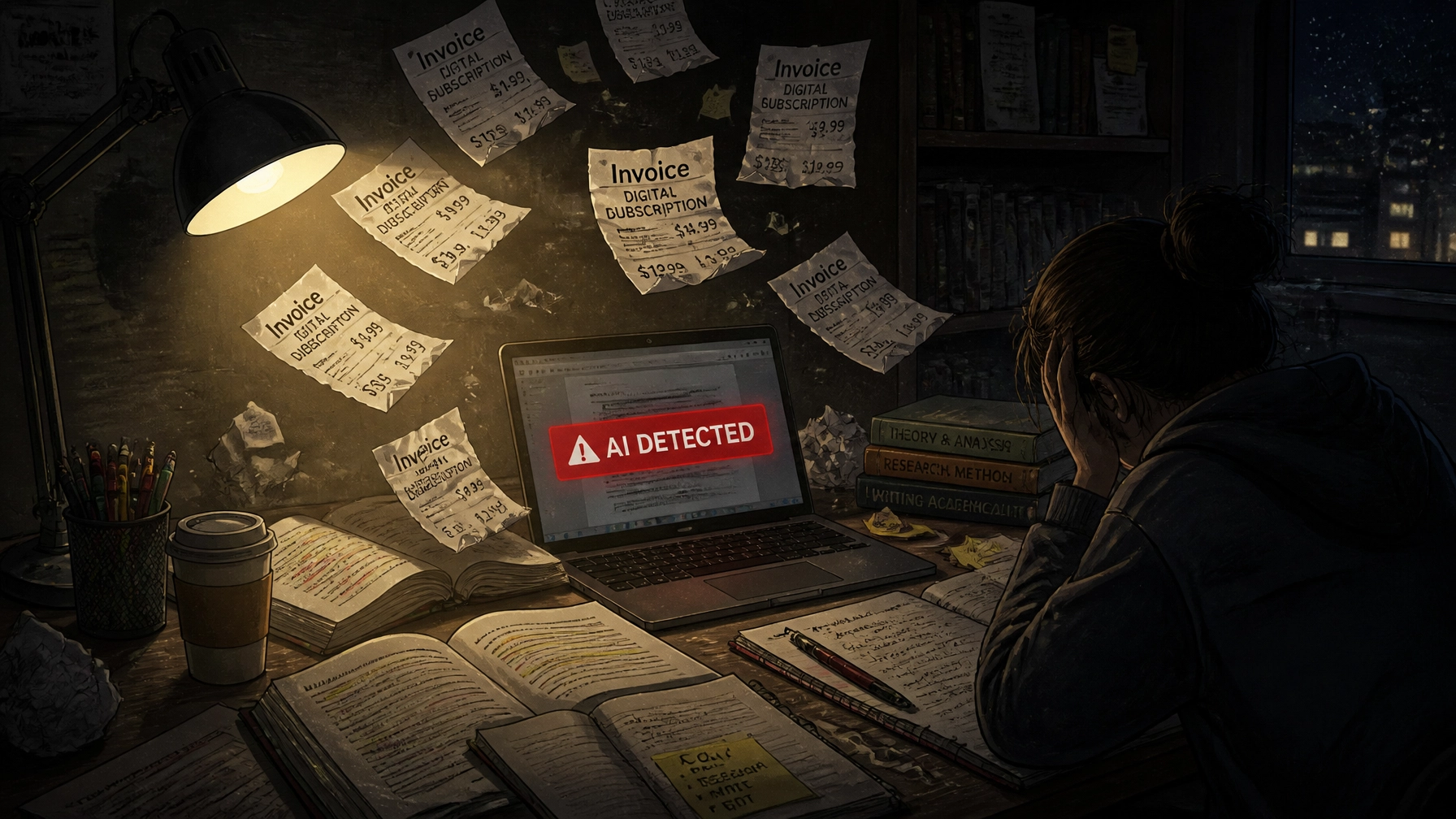
You know the feeling. It’s 11:30 PM on a Sunday, and you’re staring at a blank Google Doc. You’ve got ChatGPT Plus open in one tab ($20/month), Grammarly Premium in another ($30/month), and an "AI Humanizer" tool in a third ($15/month). You’ve already spent $65 this month just to start your homework, and you haven't even written a single original sentence yet.

Then, the panic hits. You hear a horror story about a student getting flagged for "AI detection" even though they "only used it for an outline." Suddenly, that $65 investment feels like a ticking time bomb.

Welcome to the AI Subscription Trap. It’s expensive, it’s stressful, and it’s keeping you on the academic "AI radar." But what if you could swap all those monthly bills for one single, human fee that actually guarantees peace of mind?

The Math Doesn't Add Up (Literally)

Let’s be real, being a student is expensive enough without three different SaaS companies reaching into your bank account every month. When you add up the costs of the "AI student starter pack," you’re looking at a serious chunk of change.

  • ChatGPT Plus: $20/month. (Great for ideas, but writes like a polite robot).
  • Grammarly Premium: $30/month. (Helpful, but often flags its own suggestions as "plagiarized").
  • AI Detection Bypassers: $15–$25/month. (Total gamble).

By the time you’ve paid for the tools to write the paper and the tools to hide the paper, you’ve spent nearly $75. And the worst part? You’re still doing 80% of the work, and you’re still terrified of that Turnitin report.

At Submit Your Assignments, we do things differently. Instead of a monthly drain on your wallet, you pay one transparent fee for a single project. No recurring charges. No "premium" tiers just to get a human-sounding result. Just high-quality, custom writing that's ready to turn in.

A student sits at a library desk with a laptop displaying a digital academic document, surrounded by handwritten notes, illustrating a focused academic environment.

Why "Human-Sounding" Isn't Good Enough

You’ve probably seen the ads for "AI Rewriters" that claim to make your text 100% undetectable. Here’s the truth: they’re just playing a game of cat-and-mouse with university software. And the universities are winning.

AI detection in university essays has become incredibly sophisticated. These detectors don't just look for specific words; they look for patterns in sentence structure and "perplexity." When you use an AI tool to "rewrite" a paper, it often leaves digital footprints that modern detectors pick up in seconds.

But you know what doesn't get flagged? Actually being human.

Our writers at SYA aren't just clicking "generate." They’re researchers, experts, and tutors who understand the nuances of a college-level argument. When we provide custom academic writing services, we’re building a paper from the ground up. There is no "AI radar" to bypass because there’s no AI in the foundation.

Quick Tips to Stay Off the AI Radar:

  • Stop the Copy-Paste: Never copy-paste directly from a bot into your final draft. Even "humanized" text carries metadata and patterns that trigger flags.
  • Keep Your Drafts: If a professor ever questions your work, having your early notes and outlines is your best defense.
  • Use Human Editors: A human eye can catch the "robotic" flow that AI tools often produce, even when they're technically grammatically correct.
  • Ask for an Originality Report: We provide these so you can see exactly what your professor sees before you hit "submit."

One Fee, Zero Stress

One of the biggest pain points of the subscription model is that it forces you to keep paying even when you don't have an assignment. You're paying for ChatGPT in July when you're at the beach? That's a scam.

With SYA, you only pay when you need us. Whether it's a complex research paper or a quick edit on a term paper, our pricing is "student-friendly." We even offer a "pay half now, half later" plan because we know what the student budget struggle is like.

Screenshot of the Submit Your Assignments website homepage displaying custom writing, research, and editing services with a quick quote calculator.

When you work with us, that one fee covers:

  1. Professional Research: No "hallucinated" sources or broken links.
  2. Custom Drafting: Written specifically for your prompt and your rubric.
  3. Human Editing: Every paper is checked by an actual person (an editor, not a bot).
  4. Formatting: MLA, APA, Chicago, we handle the bibliography so you don't have to.
  5. Unlimited Revisions: 7 days of free tweaks to make sure it's perfect.

Living Your Life vs. Managing Your "Stack"

Think about what you could do with the 10+ hours you spend wrestling with AI tools every week. You could actually sleep. You could go out with friends. You could work that extra shift at your job without feeling like your brain is melting.

The "freedom" we talk about isn't just about getting a grade; it's about the quality of your life. Why spend your Sunday night stressing over whether an AI detector is going to ruin your GPA?

Trust our writers to handle the heavy lifting. We provide human-written guarantees because we believe students deserve better than a subscription to a robot.

A generic Human Authenticity Certificate for Submit Your Assignments, certifying that the work is 100% human-written.

Ready to Ditch the Bots?

Stop being a "prompt engineer" and start being a student again. If you're tired of the monthly fees and the constant "AI detection" anxiety, it's time to try the human way.

  1. Listen up: Go to our order page.
  2. Tell us the vibes: Upload your prompt and any materials you have.
  3. Relax: Pay your deposit and let a human expert take it from there.

Stop worrying. Trust our writers. Get your life back.

Fun Facts About SYA:

  • We've written over 22,000 pages this year alone.
  • Our average customer rating is 94% (we’re not just "okay," we’re elite).
  • We have 24/7 support: real people, not chatbots.
  • You can get 5% cash back every time you recharge your student wallet.

Submit Your Assignments provides custom reference materials and tutoring services for research and educational purposes only. We encourage all students to follow their institution's academic integrity policies.

tAsDBLgduVw

25 Creative Nursing Capstone Project Ideas You’ve Never Thought Of (And How to Start One)

So, you’ve finally reached the “Final Boss” of nursing school: the Capstone Project.

It’s that weird, looming cloud that follows you through clinicals, making you wonder if you actually learned anything in the last four years or if you just learned how to survive on three hours of sleep and overpriced energy drinks. You’re supposed to find a "gap in practice," apply "evidence-based research," and basically save the healthcare system: all while trying to remember if you fed your cat this morning.

The struggle is real. You want a topic that isn’t the same old "handwashing protocol" everyone else is doing, but you also don't want to accidentally sign yourself up for a PhD-level dissertation. You need something that feels fresh, actually helps people, and: most importantly: gets you that degree so you can finally start getting paid.

If you’re staring at a blank Google Doc feeling the panic rise, take a breath. We’ve got you.

Quick Cheat Sheet: The PICO(T) Framework

Before we dive into the ideas, you need to know how to frame them. Most professors will ask for a PICO question. Think of it as the DNA of your project. If you don't get this right, the rest of your custom research paper will feel like a mess.

Hand-drawn lo-fi illustration of PICO letters.

  • P (Population): Who are you talking about? (e.g., Post-op elderly patients)
  • I (Intervention): What new thing are you doing? (e.g., Music therapy)
  • C (Comparison): What’s the "normal" way? (e.g., Standard pain meds only)
  • O (Outcome): What happened? (e.g., Lower reported pain scores)
  • T (Time): How long did it take? (e.g., During the first 24 hours post-op)

With that being said, let’s get into the good stuff. Here are 25 creative nursing capstone project ideas that’ll make your faculty actually sit up and pay attention.

1. The Tech-Forward Ideas (Nursing in 2026)

Nursing isn't just about bed baths anymore; it’s about data and gadgets.

  1. AI Pain Assessment: Using AI-assisted facial recognition apps to detect pain in non-verbal or intubated patients.
  2. The "Telehealth Coach": A nurse-led virtual follow-up program for heart failure patients to reduce 30-day readmissions.
  3. Cybersecurity for Bedside Nurses: An educational program to prevent EHR "near-misses" and data leaks on a busy unit.
  4. VR for Pediatric Anxiety: Using Virtual Reality headsets during IV starts for kids to see if it reduces the "needle-phobia" scream-factor.
  5. Smartwatch Monitoring: Can wearable tech help elderly patients in assisted living track their own cardiac rhythms and reduce ER visits?

2. Mental Health & Student Vibes

Let’s be honest: the healthcare system is stressed, and so are the people in it.

  1. The "Burnout Buffet": Implementing a "Resiliency Room" on a high-stress unit (like ICU) with 10-minute guided mindfulness breaks.
  2. Peer Support for New Grads: A mentorship program pairing senior students with juniors to reduce the "imposter syndrome" vibes.
  3. Social Media & Body Image: A community health project for teens focusing on the link between TikTok usage and eating disorder triggers.
  4. The Nursing Student Toolkit: Creating a digital resource for your cohort that streamlines capstone project planning, literally a meta-capstone.
  5. Post-Shift Decompression: Testing if a structured "debriefing" at the end of shifts reduces secondary traumatic stress in ER nurses.

A pair of scrubs on a chair in a messy dorm room.

3. Patient Care & Quality Improvement

These are the "bread and butter" projects, but with a twist.

  1. Music & Meds: Testing if personalized Spotify playlists reduce the need for PRN anxiety meds in hospice patients.
  2. The Sleep Hygiene Protocol: Implementing "Quiet Hours" in the ICU where lights are dimmed and non-essential alarms are silenced to prevent delirium.
  3. Vape Education in Schools: A nurse-led program for middle schoolers focusing on the chemical impact of flavored e-cigarettes.
  4. Bedside Shift Report 2.0: Including family members in the bedside report to see if it improves patient satisfaction scores (HCAHPS).
  5. Cultural Competence in Maternal Health: Developing a "Birth Plan" template specifically for non-English speaking immigrant populations.

4. Specialized & Niche Topics

If you want to stand out, go where others aren't looking.

  1. Cannabis Education: A protocol for nurses on how to document and manage patient-reported medicinal marijuana use.
  2. LGBQT+ Inclusive Intake: Redesigning EHR intake forms to be more inclusive and measuring the impact on patient trust.
  3. The "Green" Hospital: A project focused on reducing medical waste (like blue wrap or single-use plastics) in the Operating Room.
  4. Rural Health Deserts: Using mobile clinics or "Nurse-on-Wheels" programs to increase vaccination rates in remote areas.
  5. Post-Incarceration Health: A transition-of-care model for individuals leaving the justice system and re-entering community clinics.

5. Quick Wins (Simple but Effective)

Need something manageable? These focus on clear, measurable changes.

  1. Standardized Double-Checks: Does a "Do Not Disturb" vest during med administration actually reduce errors on a med-surg floor?
  2. The Fall-Risk "Badge": Using color-coded wristbands or door signs that actually correspond to specific nursing interventions.
  3. Hydration Stations: A staff-focused project to see if easy access to water stations reduces nurse fatigue during 12-hour shifts.
  4. Aromatherapy for Nausea: Using peppermint oil inhalers instead of (or with) Zofran for post-op nausea.
  5. Sepsis Speed-Dial: A "Rapid Response" checklist specifically for the early signs of sepsis in home-health settings.

How to Actually Start (Without Losing Your Mind)

As we said earlier, picking the idea is only 10% of the battle. The other 90% is the grind.

But here’s the secret: you don’t have to do it alone. Most students think they have to be a lone wolf, but professional nurses collaborate all the time. That’s what we do here at Submit Your Assignments.

If you're stuck on the "custom research paper" phase or you've found the perfect idea but the PICO question feels like a word salad, we can help. Our writers aren't just random AI bots; they are real humans (many with healthcare backgrounds) who know exactly how to structure a project that’ll pass your rubric.

Stop Worrying, Start Writing

Listen up: the goal isn't just to finish; it's to graduate with your sanity intact. Whether you need a buy capstone project consultation or just someone to help with the "reference material" for your literature review, we’ve got your back.

The SYA Loyalty Ladder:
We know nursing school is a long game. That’s why we have a loyalty program that actually makes sense for students:

  1. 15% OFF your first three orders. It’s the "Welcome to the Grind" discount.
  2. 10% PERMANENT discount for our "SYA Loyalty" members (anyone with 5+ orders). Because once you find a team you trust, you should be rewarded for sticking around.

Submit Your Assignments App Promo.

Fun Facts & Pro-Tips for Nursing Students

  • Did you know? The first "nursing capstone" was basically Florence Nightingale proving that clean water and fresh air reduced death rates. You're following in her footsteps!
  • Vibe Check: If your professor says your topic is "too broad," they're usually right. Narrow it down until it feels "too small": that's usually where the gold is.
  • All-Nighter Fuel: Cold brew is better than hot coffee for long study sessions because it doesn't get that "old" taste after three hours. Trust us.

Stop staring at that blinking cursor. Pick an idea, get your PICO sorted, and let’s get you to that pinning ceremony.

Ready to get some help? Check out our affordable writing services here.


Submit Your Assignments provides custom reference materials and tutoring services for research and educational purposes only. We encourage all students to follow their institution's academic integrity policies.