Student Discounts & Promotions 2026 | Submit Your Assignments

2 4ztgeUorb

The Ultimate APA 7 Citation Guide: Everything You Need to Know

It’s 2:00 AM in Houston. You’ve just finished a 15-page research paper that’s due by 8:00 AM. Your brain is toast, your tab count is embarrassing, and now you’re staring at a blank page titled "References."

Then the spiral starts. Is it Smith & Jones or Smith and Jones? Do you still need the city of publication? Why is one title italicized and another one not? And who decided that citation rules should feel like a pop quiz inside your actual assignment?

If that sounds familiar, you’re in the right place. This guide is helpful first: actual APA 7 formatting tips, common mistakes, and a few ways to stay sane when the reference list starts fighting back. Whether you’re at UTMB, UH, or just trying to survive a brutal week of deadlines, here’s the deal—APA gets easier once you stop guessing and start spotting the patterns.

Quick Tips for Instant APA Success

Before you touch the reference list, lock down these quick wins:

  • Double-space everything: The whole paper. Title page, body paragraphs, block quotes, and references.
  • Use one approved font and leave it alone: Times New Roman 12 still works, but so do Calibri 11, Arial 11, and Georgia 11.
  • Set 1-inch margins on all sides: Boring? Yes. Easy points? Also yes.
  • Make sure your references use a hanging indent: First line flush left, every line after that indented 0.5 inches.
  • Skip "Retrieved from" in most cases: If the source is stable, just use the URL or DOI.

Why the APA 7th Edition Matters

You might be wondering, "Why can’t I just use the old rules and hope nobody notices?" Tempting. But APA 7 changed enough stuff that using outdated formatting can make your paper look off, even when your research is solid.

And professors do notice. Weird spacing, inconsistent citations, missing page numbers on quotes, and messy references all make your paper feel less polished. Annoying? Sure. But once you know the handful of rules that come up over and over, APA turns from chaos into routine.

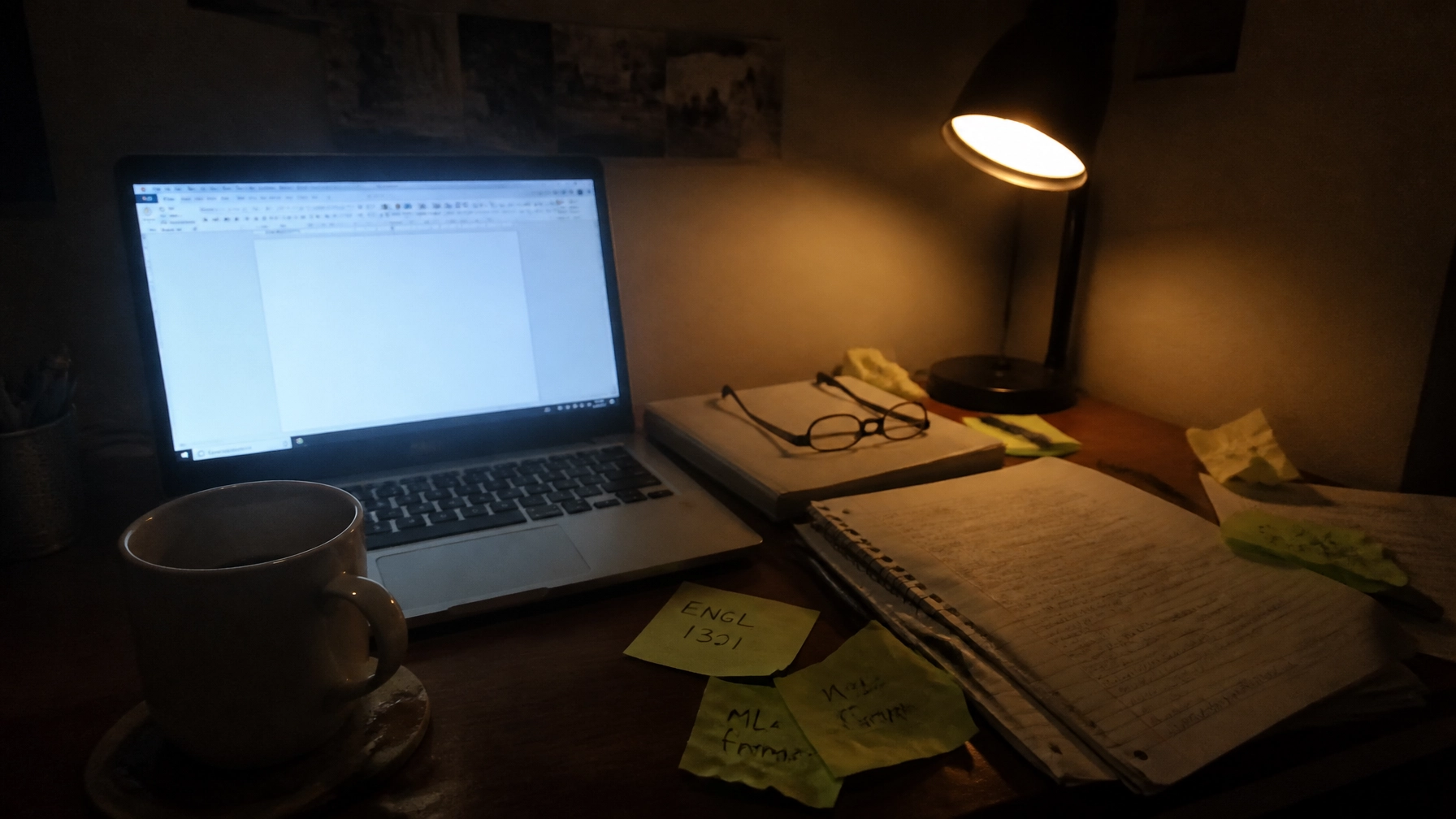
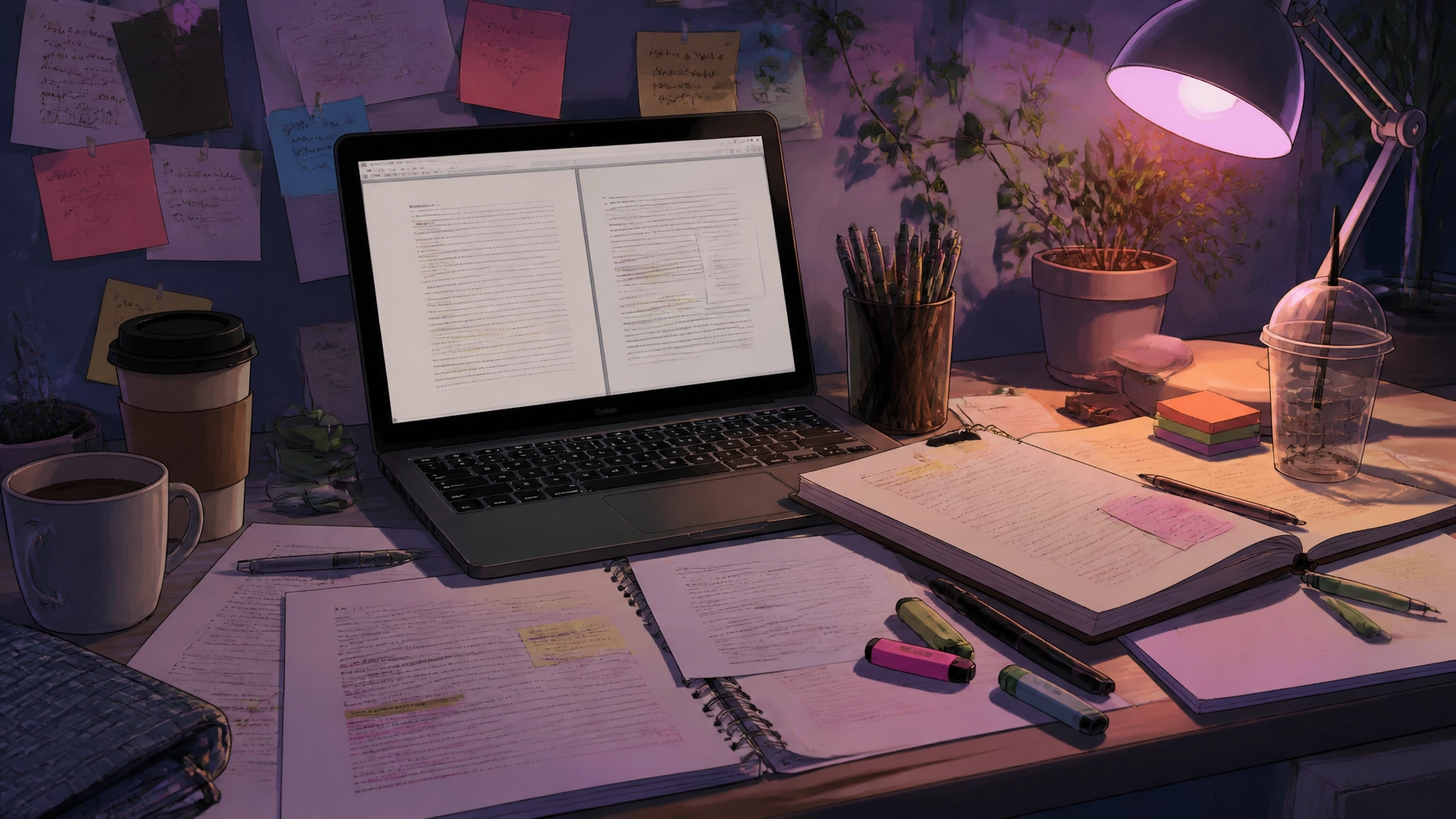
A lo-fi student desk setup showing APA formatting basics with printed pages, sticky notes, and a laptop.

Section 1: The Core Formatting Basics

Let’s start with the stuff that makes your paper look clean before anyone even reads the first sentence. For most student papers, APA 7 is less dramatic than people think.

The Student Title Page

You no longer need a "Running head" on every page if you are a student. Small win. Your title page should include:

  • Paper Title (Bold, Centered)
  • Your Name
  • Department and University Name
  • Course Number and Name
  • Instructor’s Name
  • Due Date
  • Page Number (Top Right)

Quick example:

  • Title: Sleep Deprivation and College Performance
  • Name: Jordan Lee
  • Course: PSY 2301: Introductory Psychology

Want a deep dive? Check out our upcoming guide on [How to Create a Flawless APA Title Page] to see a visual template.

Margins and Spacing

Keep it simple: 1-inch margins on all sides. Your text should be left-aligned, not justified, because those stretched-out word gaps look strange fast. That slightly uneven right edge? Totally normal. Totally APA.

Common Formatting Mistakes That Sneak Up on You

These are the little things that trip students up all the time:

  • Mixing fonts: If page 1 is Times New Roman and page 4 is suddenly Arial, your professor will notice.
  • Single-spacing the references by accident: Citation generators love this little prank.
  • Forgetting the page number: It belongs in the top right corner.
  • Using extra spaces between paragraphs: APA wants consistent double spacing, not mystery gaps.
  • Centering headings that shouldn’t be centered: If you’re guessing, check the heading level before you commit.

Section 2: Nailing In-Text Citations

In-text citations are the receipts. They show where the idea came from and help your reader find the full source later.

The "Et Al." Upgrade

Honestly, this rule is a gift. If a source has three or more authors, you use "et al." from the very first citation.

  • Parenthetical example: (Miller et al., 2024)
  • Narrative example: Miller et al. (2024) found that students retained more information with spaced review.

Direct Quotes vs. Paraphrasing

If you quote someone word-for-word, you need a page number.

  • Quote: "The results were inconclusive" (Davis, 2023, p. 42).
  • Paraphrase: Davis (2023) noted that the findings did not provide a clear answer.

Common Citation Mistakes

Here’s where people get caught slipping:

  • Using "&" in the sentence itself: Write "Smith and Jones (2022)" in a sentence, but "(Smith & Jones, 2022)" in parentheses.
  • Forgetting the year in narrative citations: "According to Smith" is not enough. You need the year too.
  • Dropping the page number on direct quotes: If it’s a quote, add the page.
  • Citing the source in the reference list but not in the paragraph: If you used the idea, cite it where you used it.

Quick side-by-side example:

  • Wrong: Smith & Jones (2022) said stress affects memory.
  • Right: Smith and Jones (2022) said stress affects memory.
  • Also right: Stress affects memory (Smith & Jones, 2022).

If rewording source material without sounding awkward feels harder than it should, you’re not the only one. Start by reading the source, closing the tab for a second, and explaining the idea in your own plain language. That one trick saves a lot of accidental patchwriting.

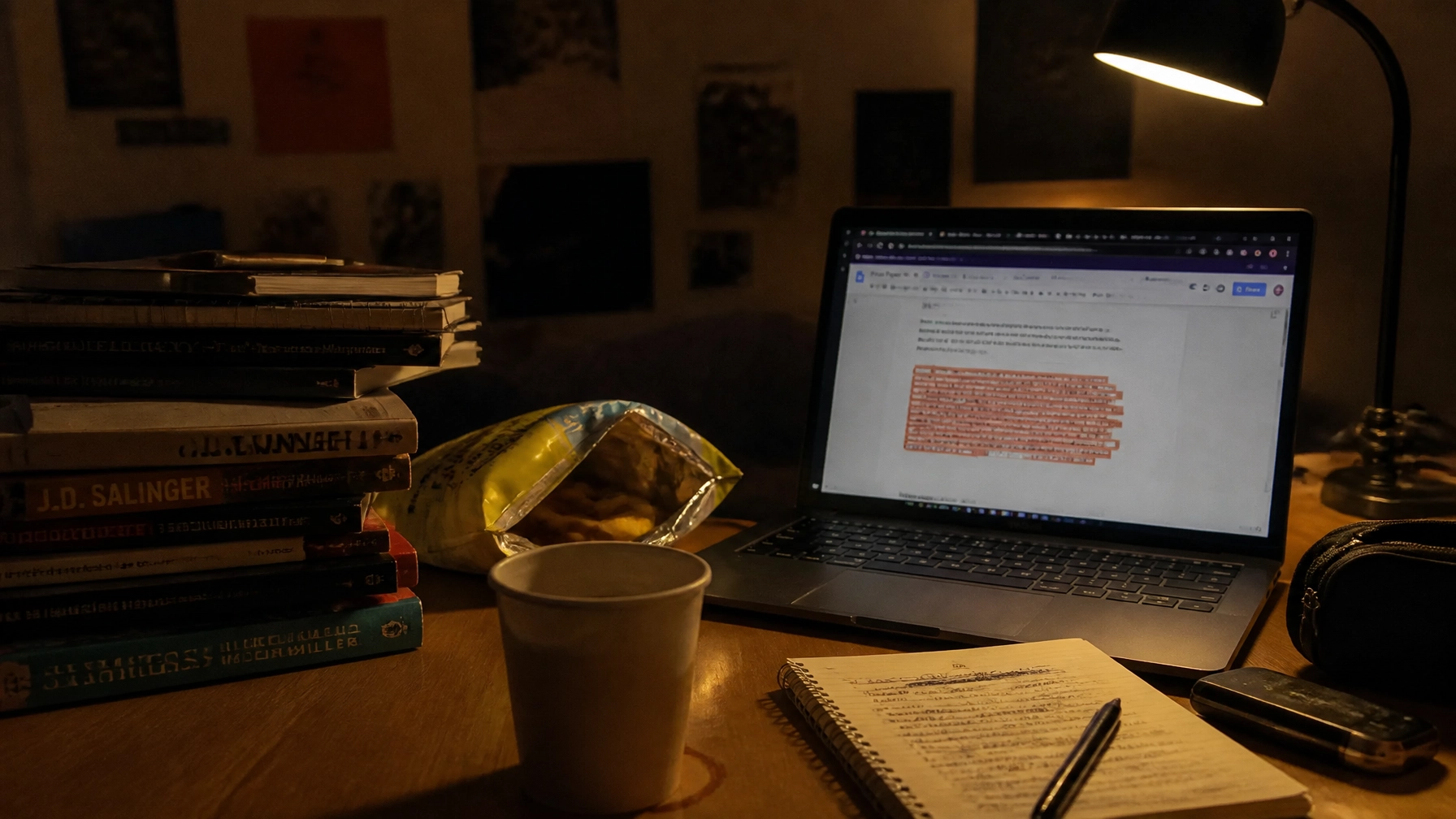
A lo-fi late-night workspace with citation notes, a laptop, and coffee cups scattered across a desk.

Section 3: Building the Reference List

This is where a lot of students lose easy points. The good news? Most references follow repeatable patterns.

The General Formula

Most entries follow this pattern: Author. (Date). Title. Source. DOI/URL.

Specific Examples You Can Actually Use

Journal article:
Smith, R. T., & Lee, A. J. (2024). Study habits among first-year college students. Journal of Academic Success, 18(2), 44–59. https://doi.org/10.1234/abcd.5678

Website:
Centers for Disease Control and Prevention. (2024, March 8). Sleep and student health. https://www.cdc.gov/example

Book:
Nguyen, P. R. (2021). Writing under pressure. Beacon Press.

3 Key Changes to Remember:

  1. No More Publisher City: You no longer need to write "New York, NY: Penguin." Just "Penguin" will do.
  2. Up to 20 Authors: You must list up to 20 authors in the reference list before using an ellipsis (…) to skip to the final name.
  3. DOIs as Links: Digital Object Identifiers (DOIs) should look like live URLs (e.g., https://doi.org/10.xxxx).

Common Reference List Mistakes

Watch for these, because they’re everywhere:

  • Capitalizing every word in an article title: In APA, most titles use sentence case.
  • Forgetting italics: Journal titles and book titles usually get italics. Article titles usually do not.
  • Breaking alphabetical order: Your reference list should be alphabetized by the first author’s last name.
  • Using raw database URLs: If there’s a DOI, use that instead.
  • Inconsistent hanging indents: If one entry is indented and the next one isn’t, the page looks messy fast.

Section 4: The New Frontier, Citing Generative AI

As we discussed in our guide on [Why Professors Flag AI], citing tools like ChatGPT is still messy territory. APA generally treats AI output as a "nonrecoverable source," which means your professor can’t click back to the exact same output you got.

That’s why AI often gets cited in the text as personal communication, or as software when you’re describing the tool itself. But school rules vary a lot, so always check your course policy before you use it.

Simple sanity tip: if your professor has not clearly allowed AI use, do not assume it’s fine just because you cite it.

Penny’s Take: APA 7 Is Basically a Logic Puzzle Designed to Test Your Patience

Here’s my honest take: APA 7 isn’t hard because the ideas are deep. It’s hard because it’s a logic puzzle made of tiny rules, exceptions, and formatting choices that somehow all matter at once.

One source has two authors. Another has seven. One title gets sentence case. Another gets italics. One needs a page number. Another doesn’t. And somehow you’re supposed to remember all of this while also writing an actual paper? Rude.

But once you stop treating APA like random punishment and start seeing the patterns, it becomes way less terrifying. It’s still picky. It still tests your patience. But it also gets weirdly manageable. Total game changer.

How to Stay Sane While Citing

A few habits make APA way less painful:

  • Build the reference list as you research: Don’t save all 14 sources for 1:13 AM.
  • Keep one clean sample of each source type: One journal article, one website, one book. Copy the pattern, not the panic.
  • Do one citation sweep at the end: Check every in-text citation against the reference list like a matching game.
  • Use citation generators carefully: They’re a starting point, not a final draft.
  • Take a five-minute break before proofreading references: Your eyes stop seeing mistakes when you’ve been staring at commas for too long.

Lifestyle Benefits: Why Sweat the Small Stuff?

Why do we care so much about these details? Because clean formatting buys you breathing room.

Imagine a weekend where you aren’t stuck in the library at Rice University or HCC, squinting at a style manual and second-guessing every period. Imagine the relief of handing in a paper that looks polished and pulled together. That’s the real win here: less panic, fewer dumb formatting errors, and way more mental energy for the rest of your life.

A relaxed student in a cozy apartment with coffee cups nearby, unwinding after finishing a paper.

Stop Worrying and Start Succeeding

APA 7 doesn’t need to be the thing that derails your whole paper. Start with the basics, check the repeat-offender mistakes, and treat the reference page like a pattern-matching exercise instead of a personal attack.

And if you want backup at the very end, Submit Your Assignments can help with reference materials, formatting support, and model papers that show you what clean APA looks like in real life.

Ready to get your time back?
Check out our pricing and get a quote today!

Fun Facts for the Houston Scholar:

  • The "Bird" Pricing: We "charge like a bird" because we believe academic help should be affordable for every student budget.
  • Local Love: Our company is based right here in the Houston area (Nassau Bay/Houston), and we’ve been supporting Texas students since 2014.
  • 24/7 Hustle: Like the city that never sleeps, our support team is available 24/7 to answer your questions.

Submit Your Assignments provides custom reference materials and tutoring services for research and educational purposes only. We encourage all students to follow their institution's academic integrity policies.

zQ4nPc871bL

The Procrastinator’s Bible: How to Get Same-Day Essay Help Without the Stress

It’s 11:42 PM. You’re staring at a blinking cursor that seems to be mocking you. The blank white screen is so bright it’s practically burning your retinas, and the coffee you finished an hour ago has officially transitioned from "helpful stimulant" to "existential dread juice." Your essay is due at 8:00 AM, and you haven’t even figured out your thesis statement yet.

Does this sound like a scene from a horror movie? For many students, this is just a typical Tuesday night.

Whether you’re a high schooler overwhelmed by finals or a university senior juggling three part-time jobs, the pressure of a looming deadline can be paralyzing. You start asking yourself the big questions: Is it too late? Can I actually pull this off? Where can I find a human sounding essay service that won't flag as a robot?

Stop worrying. You’ve just opened the Procrastinator’s Bible. We’re going to walk through why your brain does this to you, how to survive the next few hours, and how a professional consultation can turn your academic panic into total peace of mind.

The Science of Why You’re Like This (It’s Not Laziness!)

Before you dive into a spiral of self-loathing, let’s get one thing straight: procrastination is not a character flaw. It’s actually a battle happening inside your brain. Scientists have spent a plethora of time studying this phenomenon, and it turns out there’s a biological reason you’re still scrolling through TikTok instead of writing that intro.

1. The Present Bias

Your brain is wired for immediate rewards. This is called "temporal discounting." Watching a funny video gives you an instant hit of dopamine right now. Finishing an essay gives you a "good grade" reward three weeks from now. In a head-to-head fight, your brain usually picks the instant gratification every single time.

2. Task Aversion

If an assignment feels boring, confusing, or just plain monumental, your brain views it as a threat. When you look at a 10-page research paper, your amygdala: the part of the brain that handles fear: actually triggers a "flight" response. You aren’t being lazy; you’re literally running away from something that feels dangerous to your emotional well-being.

3. The Perfectionism Paradox

Many chronic procrastinators are actually closet perfectionists. You’re so worried about doing a mediocre job that you’d rather wait until the last possible second. That way, if the grade isn't perfect, you can tell yourself, "I just didn't have enough time," rather than, "I wasn't smart enough." It’s a defense mechanism that, unfortunately, is quite detrimental to your GPA.

Science of Procrastination

Quick Survival Tips for Your Deadline Emergency

If the clock is ticking and you’re determined to forge ahead, you need a strategy that expedites the process without sacrificing quality. Follow these quick tips to get moving:

  • The 10-Minute Dash: Tell yourself you’ll only work for 10 minutes. Often, the hardest part of writing is the "activation energy" required to start. Once you’ve typed for 10 minutes, you’ll likely find the momentum to keep going.
  • The "Vomit Draft" Strategy: Stop trying to write perfect sentences. Just get your ideas onto the page. You can’t edit a blank page, but you can certainly polish a messy one.
  • Outsource the Formatting: Don't waste your precious "clutch time" worrying about where the commas go in an APA citation. Focus on the content and leave the technicalities for later.
  • Time-Box Your Research: Give yourself exactly 30 minutes to find your sources. Once the timer goes off, you must stop searching and start writing with what you have.

Why "Same Day" Doesn't Have to Mean "Stressful"

Sometimes, despite your best efforts, the mountain is just too high to climb alone. Maybe you’re a non-native English speaker who needs a second pair of eyes to ensure your tone is right. Or maybe you’ve had a family emergency that ate your entire weekend.

This is where the idea of same day essay help becomes a lifesaver. But be careful: not all help is created equal.

In the age of AI, many students are tempted to just hit "generate" on a bot and hope for the best. Big mistake. Professors are now hyper-aware of AI patterns, and getting flagged can be devastating for your academic career. What you really need is a human sounding essay service: real people who understand nuance, context, and the specific requirements of your professor's prompt.

Human Writing vs AI

Behind the Scenes: How We Save the Day

At Submit Your Assignments, we don't just "write papers." We provide a comprehensive support system designed to take the weight off your shoulders. When you’re in a rush, you don't just need a document; you need a professional consultation and a reliable partner.

Here’s how our process works when you're under the gun:

  1. The Intake: You provide your prompt and requirements. We don't just copy-paste your rubric; we analyze it to understand exactly what your professor is looking for.
  2. The Matching: We pair you with a writer who specializes in your field. Whether it's nursing, business, or liberal arts, we ensure your "model paper" is handled by an expert.
  3. The Drafting: Our writers work with incredible speed, fueled by years of experience and a deep understanding of academic standards.
  4. The Human Touch: Every piece of work is reviewed to ensure it has that authentic, conversational yet professional tone that bots simply can't replicate.

With an average rating of 94% and a 4.5 on Trustpilot, our track record speaks for itself. We’ve helped thousands of students move from "panic mode" to "peace of mind."

The "Charge Like a Bird" Pricing Model

We know you’re a student, not a CEO. You shouldn't have to choose between paying your rent and getting the academic support you need. That’s why we "charge like a bird": small, fair, and student-friendly.

You can easily check how much your order will cost using our transparent pricing tools. We believe that professional editing and reference materials should be accessible to everyone, regardless of their budget.

Pricing and Value

Real Stories from the Deadline Trenches

"I had a research paper due for my Houston-area college class, and I completely blanked on the deadline," says Sarah, a recent junior. "I was terrified of getting a zero. I reached out for a consultation, and the team helped me brainstorm an outline and provided a model paper that showed me exactly how to structure my arguments. I submitted on time and actually understood the material better afterward."

These stories are why we do what we do. We aren't just a service; we are your allies in education. We want you to have the freedom to live your life: to go to that concert, to sleep eight hours, or to focus on the classes that actually matter for your major.

Stop Worrying and Start Winning

Listen up: the clock is going to keep ticking whether you’re stressed or not. Why not spend that time feeling confident?

Trust our writers to provide the high-quality, custom reference materials you need to succeed. Our process is straightforward, professional, and built for speed.

Ready to breathe again? Check out our student services and see how we can help you cross that finish line today.

Fun Facts & Local Love

  • Did you know that the "midnight oil" phrase comes from the time before electricity when students actually had to burn oil lamps to study late?
  • Submit Your Assignments is proud to support students across the great state of Texas, from the bustling streets of Houston to the quiet campuses in the Hill Country.
  • Our most requested help usually comes in on Tuesday nights: it seems everyone has a Wednesday morning deadline!

24/7 Support


Submit Your Assignments provides custom reference materials and tutoring services for research and educational purposes only. We encourage all students to follow their institution's academic integrity policies.

REcCGQkviZj

Rice University Transfer Essays: Leveling Up Your Admissions Game.

You’re sitting in your current dorm room, looking at your transcript, and realizing something isn’t clicking. Maybe the campus culture feels off, or perhaps the academic rigor just isn't meeting your ambitions. You’ve got your eyes on the prize: Rice University. But as you open the Common App, that familiar "application dread" starts to creep in.

Transferring to a prestigious institution like Rice isn't just about moving from Point A to Point B; it’s about proving that you belong in one of the most unique academic communities in the country. The prompts are short, the stakes are high, and the competition is fierce. How do you condense your entire academic journey and your future dreams into a few hundred words without sounding like every other applicant?

If you’re feeling the pressure of deadlines or struggling to articulate your "why," don't panic. You don't have to navigate this alone. Whether you need Rice University essay help or a complete strategy for your transfer application, we’ve got your back.

Quick Tips for Mastering the Transfer Essay

Before we dive into the deep end, here are a few immediate adjustments you can make to your writing process to instantly elevate your draft:

  • Be Specific, Not General: Don't just say you like "small class sizes." Mention specific Rice research initiatives or professors whose work aligns with your goals.
  • Show, Don’t Tell: Instead of saying you’re a leader, describe a specific moment where you led a project at your current institution.
  • Bridge the Gap: Your transfer essay should clearly explain why your current school can't provide what Rice can.
  • Watch the Word Count: Rice prompts are notoriously tight (often 150 words). Every word must earn its place.

Why Transferring to Rice is a Different Beast

Rice University isn’t just looking for high GPAs (though a 3.2+ is generally the baseline). They are looking for "unconventional wisdom." As a transfer student, you are expected to bring a level of maturity and focus that a high school senior might not yet possess.

You’ve already experienced college life. You know what works for you and what doesn't. Your essays need to reflect that clarity. Are you seeking the tight-knit vibe of the Residential College System? Are you looking for the interdisciplinary freedom that only Rice provides?

With that being said, the challenge lies in the brevity of the prompts. How do you show depth when you only have 150 words? This is where professional consultation and brainstorming become your greatest assets.

Checklist Illustration

Breaking Down the Prompts: What They’re Really Asking

When you look at the Rice transfer supplement, you’ll notice three main pillars. Let’s break down how to approach them without losing your mind.

1. The Academic Path (150 Words)

The Prompt: How will continuing your education in the academic areas you selected help you achieve your goals?

This is your "Why Major" essay. Rice wants to see a direct line between your past experiences, your time at Rice, and your ultimate career.

  • The SYA Strategy: Don't just list your accomplishments. Instead, frame your academic goals as a puzzle that only a Rice education can solve. Use this space to demonstrate that you’ve done your homework on their specific curriculum.

2. The Rice Interest (150 Words)

The Prompt: In addition to academics, why are you interested in transferring to Rice University?

This is where you talk about the "Rice vibe." They want to know that you’ll fit into the culture. Mention the "Culture of Care" or specific student organizations that resonate with you.

  • The SYA Strategy: This is a test of your research. If you mention something generic, they’ll know. Our writers can help you identify specific Rice traditions or community aspects that make for a compelling narrative.

3. The Community Contribution (500 Words or fewer)

The Prompt: Explore how you will contribute to the Rice community, specifically focusing on the Residential College System.

This is the big one. Rice is famous for its Residential Colleges. They want to know what kind of neighbor, teammate, and friend you will be.

  • The SYA Strategy: Think about your "unique life experiences." What is something you bring to the table that no one else does? This is the place for your "Main Character" energy to shine.

Reclaiming Your Life: The "No Homework & Chill" Approach

Let’s be real: you’re already a college student. You’re likely juggling a full course load, maybe a part-time job, and a social life that you’d actually like to enjoy. The thought of spending your entire spring break or weekend drafting and redrafting these essays is detrimental to your well-being.

Why spend your Friday night staring at a blinking cursor when you could be out living your life? This is where Submit Your Assignments steps in as your academic ally. We don't just provide "model papers"; we provide peace of mind.

Trust our writers to help you structure your thoughts, refine your voice, and ensure that your application stands out from the plethora of other candidates. Our process is designed to be straightforward and stress-free, so you can focus on what matters most: enjoying your current semester while preparing for your future at Rice.

Relaxing Student

Behind the Scenes: How We Help You Win

You might wonder, "How does a writing service actually help with a personal transfer essay?" It’s all about the workflow. When you reach out for Rice University essay help, you aren't just getting a document; you're getting a professional perspective.

  1. The Brainstorming Phase: You provide us with your background, your "why," and your goals.
  2. The Drafting Phase: Our experienced writers: who understand the nuances of elite university admissions: craft a model paper that serves as a high-level blueprint for your own work.
  3. The Refinement Phase: We ensure the tone is bold, the vocabulary is sophisticated (think "expedites" and "detrimental"), and the message is crystal clear.

This collaborative approach ensures that the final product feels authentically like you, but with the professional polish required to catch the eye of a Rice admissions officer. We've helped thousands of students achieve a 94% average rating, and we're ready to do the same for you.

Your Future at Rice Starts Now

Stop worrying about whether your essay is "good enough." Stop losing sleep over word counts and prompts. If you want to level up your admissions game, you need a partner who understands the high-stakes world of transfer applications.

Whether you're applying for the Fall (March 15 deadline) or the Spring (October 15 deadline), the time to start is now. Let us help you find the freedom to enjoy your life while we handle the heavy lifting of the drafting process.

Community Illustration

Why Choose Submit Your Assignments?

  • Experienced Writers: We know what elite schools are looking for.
  • Student-Friendly Pricing: We "charge like a bird" to keep things affordable for you.
  • Reliable Support: We’re here 24/7 to answer your questions.
  • Proven Success: A 4.5 rating on Trustpilot doesn't lie.

Listen up: Your dream of walking across the Rice campus shouldn't be sidelined by a writing block. Take the first step today. Visit our order page and let's get to work on your future.


Fun Facts for the Aspiring Owl:

  • The Rice Box: Every year, Rice applicants submit an image for the "Rice Box." It’s a chance to show your personality without words!
  • No Mascots allowed: While we can't show you the Owl logo, we can tell you that Rice pride is everywhere in Houston.
  • Transfer Perks: Rice has a dedicated transfer student orientation to help you integrate quickly into your new residential college.
  • Local Vibes: If you're already in Houston, you know that the walk from Rice to Hermann Park is the ultimate study break.

Submit Your Assignments provides custom reference materials and tutoring services for research and educational purposes only. We encourage all students to follow their institution's academic integrity policies.

Why You Should Buy Capstone Project Online for Your Final Semester

You’ve made it. You are finally in the home stretch of your degree. The finish line is so close you can almost taste the celebratory pizza and feel the weight of that diploma in your hands. But then, it hits you like a ton of bricks: the capstone project.

It isn't just another essay; it’s the "final boss" of your academic career. It’s that massive, multi-faceted assignment that demands every ounce of your research skills, writing prowess, and: most importantly: your time.

Does the mere thought of starting it make your stomach do somersaults? Are you staring at a blank document, wondering how on earth you're going to synthesize four years of learning into one cohesive masterpiece while juggling a part-time job, internships, and maybe even a social life?

If you're feeling overwhelmed, you aren't alone. In fact, many students in your exact position are realizing that the smartest move they can make is to buy capstone project online. At Submit Your Assignments, we don't just write papers; we provide the peace of mind you need to actually enjoy your final semester.

The Capstone Mountain: Why is it So Stressful?

Deadlines and schedules looming over a student

A capstone project is a unique beast. Unlike a standard term paper, it requires you to identify a real-world problem, conduct extensive literature reviews, gather data, and propose a viable solution. It’s a plethora of moving parts that must work in perfect harmony.

The detrimental effects of capstone stress are real. You might find yourself:

  • Struggling with Time Management: Between final exams and life responsibilities, finding forty hours a week to dedicate to one project feels impossible.
  • Facing Research Setbacks: Sometimes the data just doesn’t cooperate, or the resources you need are locked behind a paywall.
  • Wrestling with Structure: How do you even organize a 50-page document without it becoming a disorganized mess?

With that being said, shouldn't your final semester be a time of celebration rather than a period of burnout? Why spend your last few months of college locked in a library basement when there is a more efficient way?

5 Signs You Should Buy Your Capstone Project Online

If you are nodding your head at any of these, it might be time to call in the professionals.

1. You Are Juggling Too Many Responsibilities

Are you working a job to pay for tuition? Do you have an internship that is basically a full-time role? If your schedule is packed to the brim, adding a massive project can be the tipping point. Choosing to buy a capstone project online is an act of strategic delegating, not a sign of weakness.

2. You’ve Hit a Writing Wall

Writer's block is one thing, but "Capstone Block" is a different level of frustration altogether. If you’ve been staring at the same introductory paragraph for three weeks, you need a fresh perspective. Our writers are experts at breaking through those mental barriers and keeping the momentum going.

3. Your Grade Depends on Perfection

In many programs, if you don't pass the capstone, you don't graduate. Period. That is a lot of pressure to carry on your own. When you trust a professional service, you ensure that your project meets all the rigorous academic standards required for a top-tier grade.

4. You Need Expert Research Skills

Not everyone is a natural-born researcher. Finding credible, peer-reviewed sources and synthesizing them into a persuasive argument is a specialized skill. Our writers have been doing this for years; they know exactly where to look and how to interpret the data.

5. You Want Your Life Back

Do you remember what it was like to hang out with friends without a looming deadline hanging over your head? That freedom is within reach. By outsourcing the heavy lifting, you can focus on making memories during your final semester.

How Submit Your Assignments Expedites Your Success

Students studying together in a focused library environment

At Submit Your Assignments, we take pride in being more than just a writing service. We are your allies in the academic world. When you decide to buy capstone project online from us, you aren't just getting a file; you are getting a high-quality, custom-tailored academic experience.

Our process is designed to be as straightforward as possible. You simply provide the details of your assignment, and we take care of the rest. We guarantee that your paper will be original, well-researched, and delivered on time.

In addition, we maintain an average rating of 94% from our customers. That’s because we don't just "turn out papers." We meticulously craft each assignment to reflect your specific requirements and academic level. Whether you are in nursing, engineering, business, or the arts, we have specialized writers ready to tackle your specific subject matter.

More Than Just a Grade: Reclaiming Your Freedom

A student enjoying freedom and balance outdoors

Think about the lifestyle benefits of delegating this massive task. Imagine waking up on a Saturday morning and knowing your capstone project is being handled by a pro. You can go for a hike, visit family, or just sleep in: all while your academic success is being secured.

Listen up: you’ve worked hard for years. You’ve sat through the lectures, passed the midterms, and written the smaller essays. You’ve paid your dues. Buying a capstone project online isn't "cheating" the system; it’s using the tools available to you to ensure you cross the finish line successfully. It gives you the "freedom" to live your life while we handle the "detrimental" stress for you.

The "Charge Like a Bird" Advantage: Affordable Quality

One of the biggest concerns students have is the cost. You might be wondering, "How much will my order cost?" Luckily, we have designed our pricing to be student-friendly: or as we like to say, we "charge like a bird."

You don't have to break the bank to get professional help. You can check out our pricing guide or even look for discounts that we regularly offer. We believe that high-quality academic support should be accessible to everyone, not just those with deep pockets.

Trust the Pros, Forget the Stress

An expert writer crafting a professional document

The clock is ticking. Every day you spend worrying about your capstone is a day you aren't enjoying your final semester. Why wait until you’re in a state of total panic?

Stop worrying. Trust our writers to deliver a project that will make you proud and ensure your graduation. Our professional team is ready to provide the support, research, and high-level writing that your project deserves.

As we said earlier, this is the final hurdle. Let us help you clear it with ease. Get started today and see why thousands of students trust Submit Your Assignments with their most important work.

Did You Know? (Fun Facts for Students)

  • The "Capstone" Origin: The term comes from the top stone of a structure or wall, representing the "crowning" achievement of your education.
  • Average Length: Depending on the major, some capstone projects can reach over 100 pages, though most fall between 40 and 60.
  • Houston Proud: Submit Your Assignments is based right here in the Houston area (Nassau Bay), serving students globally with that Texas-sized commitment to quality!
  • 24/7 Support: We never sleep so you can! Our support team is available around the clock to answer any questions you might have about your order.
  • Top Rated: We currently hold a 4.5 rating on Trustpilot, proving that our commitment to student success is recognized by real people just like you.

Don't let your capstone project be a burden. Reach out to Submit Your Assignments today and let’s get you that diploma!

bPFCxGlw5h

Beyond the Grade: Student Support for Stress-Free Writing

Beyond the Grade: Getting Your Life Back

Think about what you could do if you weren’t hunched over your desk right now. You could finally catch up on sleep. You could head over to Discovery Green for a walk, or actually hang out with your friends at the Galleria without that "I have an essay due" cloud hanging over your head.

Overwhelmed student desk with notes, coffee, and writing stress vibes

Academic success is important, but so is your well-being. Burnout is a real thing, especially for students juggling work, family, and classes. Using a support service isn't "taking the easy way out", it's managing your time like a pro.

And let’s be honest, wouldn't you rather spend your Saturday enjoying the Houston vibes instead of fighting with a bibliography?

A Few "Fun" Facts About Writing Stress

  • Procrastination isn't laziness: It's usually a stress response to a task that feels overwhelming.
  • The "First Draft" Curse: Most professional writers hate their first drafts. The goal is just to get something on paper.
  • Houston humidity: Does it actually make your brain slower? No, but it definitely makes walking to the library more of a chore.

Student getting back control of their schedule and submitting work with confidence

Stop Worrying and Start Submitting

Don’t let one assignment ruin your week. If you’re stuck, if the deadline is looming, or if you’re just tired of the "AI vs. Human" battle, let us help. We provide the research, the formatting, and the high-quality writing that lets you breathe again.

Trust our writers to give you the head start you need. Whether it's a scholarship essay, a history paper, or a complex nursing care plan, we’ve got the expertise to handle it.

Check out our services here and let's get that assignment off your plate today.


Submit Your Assignments provides custom reference materials and tutoring services for research and educational purposes only. We encourage all students to follow their institution's academic integrity policies.

CwAyV5UY3wE

Boost Your GPA Instantly with These 5 Free AI Study Tips

Let’s be real for a second: the "grind" is exhausting. You’re sitting there at 2 AM, surrounded by empty Celsius cans and a mountain of PDFs that you’re supposed to have read by tomorrow’s 8 AM. Your brain feels like a browser tab that’s been frozen for ten minutes, and the panic is starting to set in. How are you supposed to memorize three chapters of biology, write a reflection paper, and still find time to sleep?

We’ve all been there. The pressure to keep that GPA up while actually having a life (or at least a nap) is heavy. But what if we told you that you could stop the frantic scrolling and start working smarter?

At Submit Your Assignments, we’re all about making student life easier, and we don’t just mean our custom writing services. We’ve built a suite of free AI student tools designed to do the heavy lifting for you. We "charge like a bird" (aka, we keep it light and accessible), and these tips are going to change how you handle your workload forever.

Here are 5 ways to use free AI to boost your GPA without losing your mind.

1. Turn Your "Sleepy" Lectures into Study Bibles

We’ve all done it. You sit in the back of the lecture hall, hit record on your phone, and then promptly zone out. But then you’re stuck with a 60-minute audio file that you’ll probably never listen to again.

The Hack: Use our free Audio Transcription tool. Instead of re-listening to your professor drone on at 1x speed, you can upload that recording and get a full, written transcript in seconds.

Quick Tip: Once you have the text, you can skim for keywords or specific concepts you missed while you were daydreaming about lunch. It’s like having a perfect set of notes without actually having to take them.

Lo-fi hand-drawn digital art of a smartphone recording a lecture with a moving waveform on a wooden desk.

2. Instant Flashcards (Because Manual Entry is a Scam)

Making flashcards is the ultimate procrastination trap. You spend three hours "prepping" by typing out definitions, and by the time you’re done, you’re too tired to actually study them.

The Hack: Stop doing the manual labor. Head over to our AI Note/Quiz/Flashcard Generator. You can paste in your messy lecture notes or a chunk of a textbook chapter, and the AI will instantly spit out a list of flashcards or a practice quiz.

Why it works: This moves you straight into active recall, which is the holy grail of high GPAs. You’re testing your brain immediately rather than just coloring in your notes with a highlighter.

3. The "Rubric Reality Check"

You’ve finished your essay, and it feels… okay? But does it actually answer what the professor asked? Sometimes we get so caught up in the word count that we drift away from the actual prompt.

The Hack: Use our AI Essay Review tool. You can actually upload your essay along with the instruction or rubric. The AI will scan your work to see if you actually checked all the boxes.

It’s like a pre-game for your grading. If the AI says you missed the "Critical Thinking" section, you can fix it before you lose points. As we said earlier, it’s about working smarter, not just harder.

Abstract digital art of digital flashcards and light bulbs floating in a grainy, cozy study space.

4. Beat the AI Detector Panic

In 2026, every professor is looking at your work with a side-eye, wondering if a robot wrote it. Even if you wrote every single word yourself, some detectors are just glitchy and might flag your "vibe" as robotic.

The Hack: Our Essay Check includes "Professor suspicion indicators." It scans your draft to see if it’s triggering any of those common AI-detection red flags.

Quick Tip: If your draft looks a little too "perfect," try adding some human spice. Break a grammar rule (like starting a sentence with "And"), use a personal anecdote, or swap out a fancy word for something more conversational. Authenticity is your best defense.

5. Build a "Micro-Study" Schedule

One of the biggest GPA killers is the "All-Nighter." Trying to cram 15 hours of info into your brain in one go just doesn't work. Your brain is a muscle; it needs breaks.

The Hack: Take those notes you generated in Tip #2 and break them into 15-minute blocks. Use the AI to identify the "High-Yield" topics: the stuff that is 90% likely to be on the test.

The Strategy: Trust the process. Study one high-yield topic for 15 minutes, take a 5-minute TikTok break, and repeat. It feels less like a "grind" and more like a series of small wins. With that being said, consistency beats intensity every single time.

A student looking at a laptop screen with a big green checkmark reflected in their glasses, feeling relieved.

Why Trust Us?

Listen up: we’ve been in the game for a long time. We know that being a student isn't just about grades: it's about survival. That’s why we offer these free tools. We want you to have the freedom to live your life, go to that concert, or just catch up on sleep without your GPA tanking.

And if you ever hit a wall where even AI tools can't help: like a complex nursing care plan or a 20-page research paper that needs a human touch: our expert writers are always here. We provide custom model papers that act as the ultimate reference material to help you understand your topic inside and out.

Fun Facts for the Study Break

  • The Pomodoro Technique was named after a tomato-shaped kitchen timer.
  • Smell and Memory: Sniffing a specific scent (like peppermint) while studying and again during the test can actually help you remember the info.
  • Sleep is key: Your brain literally "washes" itself of toxins while you sleep. Don't skip it!
  • The "Bird" Motto: Why do we say "charge like a bird"? Because we believe high-quality help shouldn't cost you your entire savings. We keep it light, fast, and student-friendly.

Stop worrying about that mounting pile of work. Trust our tools, use these tips, and go get that GPA you deserve.

Ready to try it out? Jump over to our student tools page and start for free!


Submit Your Assignments provides custom reference materials and tutoring services for research and educational purposes only. We encourage all students to follow their institution's academic integrity policies.

cmr9SF8Lk2z

Can Same Day Essay Help Really Save Your Grade? Find Out Here

It’s 11:34 PM. You’re staring at a blank Google Doc, and that little vertical cursor is blinking at you like a taunt. The prompt for your English 1301 class is sitting in another tab, looking more like a foreign language than a set of instructions. You’ve got six hours until the deadline, three empty energy drink cans on your desk, and zero words on the page.

The panic starts to set in. You start wondering if you can finish it, or if you should just take the 'L' and hope for a miracle on the final. We’ve all been there: the "grind" is real, and sometimes the grind wins. But what if you didn't have to choose between your sleep and your GPA?

Same day essay help is often talked about in hushed tones in the back of the library, but it’s actually a lifesaver for thousands of students who are just trying to keep their heads above water. Whether you’re juggling a part-time job, family drama, or just a really heavy course load at Houston Community College, getting a little backup isn't just helpful: it’s a survival tactic.

Quick Fixes for Your Deadline Panic

Before we talk about how we can take the weight off your shoulders, here are a few quick tips to help you get moving if you’re trying to DIY this at the last minute:

  • Don't start with the Intro: The introduction is the hardest part. Skip it. Start with your three main points. You can write the "hook" once you actually know what you've said.
  • The Rubric is Your Best Friend: Don't just read the prompt; look at how you're being graded. If the professor wants three scholarly sources and MLA formatting, make sure those are in there first.
  • Speech-to-Text is a Cheat Code: If your fingers can't keep up with your brain, use the dictation tool on your phone. Talk through your points like you’re explaining them to a friend, then go back and clean up the "ums" and "likes."
  • Focus on the Outline: A solid outline is 50% of the work. If you have a clear roadmap, the actual writing becomes much less scary.

A stressed student working on a laptop outdoors

Why Same Day Essay Help Actually Works

You might be thinking, "Is it even possible to get a quality paper in a few hours?" It sounds like a myth, right? But at Submit Your Assignments, we’ve turned it into a science.

When you’re looking for same day essay help, you aren't just looking for someone to "write words." You're looking for a researcher, an editor, and a subject matter expert who can look at a prompt and immediately see the best path forward. Our writers do this every single day. What takes you five hours of hair-pulling takes them two hours of focused, professional work because they know the academic standards inside and out.

If you’re a local student looking for Houston Community College writing help, you know that HCC professors can be surprisingly tough. They want clear arguments and perfect citations. When you're in a time crunch, those small details are the first things to slip. Having a professional second pair of eyes ensures those easy-to-miss mistakes don't cost you a letter grade.

Behind the Scenes: How We Pull Off the Impossible

We don't use magic, and we definitely don't use "glowing brain" AI bots. Our process is strictly human-powered because we know that professors can spot an AI-generated essay from a mile away. They want your voice, your perspective, and actual human logic.

As we said earlier, we’ve streamlined everything so that your urgent deadline doesn't become a disaster. Here is the workflow that keeps us (and you) on track:

  1. The Quick Quote: You tell us what you need. No complicated forms that take twenty minutes. Just the basics: topic, page count, and that looming deadline.
  2. The Writer Match: Within a few hours, we match your order with a writer who actually understands your subject. If it’s a nursing paper, a writer with a healthcare background takes it. If it’s a business case study, an MBA handles it.
  3. The Research Sprint: Our writers have access to academic databases that go way beyond a basic Google search. They find the scholarly sources your professor is looking for in a fraction of the time.
  4. The Human Check: Every paper goes through an editor and a plagiarism check. We even provide a Human Authenticity Certificate to give you total peace of mind.

Submit Your Assignments Human Authenticity Certificate

Pricing That Doesn't Break the Bank

Let’s be real: most "emergency" services charge you an arm and a leg. They know you're desperate, and they take advantage of it. We take a different approach. We like to say we "charge like a bird": small, fair, and student-friendly.

Even for urgent, same-day orders, we keep our pricing accessible. We know that as a student, you're probably working with a tight budget. Whether you're paying for tuition out of pocket or just trying to save enough for rent, your academic success shouldn't be a financial burden. We offer a payment plan where you can pay half now and half later, so you don't have to wait for your next paycheck to get the help you need today.

More Than Just "Saving a Grade"

At the end of the day, this isn't just about a letter on a transcript. It’s about your sanity. It’s about being able to go to your friend’s birthday party without a cloud of guilt hanging over your head. It’s about finally getting a full eight hours of sleep so you don't crash during your morning lecture.

We see ourselves as a support system. Think of us as the ultimate tutor or the professional editor you wish you had. We provide custom reference materials and outlines that you can use to understand the subject better. When you see a perfectly structured paper, it’s a lot easier to learn how to write one yourself next time.

Submit Your Assignments Customer Ratings

With that being said, we’re incredibly proud of the trust our students place in us. With a 97.5% positive feedback rate and a solid 4.6-star rating from real students, we aren't just some faceless website. We're a team based right here in the Houston area (catch us over in Dickinson or at our office on Savoy Drive!), and we actually care about your progress.

Fun Facts About the Student Grind

  • Coffee Power: Did you know that the average college student consumes about 200mg of caffeine a day? That’s roughly two cups of coffee just to stay functioning.
  • The 11:59 Phenomenon: Over 60% of assignments are submitted within the final hour before the deadline. You are definitely not alone in the last-minute club.
  • Brain Fuel: Students who eat a consistent breakfast actually perform 10% better on written assignments. Maybe put down the Red Bull and grab a bagel?

Ready to Stop the Panic?

Stop worrying about the clock. If you’re feeling overwhelmed and that deadline is closing in, let us help you find your footing. Whether you need a full research paper or just a solid outline to get you started, we’re here 24/7.

Trust our writers to handle the heavy lifting while you take a breath. You’ve worked hard enough; let us help you cross the finish line.

Get Your Same Day Essay Help Now


Submit Your Assignments provides custom reference materials and tutoring services for research and educational purposes only. We encourage all students to follow their institution's academic integrity policies.

Academic Writing 101: The Ultimate Guide to Everything You Need to Succeed This Semester

It’s 11:45 PM on a Tuesday. You’re staring at a blinking cursor that seems to be mocking your very existence. You’ve got three tabs open: the assignment prompt you’ve read six times, a Wikipedia page you know you shouldn't cite, and a "Lo-fi Beats to Study To" livestream. Your brain feels like a browser with 47 tabs open, and 3 of them are playing music you can’t find.

We get it. The "mid-semester grind" isn't just a catchy phrase; it's a physical weight. Between trying to maintain a social life, maybe getting five hours of sleep, and figuring out what your professor actually wants when they say "critically analyze," academic writing can feel like a boss fight you’re underleveled for.

But here’s the thing: academic writing isn't some secret code only "smart people" know. It’s a set of tools. Once you have the manual, the blinking cursor stops being scary. Whether you're hunting for the best research paper topics or trying to figure out if spatial ordering is a real thing (spoiler: it is), we’ve got your back.

Quick Wins for Your Next Paper

Before we jump into the deep end, try these three things right now:

  • Read it out loud. If you run out of breath, your sentence is too long. If it sounds weird, it is weird.
  • Kill the fluff. Delete "I think," "In my opinion," and "It is important to note that." Just say the thing.
  • Reverse outline. Look at the first sentence of every paragraph. Do they tell a story? If not, move them around.

1. Choosing Your Battle: Best Research Paper Topics

The biggest mistake you can make? Picking a topic that’s too broad. If you try to write about "Climate Change," you'll end up with a 15-page Wikipedia summary that gets a C+. You need a niche. You need a vibe.

Think of it like a camera lens. Start with the wide-angle (Education) and zoom in (Higher Education) until you’re at a macro level (The impact of TikTok on the attention spans of first-year college students).

How to find your "Goldilocks" topic:

  1. Interest Check: Are you actually going to care about this after 48 hours? If you hate the topic now, you'll despise it by the time you're writing the bibliography.
  2. The "So What?" Factor: Ask yourself why this matters. If the answer is "because my professor told me to," keep digging.
  3. Resource Hunt: Do a quick five-minute search. If there are zero scholarly sources, you’re pioneering a field (cool, but hard). If there are 50 million, you’re shouting into a void. Aim for the middle.

Hand-drawn style digital art of a mind map on a textured paper background. Central bubble says 'My Topic' with messy arrows pointing to smaller bubbles like 'Social Media', 'Mental Health', and 'Gen Z'. It looks like a student's frantic brainstorming session.


2. The Thesis Statement: Your Paper’s GPS

If your paper was a road trip, the thesis statement is the GPS. Without it, you’re just driving around aimlessly in a parking lot. A good thesis isn't just a statement of fact; it’s an argument that someone could actually disagree with.

The Magic Formula:
[Specific Topic] + [Active Verb] + [Your Main Points/Reasons] = A Solid Thesis.

  • Weak: "Social media is bad for kids." (Duh. Everyone knows this.)
  • Strong: "While social media platforms offer connection, Instagram’s algorithmic structure negatively impacts teenage self-esteem by prioritizing filtered aesthetics over authentic interaction."

See the difference? The second one tells the reader exactly what you’re going to prove and how. It gives you a roadmap for your body paragraphs. If you're struggling to narrow this down, checking out thesis writing resources can help you see how the pros structure their claims.


3. Organizing the Chaos: Spatial Ordering & Its Friends

So you have a topic and a thesis. Now, how do you lay it out? Most students default to "Chronological" (first this happened, then that). That’s fine for history, but what if you're describing something physical or a complex system?

Enter Spatial Ordering.

Spatial ordering organizes information based on physical location or arrangement. Imagine you’re writing a paper on the layout of a sustainable "green" office. You wouldn't start with the history of desks. You’d start at the entrance (natural light), move to the center (communal gardens), and end at the roof (solar panels). You’re guiding the reader’s "eyes" through the space.

Other ways to organize your thoughts:

  • Cause and Effect: Great for science or policy papers. "This happened, so that happened."
  • General to Specific: Start with the big picture and slowly zoom into your specific case study.
  • Problem-Solution: Perfect for business or social science. "Here’s why everything is broken, and here’s how we fix it."

An abstract digital illustration representing spatial ordering. It shows a simplified, hand-drawn floor plan of a library with arrows guiding a path from the 'Entrance' to 'Research Nooks' and 'Quiet Zones'. The style is textured and minimalist.


4. Drafting Without the Drama

Here is a secret: your first draft is allowed to be absolute trash. In fact, it should be. The "shitty first draft" is where you get the ideas out. Don't worry about the perfect transition or the exact APA citation yet. Just write.

How to structure a body paragraph (The TEEL Method):

  • T – Topic Sentence: What is this paragraph about?
  • E – Evidence: Where is your proof? (Citations, data, quotes).
  • E – Explanation: Why does this evidence prove your thesis? Don't just drop a quote and leave; explain it.
  • L – Link: Wrap it up and point toward the next paragraph.

And please, stop using "In conclusion." We know it's the conclusion. We've been reading for six pages. Instead, try summarizing the significance of your findings. Leave the reader with something to think about, not just a recap.


5. Why the Grind Doesn't Have to Be Solo

Listen, we know the pressure is real. You’re expected to be an expert in economics on Monday, a Shakespeare scholar on Wednesday, and a chemist by Friday. Sometimes, you just need a model paper to see how a professional would structure a complex argument.

That’s where we come in. At Submit Your Assignments, we’re not about "buying a way out." We’re about providing the reference materials, brainstorming sessions, and editing help you need to actually learn the craft. Our writers have been through the fire: they know the difference between a "good" paper and one that actually makes a professor nod in approval.

Whether you're in Houston or anywhere else in the world, having a partner in the process gives you something more valuable than a grade: peace of mind. You get your weekend back. You get to sleep. You get to live your life while still crushing your academic goals.

A person’s hand holding a smartphone showing the Submit Your Assignments website. The background is a blurry, warm cafe with a laptop and a croissant on the table. The vibe is 'productive but relaxed'.

Fun Facts & Last-Minute Survival Tips

  • The "Font Hack": If you’re a few lines short of a page requirement, don’t change the font size. Increase the character spacing slightly (but don't get caught).
  • Citation Tools: Use them, but double-check them. They often mess up the capitalization of titles.
  • Drink Water: Seriously. Your brain is 75% water. If you’re dehydrated, your writing will feel "dry" too.
  • Change Scenery: If you’re stuck, move from your desk to the floor, or from your room to a coffee shop. A new perspective literally changes your brain chemistry.

Stop worrying about that blinking cursor. You’ve got the guide, you’ve got the tools, and you’ve got a team ready to help if the load gets too heavy.

Ready to level up your semester? Check out our services and let’s get that assignment off your plate.


Submit Your Assignments provides custom reference materials and tutoring services for research and educational purposes only. We encourage all students to follow their institution's academic integrity policies.

pexels photo 8197555 1

AI Detector Flagged My Essay? Why It Happens and How to Fix It

If an AI detector flagged my essay, I know the sinking feeling. Your stomach drops, your mind races, and suddenly you are questioning whether hours of honest work are about to blow up in your face. But in 2026, false positives are more common than ever, and a flag does not mean you cheated. It means an algorithm made a statistical guess, and it guessed wrong. This article will walk you through exactly why your original writing got flagged, what to do right now if you are facing an accusation, and how to edit your future work so detectors see the human behind the words. You are not alone in this, and you are not powerless.

Table of Contents

Why Your Original Essay Got Flagged (It’s Not You, It’s the Algorithm)

The most important thing to understand is that AI detectors do not read essays the way a human does. They do not evaluate your ideas, your argument, or your evidence. They measure statistical patterns in your sentence structure and word choice, then compare those patterns to what they know about AI-generated text. The problem is that a lot of human writing looks statistically similar to AI output, especially when that writing is formal, structured, and polished.

Consider the Winnie the Pooh problem. A paragraph from A.A. Milne’s 1926 children’s classic was run through an AI detector and flagged as 82 percent AI-generated. Winnie the Pooh. Written decades before the first computer, let alone large language models. If a beloved children’s book from the Jazz Age can get flagged, your carefully structured term paper does not stand a chance. This example is not just amusing; it is a devastating demonstration that detectors measure patterns, not authorship. When a detector flags your essay, it is not accusing you of anything. It is admitting that your writing style falls within the same statistical range as a machine’s output.

Two core metrics drive these false positives: perplexity and burstiness. Perplexity measures how predictable your word choices are. If a reader can guess the next word in your sentence with high accuracy, your text has low perplexity. AI models generate text by predicting the most probable next word, so low perplexity text looks machine-made to a detector. Formal academic writing is inherently predictable. You use discipline-specific vocabulary, standard transitions, and expected sentence structures. That predictability is what your professors have rewarded for years, and it is exactly what makes detectors flag you.

Person in yellow sweater working at a wooden desk with documents, folders, and a laptop.
Photo by Tima Miroshnichenko on Pexels

Burstiness measures variation in sentence length and structure. Human writing tends to be bursty: we mix short, punchy sentences with longer, more complex ones. AI-generated text, especially from earlier models, often produces sentences of similar length and rhythm, creating a uniform, smooth flow. If you write with consistent, balanced paragraph structures, you trigger the burstiness alarm. The irony is painful. The more carefully you craft your prose, the more suspicious it looks.

Then there is the school template trap, a Catch-22 that deserves special attention. Many schools provide writing templates like MOST or POET to help students structure their essays. You follow the template because you want a good grade. But templates produce exactly the kind of uniform, predictable writing that detectors flag. The same goes for polished transitions: "furthermore," "in addition," "consequently," "nevertheless." These words are the glue of formal academic prose, but they are also statistical red flags. The more you follow the rules, the more you look like a robot. Students who dutifully use every resource their instructors gave them are walking directly into a false positive.

One more specific trigger worth knowing: hyphens and em-dashes. Overuse of em-dashes has become a telltale sign of ChatGPT output, and professors are increasingly aware of this pattern. If your writing is sprinkled with dramatic pauses set off by dashes, you are adding another statistical strike against yourself. This is a stylistic choice that has nothing to do with academic integrity, yet it can tip a detector’s score from clean to flagged.

Detectors flag style, not guilt. Your polished, template-driven writing is statistically similar to AI output. That is the whole story.

How AI Detectors Actually Work (And Why They’re Wrong So Often)

To defend yourself, you need to understand the machinery behind the flag. AI detectors are not magic. They are statistical classifiers trained to distinguish between text that looks like it came from a language model and text that looks like it came from a human. They do this by analyzing the same metrics we just discussed: perplexity and burstiness.

Perplexity, in simple terms, is a measure of surprise. If a detector reads your sentence and finds every word exactly where it expected to find it, perplexity is low. Low perplexity text follows predictable patterns. Formal academic writing, with its standardized vocabulary and conventional structures, is highly predictable. A history paper that begins with "The Industrial Revolution fundamentally altered European society" is not surprising anyone. Every word in that sentence is the most probable choice. Compare that to conversational or messy human writing: "Look, the Industrial Revolution didn’t just change things. It blew everything up." That second version has higher perplexity because the word choices are less predictable. The detector sees the first version as machine-like and the second as human.

Hands typing on a vintage beige keyboard with a striped sweater visible, indoors.
Photo by MART PRODUCTION on Pexels

Burstiness works on a similar principle. When humans write naturally, we vary our rhythm. A short sentence lands hard. Then we might expand into something longer and more nuanced, weaving in clauses and qualifications before snapping back to brevity. AI text, particularly from models optimized for coherence, tends toward uniformity. Sentences hover around the same length. Paragraphs follow the same structural logic. If your writing is consistently balanced and smooth, the detector assumes a machine wrote it because machines are better at maintaining that consistency than humans are.

No detector is 100 percent accurate, and the lack of independent accuracy data is telling. The companies that make these tools rarely publish their false positive rates, and the studies that do exist often come from the companies themselves. What we do know is that even Turnitin, the industry standard in academic integrity software, has faced significant pushback. Vanderbilt University publicly scaled back its reliance on Turnitin’s AI detection feature after concerns about false positives. If a major research university is walking away from the tool, that should tell you something about its reliability.

Detector differences also matter more than most people realize. GPTZero, Originality AI, and Copyleaks use different training data, different thresholds, and different underlying models. A flag on one tool does not mean a flag on all. GPTZero is commonly used in educational settings and tends to be more conservative. Originality AI is marketed to professional writers and content marketers and is generally stricter. Copyleaks falls somewhere in between. If you run your essay through one detector and get a high AI probability, try another before you panic. The inconsistency across tools is itself evidence that these systems are not definitive.

Understanding the math behind the flag helps you argue your case and choose the right tool to test your work. When you know that a detector is just measuring statistical patterns, not reading your essay for meaning, you can explain to an instructor exactly why your original writing triggered a false positive.

What to Do Right Now If an AI Detector Flagged Your Essay

You just got the notification. Your essay was flagged. Your instructor is asking questions, or you are staring at a detector score that says 92 percent AI-generated and you know you wrote every word. Here is your action plan.

Step 1: Do Not Panic, Gather Your Evidence

The first instinct is to fire off an emotional email or post a frantic message on Reddit. Resist that urge. Instead, start collecting proof of your writing process. If you used Google Docs, open the version history and take screenshots showing the essay evolving over time. If you used Microsoft Word, check your file properties for edit timestamps and track changes. Save every outline, every page of notes, every research file you consulted. The goal is to build a paper trail that demonstrates a human writing process: messy starts, revisions, dead ends, breakthroughs. AI-generated text does not have a revision history. Your essay does. That is your strongest evidence.

Also, print or screenshot the flagged detector report. Save it as a PDF. You want a record of exactly what the tool said, including the date, the score, and any specific sections it highlighted. If this escalates, you will need that documentation.

Step 2: Talk to Your Instructor the Right Way

How you approach this conversation matters enormously. Do not come in defensive, angry, or accusatory. Instructors are also navigating this new landscape, and many of them are just as frustrated with unreliable detectors as you are. Frame the conversation as a collaborative problem-solving effort. Try something like: "I ran my essay through a detector and got a false positive. I understand why the algorithm flagged it, and I have my drafts and notes here. Can we look at this together?"

Bring your evidence. Show the version history. Explain that you understand the technical reasons for the flag: your writing is formal and structured, which means low perplexity and low burstiness, which triggers the detector. Reference the Vanderbilt example or the Winnie the Pooh test to demonstrate that this is a known institutional problem, not a personal excuse. When you show that you understand how the technology works, you shift the conversation from "I didn’t cheat" to "this tool is flawed, and here is why." The second framing is much harder to dismiss.

Step 3: Know Your Rights in 2026

By 2026, many universities have implemented formal appeals processes for AI detection false positives. Before you need it, find out if your school has a written policy. Ask your instructor or department head for documentation. If an accusation escalates to an academic dishonesty hearing, you have the right to request a human review of your writing process, not just a software score. A detector report is not proof of cheating. It is a statistical guess, and it should never be the sole basis for disciplinary action.

For college and graduate school applicants, there is additional reassurance. Admissions committees, according to insider perspectives, prioritize voice and authenticity over detector scores. They are reading for who you are, not for statistical patterns. A flagged essay does not automatically sink your application, especially if the rest of your materials demonstrate a consistent, genuine voice. If you are asked about a flag, explain your process calmly and provide your evidence. Admissions officers are human beings who understand that detectors make mistakes.

Your defense is your process, not your tool. Prove you wrote it, and the flag becomes irrelevant.

How to Edit Your Essay to Avoid Future AI Flags (The Messy-First Method)

Prevention is better than crisis management. If you want your future essays to pass under the detector radar, you need to unlearn some of the "perfect writing" habits that school has drilled into you. The messy-first method is a writing process designed to produce text that reads as unmistakably human.

Break the Template, Write Messy First

Start with a stream-of-consciousness draft. Do not open an outline. Do not slot your ideas into a five-paragraph structure. Just write, as if you were explaining your topic to a friend over coffee. Let the sentences run on. Let the ideas jump around. The goal of this first draft is not coherence; it is raw human thought on the page. You will shape it later, but starting messy establishes a human rhythm that survives the editing process.

Intentionally vary your sentence length. After a long, complex sentence that winds through multiple clauses and qualifications, hit the reader with something short. Three words, even. This variation is the natural fingerprint of human writing, and it directly addresses the burstiness metric that detectors measure. Use contractions where appropriate. Write "it’s" instead of "it is," "don’t" instead of "do not," "a lot" instead of "numerous." Formal academic writing often strips out contractions, but keeping a few in signals humanity to the algorithm without sacrificing academic tone.

Humanize Your Language and Voice

Add personal anecdotes or opinions where your assignment allows. Even in formal academic writing, a brief mention of why you chose your topic or what surprised you in your research can inject human presence. Replace generic transitions with natural connectors. Instead of "furthermore" and "in addition," try "but here’s the thing," "that said," or "on the flip side." These phrases are conversational, varied, and statistically unlike the predictable transitions that AI models default to.

Read your essay aloud. This is the single most effective editing technique for catching AI-like patterns. When you hear your words, you will notice if every sentence has the same cadence, if the transitions feel mechanical, if the whole thing sounds like a textbook. If it sounds like a textbook, it will flag like one. Revise until it sounds like you.

Use Hyphens and Em-Dashes Sparingly

Limit em-dashes to one or two per 500 words. They are a dead giveaway, and professors are increasingly trained to spot them as ChatGPT artifacts. Replace them with commas, periods, or semicolons. If you are tempted to use a dash for dramatic effect, try a colon instead. It serves a similar function without triggering the pattern.

Reality Test with Multiple Detectors

Do not rely on a single detector. Run your final draft through at least two or three tools: GPTZero, Originality AI, and a free option if available. If one flags your essay, identify the sections with the lowest burstiness, usually the introduction and conclusion, and revise them. Add more sentence length variation. Swap in a few less predictable word choices. Aim for a consistent "low probability" score across all tools, not a perfect zero. A zero is suspicious in its own right, and chasing it will strip your writing of all personality.

Unlearning perfect writing is the best defense. Messy, varied, and personal text beats polished, template-driven text every time.

The Bigger Picture: Why This Matters Beyond the Classroom

This is not just a student problem. Freelance writers, journalists, and content marketers are increasingly running into AI detection issues with clients and employers. A false positive from a client’s AI checker can cost you a contract, damage your reputation, or trigger a payment dispute. Professional writers need to be just as aware of these patterns as students are, and they need to protect themselves with the same evidence-gathering habits: save drafts, document revisions, and know which detectors your clients use.

There is currently no legal standard for AI detection. A false positive has no formal recourse in most workplaces or academic settings. If a detector flags your work and someone decides to act on that flag, you have limited options for appeal outside of whatever internal process exists. This legal and policy gap is a significant vulnerability, and it is one that legislators and institutions have been slow to address. By 2026, we should expect clearer standards, but we are not there yet.

The future of writing instruction needs to change. Educators should be teaching humanized writing as a skill, not penalizing students for following old templates that now trigger false accusations. The templates themselves need to evolve. If schools want students to write like humans, they need to stop requiring them to write like machines.

This is a systemic flaw in how we evaluate writing in the AI era. The sooner we recognize that, the sooner we can build fairer systems.

Frequently Asked Questions

Can an AI detector prove I cheated? No. Detectors flag statistical patterns, not intent. They are not evidence of cheating, and no reputable institution should treat them as such.

Should I stop using AI tools entirely? No. Using AI for brainstorming, outlining, or restructuring is legitimate. The line is submitting unedited AI output as your own work. The distinction is intent and process.

Which AI detector is most accurate? None are perfectly accurate. Originality AI is stricter and geared toward professional use. GPTZero is more common in education. Test multiple tools and look for consistency.

Will this problem get worse in 2026? Yes, as detectors become more sensitive, false positives for formal writing may increase. The solution is to write more human, not more perfect.

Final Checklist: 5 Steps to Protect Your Writing in 2026

Save everything. Keep drafts, notes, and timestamps for every writing project. Your process is your proof.

Write messy first. Break the template from the start and let your human voice onto the page before you edit.

Vary your sentences. Mix short and long, simple and complex. Let your rhythm be unpredictable.

Test with two or three detectors. Do not rely on a single score. Cross-check and revise flagged sections.

Know your school’s policy. Ask for the written appeal process before you need it. Preparation beats panic.

How to Improve Academic Writing: A Step-by-Step Guide

You’ve been staring at that blinking cursor for forty-five minutes. The white screen is practically mocking you, and that 2:00 AM deadline is looming closer than you’d like to admit. We’ve all been there: the "all-nighter grind" where your brain feels like mush and you’re pretty sure "academic writing" is just a fancy term for torture.

But here’s the thing: writing a killer paper doesn't have to feel like pulling teeth. Whether you’re a high school senior or knee-deep in a university degree, leveling up your writing game is more about strategy than "talent."

Ready to stop the panic and start actually getting stuff done? Let’s break down how to take your papers from "meh" to "actually impressive."

Plan Before You Even Touch the Keyboard

Most students make the mistake of diving straight into the first paragraph without a plan. That’s a fast track to getting stuck halfway through. Before you type a single word, you need to understand exactly what your professor is asking for.

Grab a highlighter (or use the digital one, we won't judge) and underline the "instruction words" in your prompt. Are they asking you to discuss, evaluate, or compare? There’s a huge difference between explaining a topic and arguing for a side. Once you know the mission, scribble down a messy mind map. Don't worry about being neat; just get the ideas out of your head.

Abstract hand-drawn digital art of a brainstorming session and mind map

Quick Writing Tip: Try to paraphrase the essay question in your own words. If you can’t explain it to a friend over coffee, you probably don’t understand it well enough to write five pages on it.

The "Sandwich" Method for Structure

Think of your essay like a sandwich. If the bread is soggy or the middle is missing, it’s a bad time for everyone. A solid academic paper usually follows a classic three-part structure:

  1. The Introduction (The Top Bun): Introduce the vibe of the topic. Why should anyone care? End this section with a rock-solid thesis statement: that’s your main argument in one or two punchy sentences.
  2. The Body Paragraphs (The Filling): This is where the real work happens. Each paragraph should focus on one main point. Don't try to cram three different ideas into one block of text; it just confuses the reader.
  3. The Conclusion (The Bottom Bun): Wrap it up. Remind your reader what you proved, but don't just copy-paste your intro. Show them why your argument matters in the real world.

Build Paragraphs That Actually Make Sense

A common mistake is throwing a quote into a paragraph and just leaving it there like a stray cat. You have to "claim" your evidence. Use the PEEL method to keep things on track:

  • Point: Start with a clear topic sentence.
  • Evidence: Drop in a quote, a stat, or a fact.
  • Explanation: Explain why that evidence supports your point. (This is the most important part!)
  • Link: Connect it back to your main thesis or the next paragraph.

If you’re struggling with how to organize these, checking out resources like the Harvard Writing Center can give you some extra inspo on structuring complex arguments.

Close-up of a printed essay with red ink corrections and coffee rings

Cut the Fluff and Keep It Real

Academic writing doesn't mean you have to sound like a 19th-century philosopher. In fact, professors usually prefer clarity over "fancy" words.

  • Ditch the "In order to": Just use "To." It’s shorter and cleaner.
  • Use the Active Voice: Instead of saying "The experiment was conducted by the team," say "The team conducted the experiment." It sounds way more confident.
  • Avoid Vague Words: Stop using "things," "stuff," and "very." Be specific. Instead of saying something is "very bad," say it’s "detrimental" or "ineffective."

The "Read Aloud" Secret Weapon

This is the one tip most students ignore, but it’s the one that works the best. Once you’ve finished your draft, read it out loud. Seriously.

When you read in your head, your brain automatically fixes mistakes without you realizing it. When you speak the words, you’ll catch those awkward sentences, repeated words, and weirdly long paragraphs that make you run out of breath. If a sentence feels like a tongue-twister, it needs to be edited.

Why You Don’t Have to Do It Alone

Listen up: even the best writers have editors. Sometimes you’re just too close to the project to see the flaws. That’s where we come in. At Submit Your Assignments, we aren't just about finishing a task; we’re about helping you find your academic flow.

Whether you need a consultation to brainstorm a tricky prompt, an expert edit to polish your grammar, or a model paper to show you how a professional structures an argument, we’ve got your back. Think of us as your academic pit crew. You’re the one driving the car, but we’re here to make sure you don't crash and burn before the finish line.

A relieved student relaxing on a couch after finishing their school work

A Few Extra Hacks for the Road:

  • Change the Font: If you’re tired of looking at your draft, change the font to Comic Sans while you edit. It makes the text look "new" to your brain, and you’ll spot more errors. Just remember to change it back before submitting!
  • The 20-Minute Rule: Set a timer for 20 minutes and write without stopping. No editing, no deleting. Just raw thoughts. You can clean it up later.
  • Hydrate: Coffee is great, but water actually keeps your brain from fogging up during those long study sessions.
  • Houston Fact: Did you know Houston is home to the largest medical center in the world? Just like those doctors need precision, your writing needs focus!

Stop worrying about that blank page and trust our writers to help you bridge the gap between "stressed student" and "academic pro." You deserve to live your life: go grab that pizza, hang out with friends, and let us handle the heavy lifting.

Submit Your Assignments provides custom reference materials and tutoring services for research and educational purposes only. We encourage all students to follow their institution's academic integrity policies.